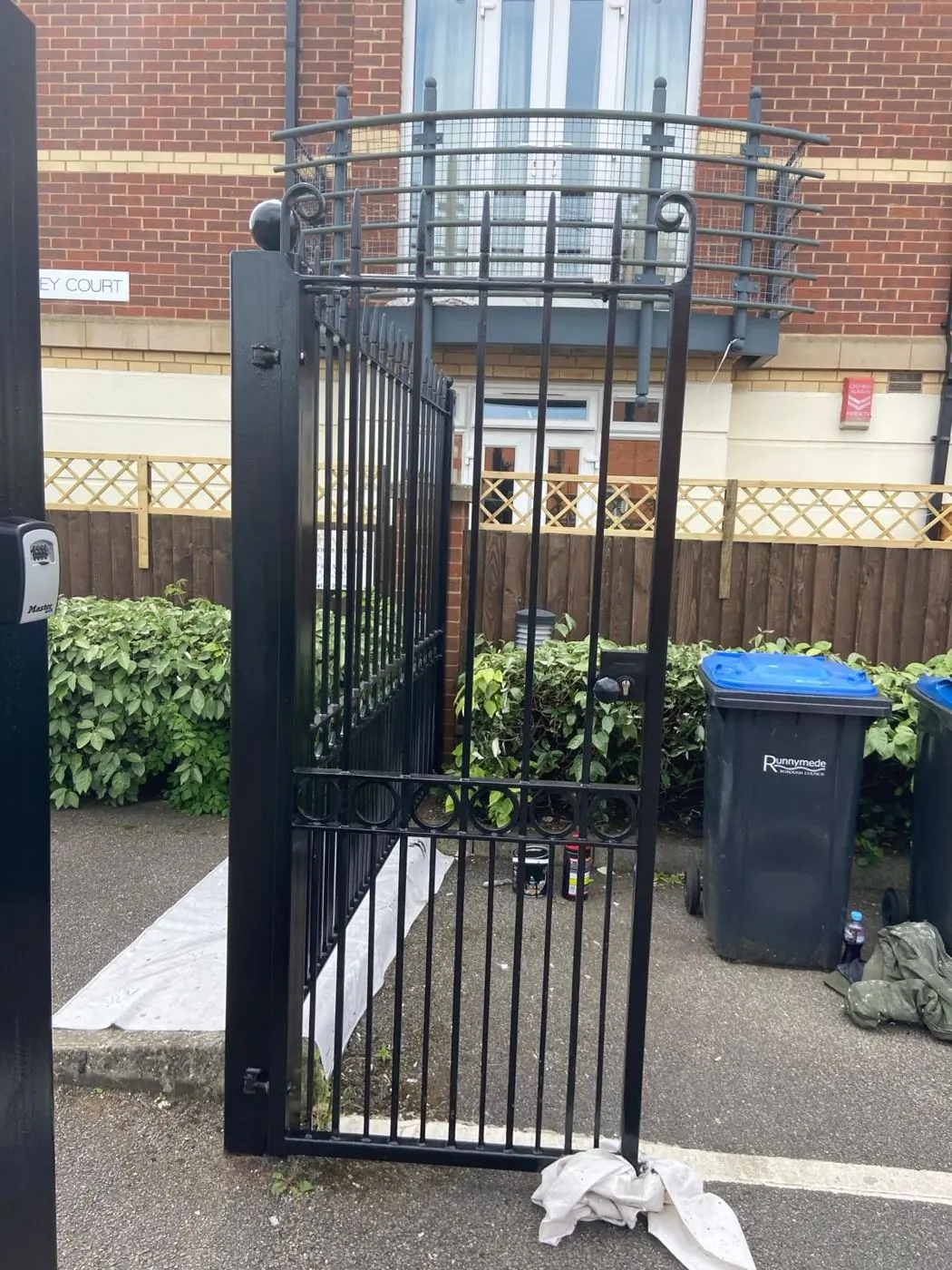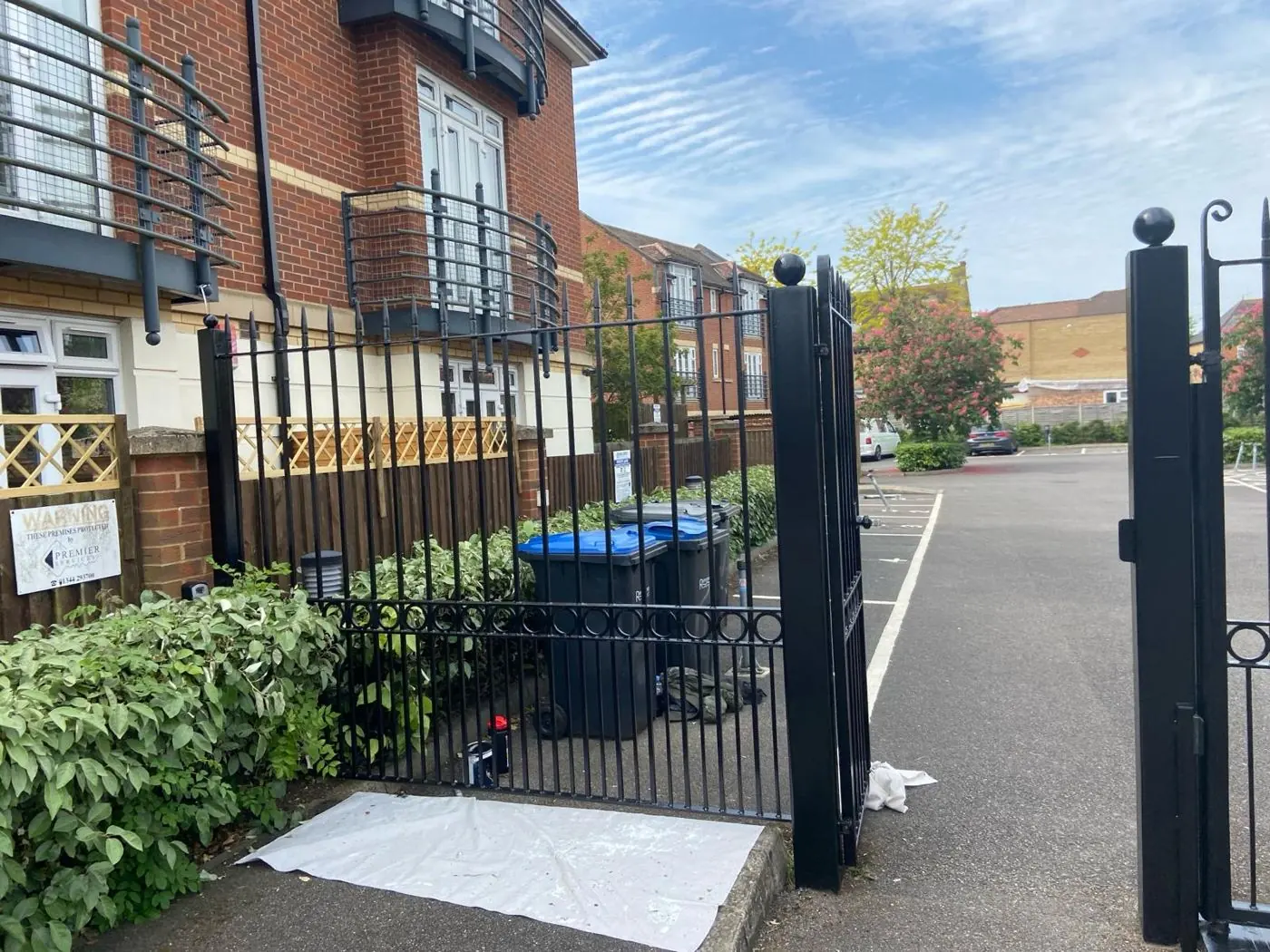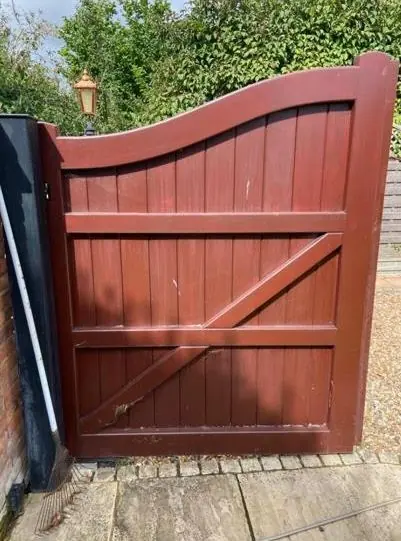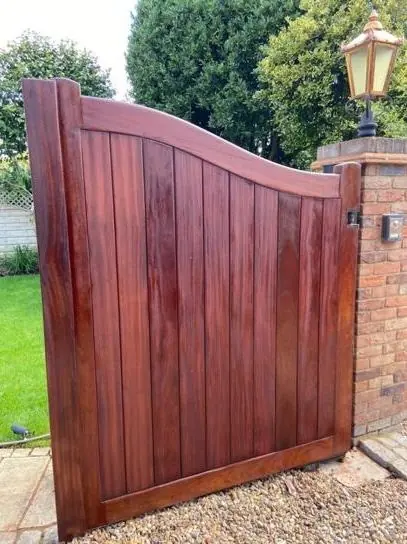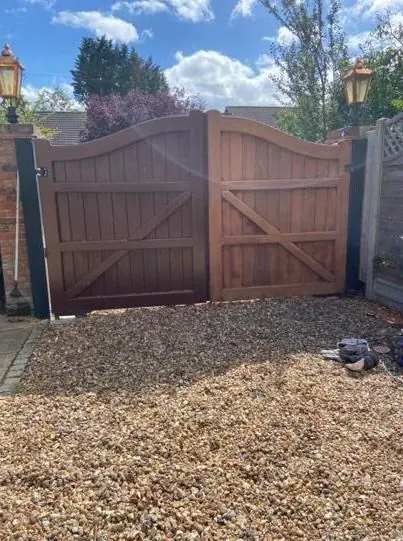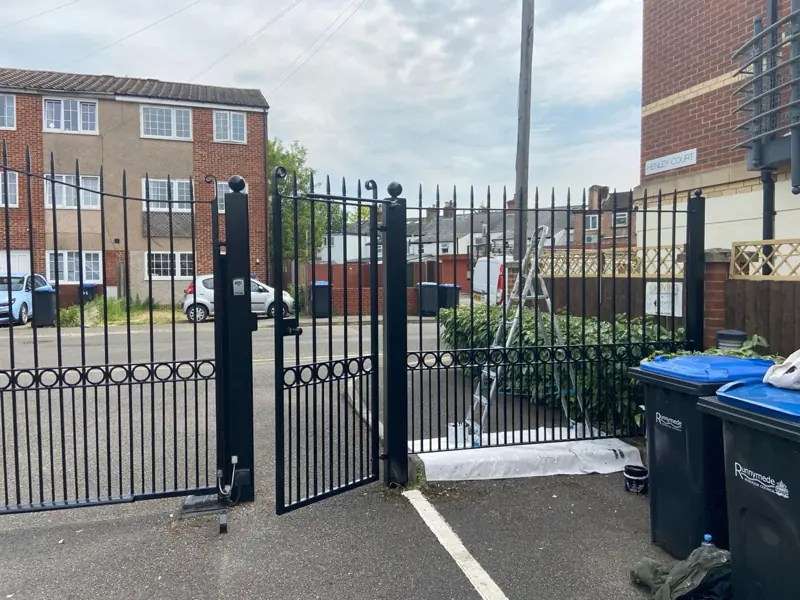
We stain and treat timber fences and gates in Hunsbury Meadows, NN4, the NN4 parish estate on Northampton's south-west edge, 2.2 miles from the centre. Detached plots here have long boundary runs, and fences along the canal, the Wildflower Meadow and public footpaths weather faster than those tucked between houses.
A lot of boundary per house
A detached house has fencing down both sides of the back garden as well as across the end, and often a timber side gate on one or both sides of the house. Across the late-1990s closes of Hunsbury Meadows, where nearly every home is detached, that adds up to more linear metres of panel, post and rail than you get behind a typical NN4 semi. Open-plan front gardens are the norm, so the side gate is often the only bit of garden timber visible from the street, and a grey, split gate next to a freshly painted front door stands out.
Before quoting, we measure each run, count posts and gravel boards and note which faces we can actually reach. The general method for panels, picket, feather-edge and gates is on our main fence and gate staining page; this page is about what is particular to this estate.
Fences on the open edge
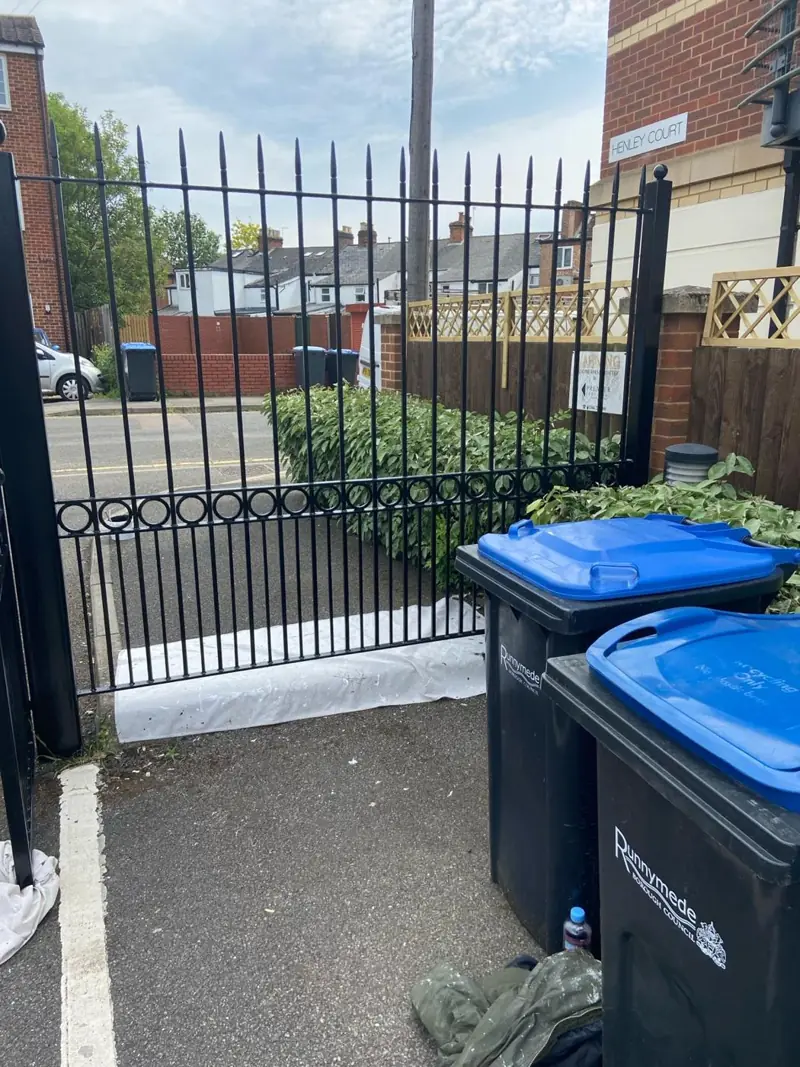
The canal’s Northampton Arm runs down the west side of the estate with the Wildflower Meadow beside it, and Banbury Lane Recreation Ground adds more open grass within the parish. Gardens that back onto that edge, mostly in the Pineham Lock streets such as Towpath Avenue and Lockgate Road, have nothing between their fence and the weather. Sun dries out and greys the timber, wind-driven rain gets into the panels, and the damp canal corridor brings green algae and lichen on the shaded faces. Fences in the middle of the core estate, sheltered between houses, tend to fade more slowly.
For the exposed fences the preparation is heavier:
- Clear growth from the base of the fence and off gravel boards.
- Treat green and black patches with a fungicidal wash, then brush them off once it has worked.
- Wait for the timber to dry through, which after a wet spell by the canal can take several days.
- Apply a microporous or oil-based stain that soaks in rather than forming a skin, with extra into the end grain at post tops and rail ends.
Our guide to the outdoor painting season explains why staining is booked for drier months.
Neighbours, footpaths and hedges
Every boundary between two gardens has two faces. We stain your side, and the other face only when the neighbour has agreed. Where both households want the same colour, one visit can do the whole run at once. Along public footpaths, the outer face of a fence may need a route in from the path, and boundary hedges are often in the way. Keeping hedges on a right of way trimmed falls to the homeowner, the parish council says, so cutting them back before the visit gives room to work and lets stain reach the bottom rails.
Choosing a colour and a cycle
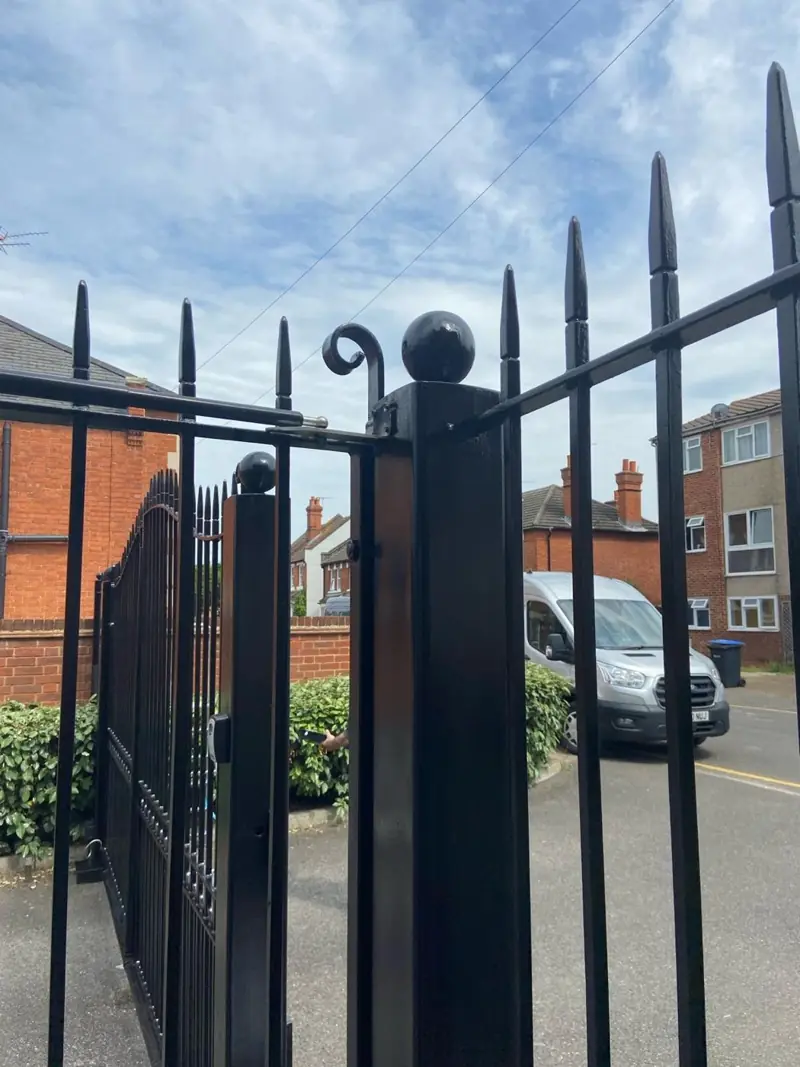
No conservation area covers Hunsbury Meadows, so the shade is up to you, from clear and natural tones to dark brown, black or sage. Two practical points apply here. Going darker than the existing stain is easy; going lighter usually means sanding back or accepting some patchiness. And because meadow and canal-edge fences weather faster, it is reasonable to expect those runs to need recoating sooner than the sheltered fences between houses. Keeping to the same product makes each later coat simpler.
Most of the estate’s drives are block paved, and stain is as hard to lift from paving as paint, so drives and patios beside fences are sheeted while we work. More about the estate’s homes is on our Hunsbury Meadows area page.
Last updated by Dean, DH Painter & Decorator.