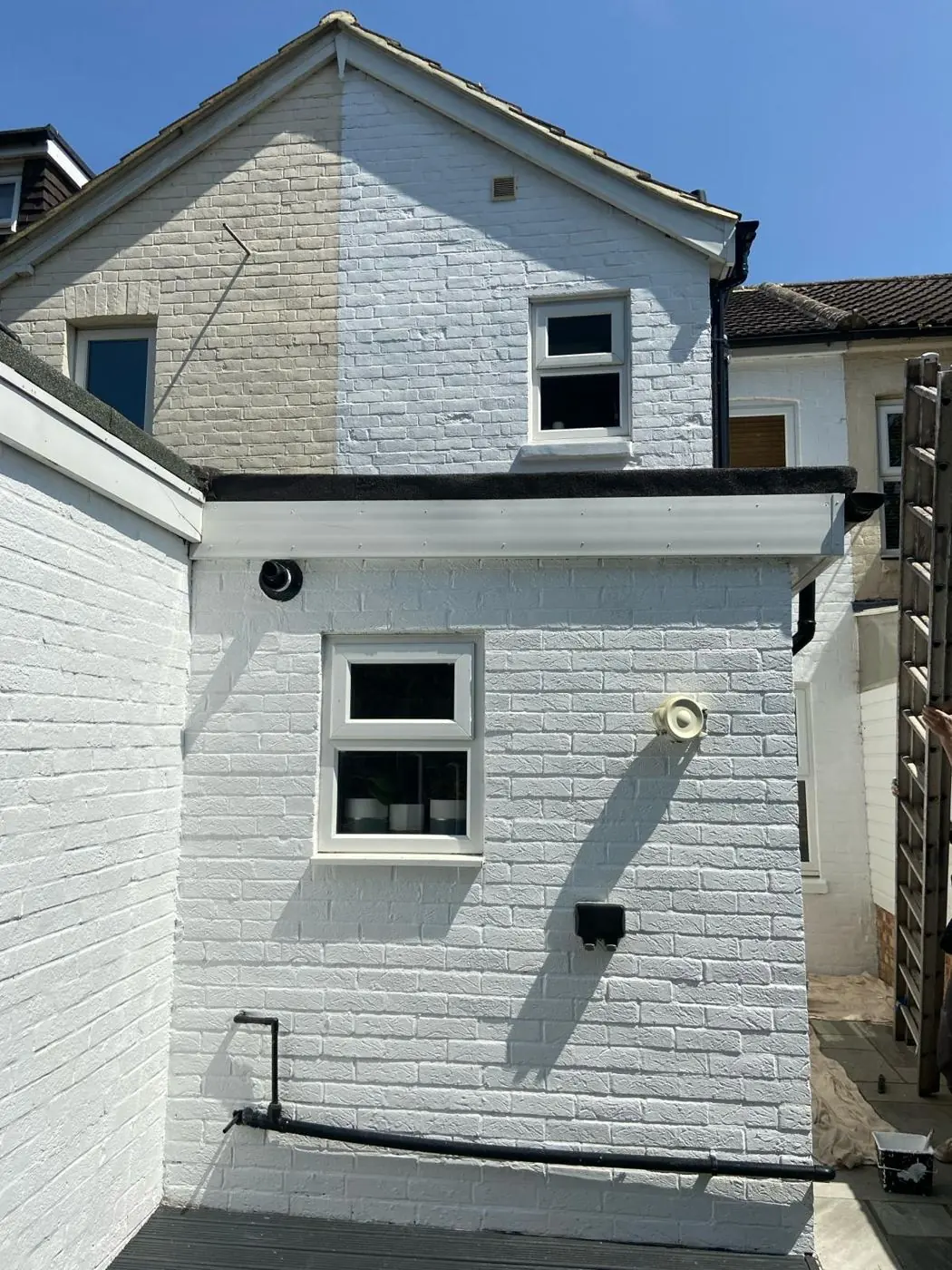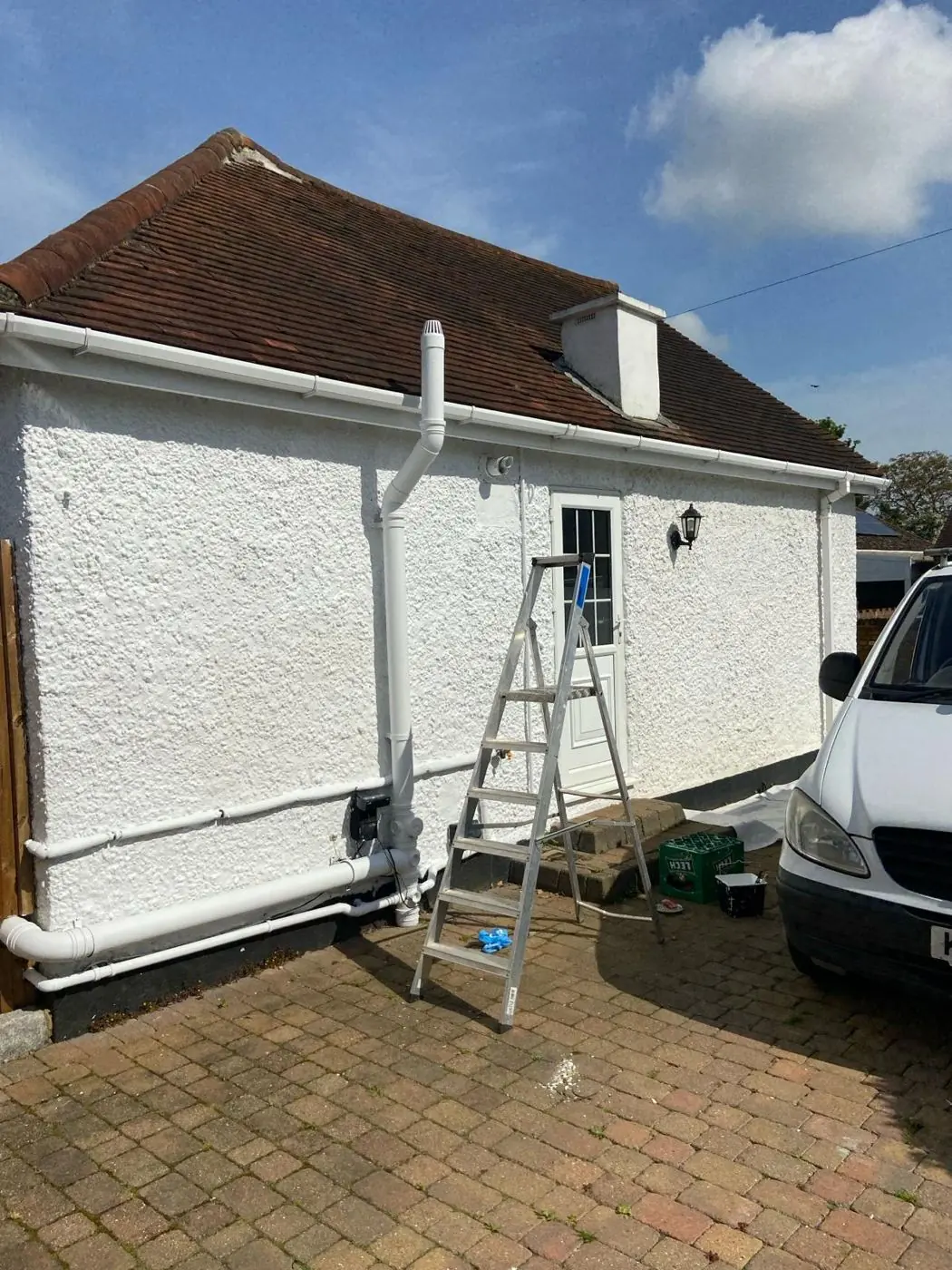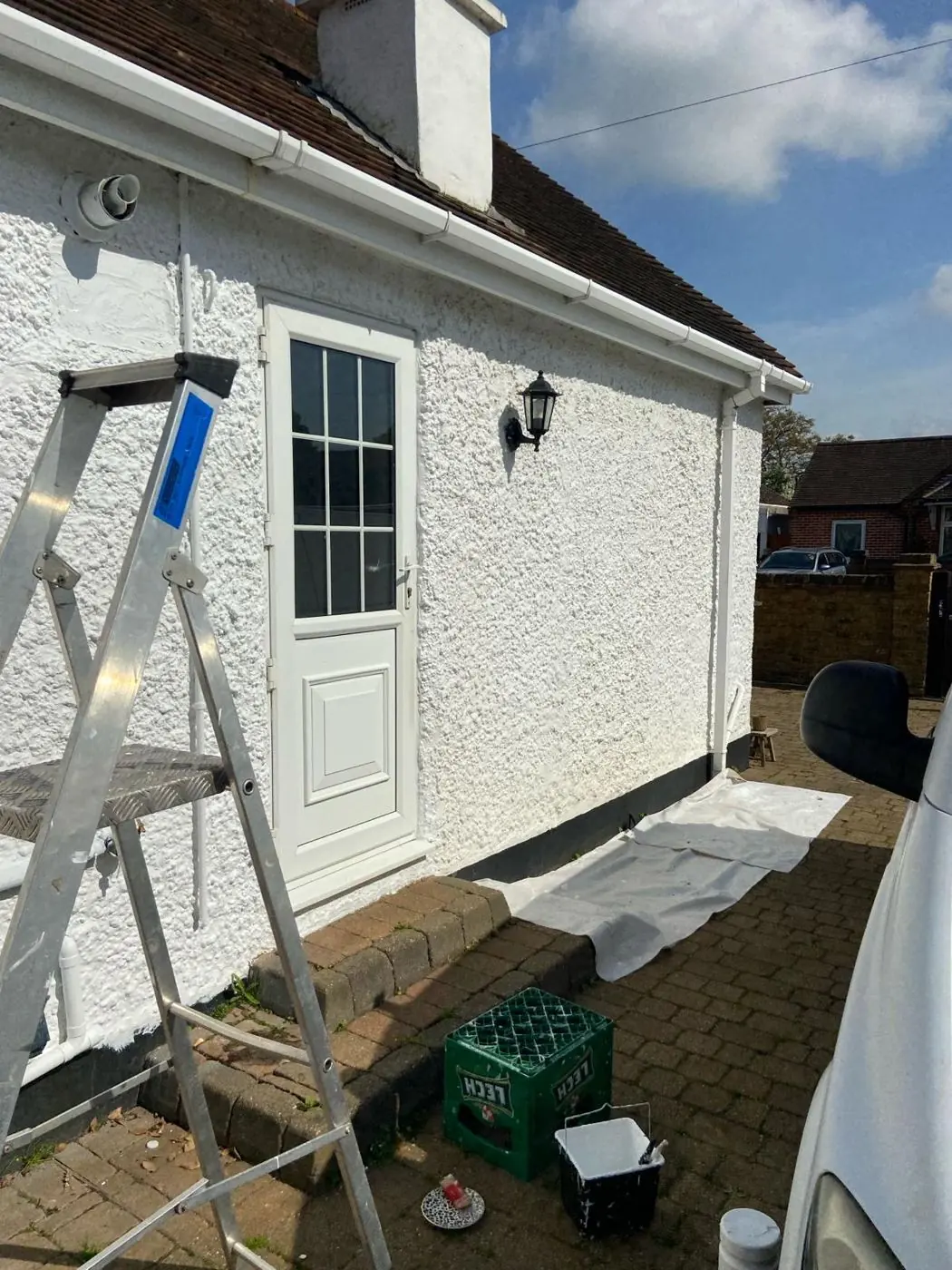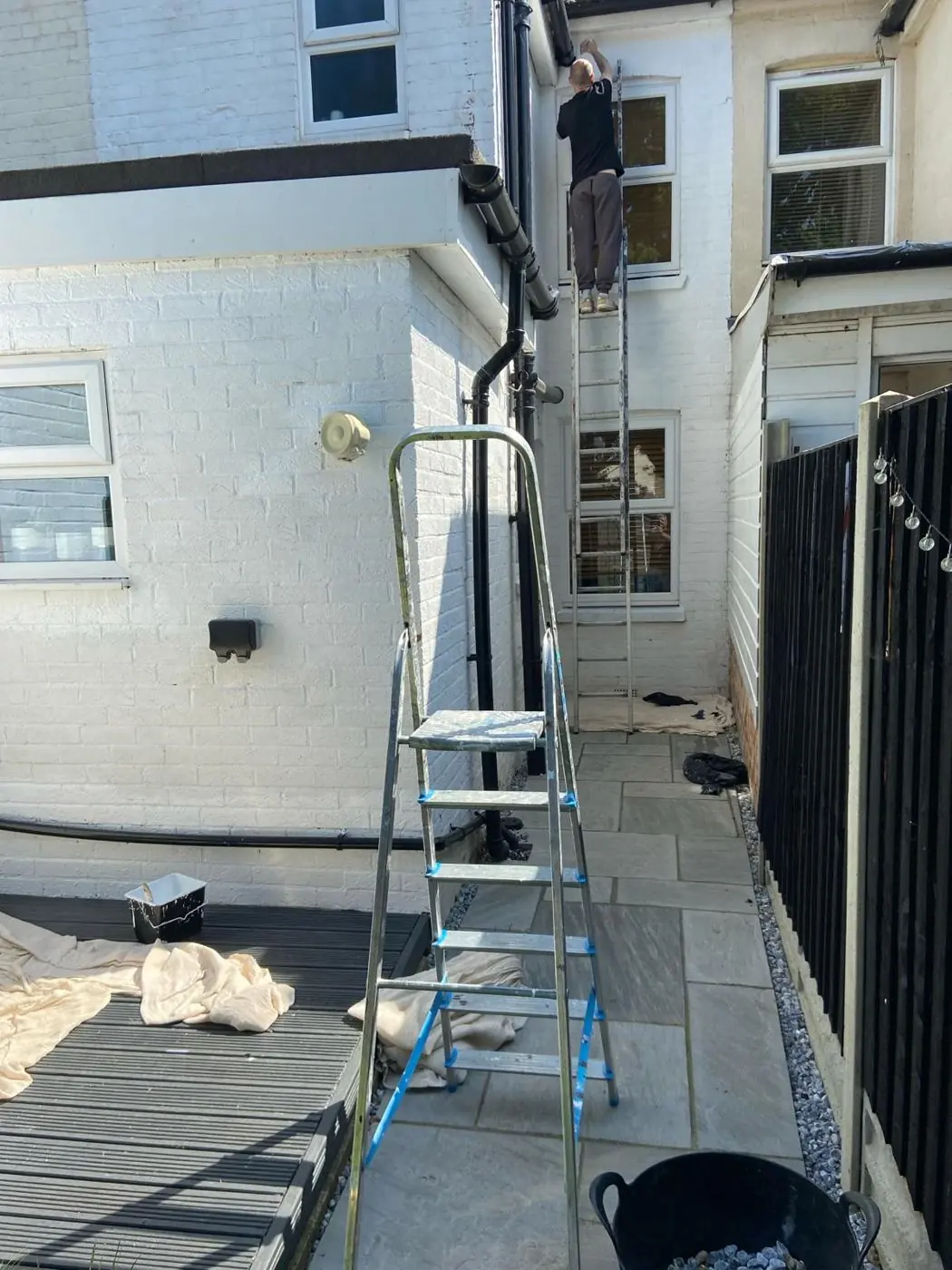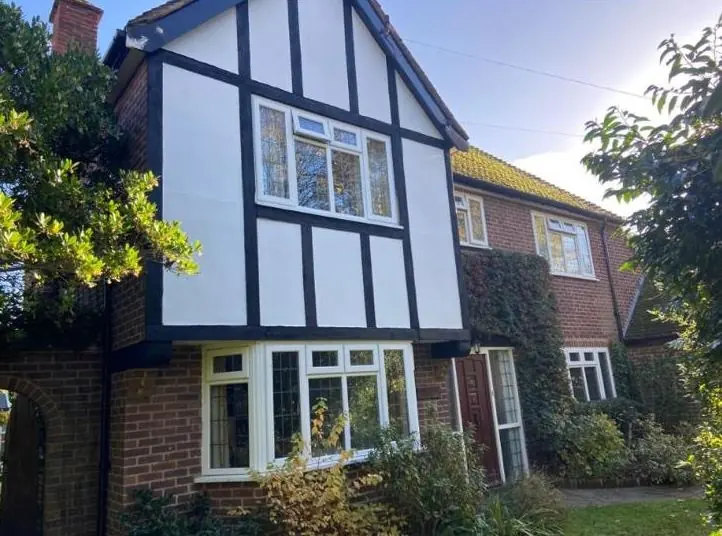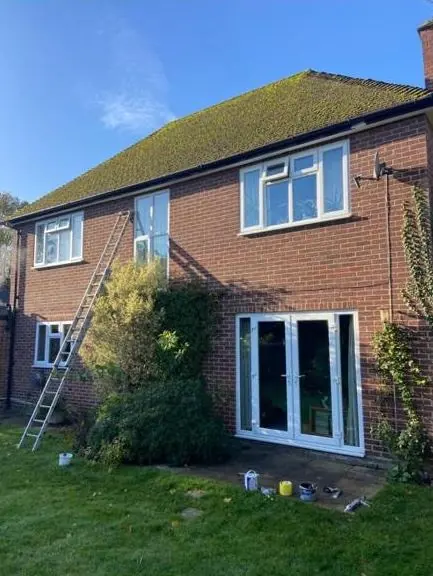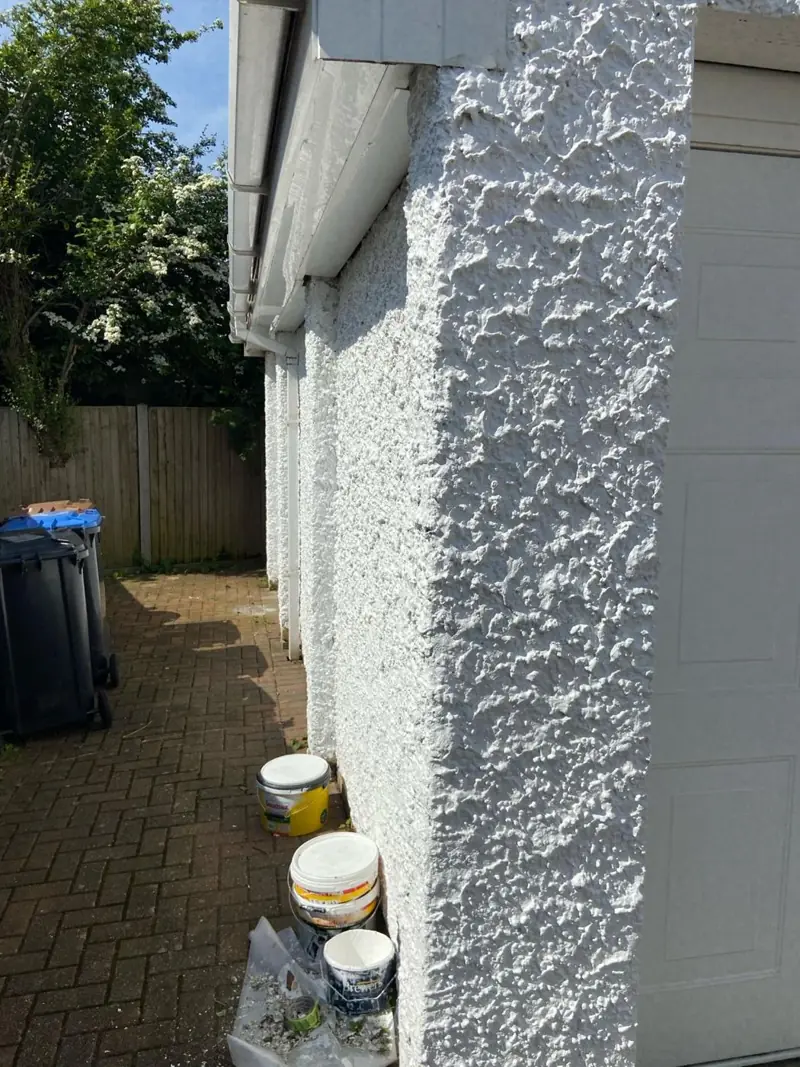
We paint render and exterior masonry in Hunsbury Meadows, NN4, a modern estate on Northampton's south-west fringe, 2.2 miles from the centre. Rendered areas here are usually panels, plinths, garage walls or later extensions rather than whole houses, and walls near the canal need algae cleared before any masonry paint goes on.
Finding out what your walls actually are
Hunsbury Meadows is modern housing from two phases: late-1990s detached homes off Banbury Lane, and the 2012-15 Pineham Lock streets beside the canal. The records we have looked at for the estate do not describe what its walls are built from, or whether any houses are rendered, so we do not assume either way. On estates of this age, render tends to show up in smaller doses: a painted panel between windows, a rendered plinth, the side wall of a garage, or an extension or garage conversion added years after the house was built.
That makes the first visit more of a survey than a measuring job. We check whether a surface is painted render, bare render, painted brick or a cement-based board, because each one takes different cleaning, repair and primer. We also tap render for hollow patches and look closely at cracks, since a loose panel will not be held on by paint. If it turns out a wall is plain facing brick that has never been painted, we will tell you it is usually better left as it is.
Damp elevations by the canal and Wootton Brook
The Pineham Lock houses nearest the water, on Towpath Avenue, Lockgate Road and Narrowboat Lane, have walls facing the canal and the meadow beside it. Wootton Brook runs past the southern edge of the parish, with balancing lakes along it, and the Nene floodplain sits further north towards Upton. None of the Environment Agency flood warning areas nearby names the estate’s streets, but this side of town is a greener, damper corridor than the middle of Northampton, and north-facing masonry here grows algae.
Masonry paint brushed over green growth peels within a couple of seasons, so the order of work on these walls matters:
- Brush off loose growth and dirt, then apply a biocide and give it time to kill the spores.
- Rinse and leave the wall to dry right through, which near the canal can take longer than you would expect.
- Fill cracks with a flexible exterior filler and stabilise any chalky old paint.
- Finish with two coats of a breathable masonry paint, so moisture in the wall can still escape.
The longer reasoning behind each step is on our main render and masonry painting page, and our guide to painting render and roughcast covers textured finishes.
Extensions and conversions on the larger plots
The detached houses in the core estate sit on plots big enough for extensions and garage conversions, and those are where most new render on the estate is likely to be. Fresh sand and cement render needs to cure before it is painted, and painting too soon can trap moisture and leave patchy, flaking colour. Once it is ready, the new render and any older painted panels on the same elevation should be coated at the same time, so the colour matches from end to end rather than showing a line where the extension starts.
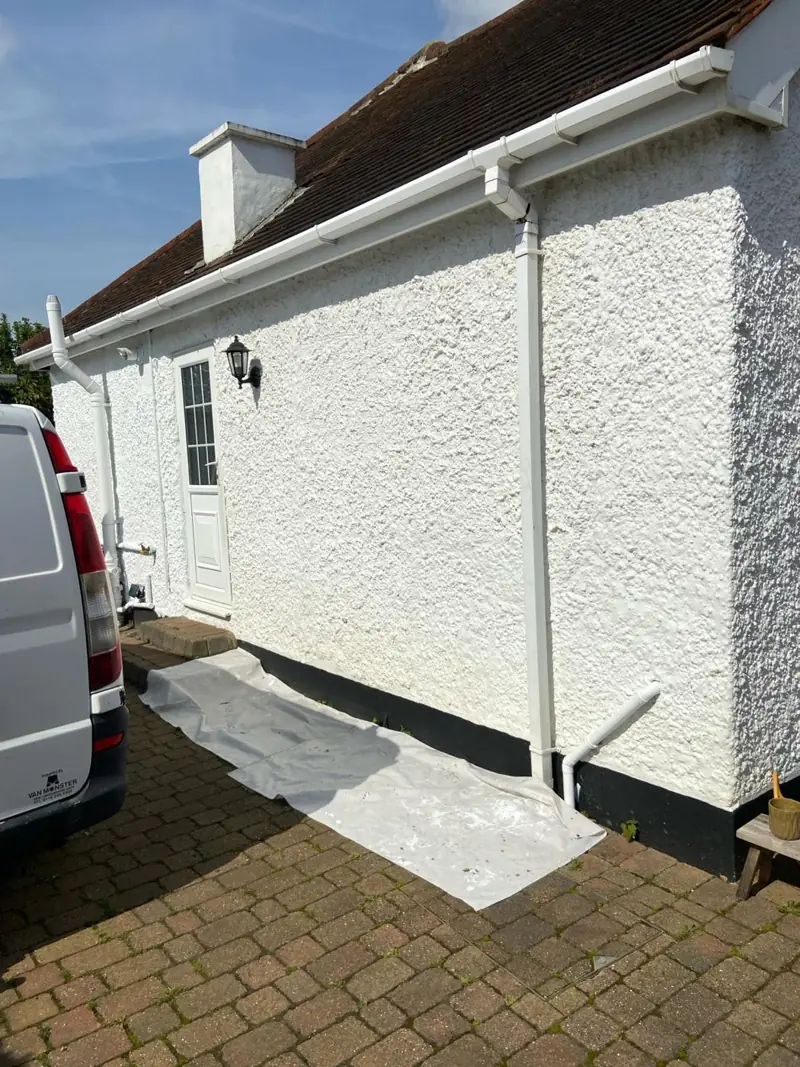
On a detached house, a rendered side wall can be a full two storeys at the gable, so access is planned at the quote. Block-paved drives give a firm base for a tower, and the paving is sheeted under every wall we paint, because masonry paint that gets into the joints of block paving rarely comes out cleanly.
Colour choice without planning limits
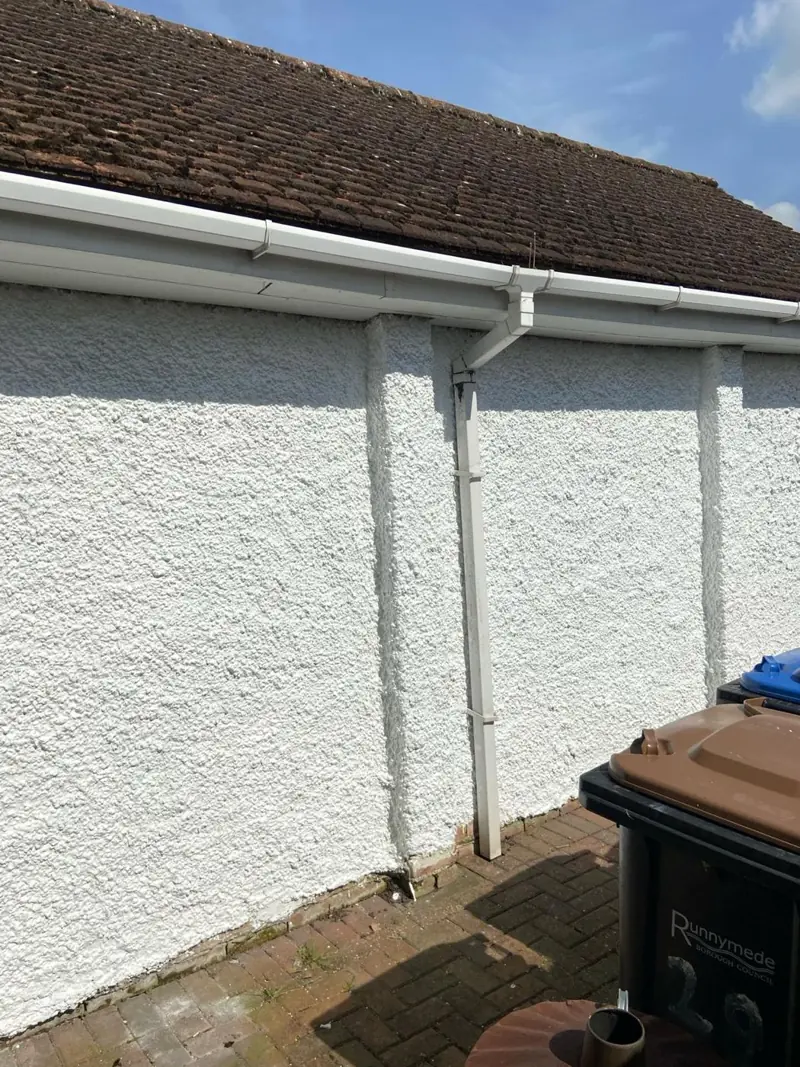
Hunsbury Meadows has no conservation area and nothing listed, so you can choose smooth or textured acrylic masonry paint in whatever colour suits the house, without council consent. The exceptions are covenants in your deeds and, for the Pineham Lock flats and maisonettes, the management company, which often controls external walls. More about the estate’s two phases is on our Hunsbury Meadows area page.
Last updated by Dean, DH Painter & Decorator.