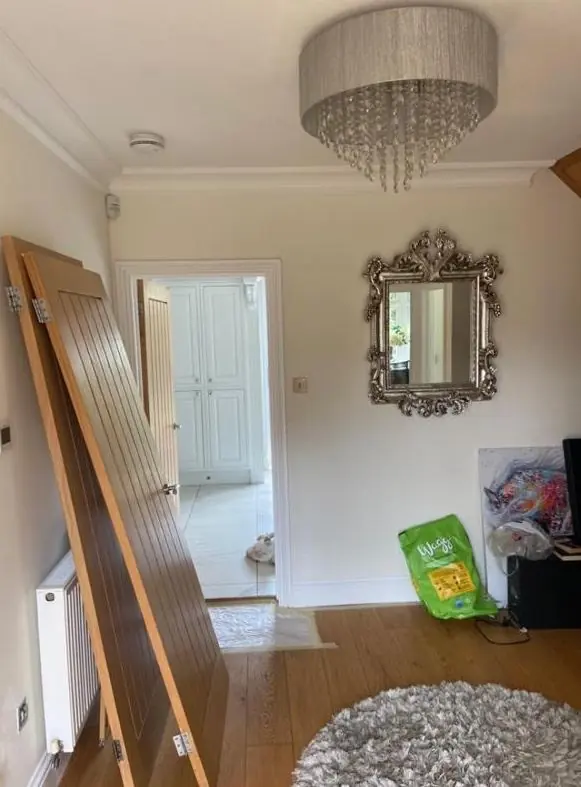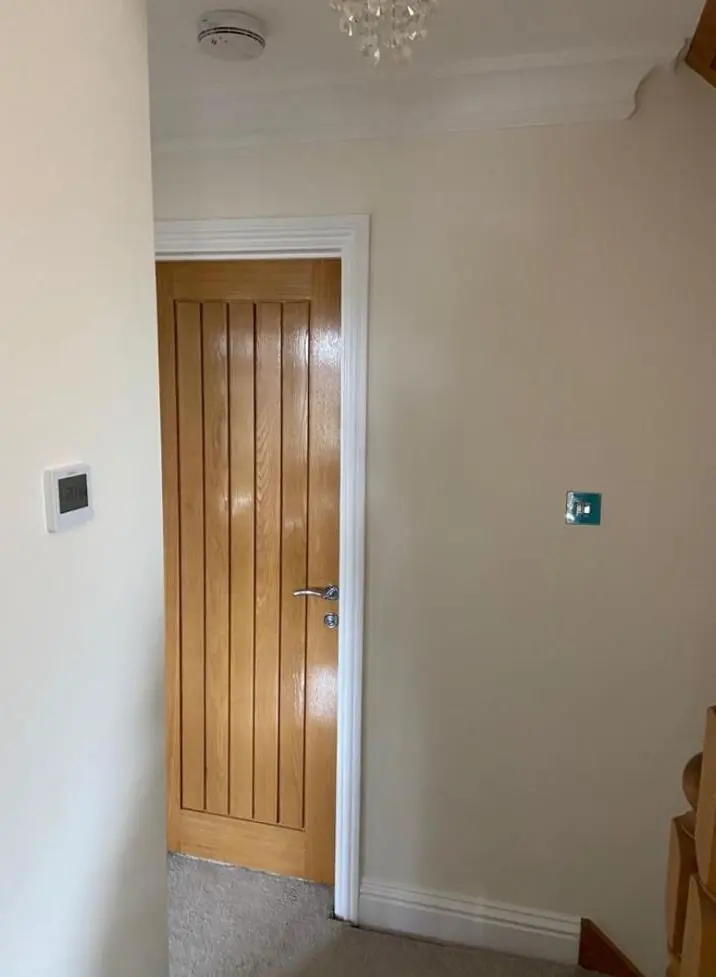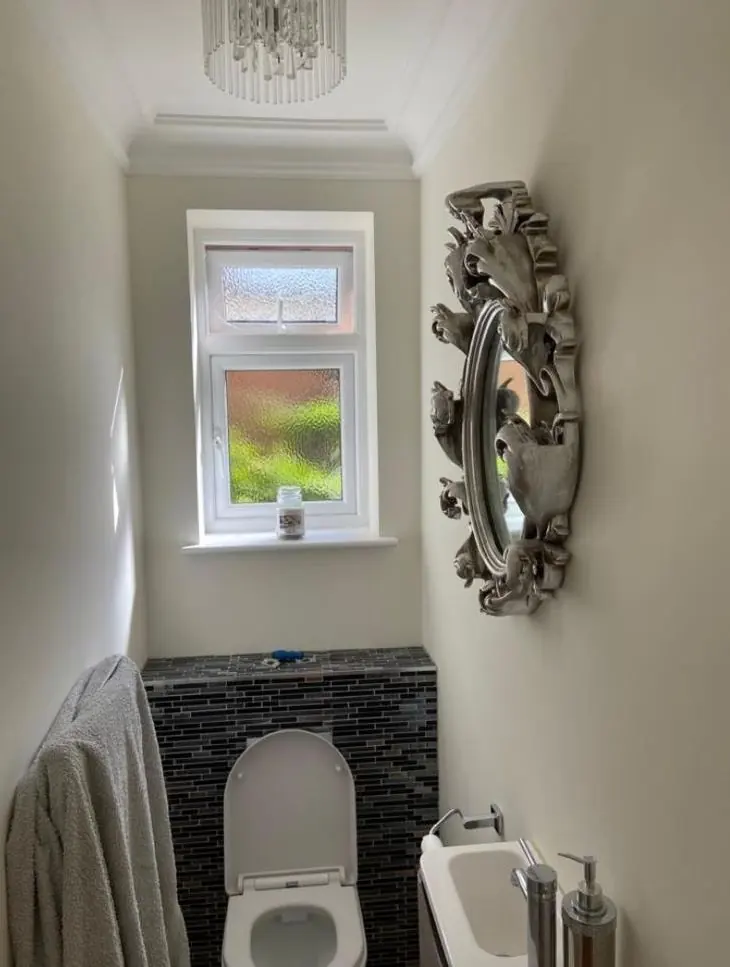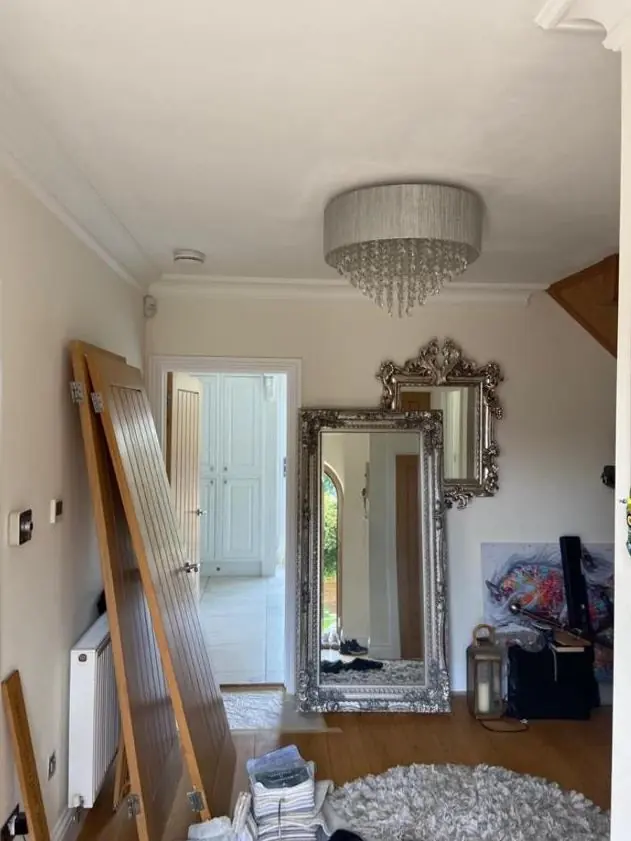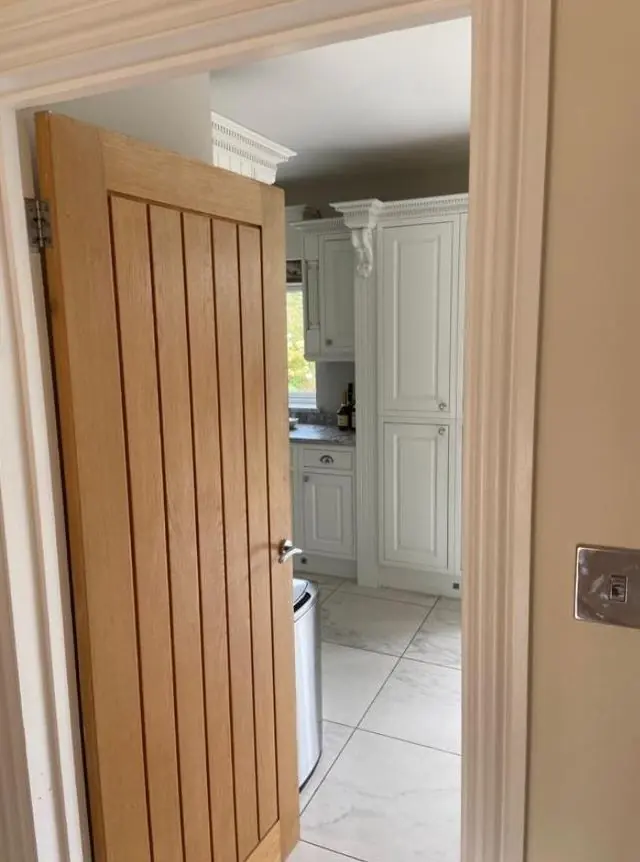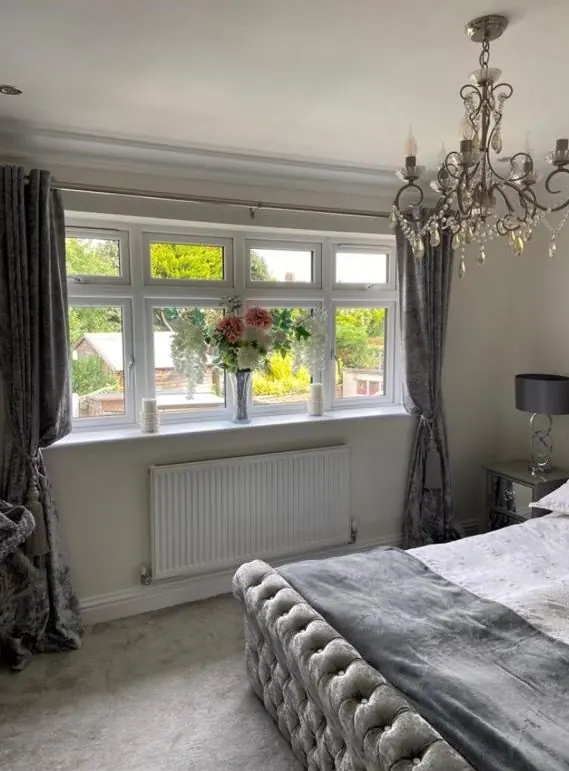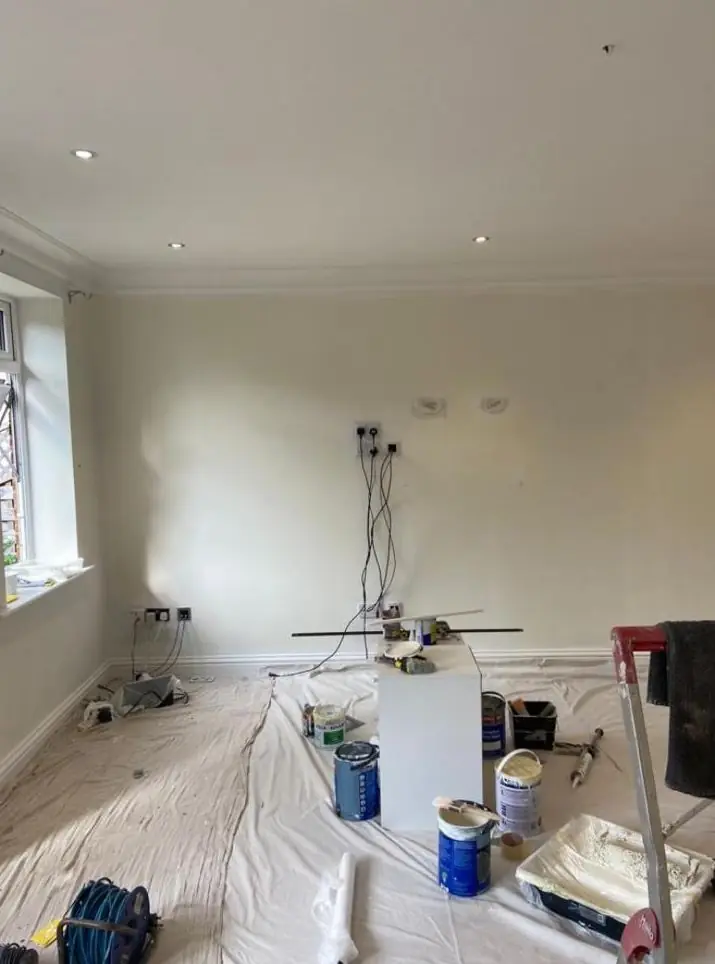
Dean paints walls, ceilings and woodwork inside homes in Kingsley, the late-Victorian district beside the Racecourse, 1.5 miles north-east of the centre. Most rooms here date from the 1870s to the 1890s, so the work usually starts with repairing old lime plaster and cutting in around period mouldings.
Two very different Victorian interiors in one district
Kingsley’s dated houses mostly carry years between 1873 and 1891, and a 1974 survey found more of them here than anywhere else in Northampton. That one period produced two quite different kinds of interior. Along the park edge, the high-status terraces and villas were built with tall ceilings, deep cornices and centre roses in the front rooms. Behind Kettering Road, plainer streets such as Junction Road have two-bedroom mid-terraces: a through living room at the front, a kitchen behind and a small walled-in garden.
The paint and the method change between the two, so Dean prices them differently and plans the days differently. Our interior painting service page covers the general process; this page is about what a Kingsley house adds to it.
Lime plaster, cracked ceilings and hand-cut mouldings
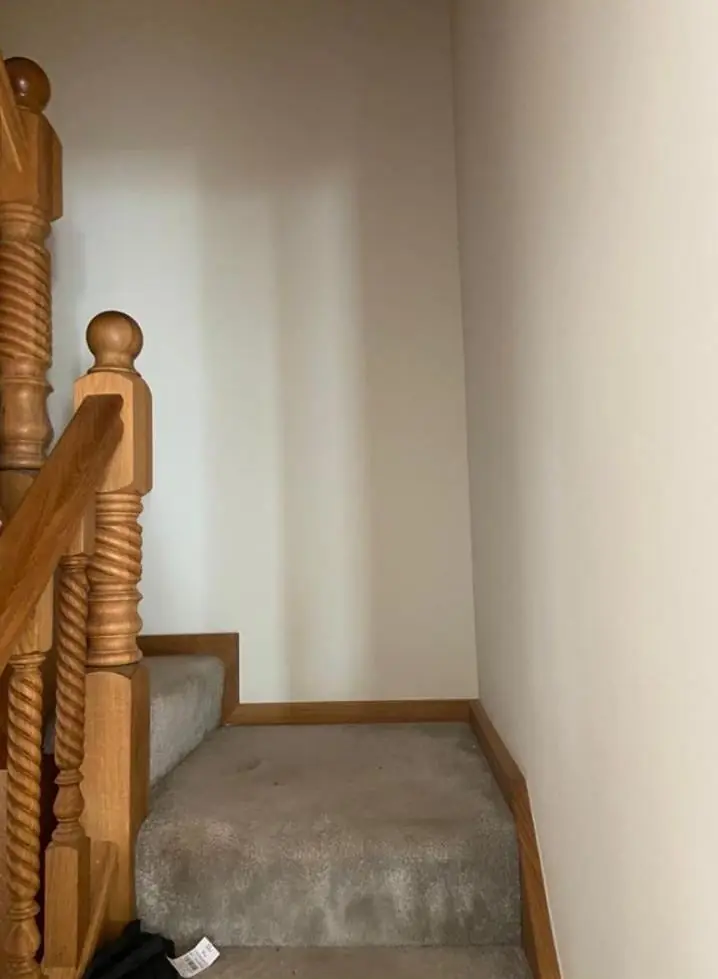
In the larger houses the walls are usually original lime plaster, sometimes on lath, and after well over a century it has moved. Hairline cracks run out from cornice corners and across ceilings, and older repairs in gypsum often show as a slightly different texture once a fresh coat goes on. Before any colour is applied we:
- rake out and fill cracks with a filler that tolerates a little movement, then sand flush
- check for loose or hollow plaster by tapping, and flag anything that needs a plasterer rather than paint
- wash down cornices and roses, which often carry decades of distemper and emulsion clogging the detail
- use a breathable emulsion on bare or patched lime areas, so damp in a solid wall is not trapped
The cutting in is slow. A cornice line well above head height has to be done by hand from a steady platform, and a ceiling rose is brushed rather than rollered so the detail stays crisp. That time is the real difference between painting a villa room here and painting a modern lounge.
Refreshing a Junction Road style terrace
The two-bedroom terraces are a much quicker job. A through sitting and dining room, a hall, a stair and two bedrooms can often be refreshed in one or two days per area, depending on how much filling the walls need. Many of these houses have already had uPVC double glazing fitted, which means fewer timber window boards and sashes to paint, but the original skirtings and door architraves usually remain.
Parking is on the street on these roads, and rear access to the enclosed gardens is not something we can count on, so dust sheets, steps and paint come in through the front door. We protect the hall floor first and work room by room so you are never without a usable living space.
Racecourse light and tree shade
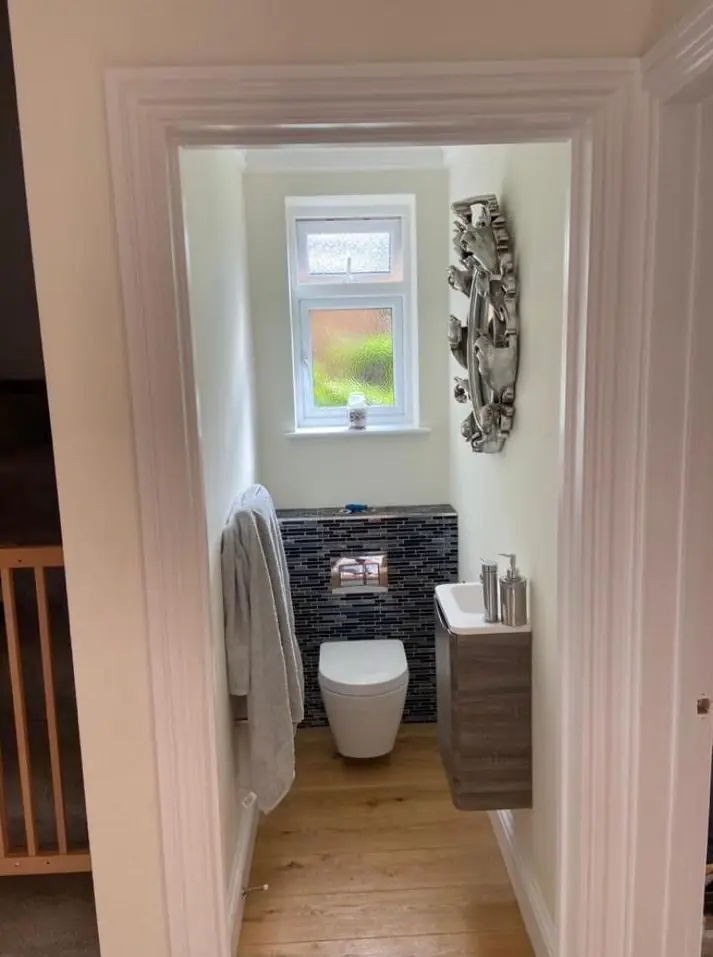
Front rooms on East Park Parade and St George’s Avenue look straight out over 117 acres of open parkland, so they get a broad, even light that flatters pale colours. Rooms behind the mature street trees on Kingsley Road and St George’s Avenue can be shaded for much of the summer, and a colour that reads warm in winter can look dull under green leaf shade. Dean will paint test patches on the actual walls before you commit, and the rear kitchens of the terraces, which face small gardens, usually need lighter, more reflective finishes than the front.
We cover Kingsley from our Northampton base, and you can read more about the district on our Kingsley area page. For typical costs, see the painter and decorator cost guide, then ask Dean for a written quote.
Last updated by Dean, DH Painter & Decorator.