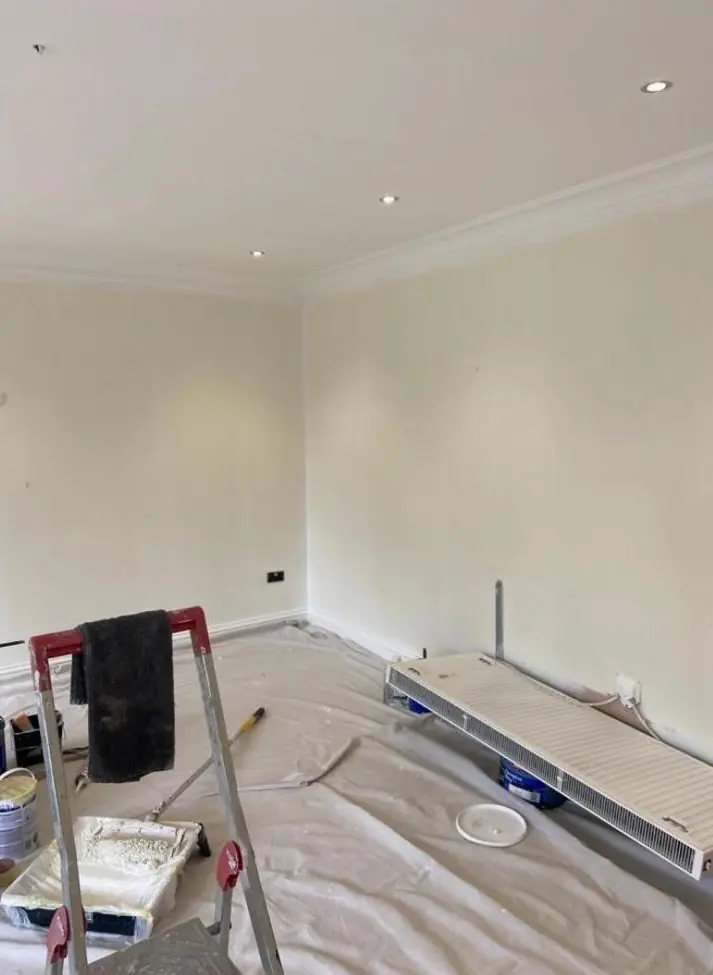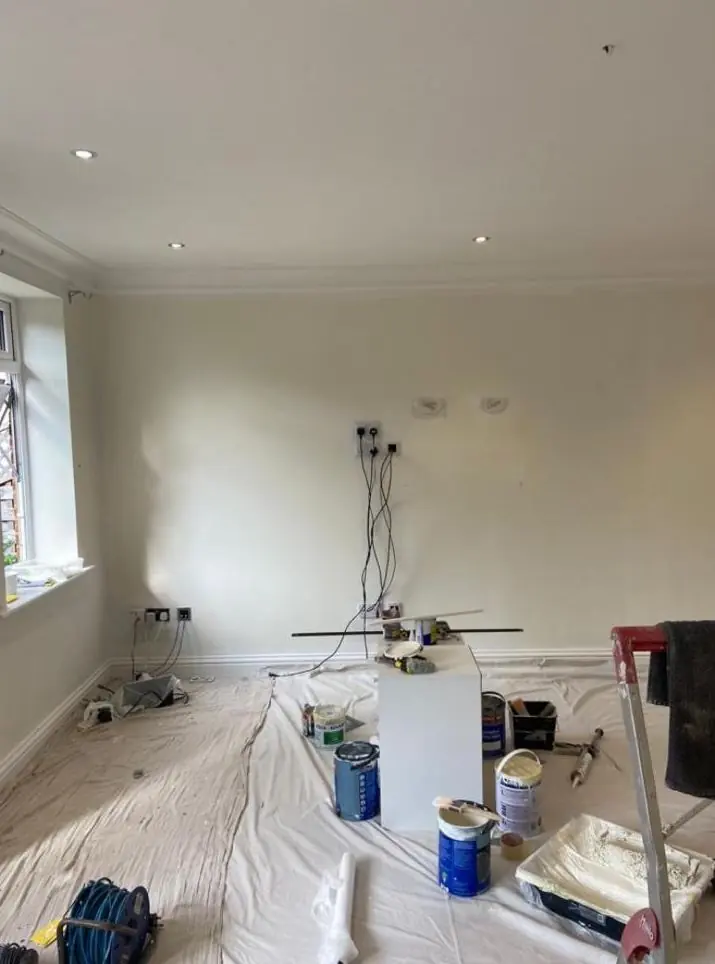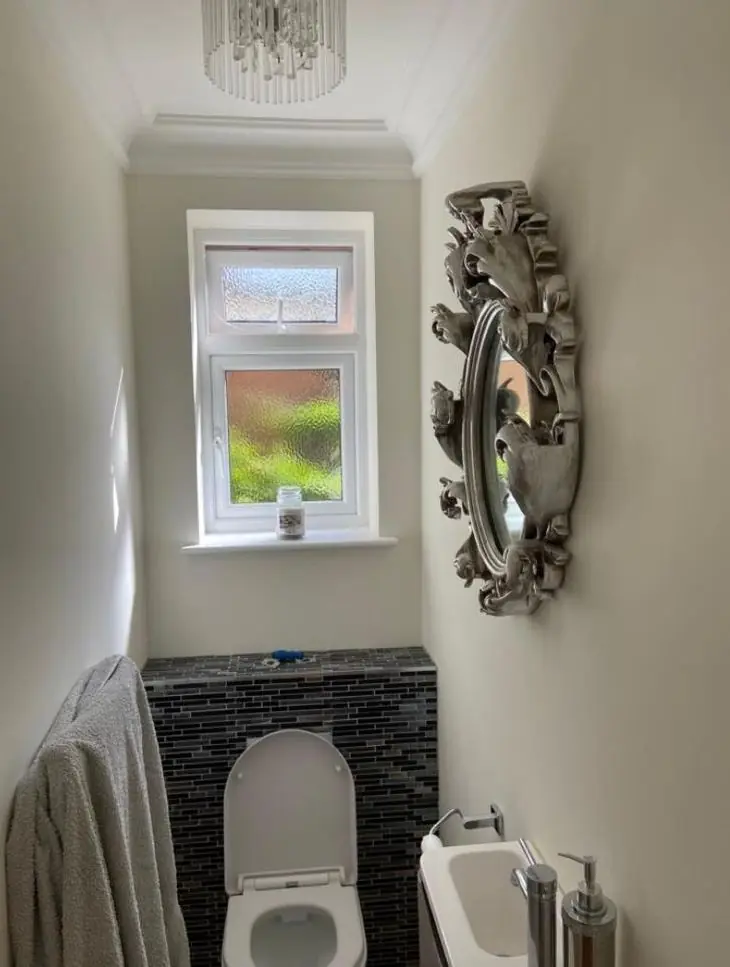
Dean carries out decorative paintwork in Kingsley, 1.5 miles out on the north-east side of town, where the late-Victorian villas facing the Racecourse are full of moulded detail. The work ranges from picking out porch capitals outside to contrast finishes on cornices and roses inside.
A district built with ornament
The houses along East Park Parade, the south end of Kingsley Road and St George’s Avenue were high-status homes when they went up between the 1870s and early 1890s, and they show it. Records of the conservation area list ornate entrance porches and doors, decorated gables, lancet windows, corbelling, wrought-iron balconies, columns, pilasters and capitals, with stained glass in some of the Gothic-style houses. Where that detail has ended up under a single colour, careful picking-out can make it legible again.
This is slow, brush-only work. None of these surfaces suit a roller or a sprayer. Our decorative finishes page describes the wider range of effects we offer; here we focus on the Kingsley features.
Porches, columns and capitals on the street front
Picking out means giving a moulding a second colour so its shape reads from the pavement: the leaves of a capital against a plain column, the band of a corbel below a sill, the edge of a gable bargeboard. Before any of that we cut back flaking layers, fill small losses in the stucco and prime bare areas, because a contrast colour shows every flaw underneath it.
On the addresses covered by the Kingsley Road Area Article 4 Direction, porches come under planning control. Repainting a porch in its existing scheme is the safe course, so on those houses we would usually restore the picked-out pattern that is already there, or one clearly evidenced by old paint layers, rather than invent a new one. If you want to introduce a different scheme, check with West Northamptonshire Council first. Houses outside the numbered addresses, but still inside the conservation area, have more freedom, though a scheme that respects the neighbouring porches will always look more at home on these streets.
Lancet windows, stained glass and datestones
The Gothic-style houses have pointed lancet windows, some with stained glass. Painting their frames and surrounds in a contrast colour means masking every pane and cutting in by hand around the lead cames, and any soft timber in the old frames needs resin or timber repair before a fine line will hold.
Dated plaques, often diamond-shaped, are common on the terraces at this end of the park, most of them from 1873 to 1891. These are part of the record of the district. We mask them or clean carefully around them and never paint over them, even when the wall surround is being picked out.
Cornices and ceiling roses inside the villas
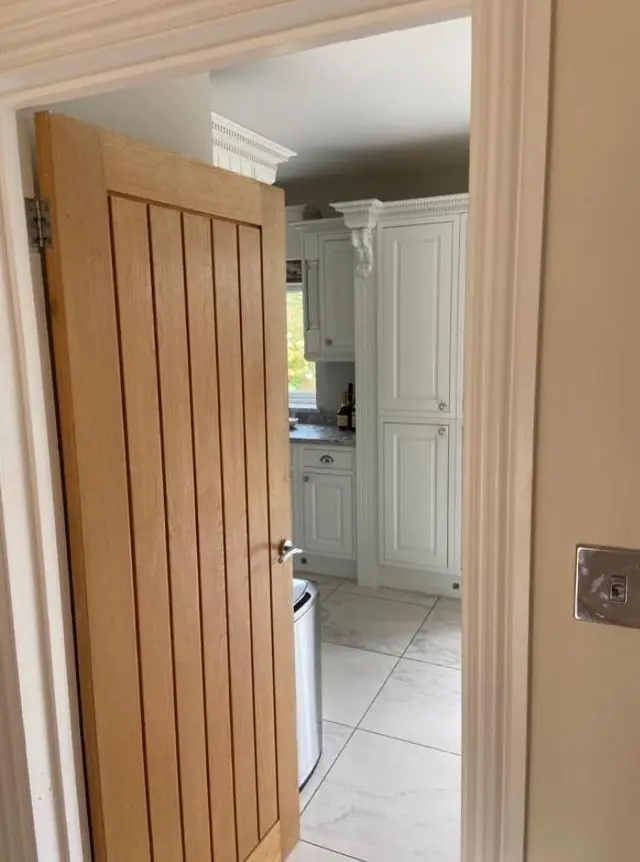
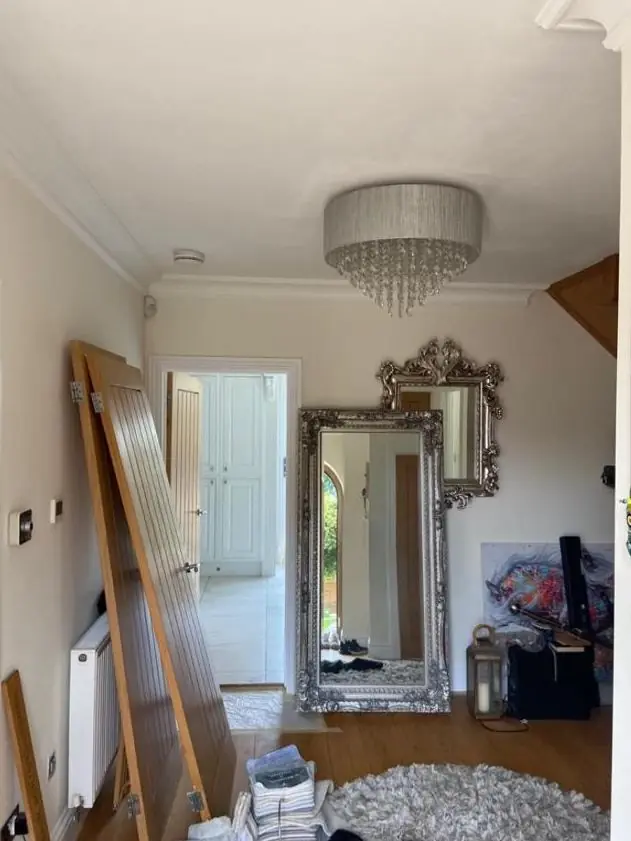
Indoors, the tall front rooms of the larger houses often keep their cornices and centre roses. A contrast finish, such as an off-white on the mouldings with a slightly deeper ceiling colour, or a single picked-out bead in the cornice, can show off the plasterwork. Before colour goes on, old clogged coats sometimes need washing out so the detail is crisp. The aim is restraint: two or three related tones usually look right in a late-Victorian room, where a full rainbow of colours would not.
- Cornices: often a soft white or stone, with the deepest recess a shade darker
- Ceiling roses: picked out in a single tone, or left white against a tinted ceiling
- Picture rails and dados: tied to the woodwork colour
Detail work on a front porch can be paired with full exterior repainting, covered on our exterior painting page. For more about painting and decorating in the district, see the Kingsley area page.
Last updated by Dean, DH Painter & Decorator.