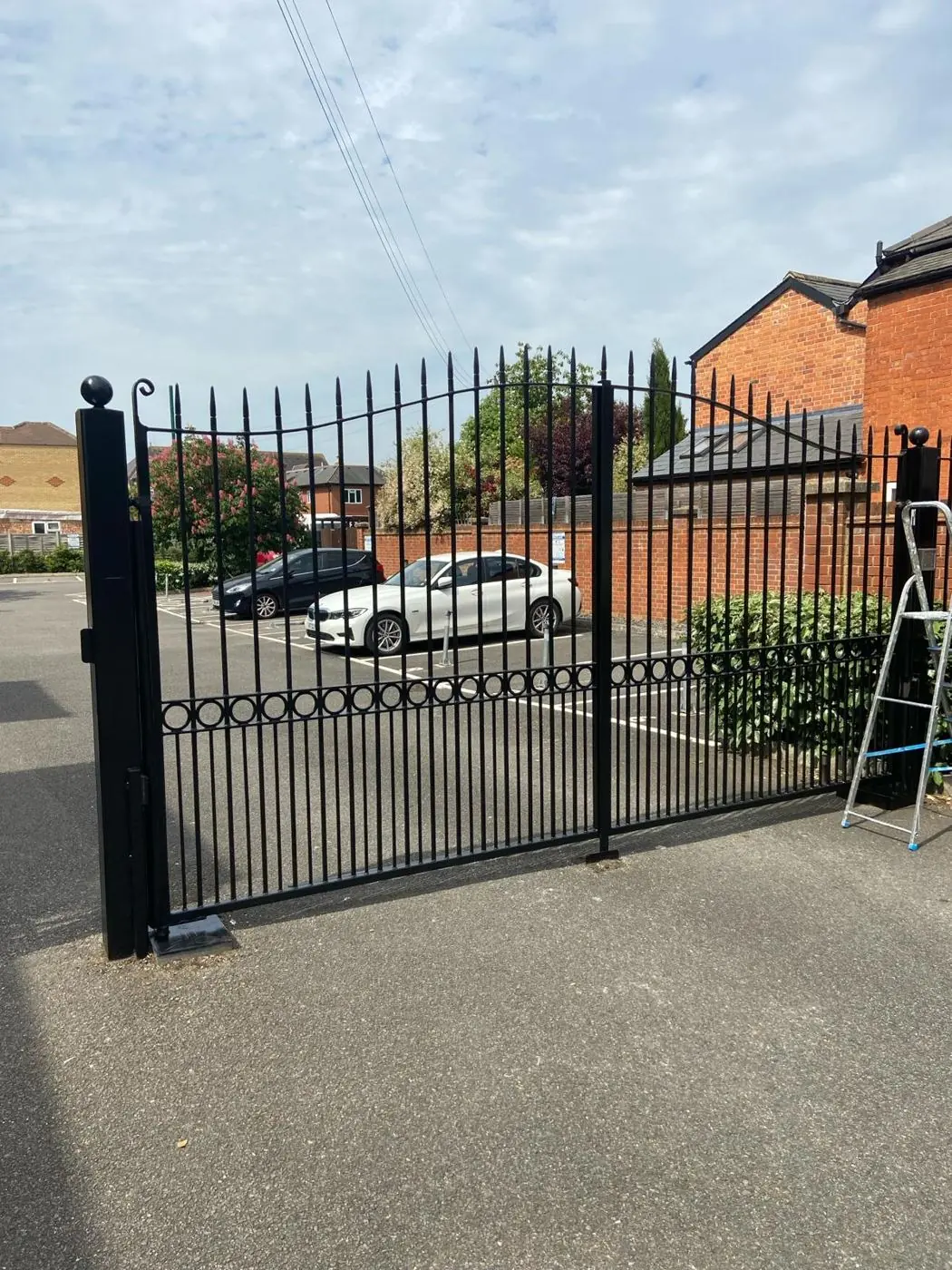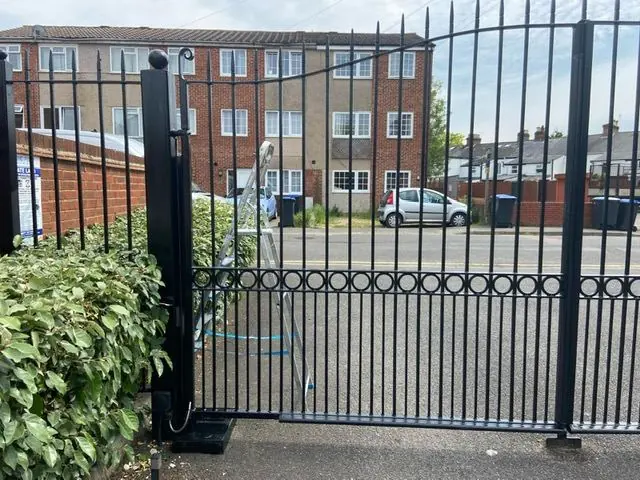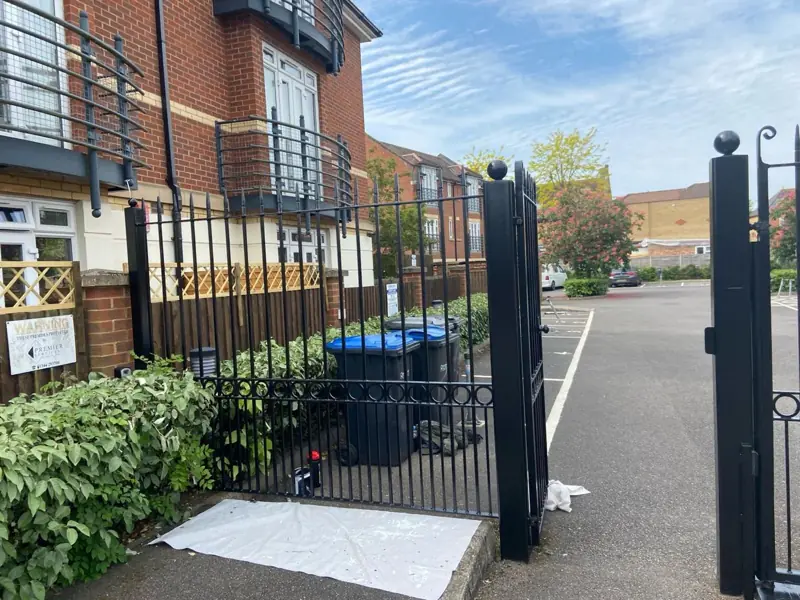
Dean paints iron railings, gates and balconies in Kingsley, the NN2 neighbourhood along the Racecourse's eastern edge, 1.5 miles from the town centre. Most of the metalwork here belongs to Victorian conservation-area houses, so the job is rust treatment, metal primer and gloss, with the original pattern and colour kept.
Ironwork on a Victorian street
The villas and high-status terraces built along the east side of the Racecourse between the 1870s and 1890s were decorated inside and out, and iron was part of that. The Historic Environment Record lists wrought-iron balconies among their features, alongside columns, corbelling and decorated gables, and front boundaries on these streets often include iron railings and gates. The Grade II Racecourse Pavilion, early 19th-century stucco with cast-iron railings, external cast-iron stairs and a loggia on cast-iron colonnettes, gives an idea of how far back the ironwork tradition goes on this side of the park.
Old iron on an exposed street has a hard life. The houses face open ground with no shelter, rain sits on horizontal rails and in the joints of scrollwork, and the stretches along Kettering Road add a film of traffic grime that holds moisture against the paint. Rust starts where the coating is thinnest: at the base of each upright, under finials and where a bar meets stone or brick.
Keeping the design under Article 4
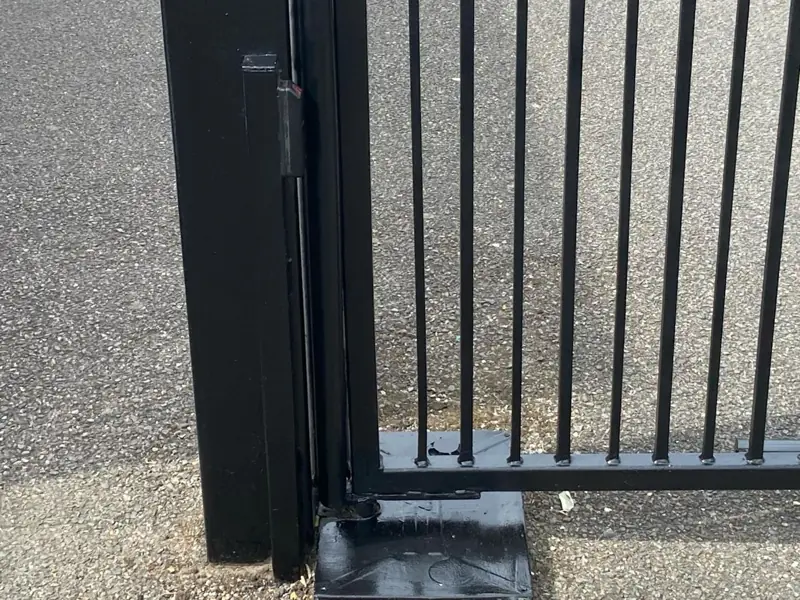
The Kingsley Road Area Article 4 Direction removes permitted development rights for maintaining and altering gates, walls and other front enclosures on the houses it names: every number from 1 to 58 on East Park Parade, plus even-numbered runs on Kingsley Road (2-84) and St Georges Avenue (78-140). For railings on those addresses that means repainting in a matching scheme rather than replacing, simplifying or redesigning them. Missing finials or a cracked casting are a job for a metalworker, and any replacement part should copy the original; check with West Northamptonshire Council before changing anything visible, since the approved direction differs from the published text.
Black is common on Victorian railings, but not universal. We record whatever is there before we start, and where a gate has been painted in a second colour on its finials or collars, that picking-out is repeated by hand so the pattern reads as it did before.
Balconies are a different job from railings
A front railing at ground level can be worked from the pavement. A first-floor wrought-iron balcony cannot. Its underside, brackets and the fixings into the wall are where water collects and corrosion is hidden, and reaching them needs a tower or scaffold, planned around the footpath and the road in front. We usually suggest doing balconies at the same time as other upper-storey work such as sashes or a stucco bay repaint, so the access is paid for once.
Inside the balcony, any door or window opening onto it is protected, and the floor and drainage points are checked: if water pools on a balcony floor it will keep rusting the base of the rails whatever paint goes on.
How we treat old iron
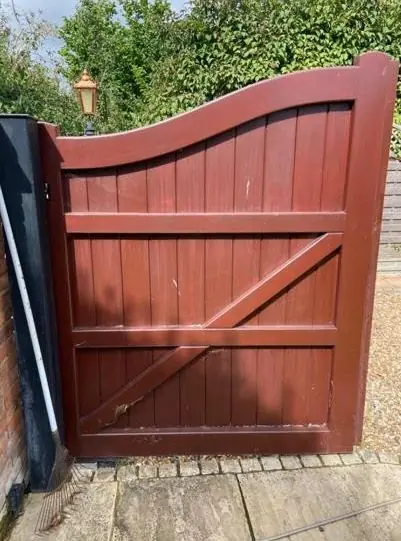
- Wire brush and hand-scrape loose paint and rust, taking care with cast iron, which is brittle and can crack if hit hard.
- Treat remaining rust and wipe down to remove traffic grime and grease.
- Spot-prime bare metal with a rust-inhibiting metal primer, paying most attention to bases, joints and the underside of rails.
- Undercoat where needed and finish in a durable exterior gloss, brushed into every scroll and collar.
The full process, and how it differs for steel or galvanised gates, is on our metal gate and railing painting page. Kingsley is a short trip from our Northampton base, and the Kingsley page covers our other work on these houses.
Last updated by Dean, DH Painter & Decorator.