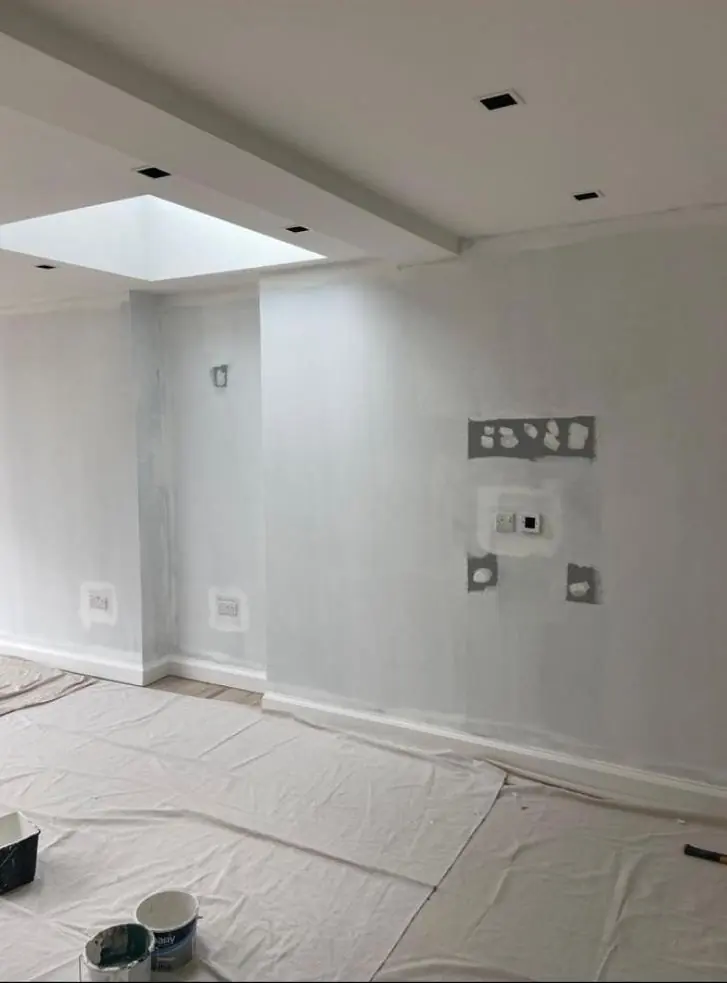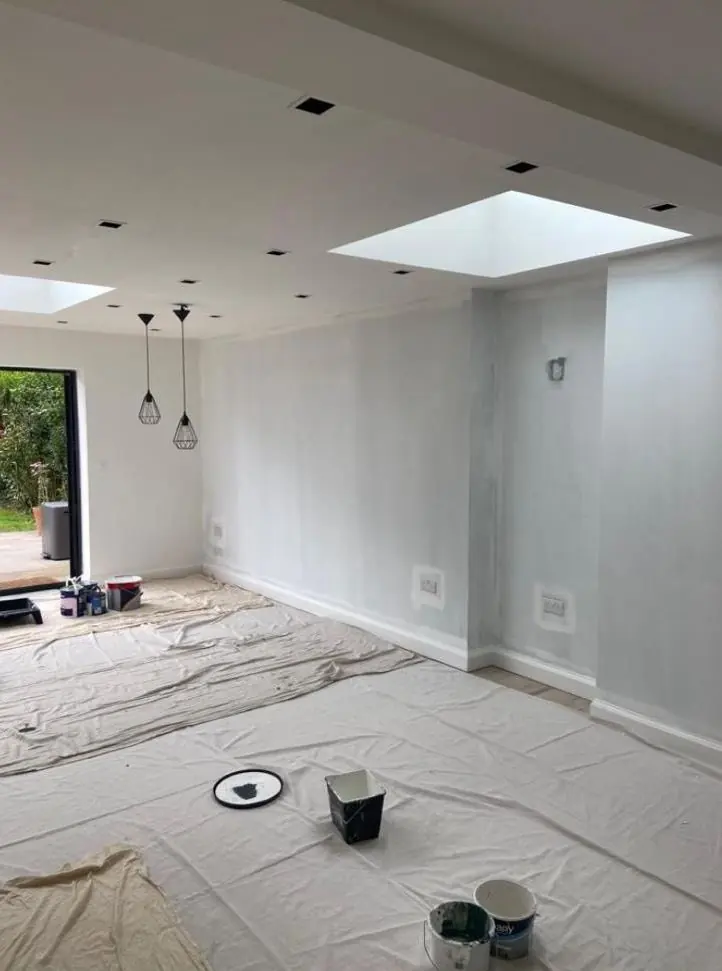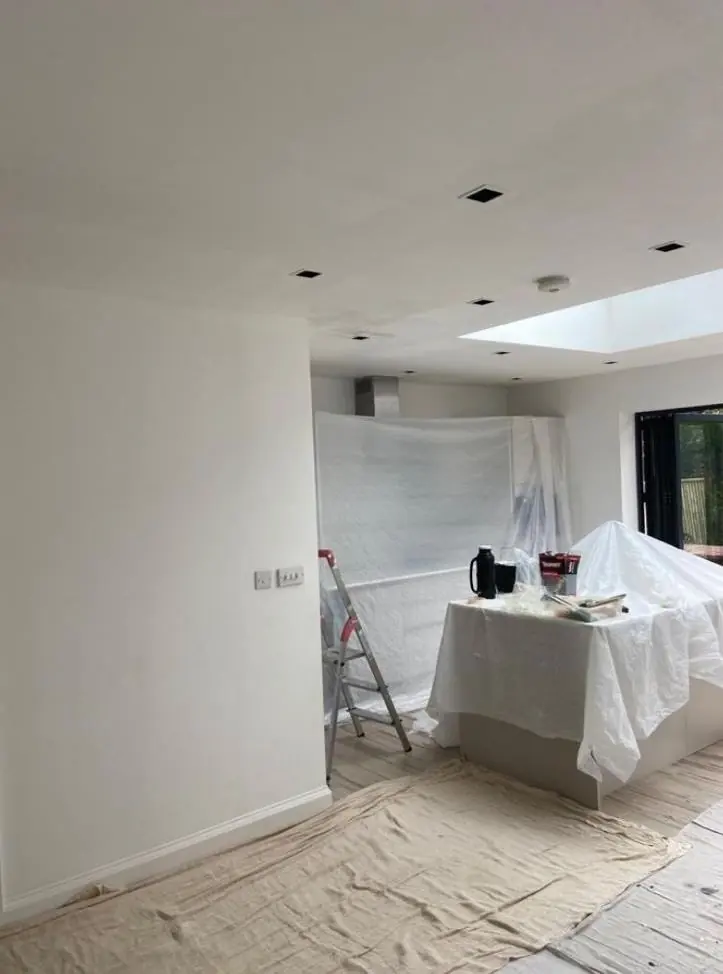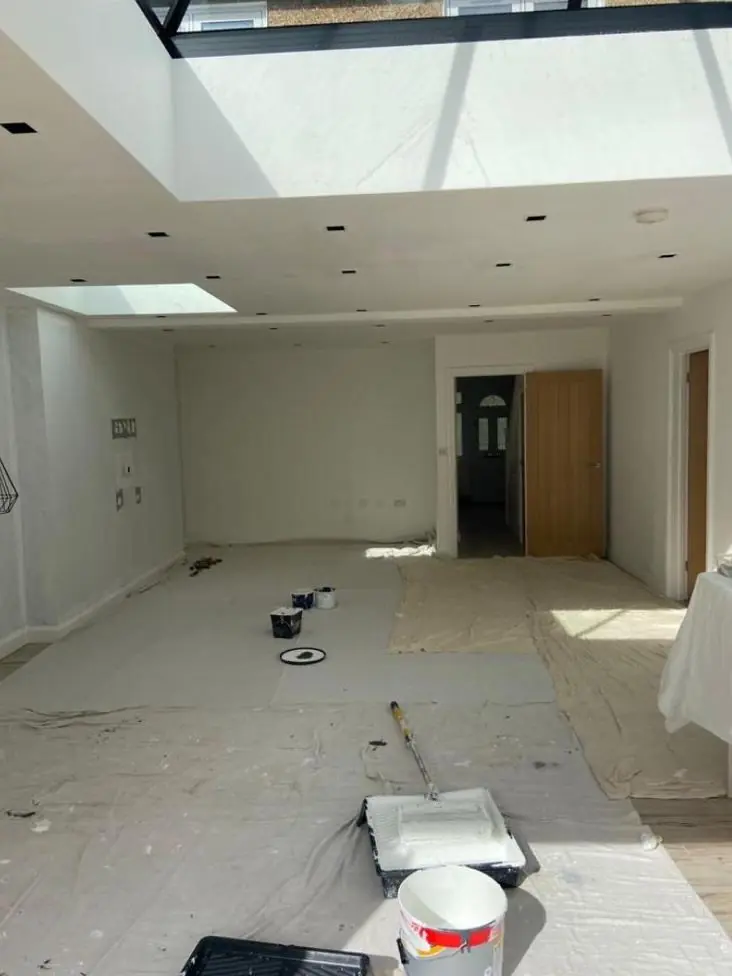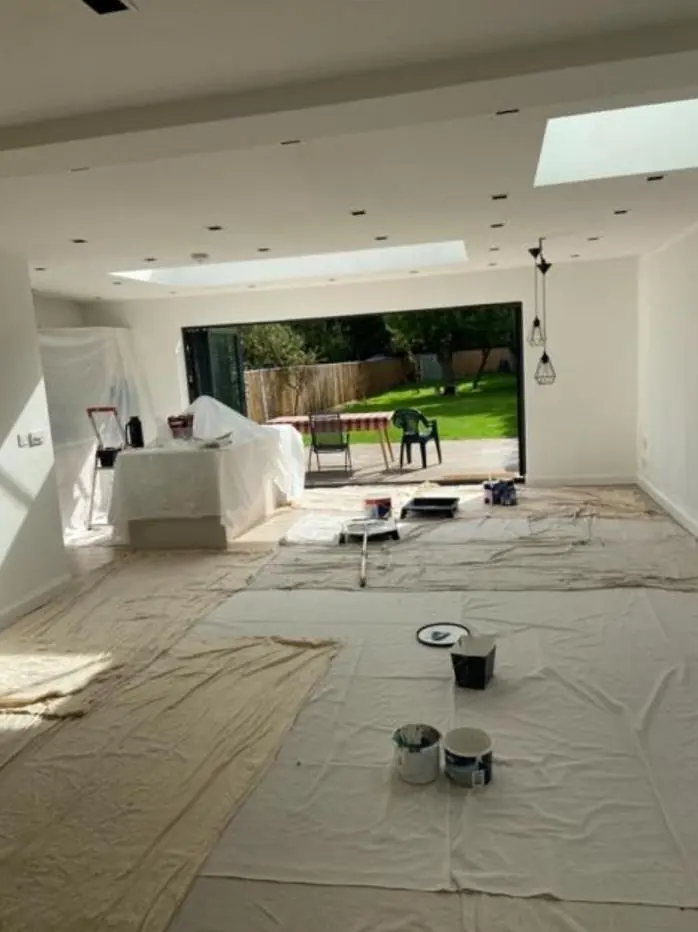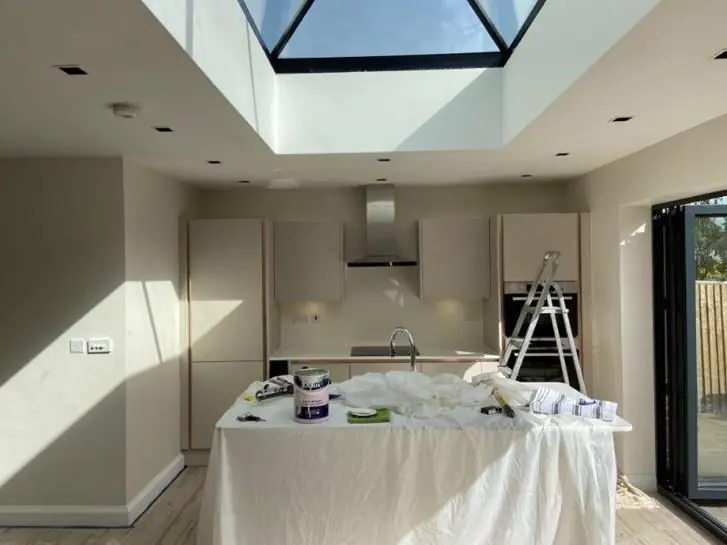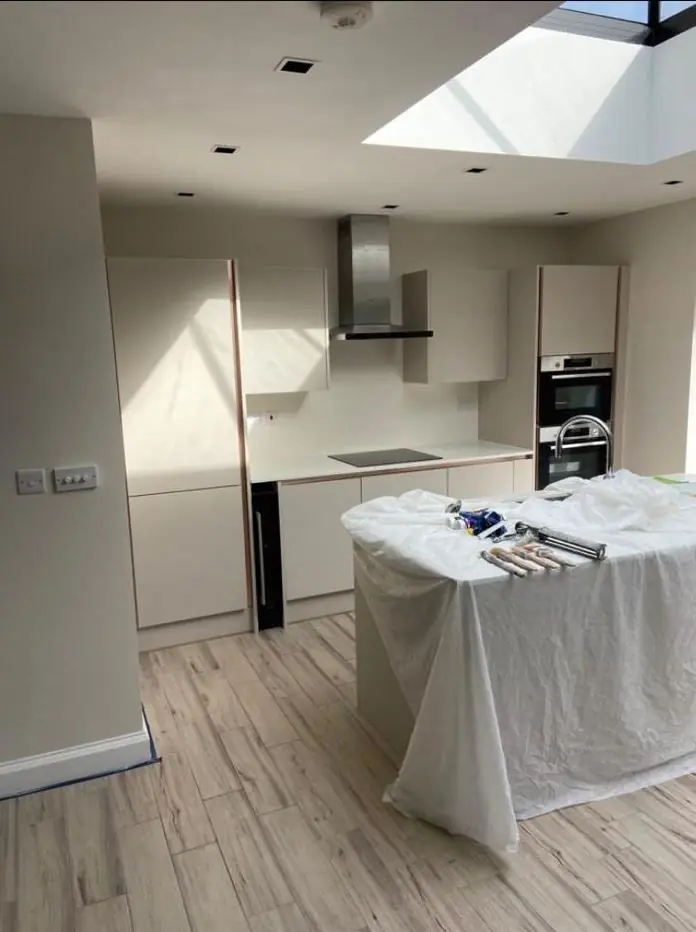
Dean decorates newly plastered rooms and extensions in Weston Favell, about 2.9 miles north-east of Northampton town centre. That covers the suburban NN3 houses, the late-20th-century closes in the village, and extension work beside the conservation area's old stone buildings.
Where new plaster turns up in Weston Favell
New plaster here comes from three directions. The suburban houses built after the 1920s get kitchen and rear extensions, loft conversions and re-skimmed rooms like anywhere else in Northampton. Inside the village, the later infill closes such as Kestrel Close, The Smithy and The Mews are modern houses that take re-skims and updates like any other. And in the old stone cottages, plaster repairs and small extensions bring new gypsum up against walls that were finished in lime many years ago.
Each needs the same first rule: let the plaster dry, then seal it with a mist coat that soaks in. The full method is set out in our mist coat guide and on the main new plaster and extension page. What follows is what is different about the job in Weston Favell.
New gypsum against old lime and stone
The cottages in the conservation area are built of coursed limestone rubble with solid walls. When part of a room is replastered in modern gypsum and the rest keeps its old lime plaster, the two surfaces behave differently. Gypsum wants a diluted contract emulsion as a mist coat. Lime plaster needs to stay breathable, so heavy vinyl paint across the whole room can trap moisture in the old wall.
Our usual answer is to treat the room as one surface with two substrates. We mist coat the new gypsum, then choose a finish that is breathable enough for the lime areas, so the room can be painted in a single colour without the old walls suffering. The joint between old and new plaster usually shows as a fine crack in the first months. We fill and paint it once the walls have settled rather than hiding it straight away.
If the cottage is listed, the work around the plaster may need listed building consent, and new work next to the village’s listed buildings is closely watched. That is a matter for your builder and the conservation officer, but it affects decorating too. If the approved plan names a specific finish or colour, we follow it.
Extensions on the suburban streets
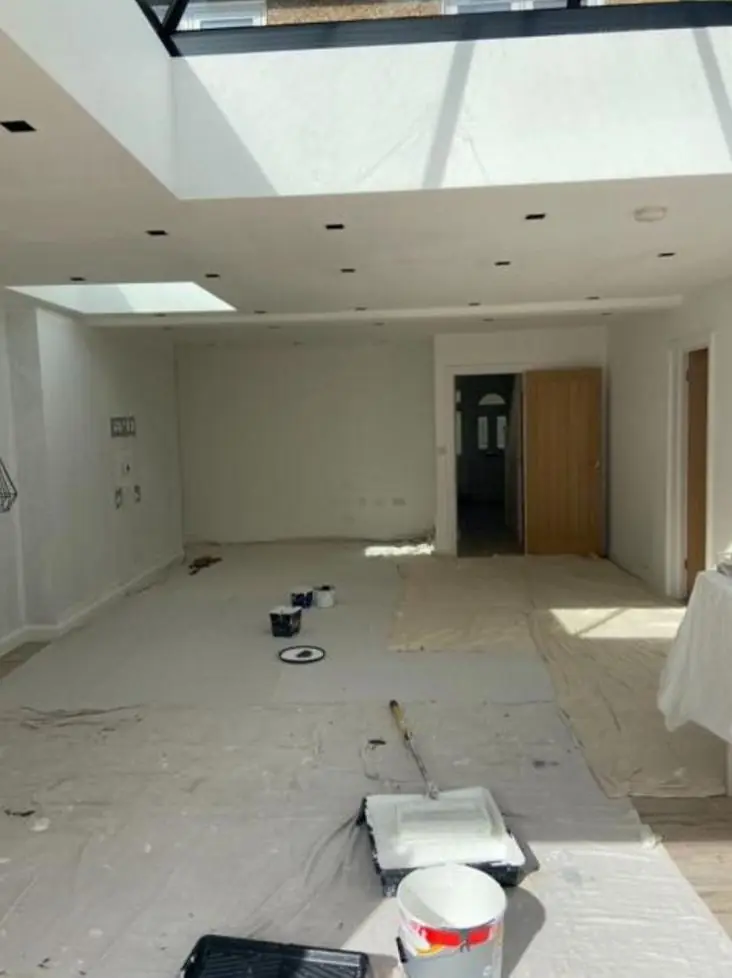
A rear extension on a 20th-century semi or detached house usually means a large area of new plaster, new skirtings and architraves, and a join where the old house meets the new room. The time-consuming bit is the snagging: the mist coat shows up every trowel mark, pin hole and small gap, and those are filled and sanded before the finish coats. New MDF or softwood trim is primed and painted, with joints caulked to the plaster.
| Situation | What we look at first |
|---|---|
| Fresh skim in a suburban extension | Even drying colour across the walls, especially behind radiators and in reveals |
| Patch repair in a stone cottage | Where gypsum meets lime, and which finish suits both |
| Newer house in Kestrel Close, The Smithy or The Mews | Standard mist coat and finish coats, matching the existing rooms |
| Loft or room-in-roof conversion | Plasterboard joints and angles that show once sealed |
Timing with your builder
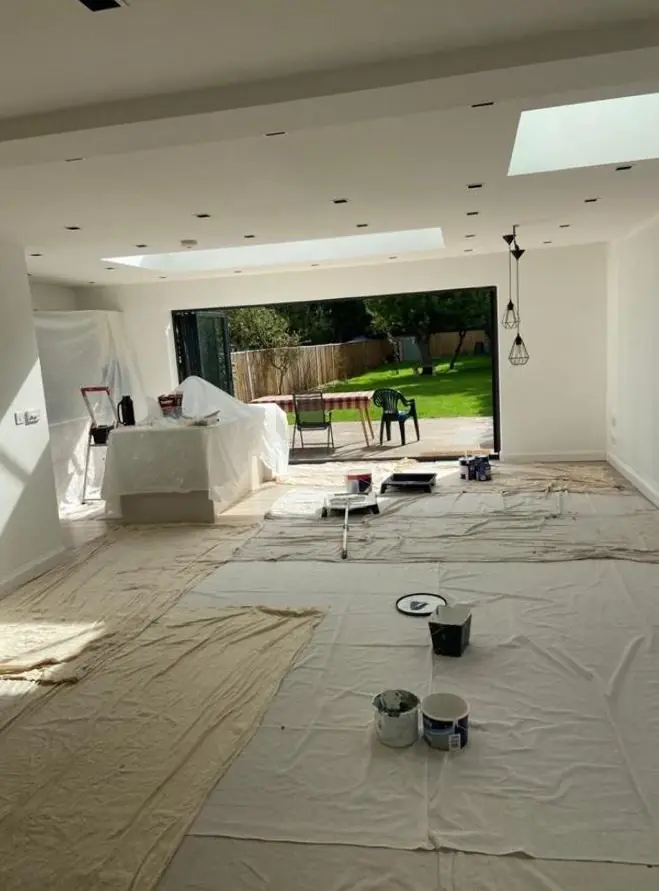
Most new plaster jobs go wrong because of timing. A skim coat needs to dry right through before the mist coat, and that takes longer in cold, damp months and in rooms with little air flow. Tell us when the plasterer finishes and we can check the walls before booking the decorating in. If you want a feel for the rest of the area’s housing, our Weston Favell area page covers it.
Last updated by Dean, DH Painter & Decorator.