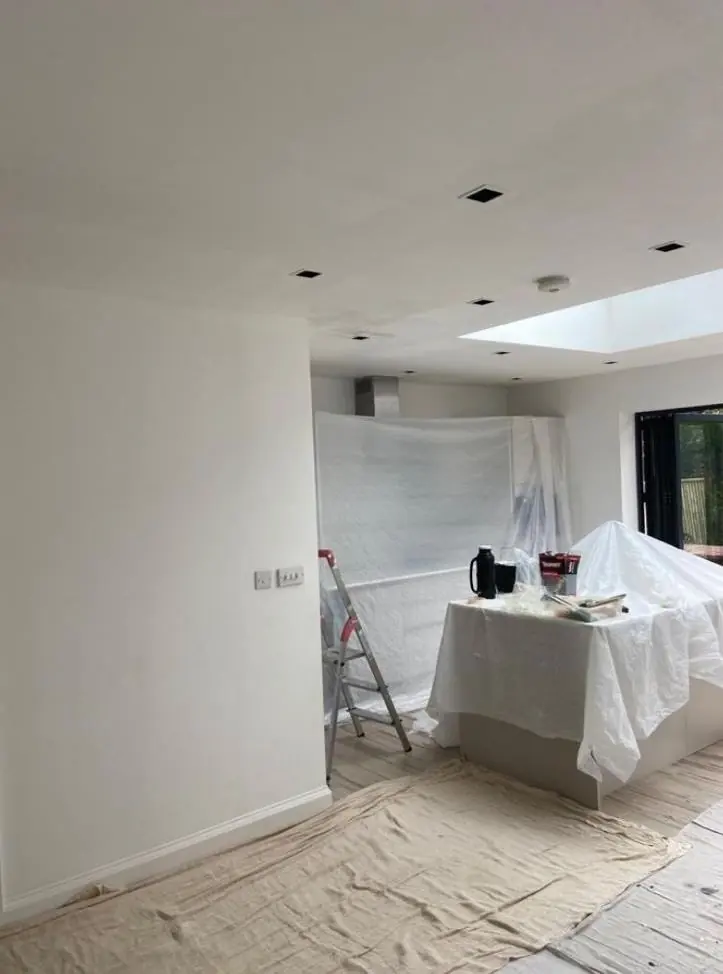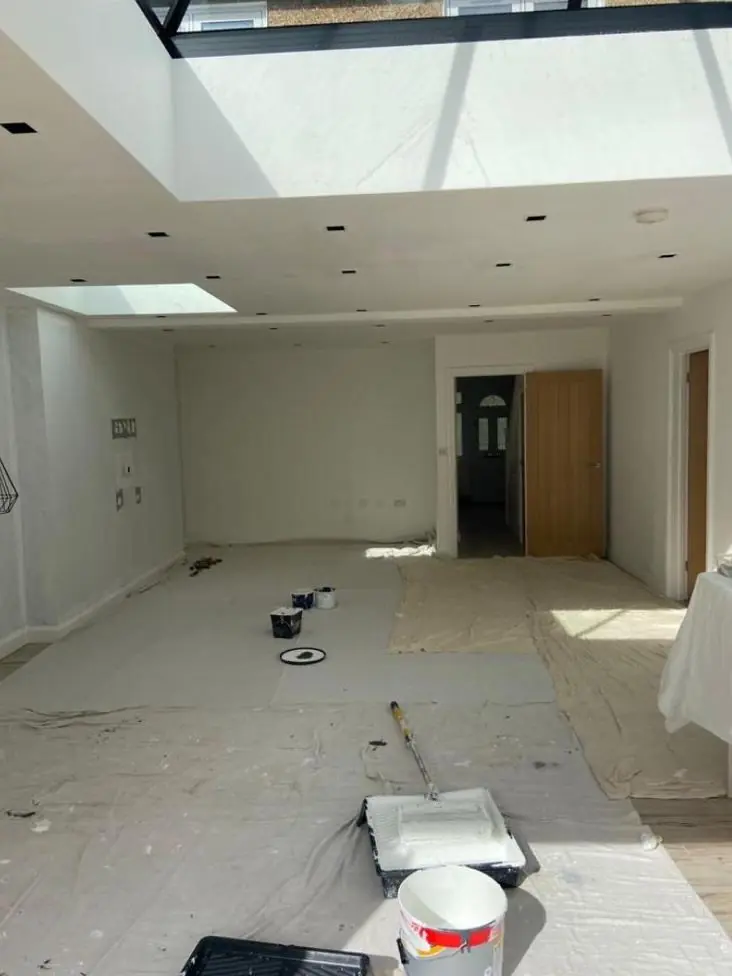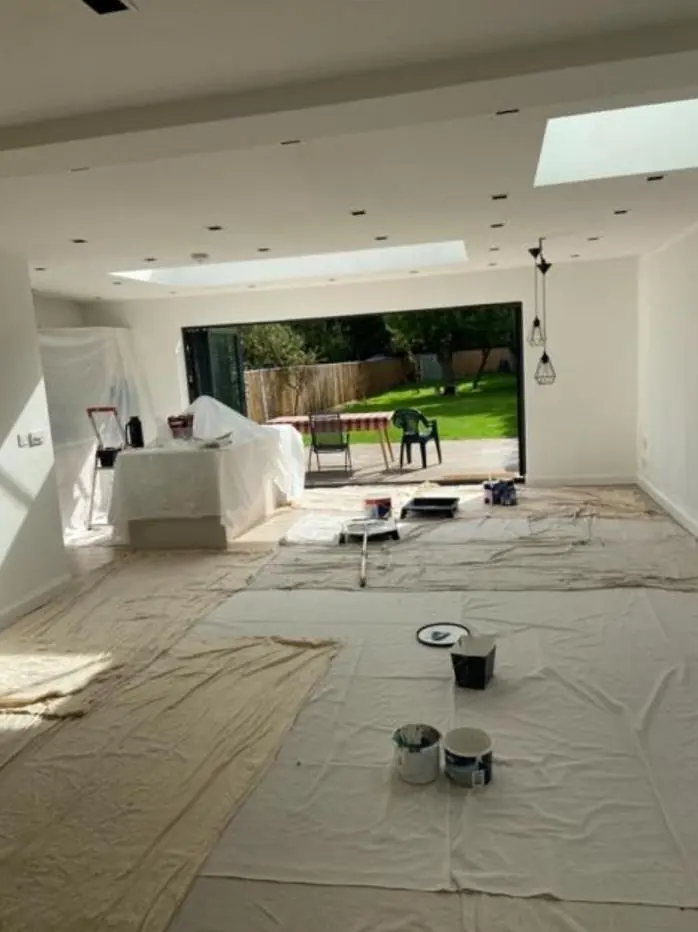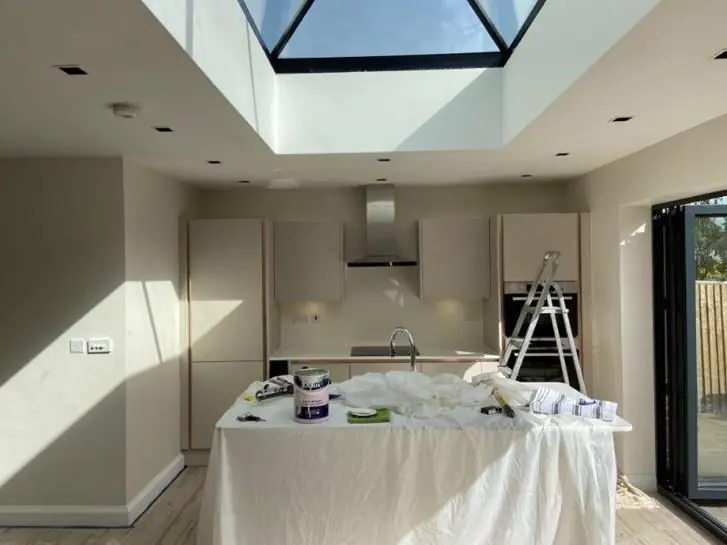
DH Painter & Decorator takes on commercial painting in Long Buckby, about 9 miles north-west of Northampton. Dean paints shop interiors, pubs, halls and community premises in the village centre, and plans exterior work around the conservation area appraisal and listed-building rules.
The village centre as a workplace
Long Buckby’s commercial centre grew up in the 19th century around the old market, and businesses still cluster around Market Place and along High Street, King Street and Church Street. The premises are mixed: small shops with timber shopfronts, pubs such as the Peacock and the Old King’s Head, chapels, the Long Buckby Community Centre on Station Road, and the former Co-operative Hall on the corner of High Street and Church Street, opened in 1910 and now a health and leisure club. Most sit inside the conservation area designated in 2021, and several are listed or locally listed.
None of the sources we checked names a business park in the village. The draft West Northamptonshire Local Plan proposes about 4 hectares of employment land at Long Buckby Station, but that is at consultation stage only.
Two pubs, two very different walls
The pubs show how varied commercial exteriors are within one village. The Old King’s Head, on West Street at the corner of Harbidges Lane, is Grade II listed, 18th century and thatched, built of coursed squared ironstone with a rendered front. A historic rendered wall like that needs a breathable, lime-compatible coating, and any change of finish or colour needs listed building consent. The Peacock Inn is locally listed and whitewashed under a slate roof. Whitewashed and limewashed walls should be recoated like for like in limewash or mineral paint, because plastic masonry paint over limewash tends to peel and holds moisture in the wall.
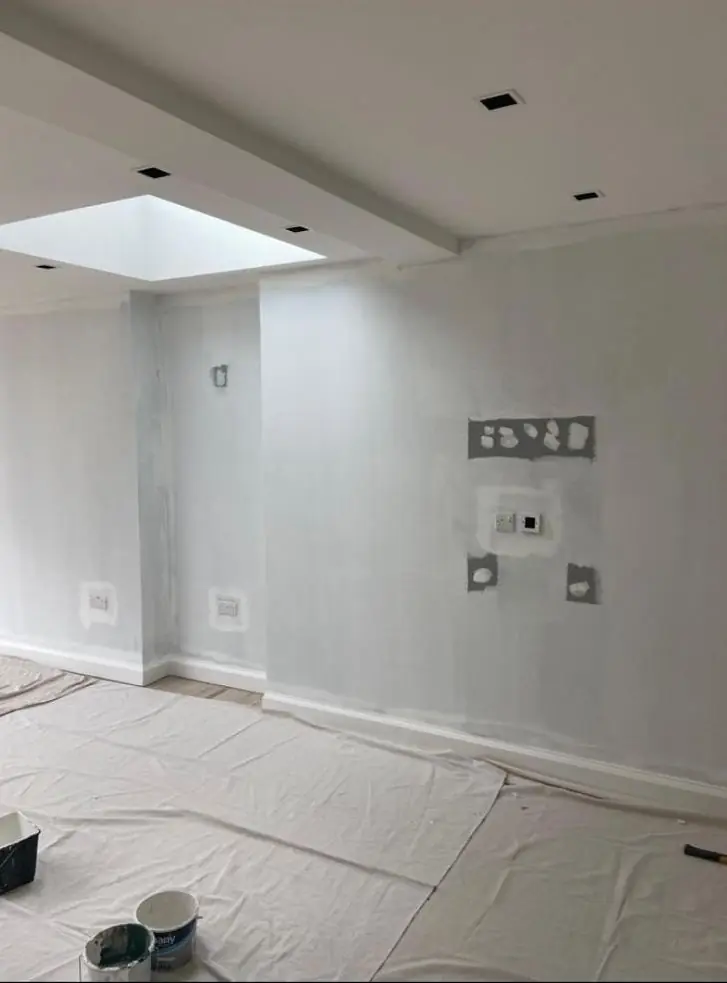
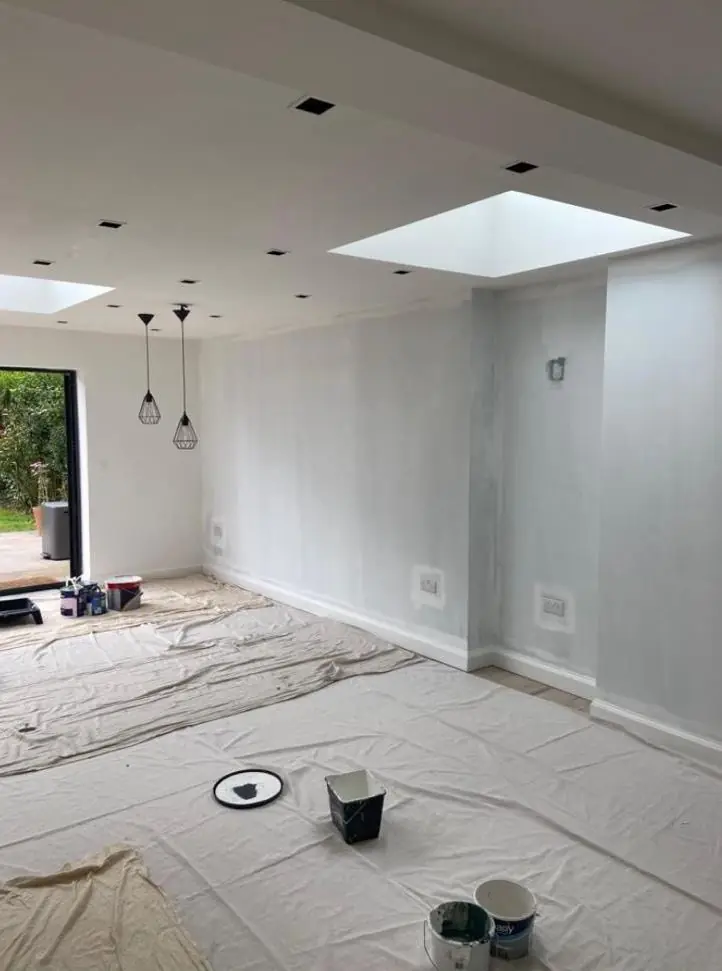
Inside a pub the priority is durability. Bar fronts, door frames and corridors take knocks every day, and kitchens and toilets need moisture-resistant finishes. We agree with you which areas can be closed off and in what order, so the business can keep trading while the work goes on. Low-odour, water-based paints help where a room has to reopen soon after painting. In an old building such as the Old King’s Head, interior walls may be lime-plastered, which brings the same breathability question indoors as out, and we check before choosing a paint.
Former factories and halls
The Community Centre occupies the former Fall’s, or Pinafore, shoe factory on Station Road, and the former Co-operative Hall of 1910 is now a health and leisure club. Converted industrial and civic buildings like these tend to have large openings and high-level joinery, so ceiling and upper-wall work usually needs a mobile tower and planning around bookings and opening times. The three-storey Castle Factory on King Street shows the same pattern, though it is now homes rather than business premises. Their brick facades were designed to be seen as bare brick, so outside the work is usually windows, doors, fascias and painted signage rather than the walls themselves.
Planning work in a tight centre
Buildings in the historic core sit hard on the street line, the middle of Market Place is used for parking, and lanes such as Church Street are narrow, so deliveries and tower or ladder positions have to be worked out before the job starts. Where a tower stands on the pavement, a licence or advance arrangement may be needed. The appraisal also sets the tone for colours: black for ironwork, white for timber windows, and sympathetic traditional shades for timber shopfronts, with uPVC fascias and large window decals discouraged.
For fascias, pilasters and stall risers in detail, see our shopfront painting page. The main commercial painting page explains how we quote and schedule business work, and the Long Buckby page covers the village as a whole.
Last updated by Dean, DH Painter & Decorator.