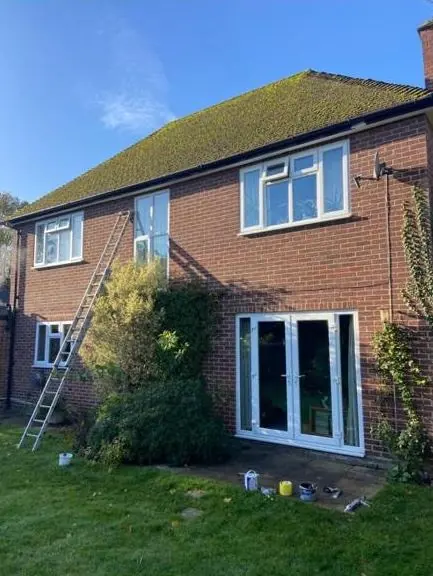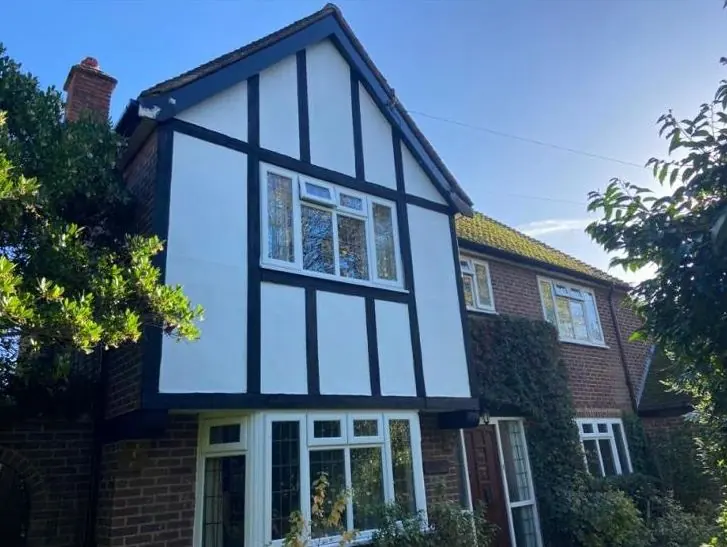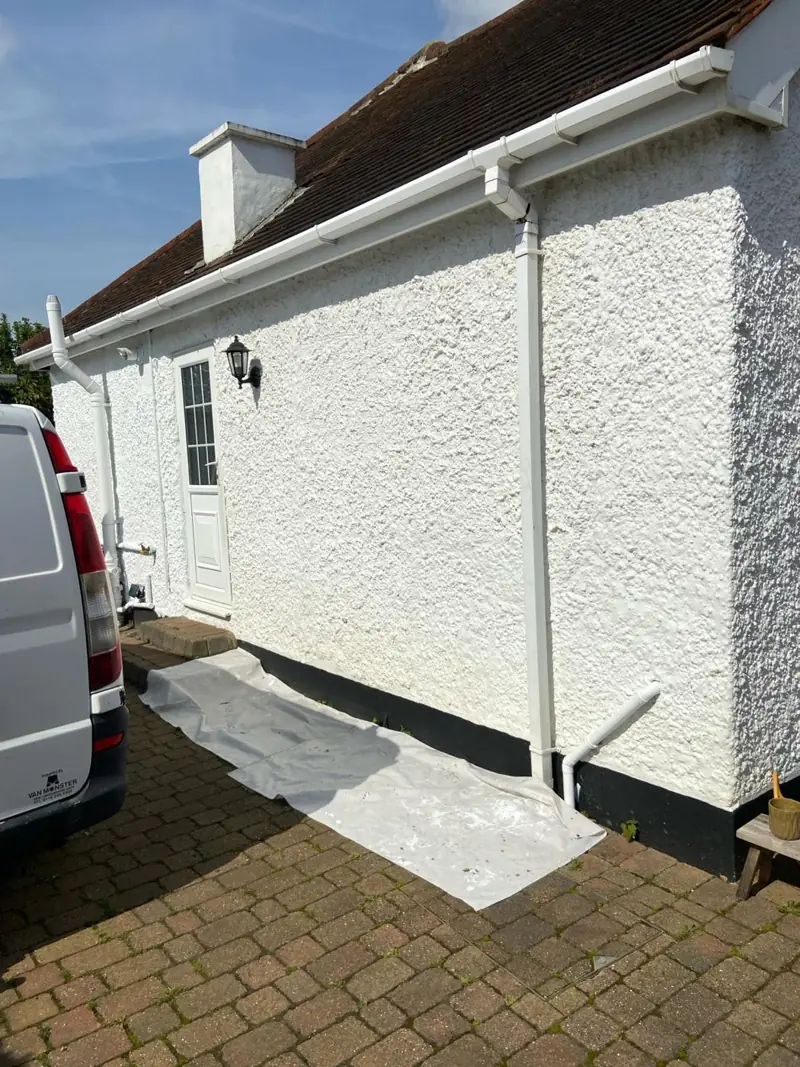
We paint render and masonry in Long Buckby, NN6, about 9 miles north-west of Northampton. Many of the village's older walls need limewash or a mineral paint rather than acrylic masonry paint, while estate houses outside the conservation area take a standard system.
Not every wall in Long Buckby should be painted
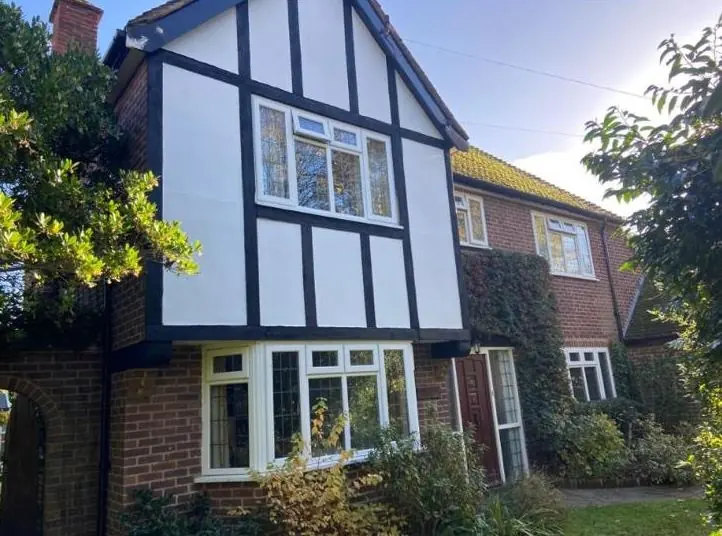
The first question on a Long Buckby masonry job is whether the wall should take paint at all. Coursed ironstone with its honeyed colour, laid in light lime mortar, and the Flemish-bond red brick of streets like The Banks were built to be seen. The conservation area appraisal adopted in March 2021 says rendering should be avoided and that masonry paint is often not acceptable on pre-1919 buildings. If you’re thinking of painting a bare stone or brick front to hide staining or old patch repairs, Dean will usually advise against it and suggest lime repointing by a mason instead, avoiding the ribbon or strap pointing the appraisal warns about. Paint on those walls is hard to get off again and holds moisture in.
Cob, lime and the oldest walls
Some of the oldest buildings are rendered or whitewashed by tradition. Nos. 10 and 12 Harbidges Lane, suggested as the oldest house in the village and dating from the late 15th century, are rendered cob. The Old King’s Head has its coursed ironstone rendered to the front, and the Peacock Inn is whitewashed. Cob is earth, and it relies on drying outwards through its render and finish. Put a plastic masonry paint over it and moisture that used to escape stays in the wall, softening the cob and loosening the render.
On walls like these the recoat should match what’s already there:
- limewash, built up in several thin coats, where the wall was limewashed before
- a silicate or other mineral paint where a breathable but harder finish has been used
- no acrylic, elastomeric or textured “weatherproof” coatings
- a test of the old layers first, because a modern paint over lime flakes and has to come off before lime can go back on
Recoating limewash with limewash is like for like; swapping it for something else is a change, and on a listed building that needs listed building consent. We’d confirm that before booking.
Render and pebbledash on the newer estates
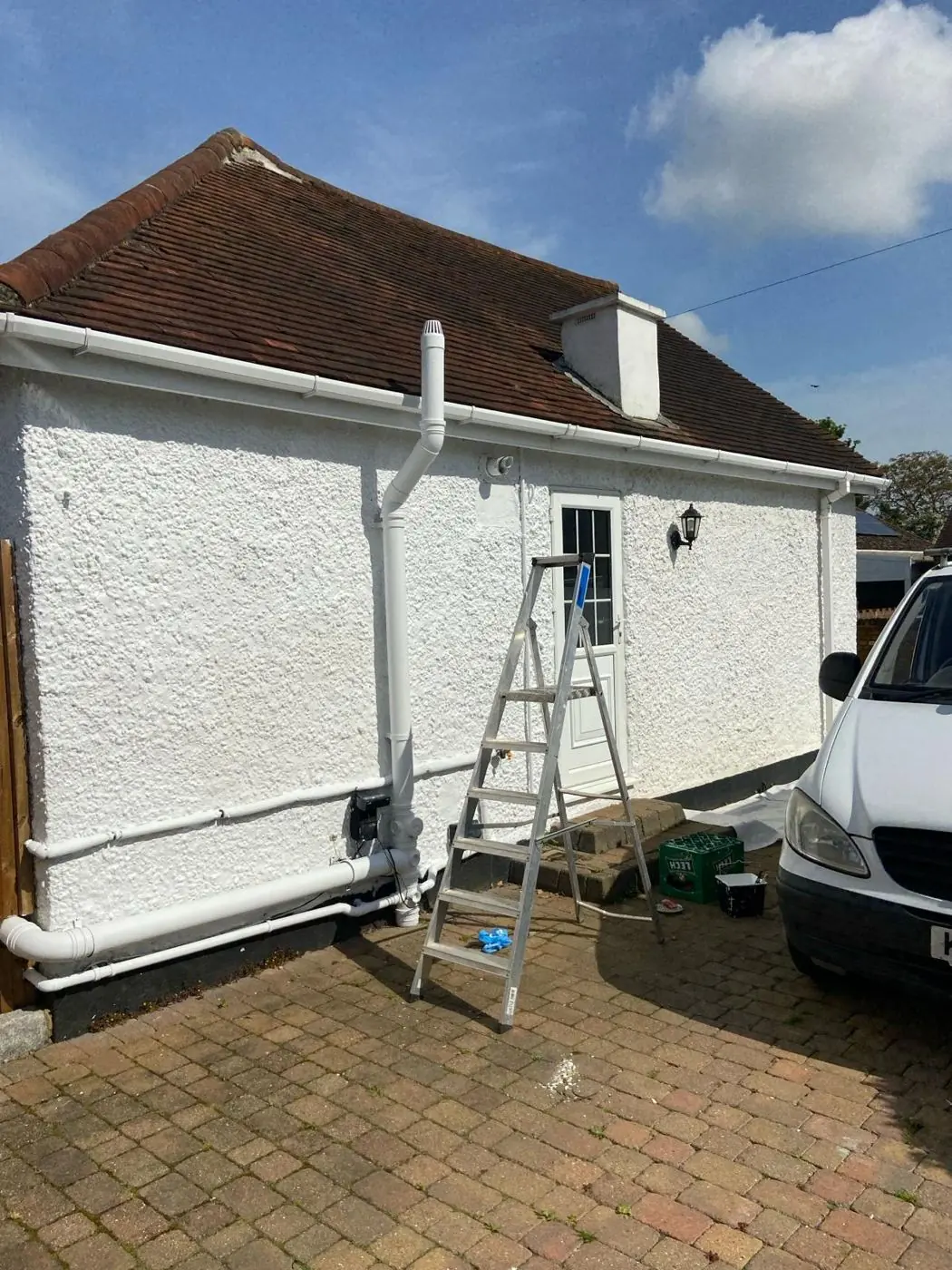
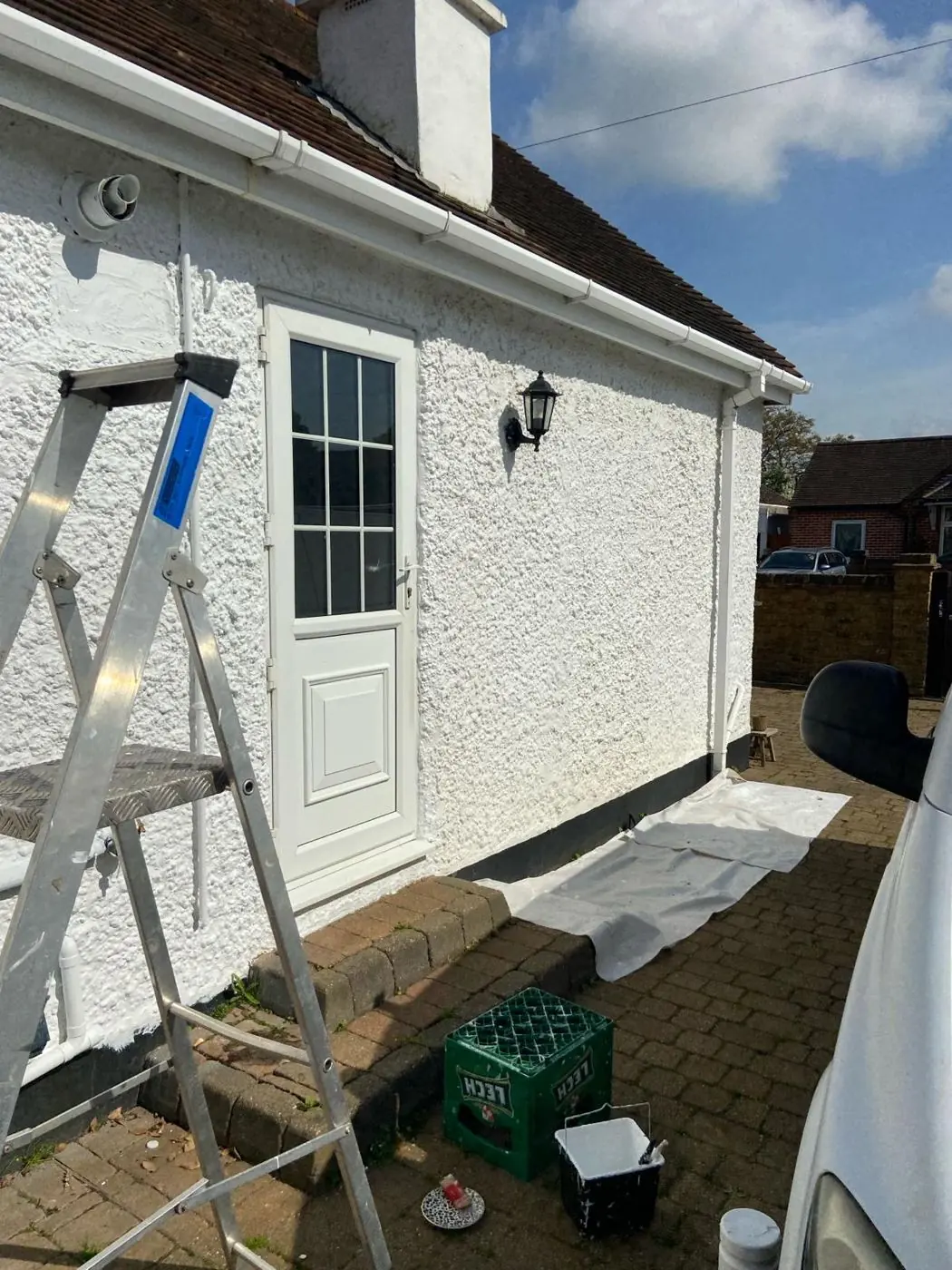
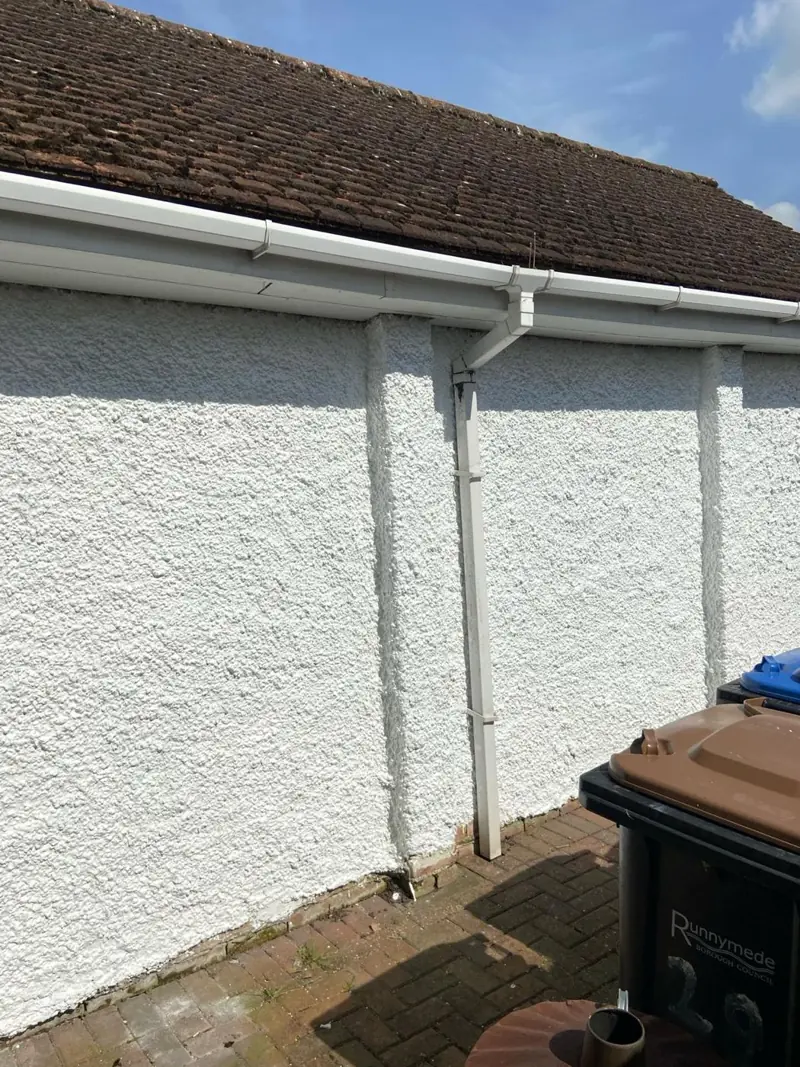
Houses built around Salem and The Mounts, along Station Road and north and south of High Street and East Street from the mid-20th century are a different job. Their construction isn’t recorded in the sources we rely on, so Dean checks each wall, but where these houses have sand and cement render or pebbledash, the usual sequence applies: wash, kill any growth, stabilise chalky patches, fill cracks and apply two coats of breathable masonry paint. There’s more on that on our render and masonry painting page and in our guide to painting render and roughcast.
Dashing isn’t only a post-war feature here. The 1894 infants’ school on High Street has pebbledash in its gable apexes, a reminder that late-Victorian buildings in the village can carry original dashed panels that belong to a pre-1919 building and deserve the same care as its brick.
Green walls under old trees, bleached walls on the ridge
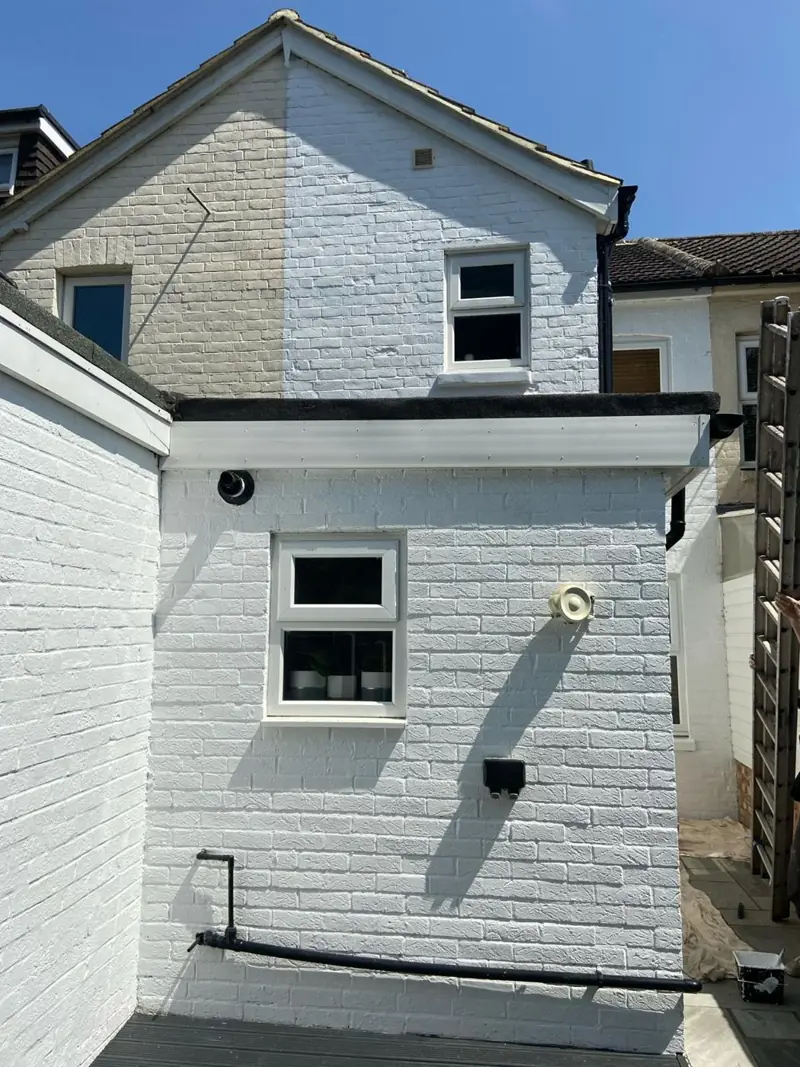
Long Buckby has a lot of mature trees close to houses: St Lawrence’s churchyard, the ring of trees around The Mounts, the earthen bank along Harbidges Lane and gardens such as Holly House and Orchard House. Some are covered by Tree Preservation Orders, so cutting them back to let light in isn’t simple. Walls in their shade stay wet, and algae and lichen settle on render and limewash alike. We treat growth with a biocide suited to the surface and leave it to work before brushing down, then allow longer drying than usual. Up on the exposed south and west faces the problem reverses: wind-driven rain and sun wear the finish thin, so those walls come round for recoating sooner.
Getting to the wall
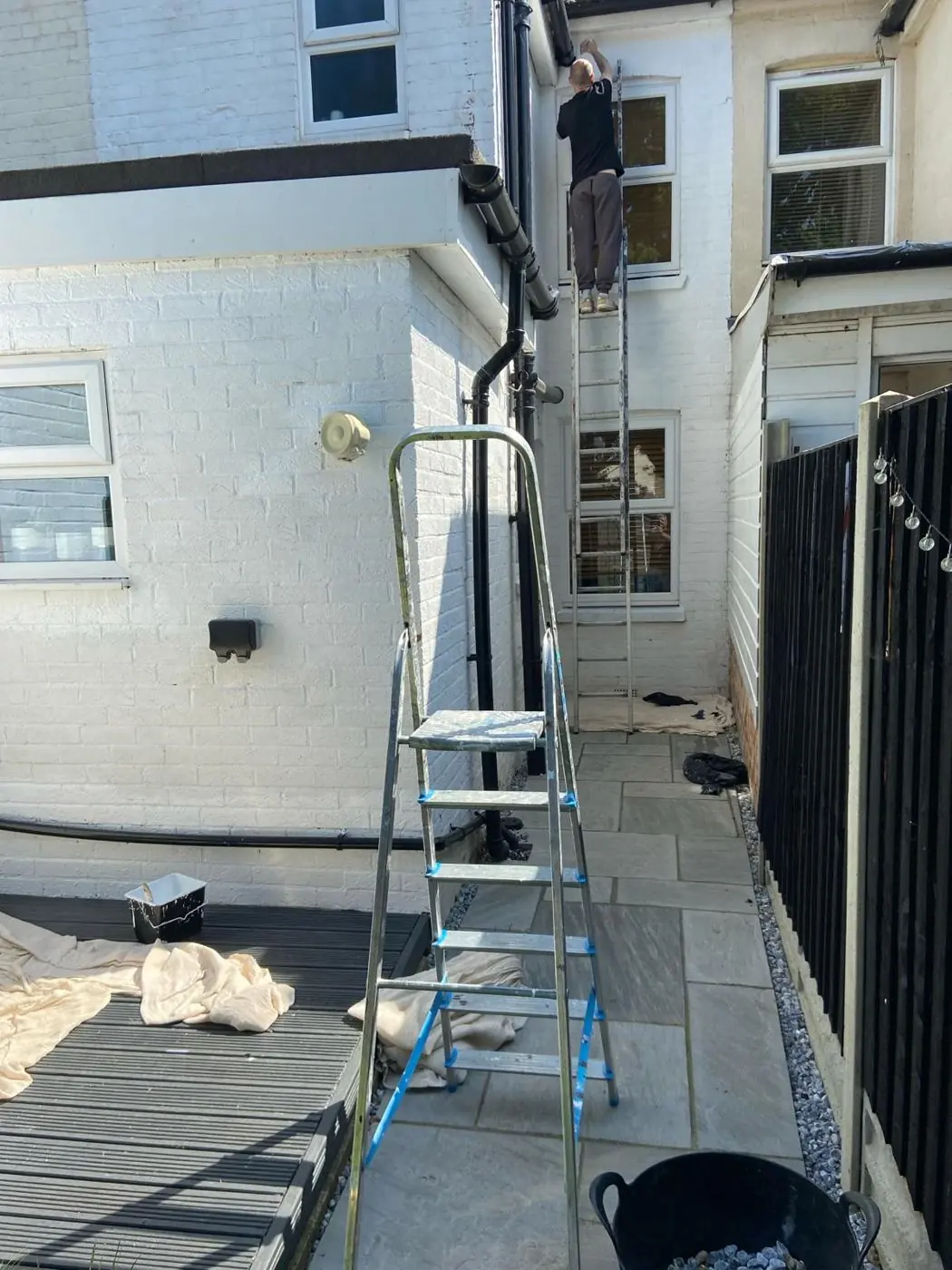
Rendered fronts in the old core usually sit straight onto the pavement or a narrow lane, with cars parked tight to the kerb. Limewash has to be protected from rain and fast drying for a day or two after each coat, so we may leave damp hessian or sheeting hung from a tower, which takes some planning with neighbours. We cover the village from Northampton, roughly 9 miles to the south-east, and there is more about local property types on our Long Buckby area page.
Last updated by Dean, DH Painter & Decorator.