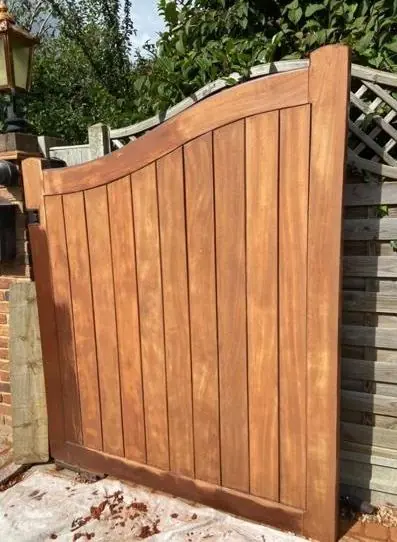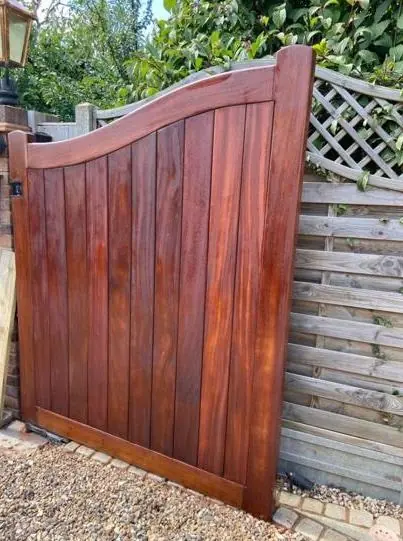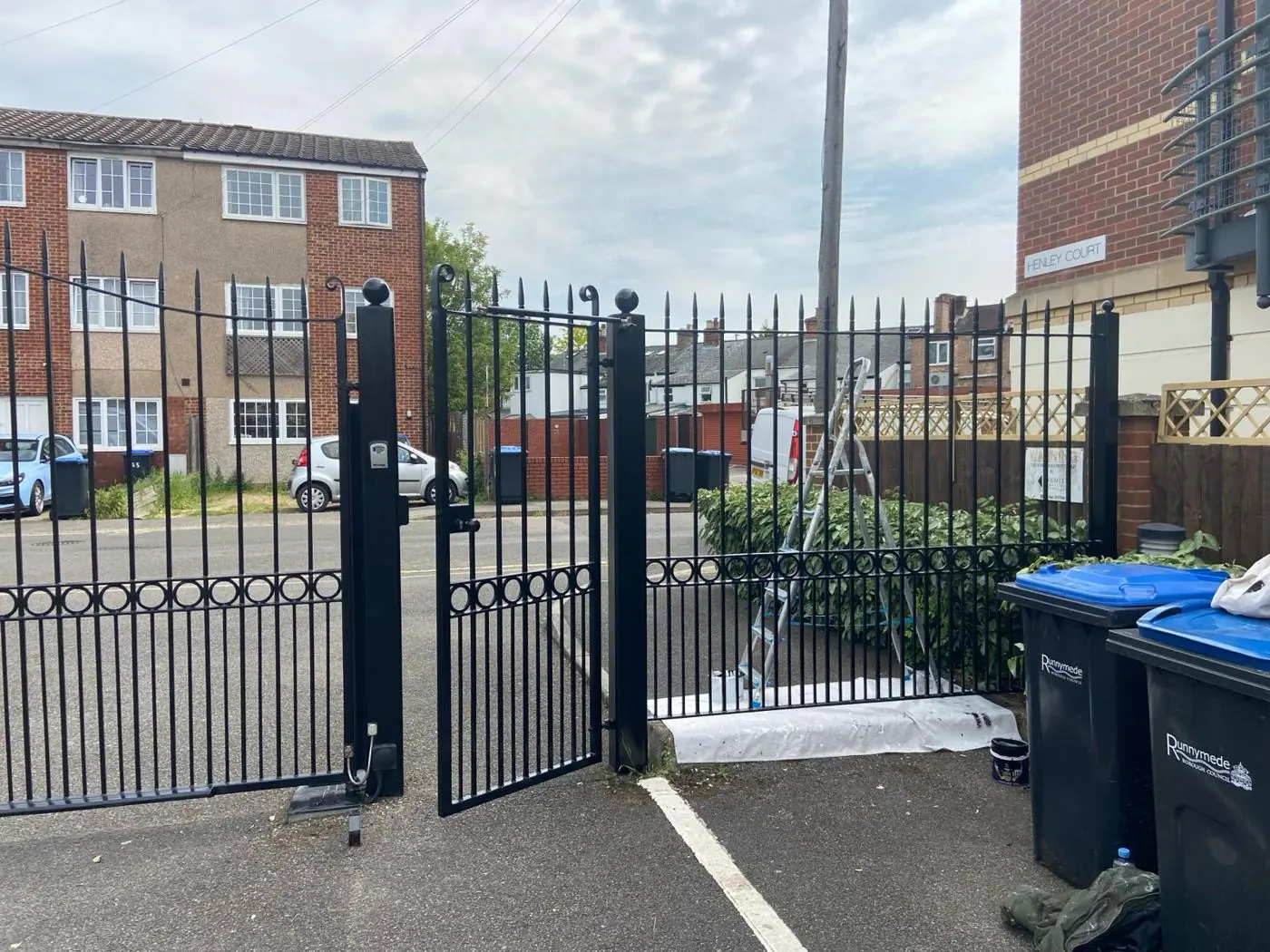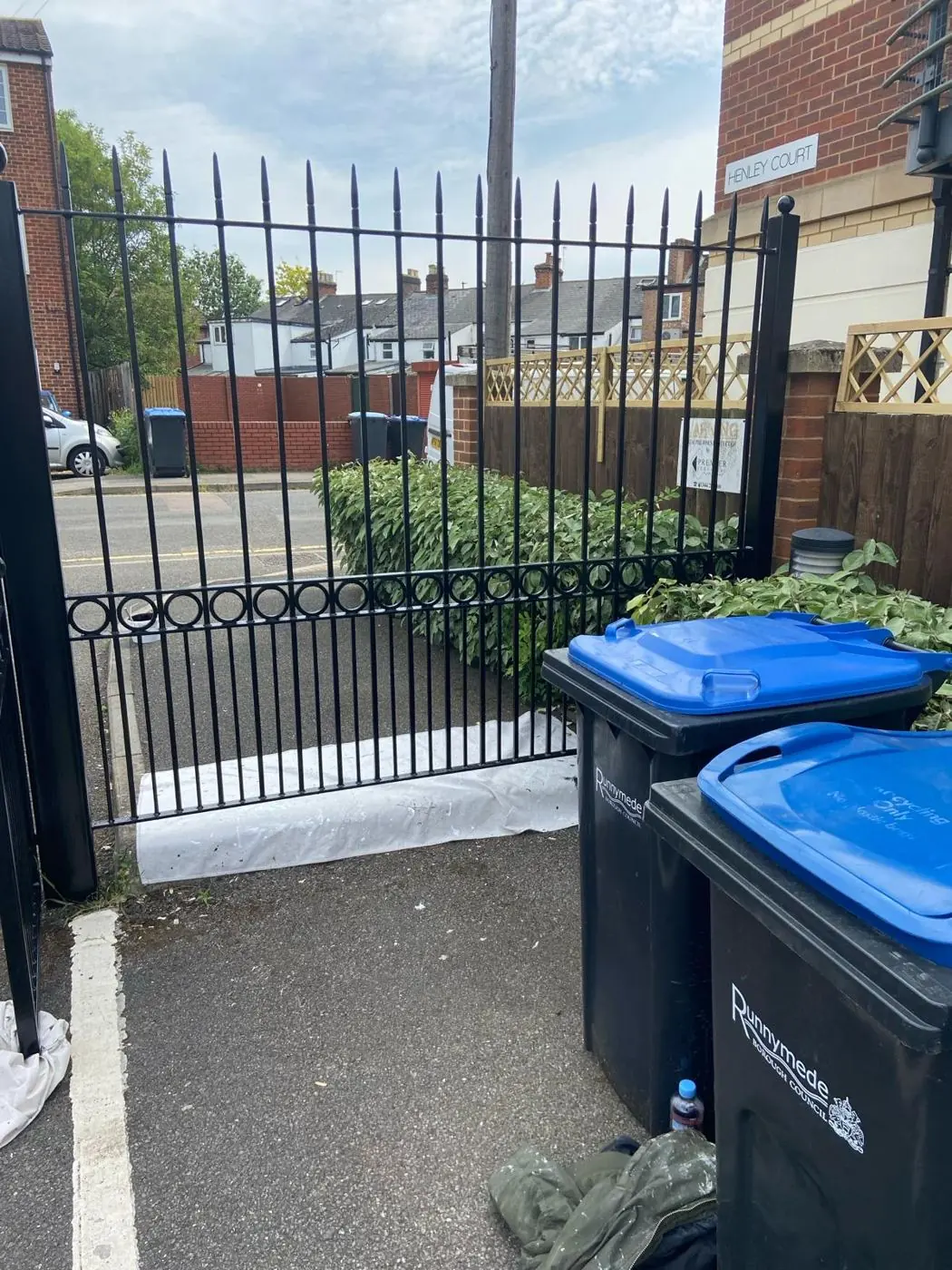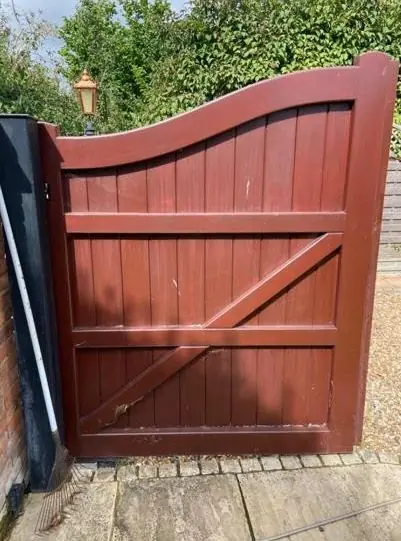
We stain and paint garden fences and timber gates in Long Buckby, NN6, about 9 miles north-west of Northampton. Most of the village's fencing is on the estates built since the 1960s, while the historic core has more stone walls, iron gates and painted outbuilding doors.
Where the fences actually are
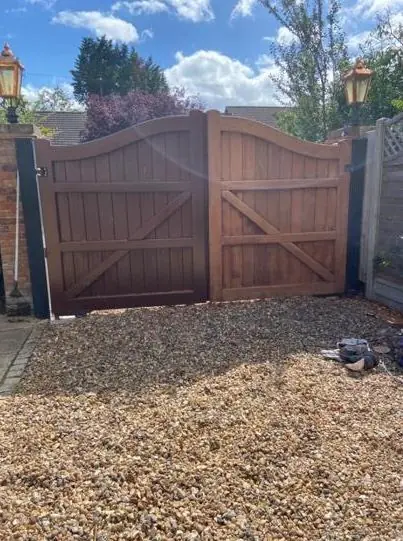
In the old core of Long Buckby, boundaries are mostly ironstone or brick walls, often with an iron gate, so there’s little fencing to stain on High Street or West Street. The timber is on the 20th and 21st-century estates: lap panels, feather-edge boards, side gates and gravel boards in the gardens around Salem and The Mounts, along Station Road, and in the closes off East Street such as Lime Avenue, Ashmore, Orchard Rise and Stenhouse Close. These are ordinary softwood fences, and they take a stain or fence paint brushed in after cleaning and drying. The general method is on our fence and gate staining page; the rest of this page is about what the village itself changes.
Fences that face the open country
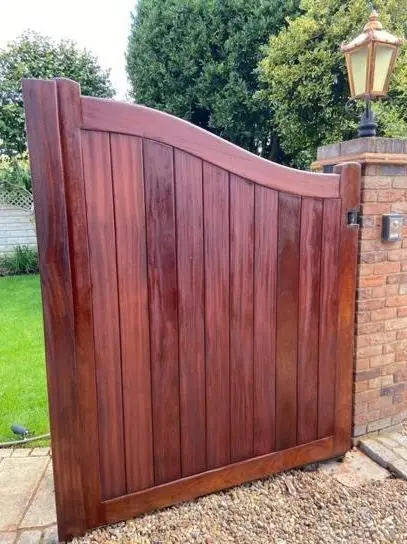
Long Buckby sits on a ridge, with the land falling away to the north, south and west and open countryside views to the north and west. Where a garden on the edge of the village faces that open ground, its boundary fence takes wind and driving rain with nothing to break it, and the side facing south or west bleaches and dries out faster than the side facing the house. For those runs Dean will usually suggest a heavily pigmented stain or an opaque fence paint, which shields the wood from sunlight better than a clear or lightly tinted finish. A sheltered fence between two neighbouring gardens can take a thinner stain that shows the grain.
Damp boards under protected trees
The opposite problem shows up near the village’s mature trees, some of which carry Tree Preservation Orders, around the churchyard, The Mounts and older gardens. Fences in their shade stay wet, turn green and get spotted with sap. Stain won’t take on a damp, algae-covered board, so these jobs start with a biocide wash and a proper drying period. That can mean waiting for a run of dry days rather than turning up the morning after rain. If you’re tempted to cut back a tree to help the fence dry, check whether it’s protected with West Northamptonshire Council first.
Garden workshops: paint, not stain
Many older houses in Long Buckby have a small brick or stone workshop at the end of the garden, left from the hand-sewn shoe trade, usually with a plank door, a large window and a chimney. The ones behind Nos. 45-53 East Street are listed. Their doors and frames are plain painted joinery, and a modern woodstain in a “natural oak” shade looks wrong on them. We recoat them in a simple paint that matches what’s there, over sound preparation, and on a listed workshop the existing colour stays unless consent says otherwise. The same thinking applies to the plank doors on cottage outbuildings in the conservation area, which the appraisal wants kept and repaired.
Getting into the garden
Estate houses usually have a side gate or a drive, so the fence is easy to reach. Older terraces are harder: front doors open straight onto the street, and the garden may only be reachable through the house or along a shared alley, as behind Holmfield Terrace in Salem. At the quote we explain how stain, sheets and brushes will reach the fence and how floors will be protected if we have to come through. On a shared boundary we stain only your face unless your neighbour agrees to both, and we hang sheets on their side to catch drips through the gaps.
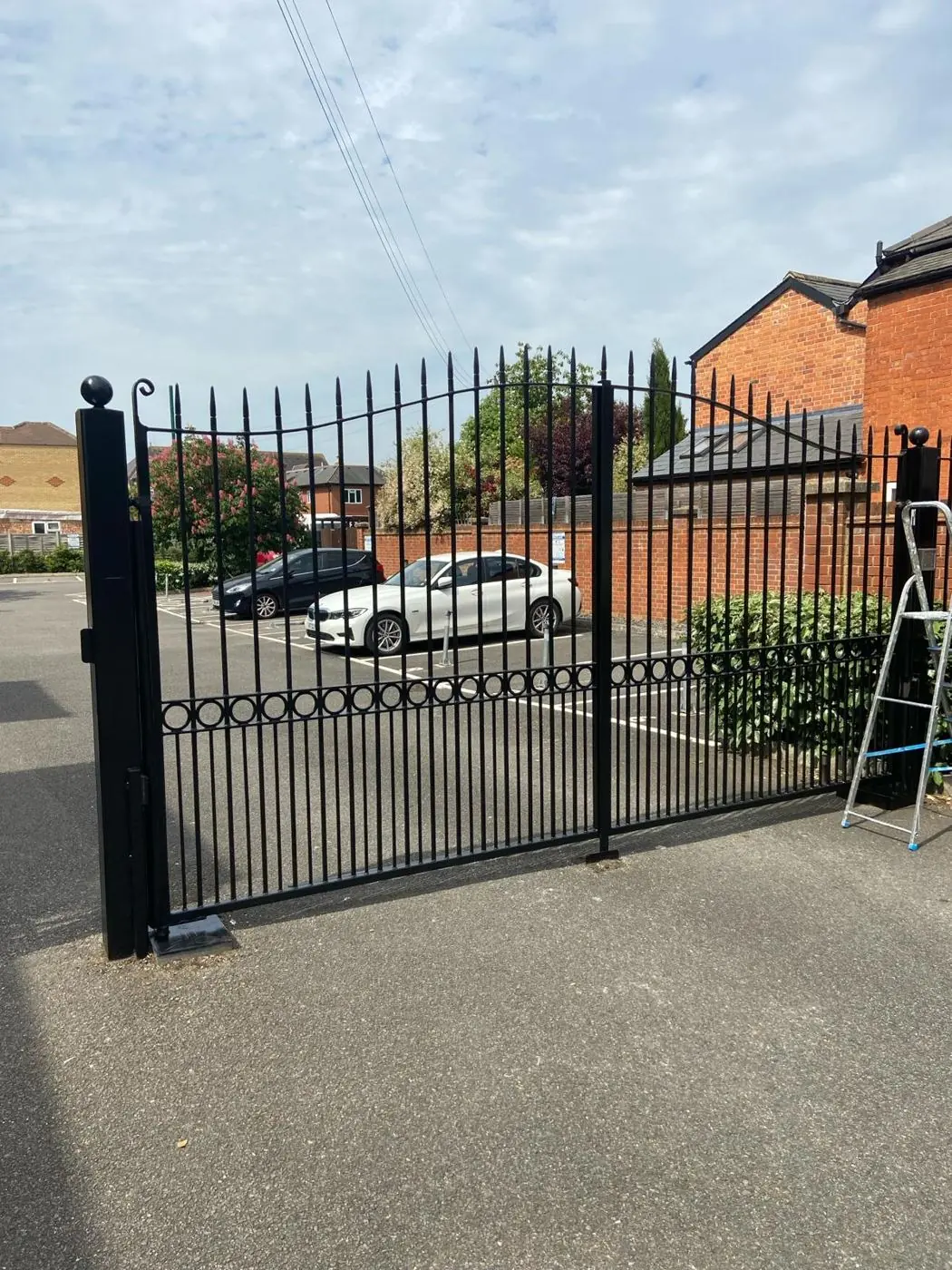
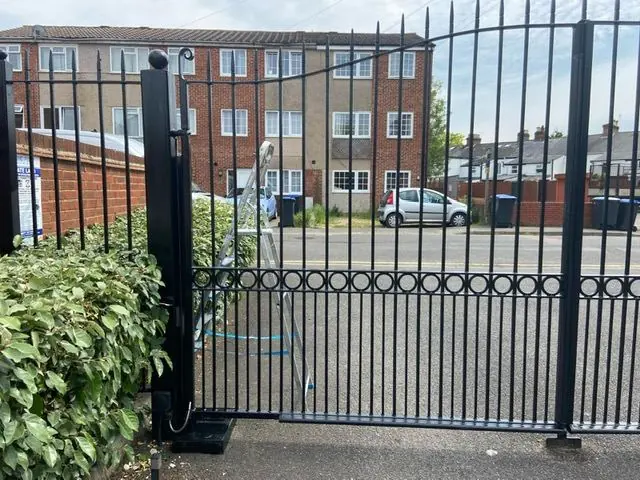
We cover Long Buckby from our Northampton base, around 9 miles to the south-east. Our Long Buckby page lists the other services we offer in the village, and if your gate is metal rather than timber, see our metal gate and railing painting instead.
Last updated by Dean, DH Painter & Decorator.