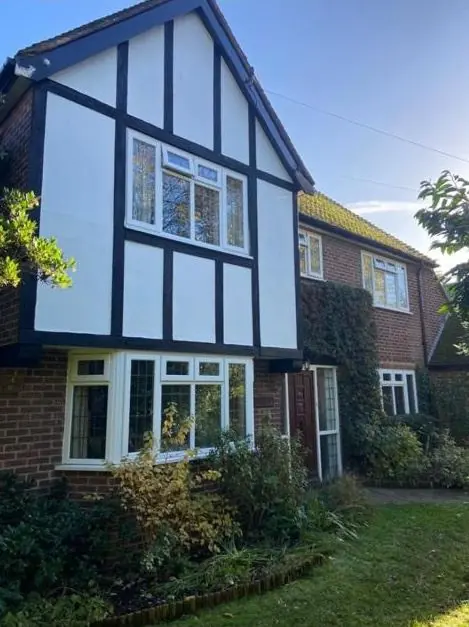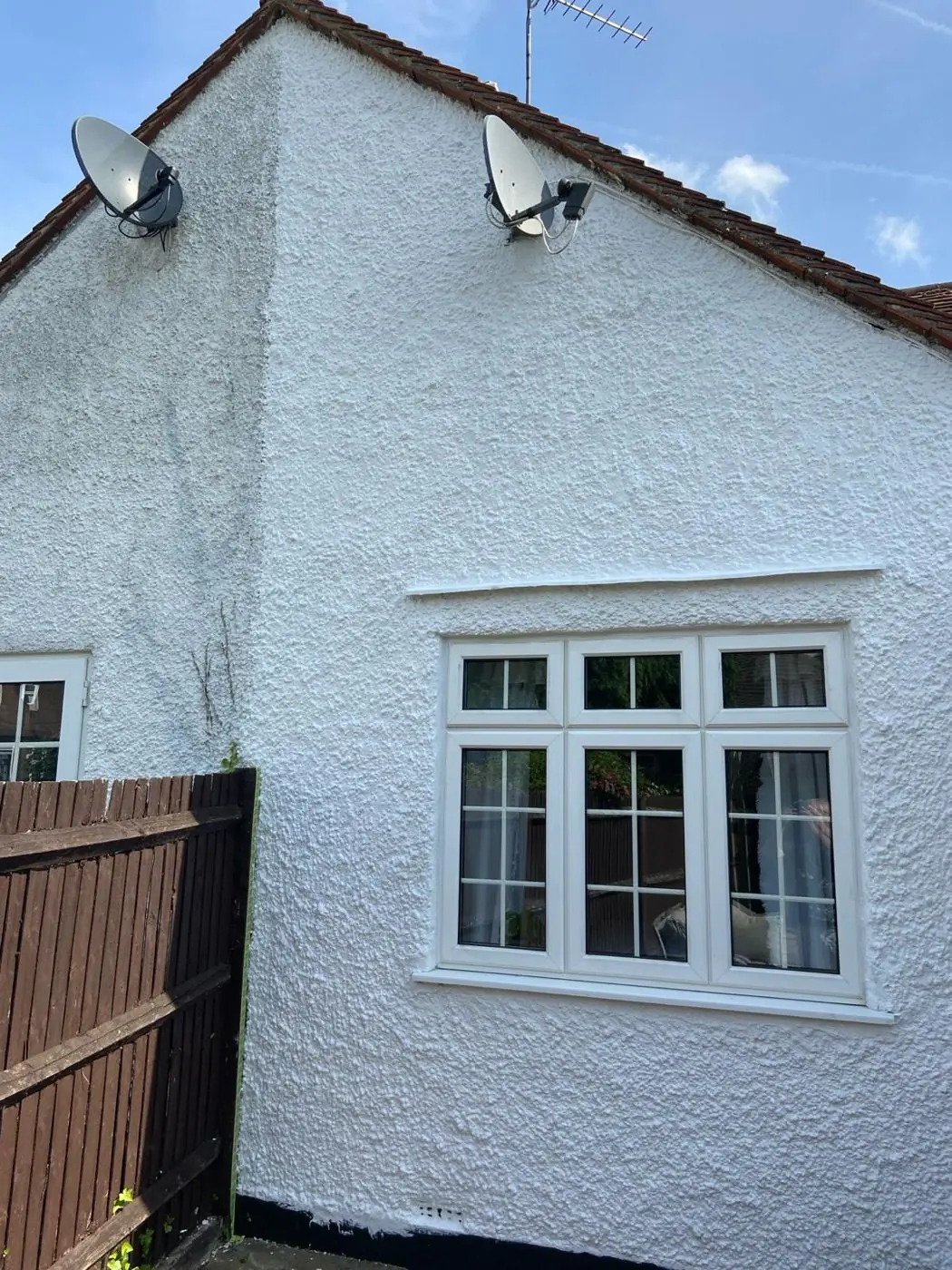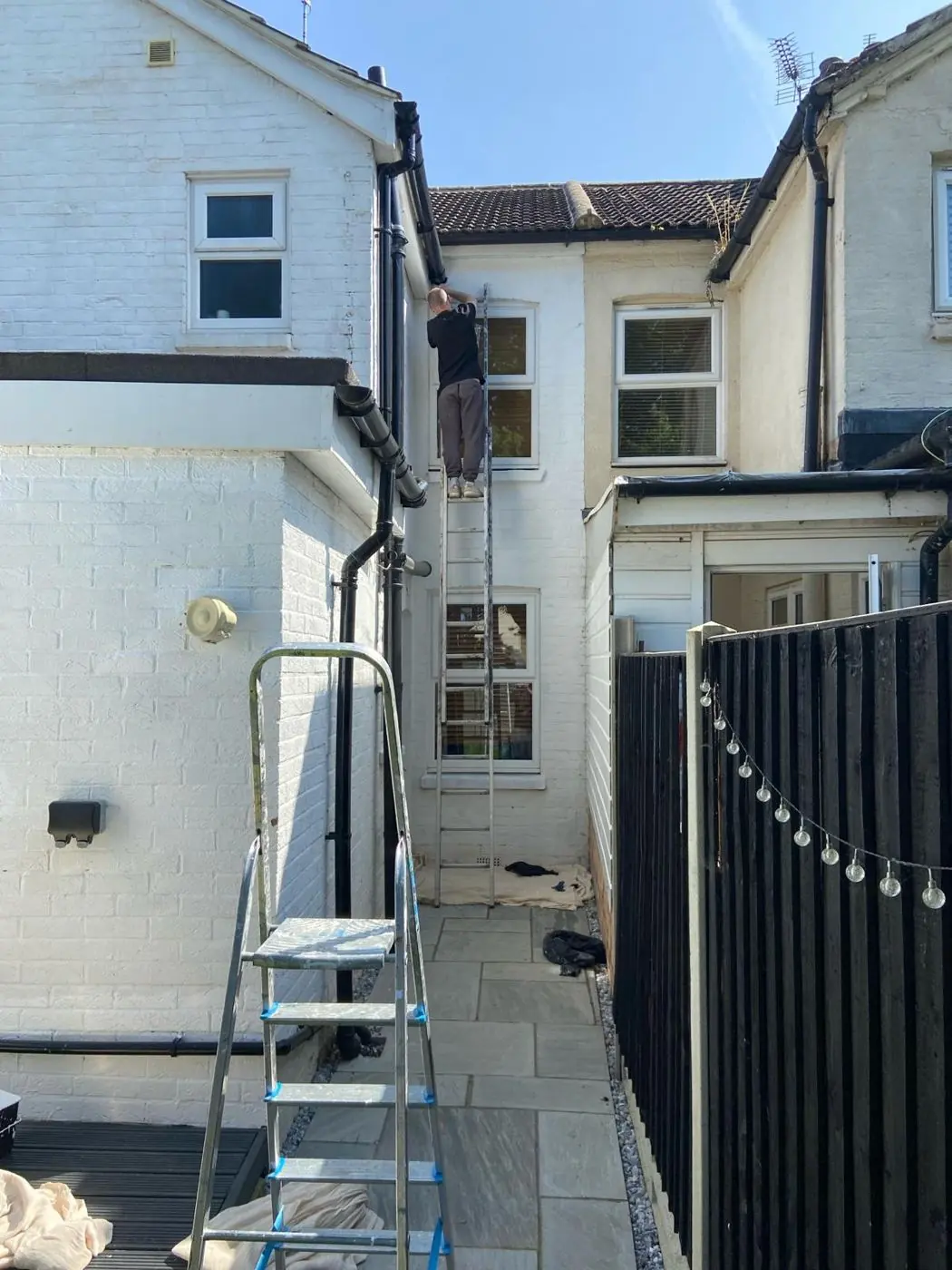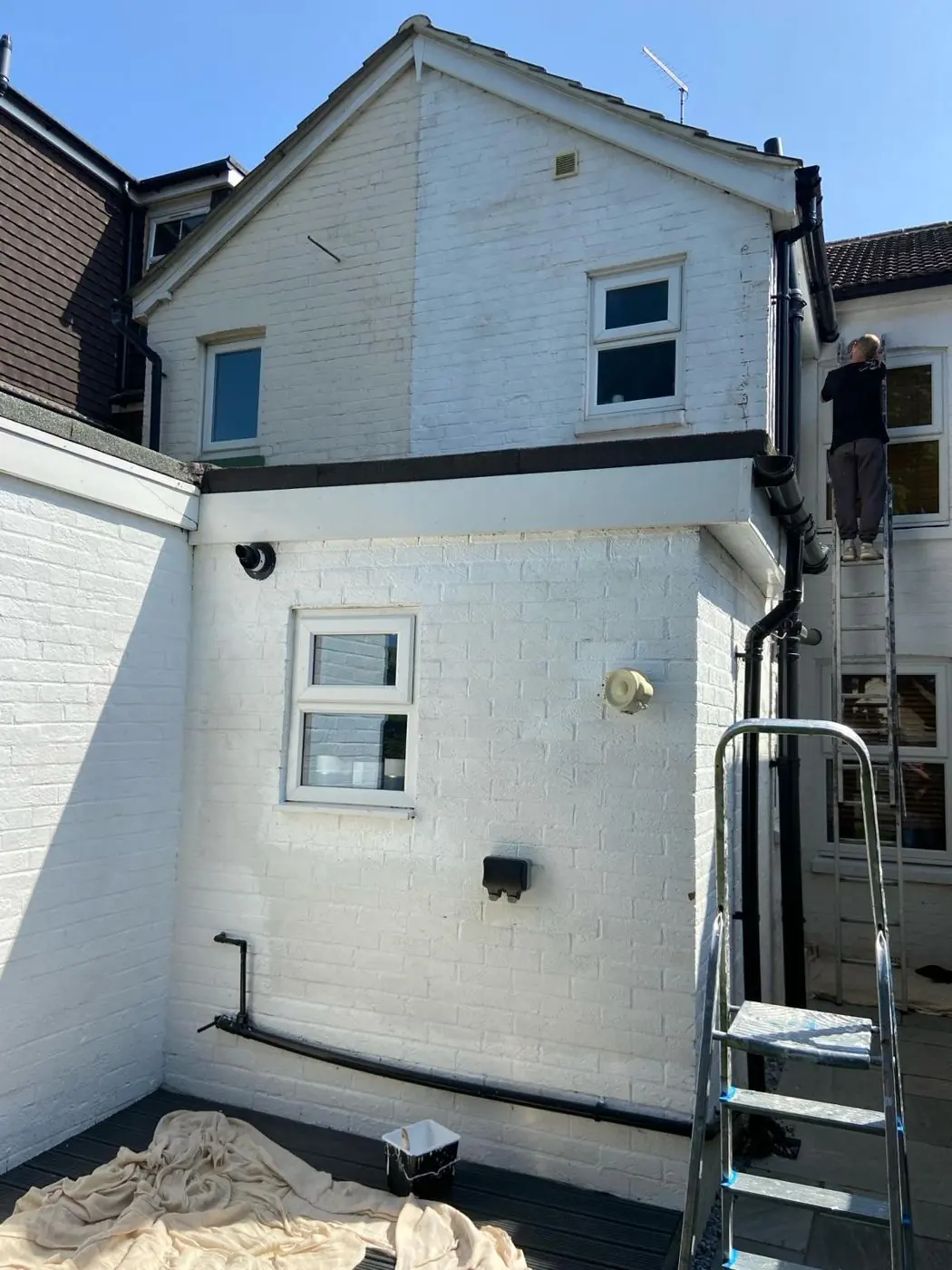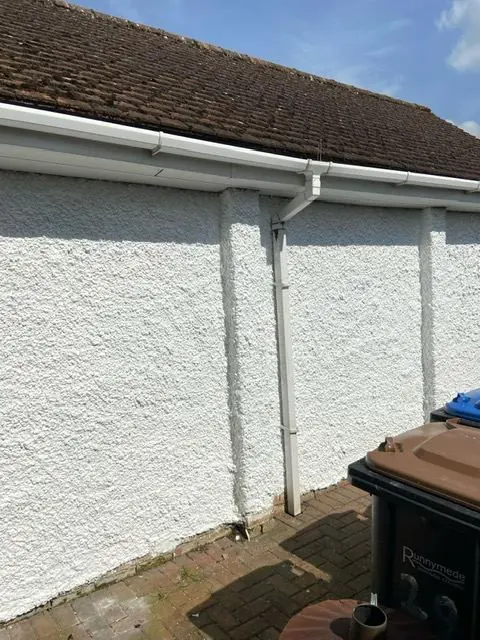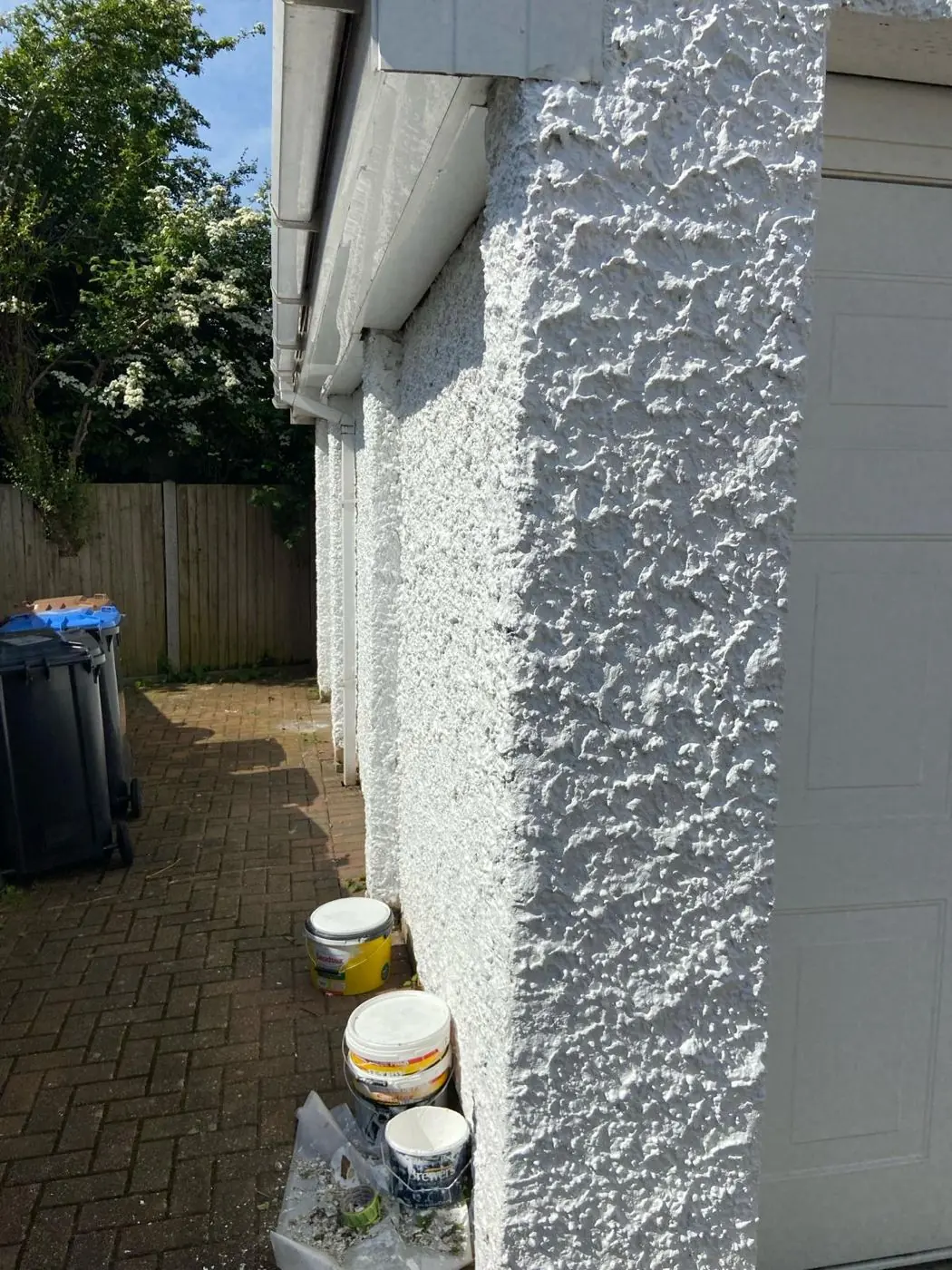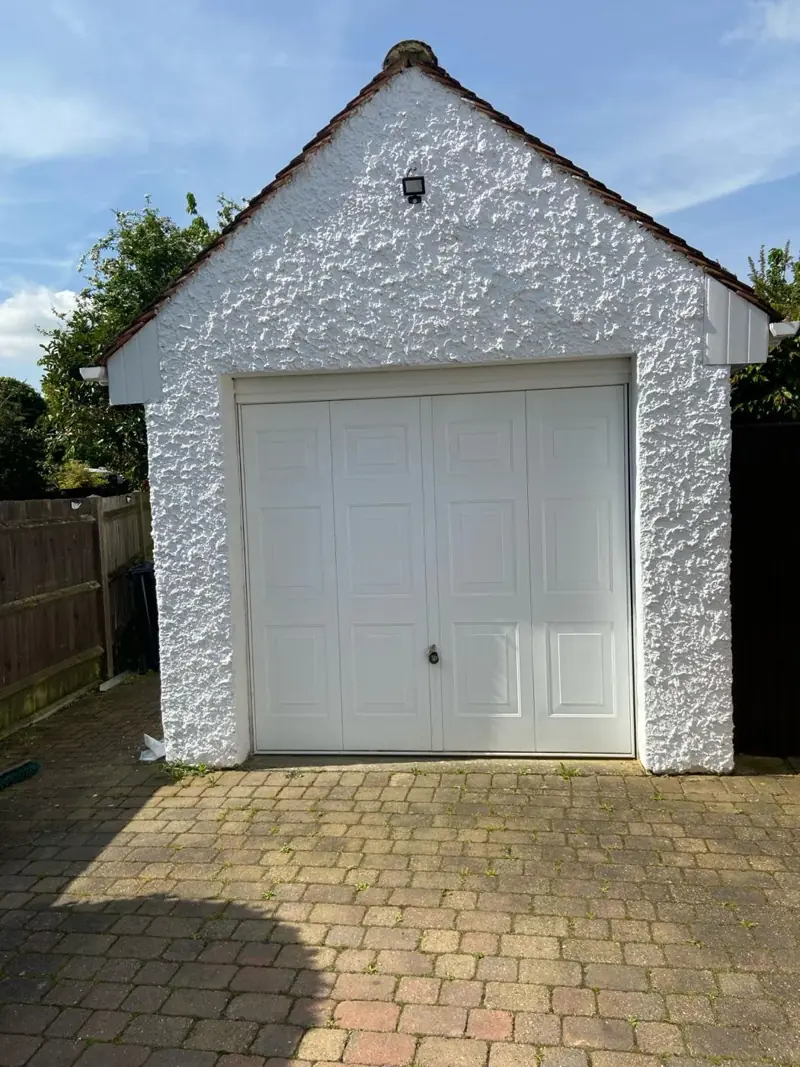
DH Painter & Decorator paints house exteriors in Long Buckby, NN6, a hilltop village about 9 miles north-west of Northampton town centre. Dean matches the system to the building: lime-based finishes and white joinery in the historic core, conventional masonry and timber paints on the post-war estates.
Old core or estate: the first thing we check
For exterior work, Long Buckby divides fairly cleanly. The older streets around Market Place, High Street, King Street, Church Street, West Street and Nuns Lane have been a conservation area since 18 March 2021, and the appraisal adopted that month takes a firm line on paint. Around them sit the estates built from the 1960s onwards as the M1 brought commuters: Lime Avenue, Ashmore, Orchard Rise and Stenhouse Close off East Street, and Berryfield, Syers Green Close, Jubilee Close and Ewart Close in Salem. Those houses fall outside the historic-material guidance, so a standard exterior specification applies. Before quoting, Dean works out which side of that line your house is on, because it changes almost every product choice.
What the house is made of decides the finish
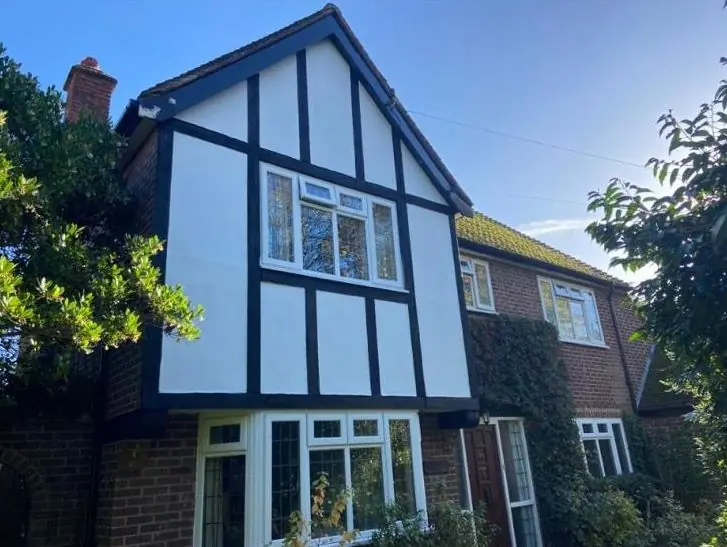
Until the 1820s the village built in local ironstone, with cob for humbler buildings. After that, lias clay fed several local brickyards and red brick took over for more than a century. Each material wants something different on the outside.
| Building | Where you’ll find it | Exterior approach |
|---|---|---|
| 18th-century coursed ironstone cottages | High Street, West Street, Nuns Lane, King Street | Stone left bare; joinery repainted, usually white |
| Rendered or whitewashed vernacular buildings | Harbidges Lane, the Peacock Inn, the Old King’s Head | Limewash or breathable mineral paint, like for like |
| Victorian red brick terraces in Flemish bond | Holyoake Terrace, Sanders Terrace, The Banks | Brick left unpainted; sills, doors, windows and eaves |
| Converted factories and civic buildings | Castle Factory on King Street, the Assembly Rooms | High-level joinery from a tower or scaffold |
| Post-1960s estate houses | Salem closes, off East Street, Station Road | Conventional masonry paint; gloss or satin on timber |
The appraisal says masonry paints are often not acceptable on buildings from before 1919, which rules out the acrylic products that suit a 1980s semi. On a pre-1919 frontage the job is mostly joinery: casements, sashes, four-panel and plank doors, bargeboards and sills. Frames there are traditionally white, sometimes black, so a fashionable anthracite grey tends to sit badly against ironstone. If your house is one of the 37 listed buildings in the parish, a change of colour or finish needs listed building consent, and we’ll ask you to confirm the position with West Northamptonshire Council before the work is booked.
Our main exterior painting page covers the general preparation steps. This page is about how they play out in the village.
Weather on the ridge
Long Buckby stands on higher ground that falls away to the north, south and west, with open countryside beyond. The south and west faces take the brunt of the sun, wind and rain, and paint on them breaks down well before it does on a sheltered rear wall. We look at those elevations first when we survey, and if only part of the house can be done this year, they are usually the part. Where mature trees overhang, as around St Lawrence’s churchyard, The Mounts and the bank along Harbidges Lane, shaded walls stay damp and turn green, so they need a biocide wash and extra drying time before any coat goes on. Our guide to timing exterior painting in the UK explains why we avoid late autumn on exposed sites like this one.
Working on a pavement-edge frontage
The medieval street plan puts many cottages directly on the footway in dense rows, so there’s no front garden to stand ladders in. Harbidges Lane, Nuns Lane and Church Street are narrow, on-street parking is heavy in parts of the conservation area, and the centre of Market Place is used as a car park. A front elevation may need an access tower on the pavement, and sometimes a licence or a word with neighbours about where cars go. We sort that at the quote stage so it doesn’t eat into a dry spell. Some terraces, such as Holmfield Terrace in Salem, have alley access to the rear, which makes back elevations simpler.
We cover Long Buckby from our Northampton base, about 9 miles away via the A428 and the A5385 at Buckby Folly. For an overview of the village’s buildings and our other services there, see our Long Buckby page.
Last updated by Dean, DH Painter & Decorator.