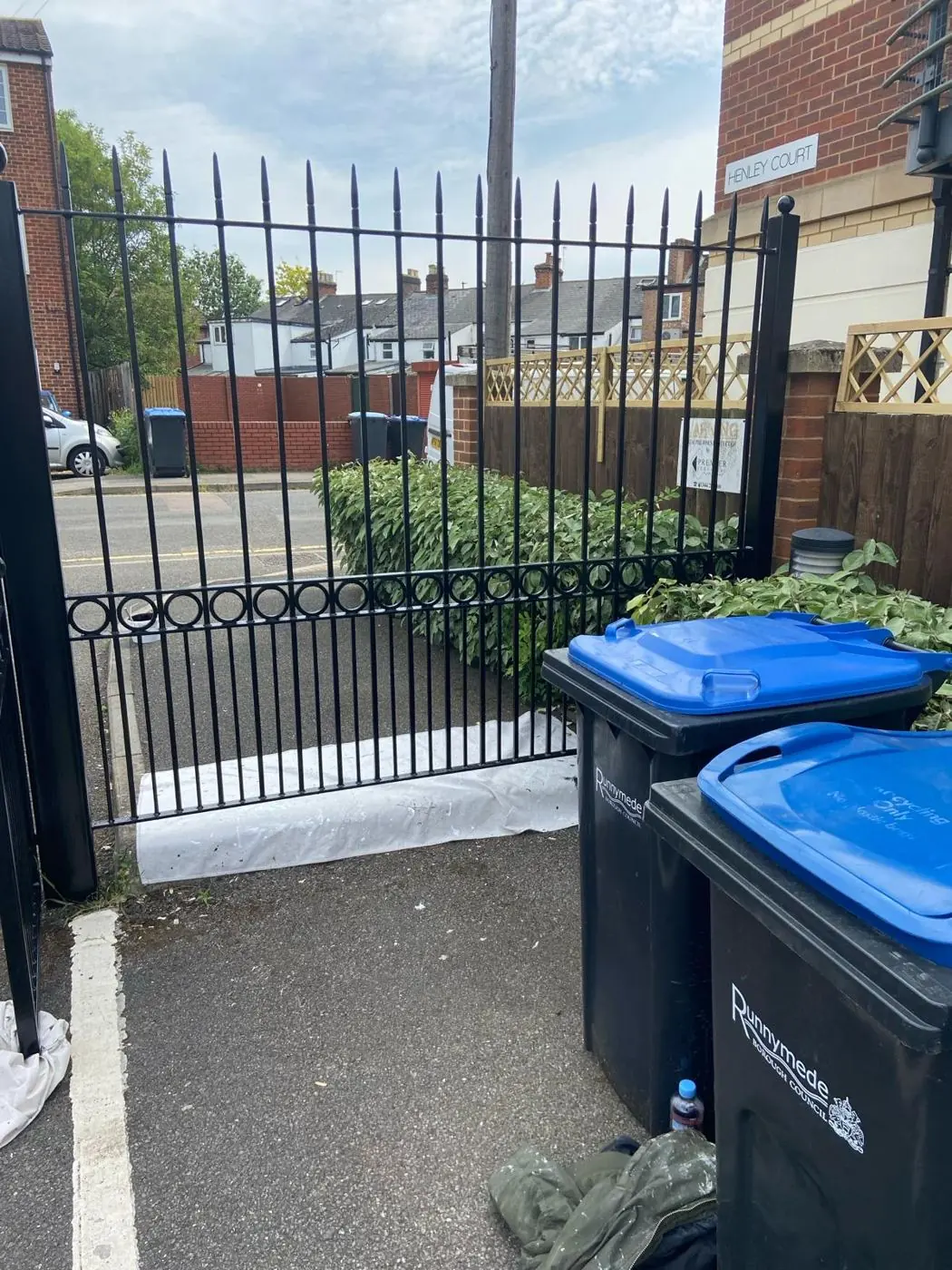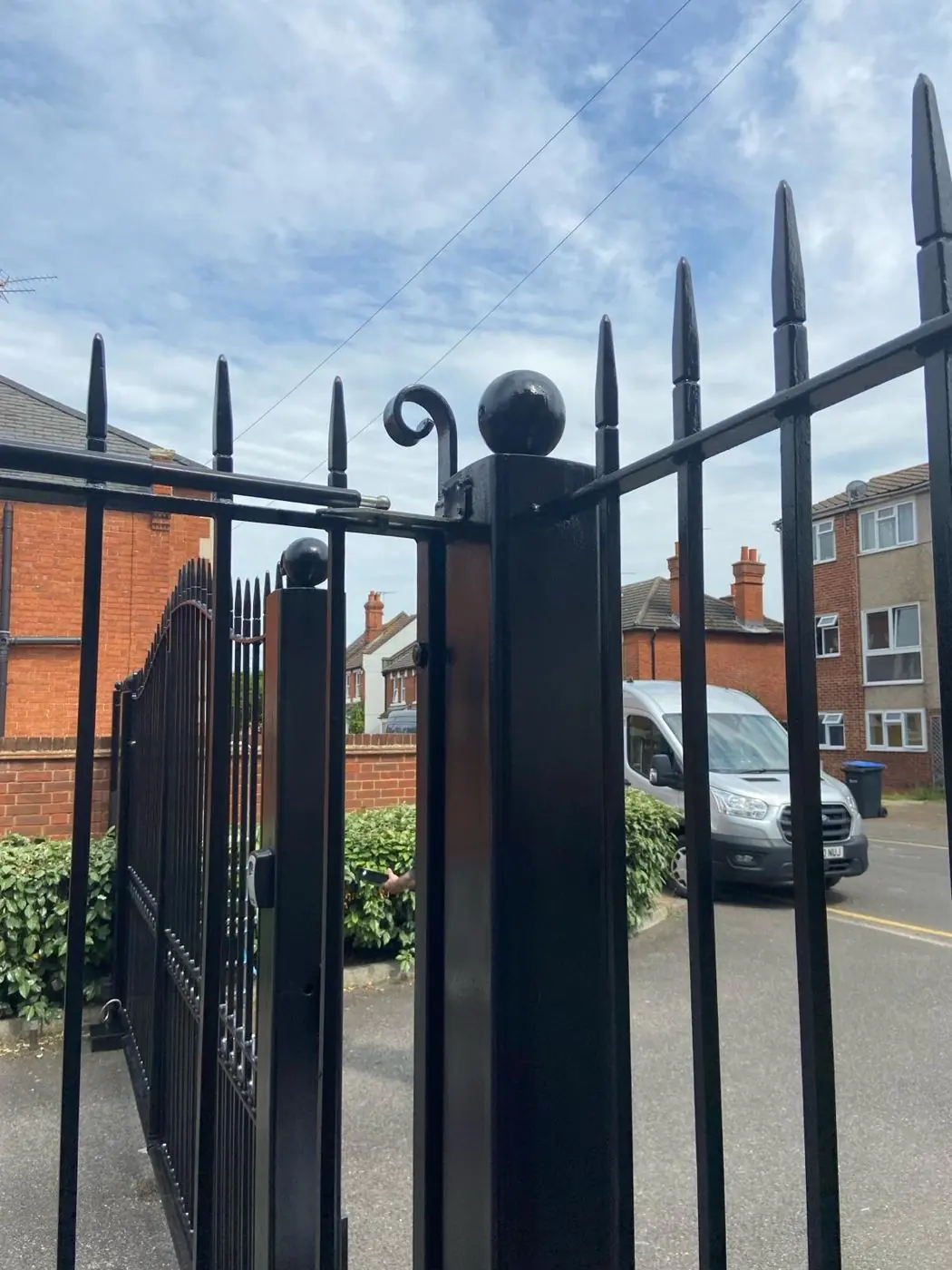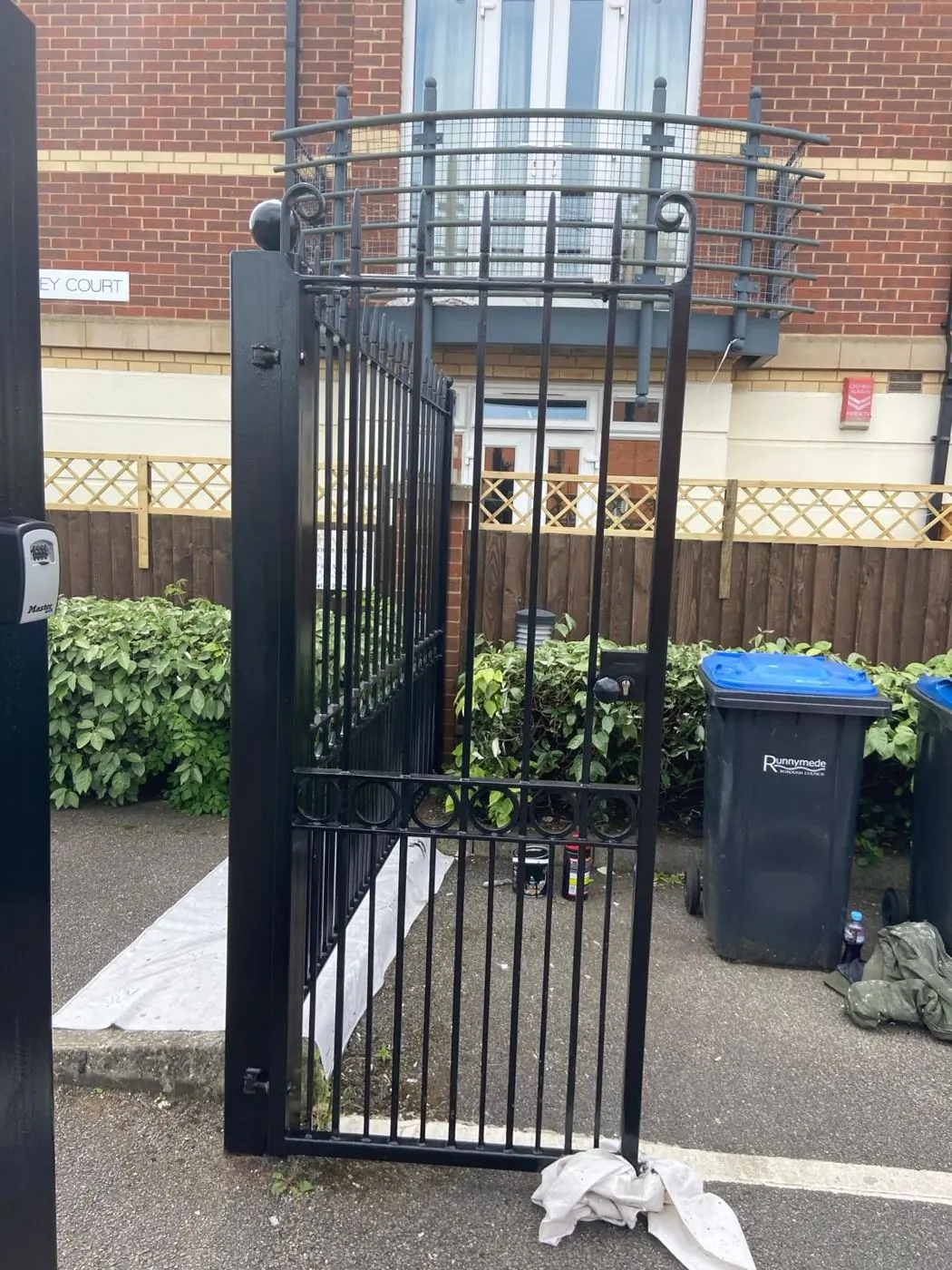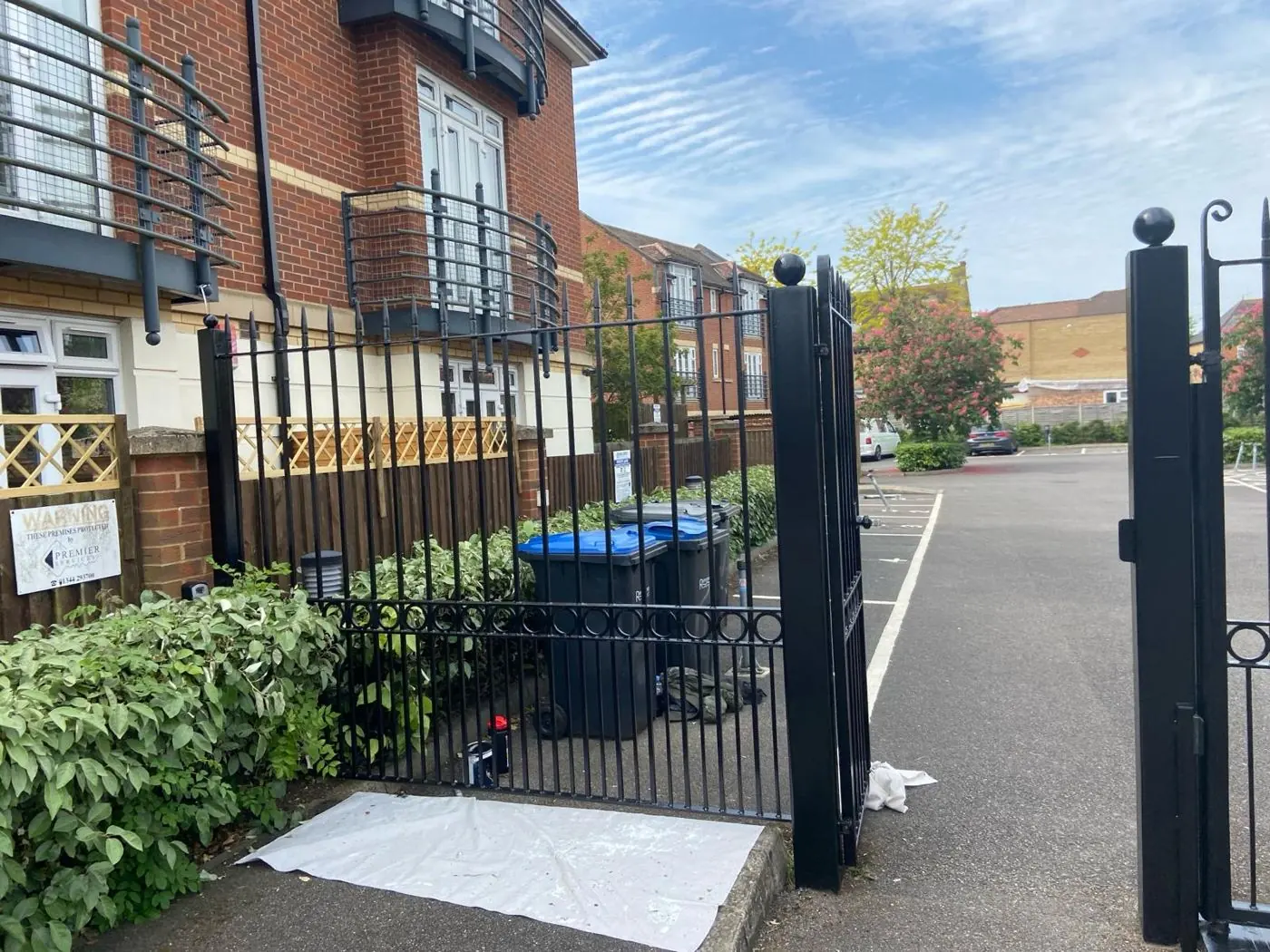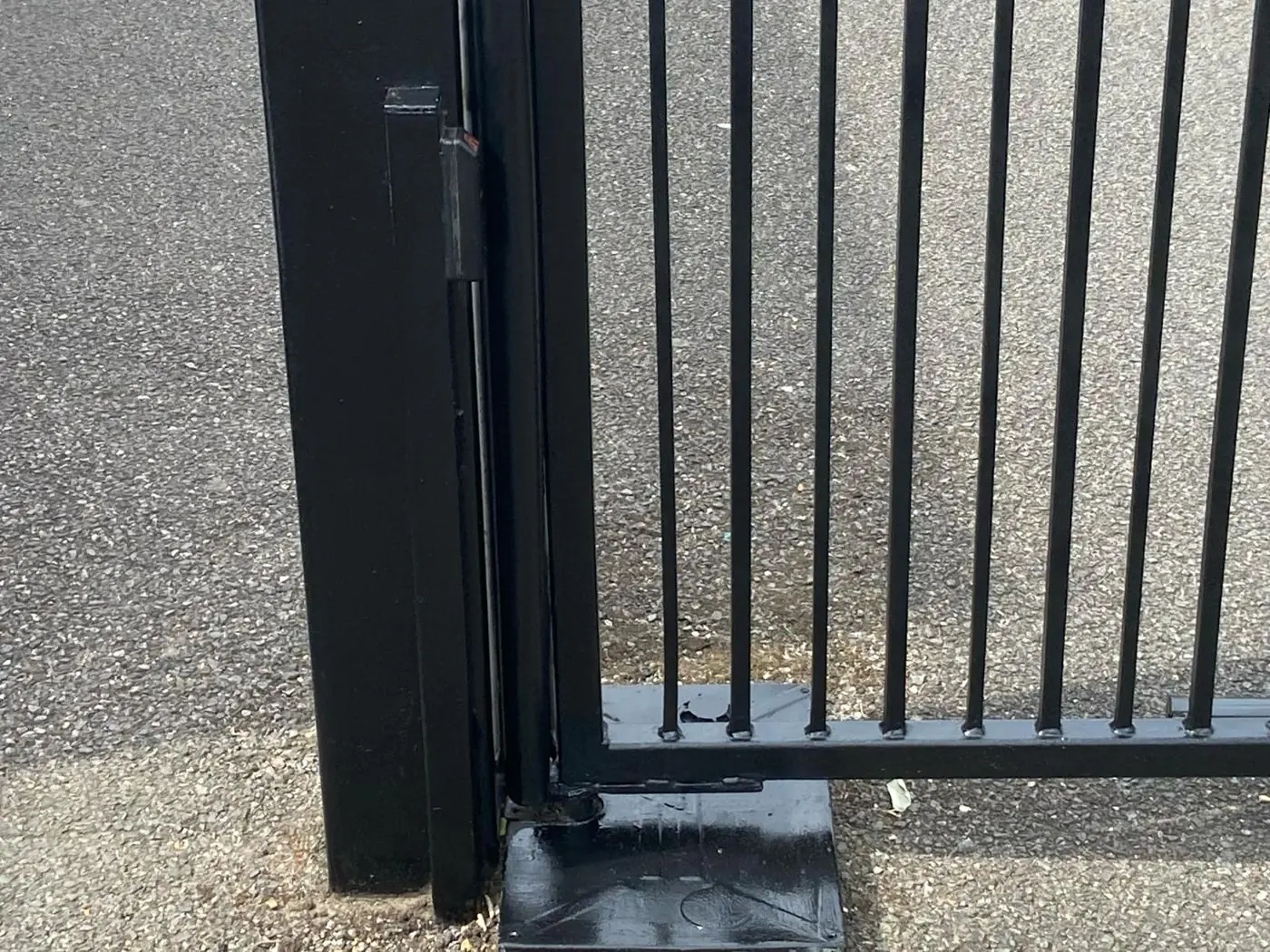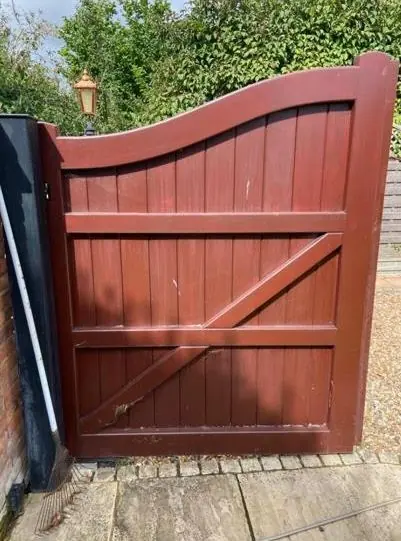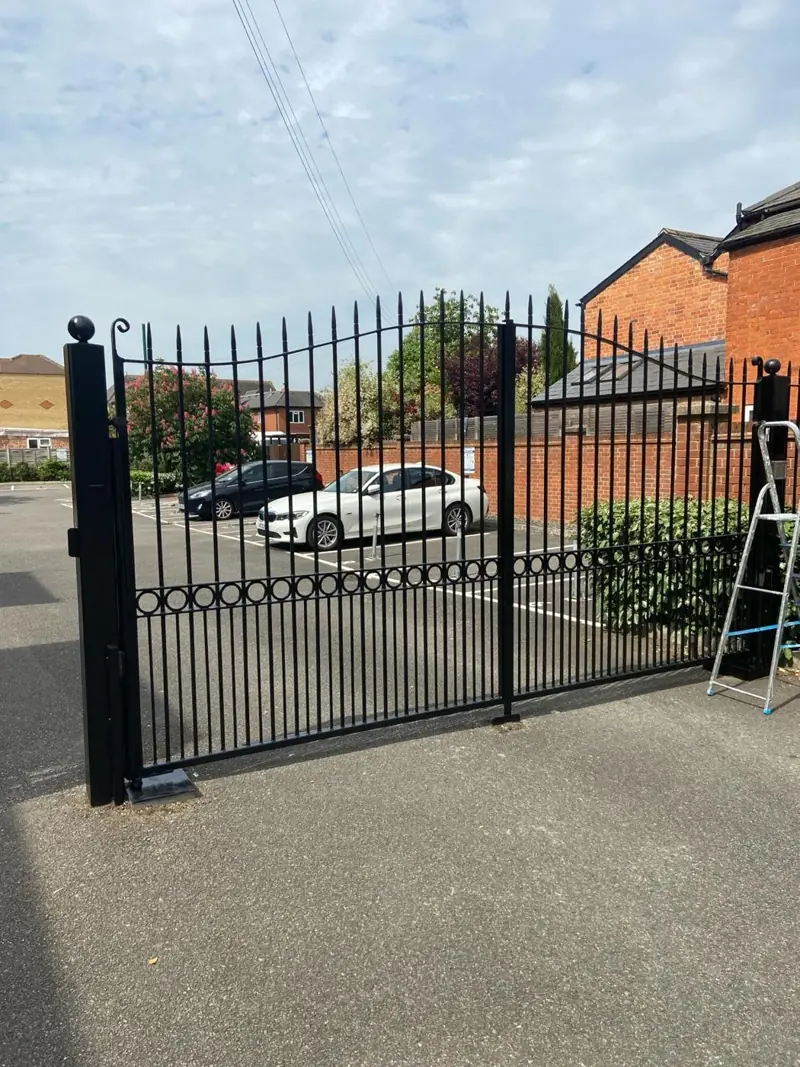
We paint metal gates and railings in Long Buckby, NN6, roughly 9 miles north-west of Northampton town centre. Much of the village's older ironwork is wrought or cast iron set into brick or stone, and black is its established colour.
Black is already the village colour
Across Long Buckby, public metalwork is painted black: the benches, the bollards and the lampposts. So are the most notable private railings, from the wrought iron with spear finials at The Manse on Brington Road to the decorative railings at the 1894 infants’ school on High Street. That gives you an easy answer on colour. Black gloss, or a black micaceous iron oxide finish on heavier ironwork, suits the conservation area, and a Victorian house with a low brick front wall and an iron gate looks right in it too. We’d steer you away from a bright colour on a gate in the historic core. Where the ironwork is part of a listed building, as at The Manse, whose railings and wall piers are included in the listing, a change of colour needs listed building consent.
Wrought iron, cast iron and newer steel
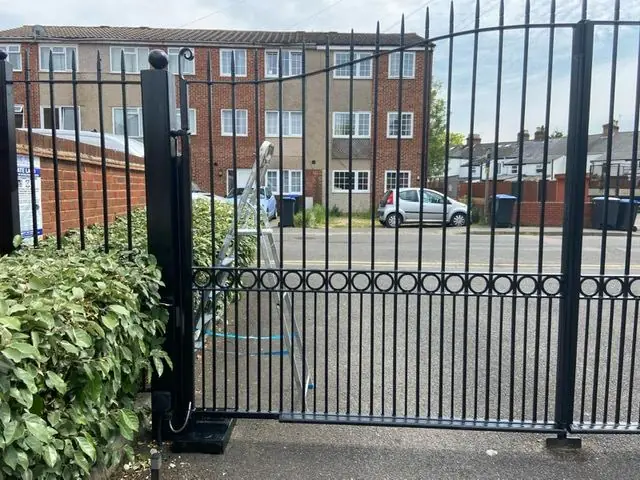
The metal decides the preparation. Wrought iron, like The Manse’s railings, is tough and often carries many old layers of paint. Cast iron, used for decorative panels and finials in the Victorian period, is brittle, so castings must not be hammered or levered. Gates on the post-war estates are more likely to be mild or galvanised steel, and galvanised steel needs a dedicated primer or the paint simply peels. Our metal gate and railing painting page sets out the whole process. On site in Long Buckby we:
- identify the metal and test old layers before quoting
- wire brush and scrape back to sound metal, cutting out loose rust at joints and finial bases
- prime bare metal the same day so it doesn’t flash-rust overnight
- build up undercoat and top coat, working into the backs of bars and the undersides of rails
Where iron meets brick, stone and lime
Railings in the village are rarely free-standing. At The Manse they sit on a red brick wall with stone-coped piers, and many Victorian gates hang from brick piers. Rust swelling where a bar enters the coping can crack the stone, so we pay close attention to those bases and to rust streaks running down onto the masonry. Paint belongs on the metal only. Ironstone, brick and lime mortar are meant to stay unpainted in the conservation area, so we mask copings and piers and wipe off any splashes before they dry. Where a bar has rusted through at its base, that’s a repair for a metalworker or mason before we paint.
Exposure, dew and the footway
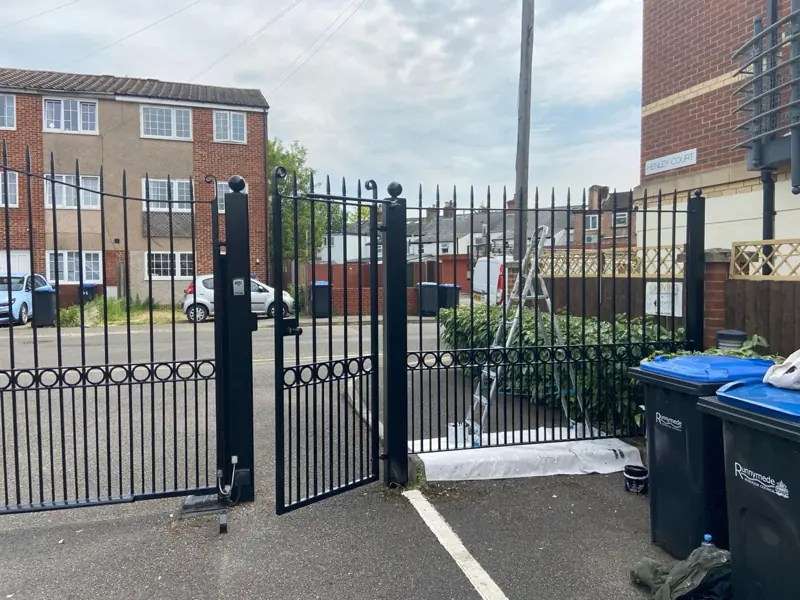
Gates on exposed corners of the ridge rust faster than those tucked into a garden, because wind-driven rain reaches every joint. Metal paint needs a dry surface and dry hours afterwards, so we plan railing work for settled weather and avoid heavy-dew mornings, which are common on open ground in spring and autumn. Front railings in the old core often stand right on the pavement, so we put up wet-paint signs and keep the footway clear for people walking past, especially on High Street near the infants’ school at the start and end of the school day. Hinges and latches get freed and greased after the paint has hardened, not before, so a gate that has stuck for years swings without scraping off the new coat. If you’d like the timing explained, our guide to the right season for exterior painting covers it.
We cover Long Buckby from our Northampton base, about 9 miles to the south-east. Our Long Buckby page describes the village’s other property types and the services we offer there.
Last updated by Dean, DH Painter & Decorator.