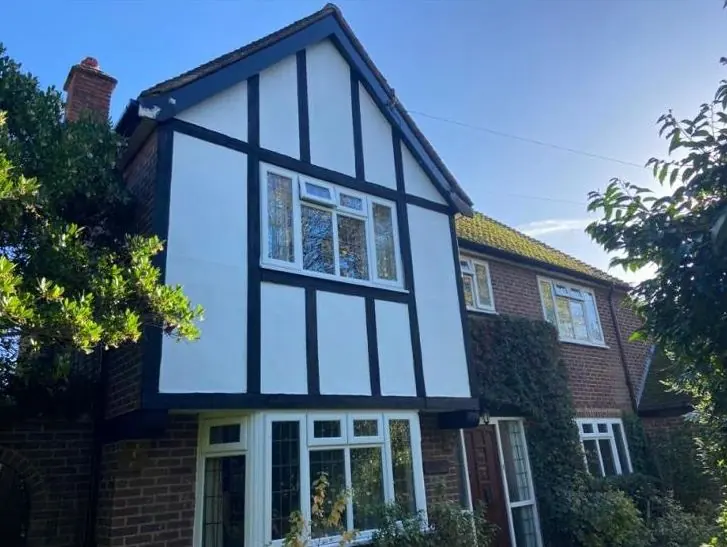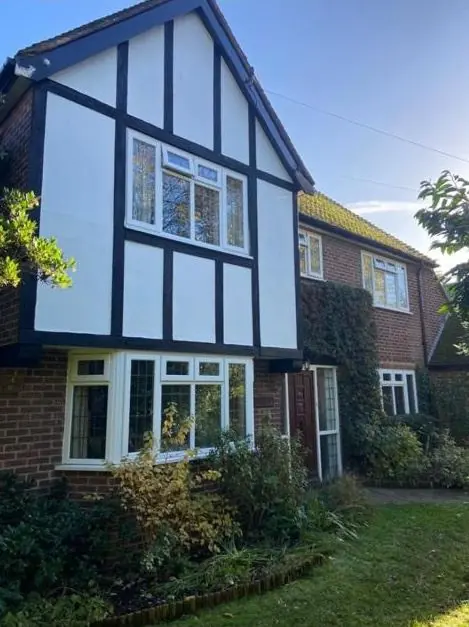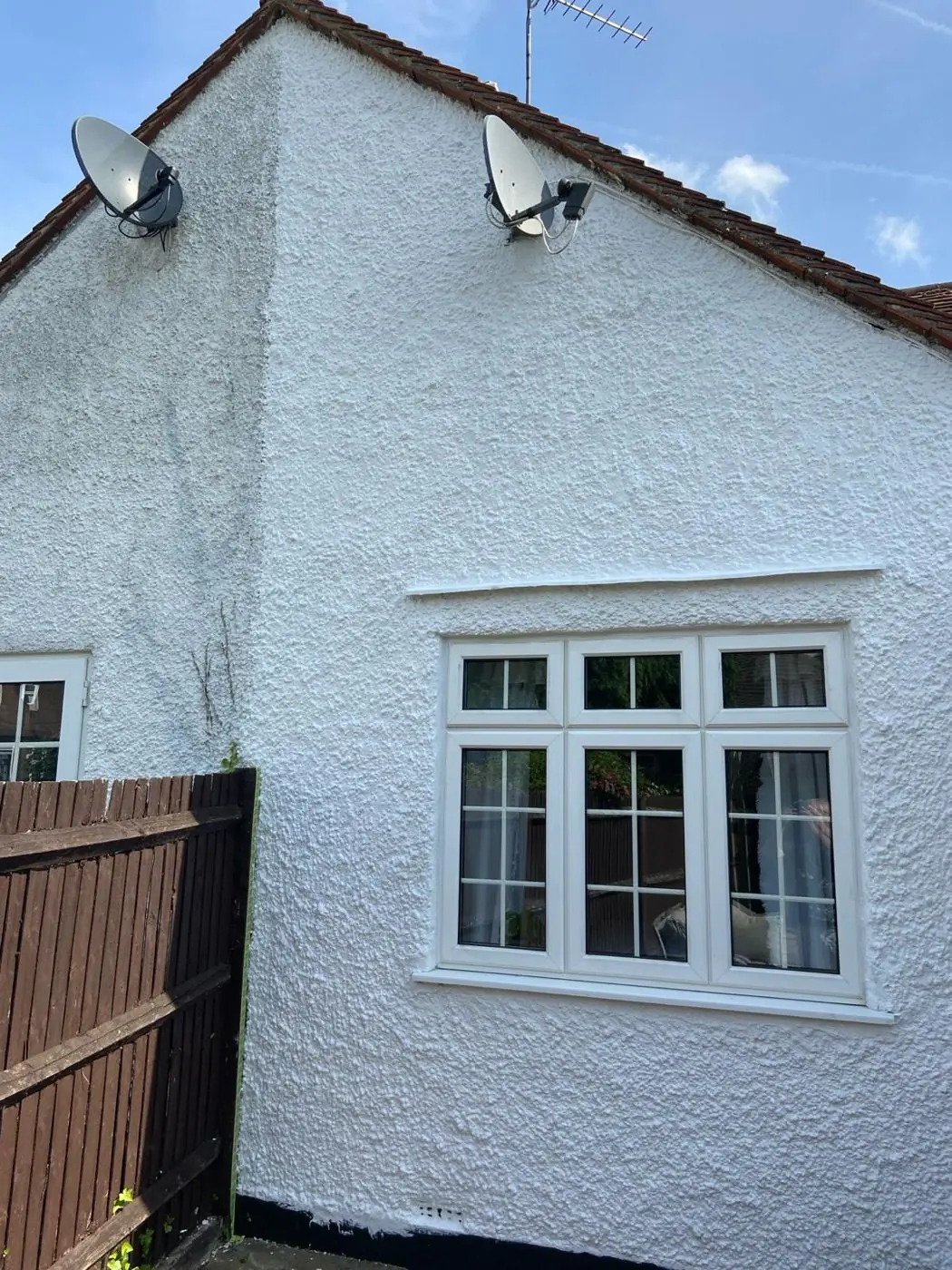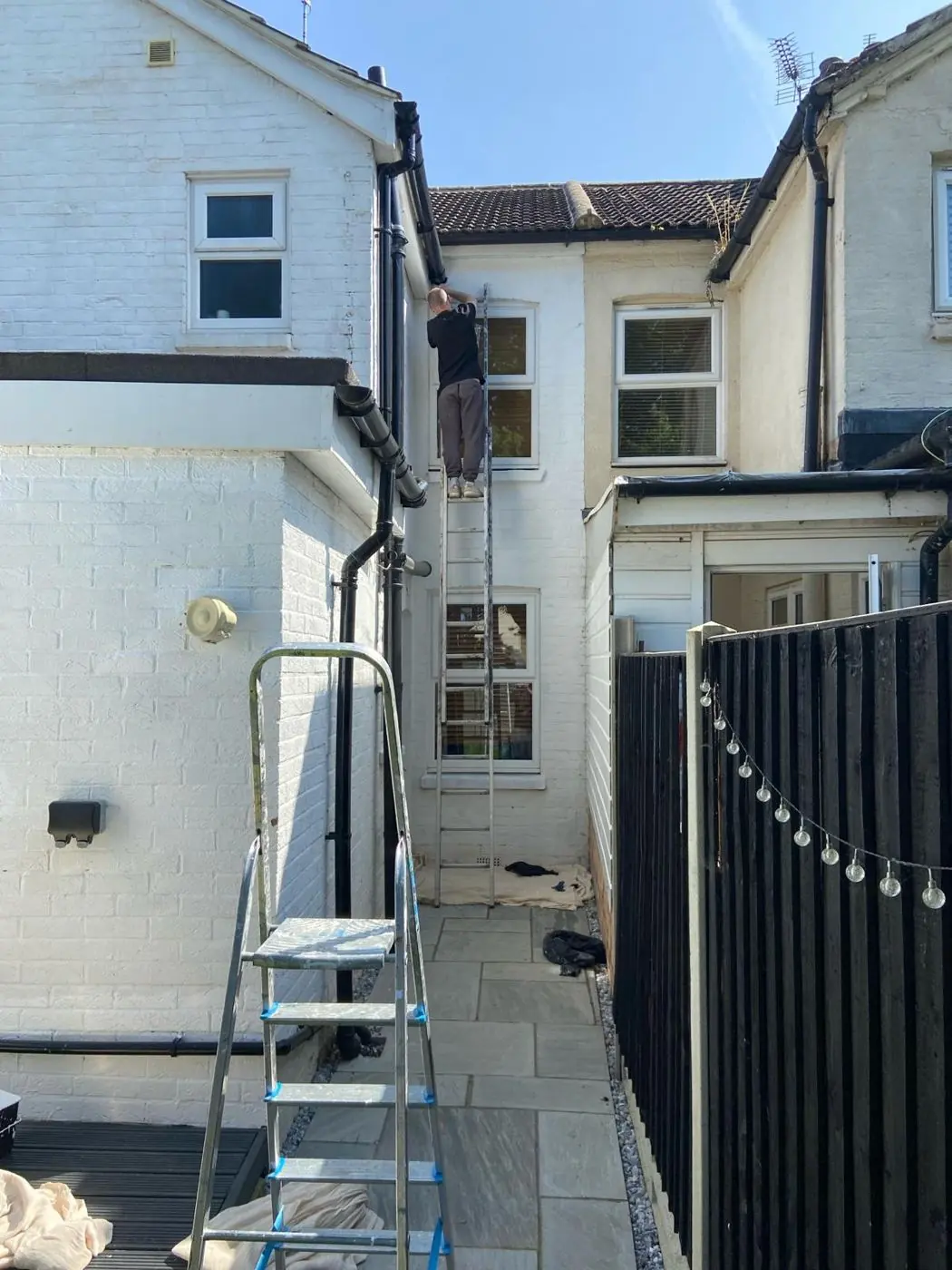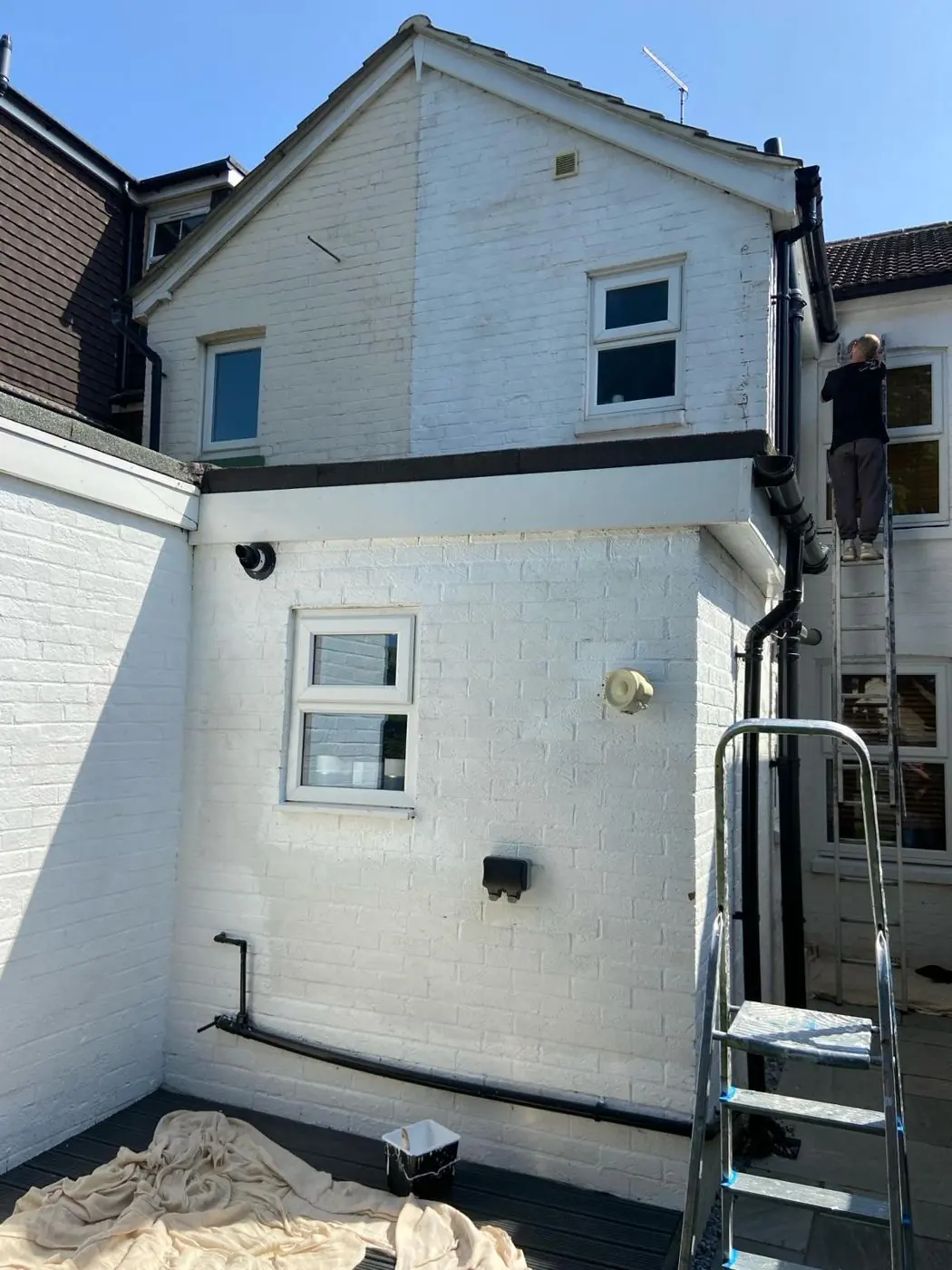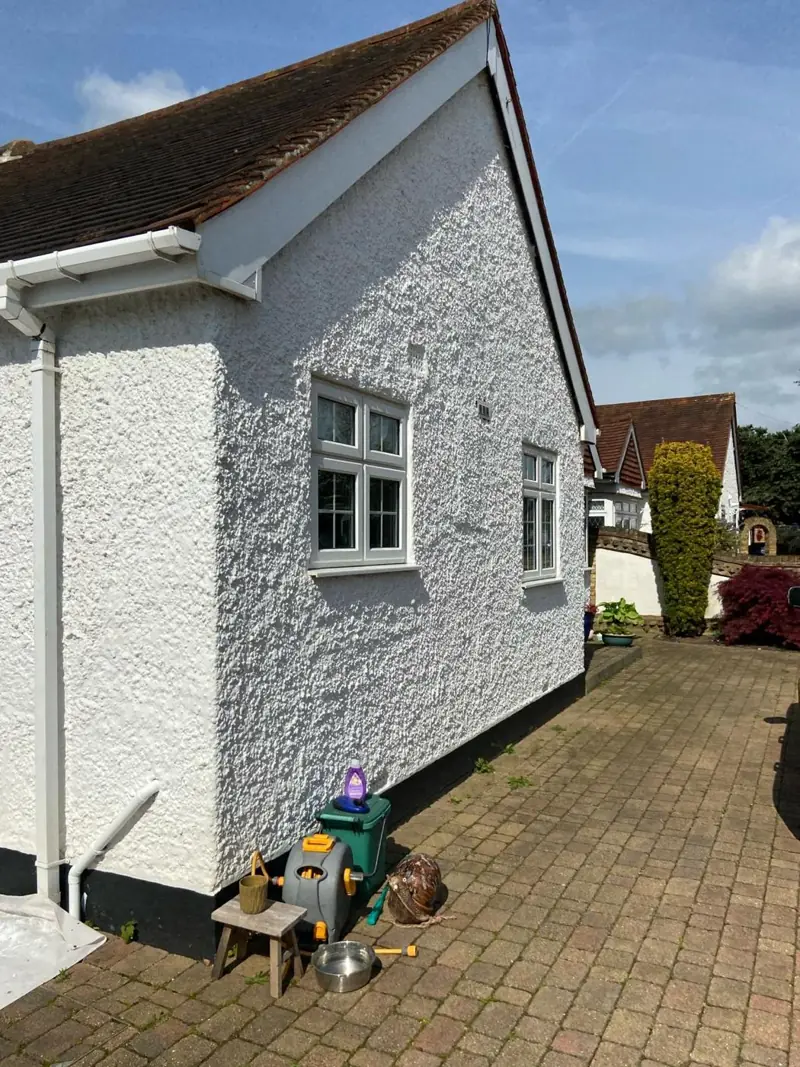
We paint fascias, soffits and gutters across Long Buckby, NN6, about 9 miles north-west of Northampton town centre. Dean adjusts colour, products and access to each type of roofline, from boxed timber eaves on Victorian villas to estate fascias in Salem and off East Street.
Reading the roofline before quoting
Along any Long Buckby street, the eaves give away a building’s age. On the 19th-century red brick terraces, a course of brick dentils steps out just below the timber fascia, so cutting in has to keep paint off brickwork that should stay bare. Detached Victorian villas tend to have deeper, boxed timber eaves, as at The Manse on Brington Road, where the soffit board, fascia and any moulding all need painting. Many 18th-century cottages stand gable-end to the road, which puts their bargeboards, rather than a fascia, on show to the street. On the estates built since the 1960s, around Salem and along Lime Avenue, Ashmore, Orchard Rise and Stenhouse Close, you find conventional fascias and soffits, some timber and some already swapped for uPVC. We price what is actually on the house.
Keeping the historic eaves white
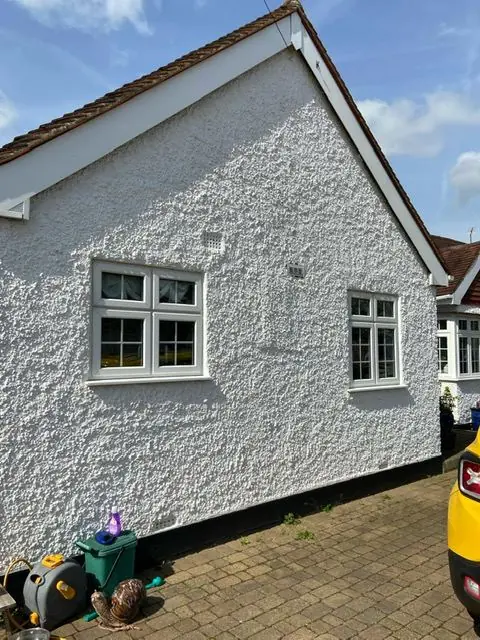
In the conservation area the appraisal’s palette for joinery is short: white, with black in places. Fascias and soffits usually follow the windows, so white is the expected choice on a High Street or West Street frontage, with black gutters and downpipes in keeping with the black ironwork found across the village. On a terrace like Holyoake Terrace, where the roofline runs unbroken along the row, a single dark grey fascia would break the line. If the house is listed, changing the colour needs consent, and we’ll raise that before you commit. If you’re unsure, our colour and finish advice can help you choose.
High eaves on tight streets
Most old cottages are two storeys and within reach of ladders with a stand-off. The converted buildings are another matter. The former Castle Factory on King Street is three storeys of red brick, and the Assembly Rooms, with their Dutch gables and stone dressings, have high-level joinery that needs a tower or scaffold. Because so many frontages sit right on the footway, the tower often has to stand on the pavement, and cars parked along narrow streets such as Church Street or Nuns Lane can take the only space it fits. We visit first to work out where equipment can go, and we tell you if a pavement licence or a request to neighbours about parking is likely.
Leaves, overflowing gutters and wet timber
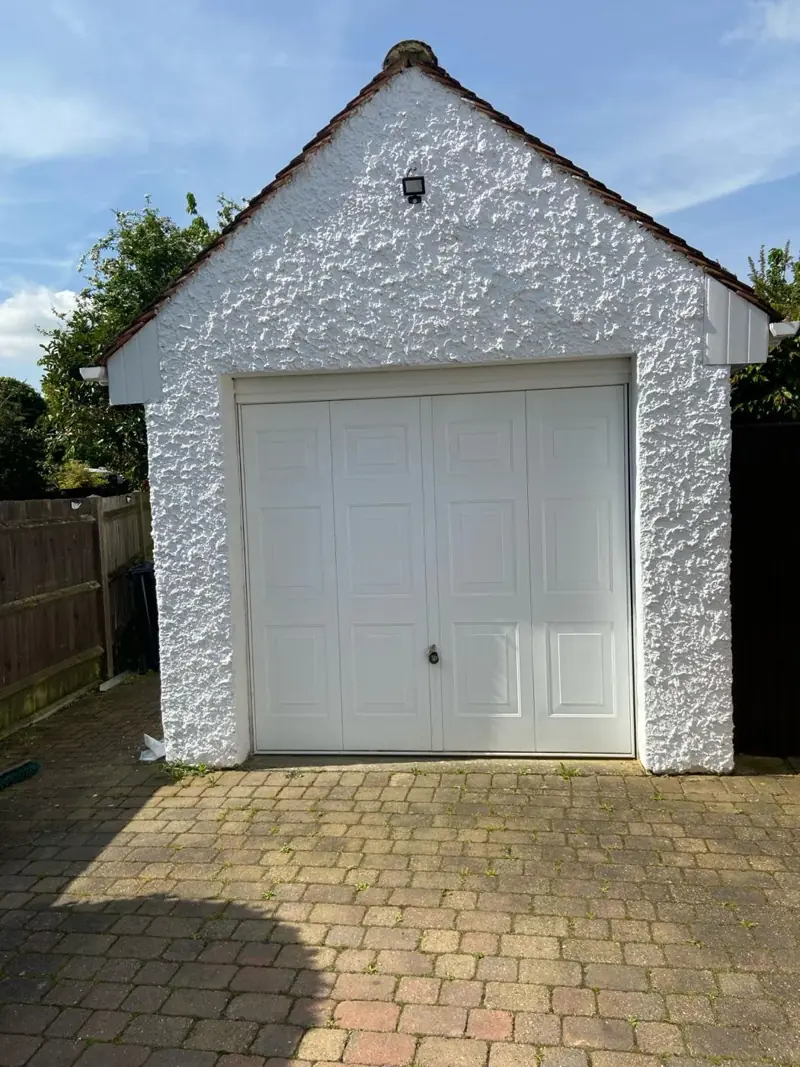
Fascia boards tend to fail along the top edge, where the gutter sits, and from behind, where water gets in. In parts of Long Buckby the trees make that worse. Leaves and sap from St Lawrence’s churchyard, the trees around The Mounts and large gardens such as Holly House block gutters each autumn, the overflow soaks the board, and the shade keeps it damp. Before painting we:
- clear the gutters so we can see where they leak or sag
- probe fascias and soffits for soft timber, especially at joints and corners
- scrape and sand back to a sound edge, then spot-prime bare wood
- treat algae on soffits and let them dry out fully
Rotten sections need a joiner’s repair before we paint, because paint over soft wood only hides the problem for a season. Up on the ridge, south- and west-facing eaves take the most sun and rain, and that’s usually where the worst flaking is.
Estate fascias, timber and uPVC
On the newer houses in Salem and off East Street, timber fascias get the standard treatment described on our fascia and soffit painting page: preparation, primer, undercoat and an exterior gloss or satin. Where boards have been replaced in uPVC, we can clean them and, if you want a colour change, apply a primer made for plastic before the top coats. Access on the estates is normally easier, with driveways for ladders. We cover Long Buckby from Northampton, about 9 miles away, and our Long Buckby page has more on the village’s buildings.
Last updated by Dean, DH Painter & Decorator.