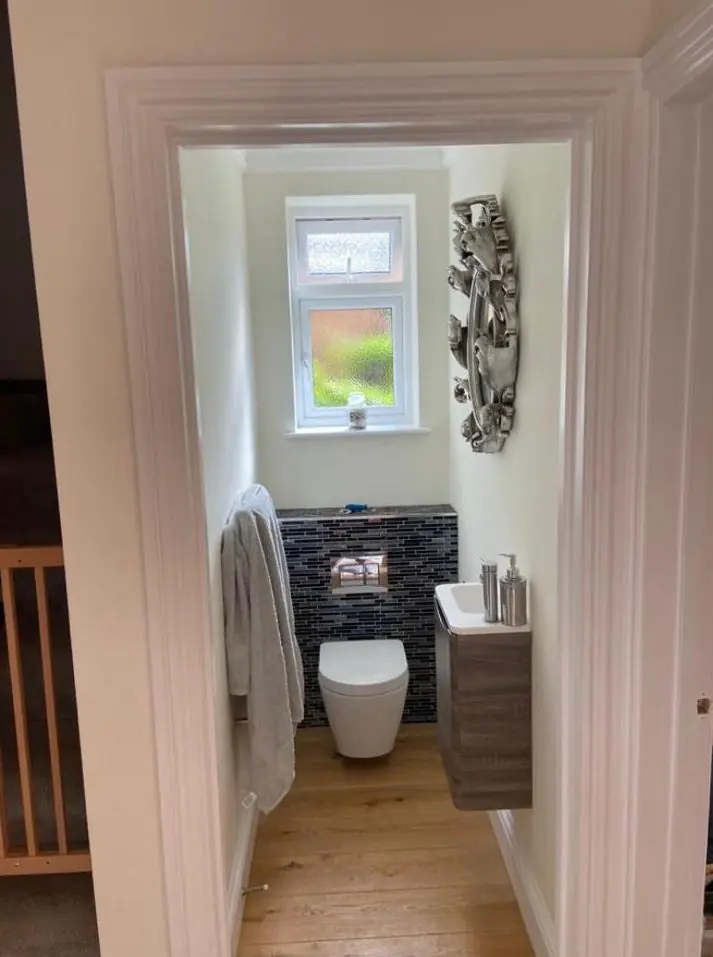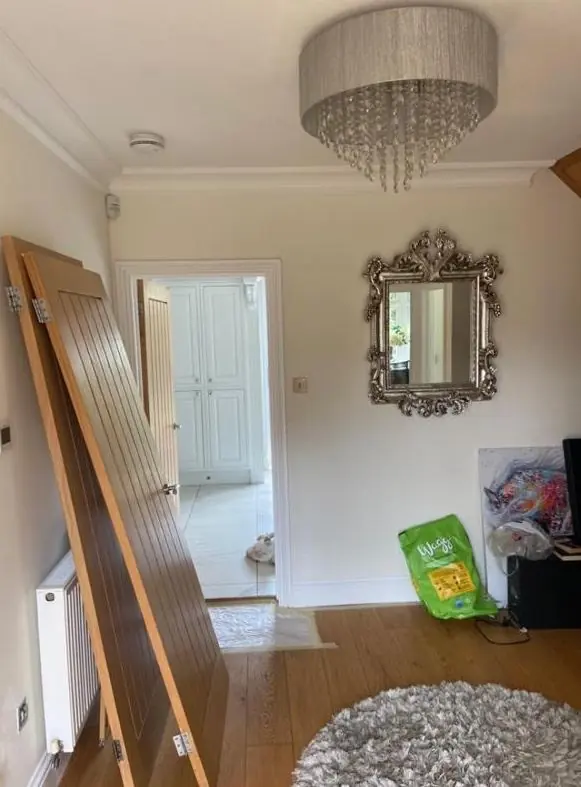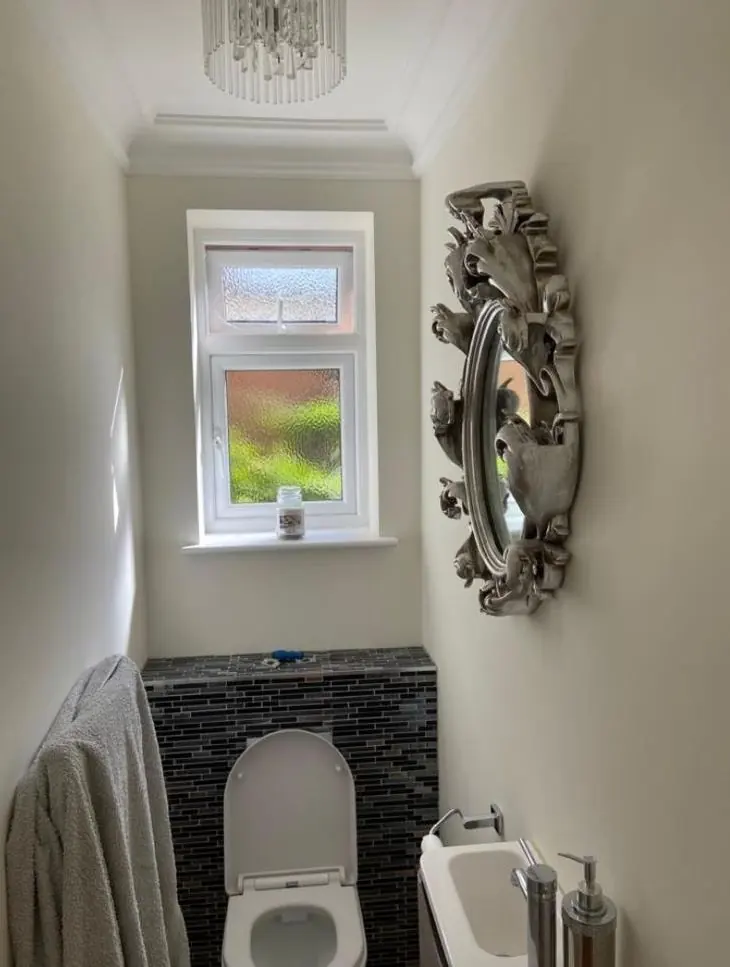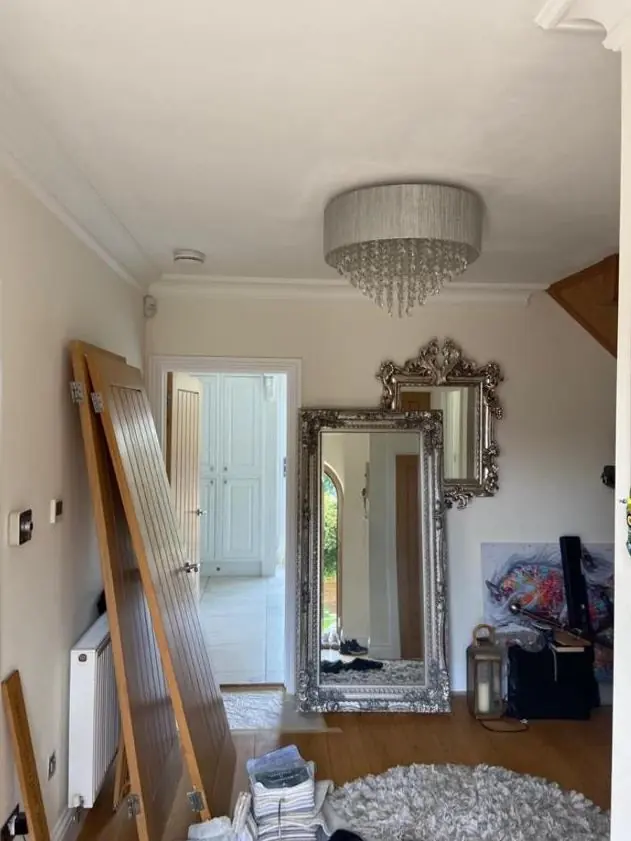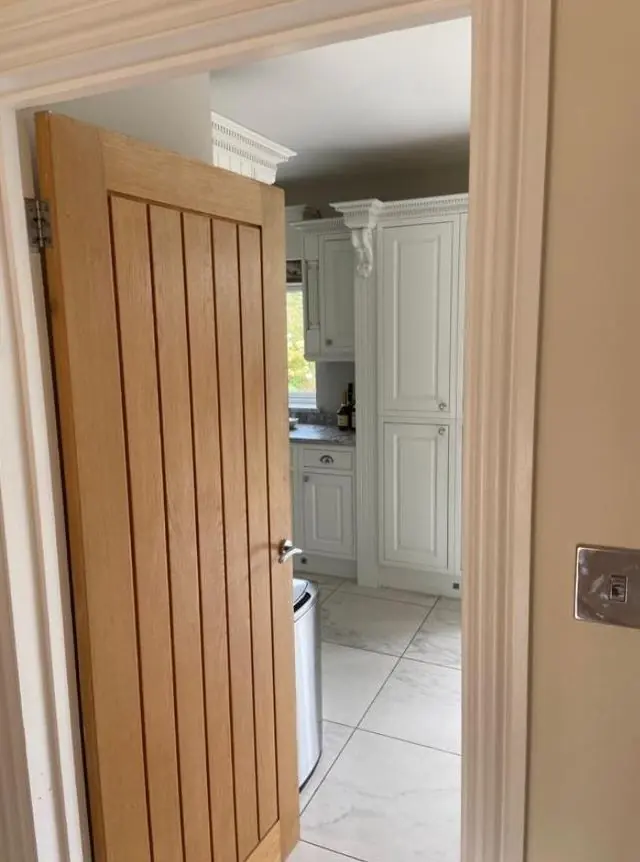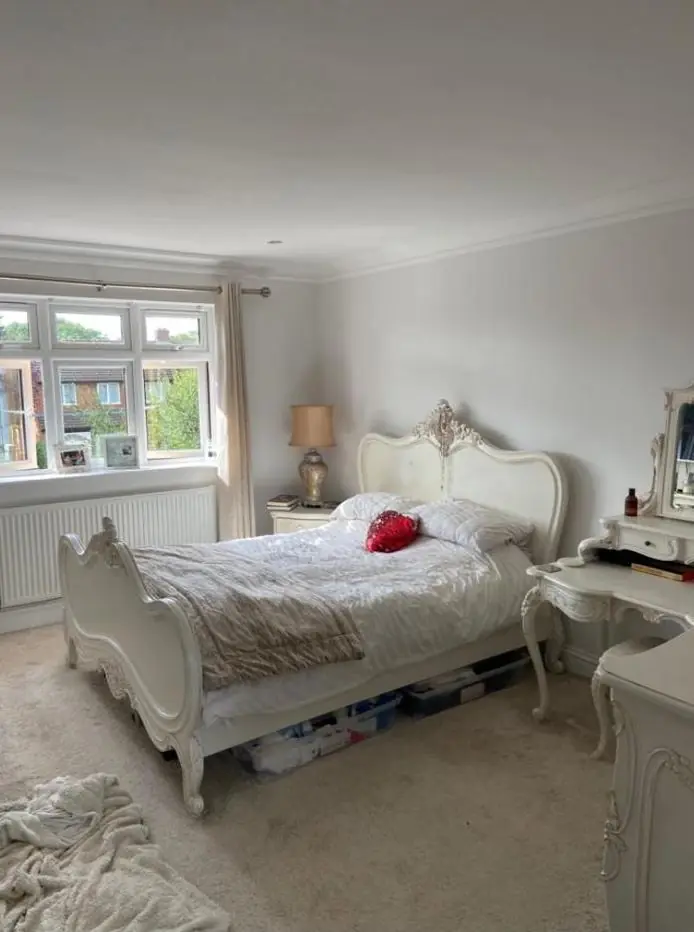
We hang wallpaper and lining paper throughout Long Buckby, the NN6 village about 9 miles north-west of Northampton. Its older ironstone and cob cottages have walls that are rarely straight, while its Victorian brick terraces and villas suit period papers in halls and front rooms, so the method depends on the house.
When the wall is older than the pattern book
Behind the honey-coloured fronts on High Street, West Street and Nuns Lane are solid walls of coursed ironstone in lime mortar, and a few humbler buildings, like 10-12 Harbidges Lane, are cob. Inside, the lime plaster follows whatever the stone does. Walls lean out of plumb, corners wander and the angle where wall meets ceiling can drop several centimetres over one room.
That matters more for wallpaper than for paint. A strong vertical stripe or a large repeating motif will show every lean, and the pattern can drift visibly from one end of the wall to the other. For rooms like these Dean will usually suggest one of two routes:
- A loose, all-over pattern or a textured plain paper that hides the movement of the wall.
- Hanging from a true plumb line in the most visible corner and accepting a deliberate fade at the least visible one, agreed with you before the first length goes up.
Lining paper on lime plaster
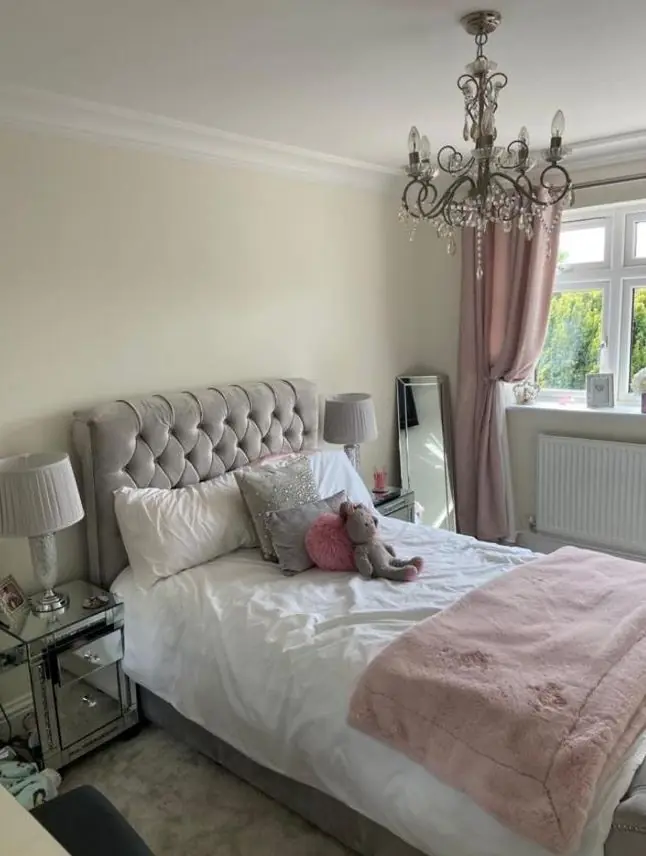
Old lime plaster can be soft, dusty or patched with gypsum from past repairs, and wallpaper paste and a heavy paper put real pull on it. We test loose areas, consolidate or repair them, size the wall and then hang a lining paper, usually cross-lined, to give an even surface. On rough walls a thicker grade of lining helps. Lining also stops the patchwork of old repairs showing through a pale paper.
Breathability matters here as well. Heavy vinyl papers are not ideal on solid ironstone or cob walls that need to let moisture out, particularly on a cold external wall. Paper-based, non-woven or traditional pulp papers are kinder to them, and we will tell you if the paper you have chosen is likely to cause trouble on a particular wall.
Period papers for the shoe-trade houses
From the 1820s Long Buckby was built in local red brick, first for shoe workers in planned terraces such as Holyoake Terrace, Sanders Terrace and The Banks, then in villas along Station Road and Rockhill Road. Later came the late Victorian and Edwardian cottages, including Jubilee Cottages and West-End Cottages on West Street (both dated 1897) and Holmfield Terrace in Salem. Houses of this period were made for papered halls, front parlours and stairwells, with picture rails and dado rails that split a wall into bands.
A traditional floral or damask paper above a painted dado, or a paper between picture rail and dado, suits these rooms well. Hand-printed and pulp papers are often thinner and need careful pasting and fast, clean handling, as the paper stretches when wet and can tear. Where a stairwell is tall, we bring a platform so the drops can be hung and matched safely from top to bottom.
Newer houses and feature walls
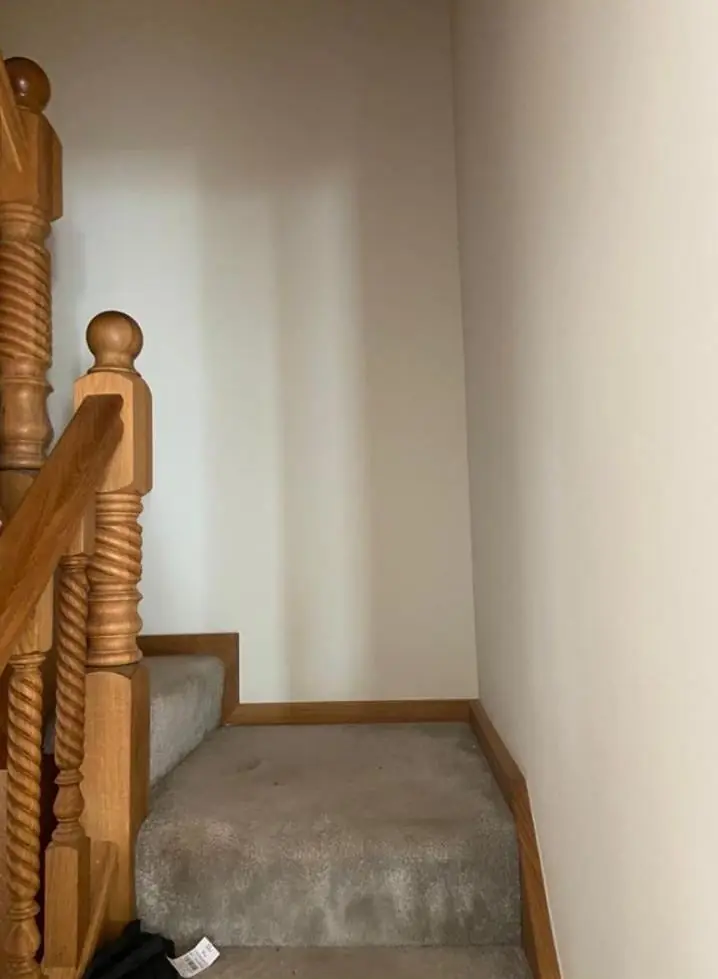
Estate houses in Salem and off East Street, such as those in Orchard Rise and Lime Avenue, have flatter plasterboard walls, so a single feature wall, a chimney breast or a bedroom in a bold print is straightforward. We strip any old paper, fill and sand, size the wall and hang your paper with matched seams. See the main wallpaper hanging service for the full process and the types of paper we handle.
Arranging a visit
Long Buckby is about 9 miles from our Northampton base. Before you order rolls, it helps to have Dean measure up, because walls in the older houses rarely match the floor plan and pattern repeats change the number of rolls. He will also check whether the walls need lining. Other work we cover in the village is on our Long Buckby area page.
Last updated by Dean, DH Painter & Decorator.