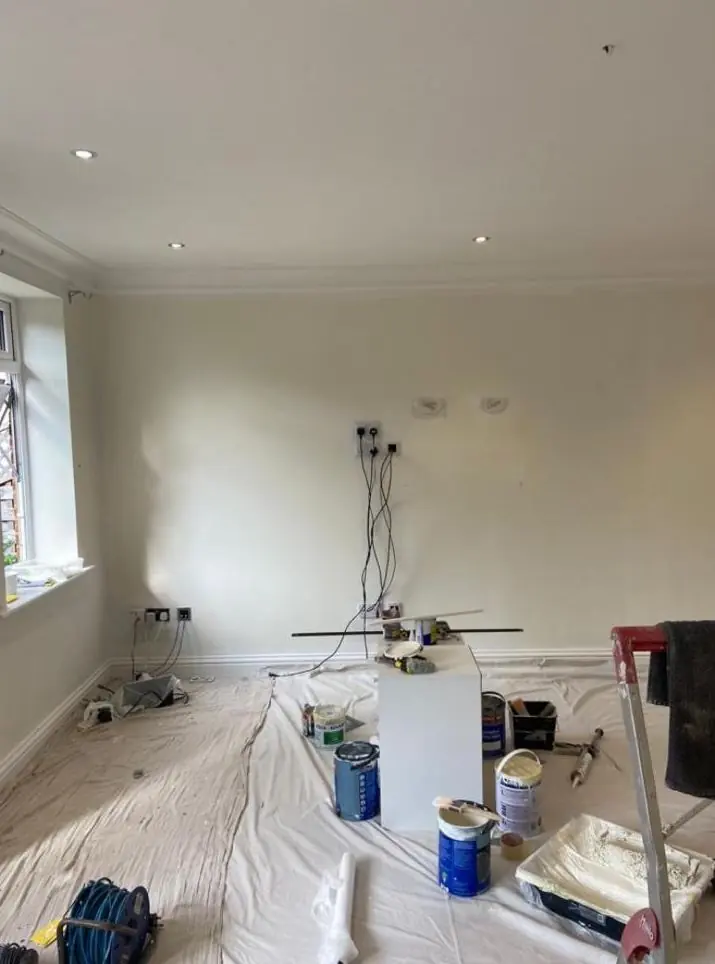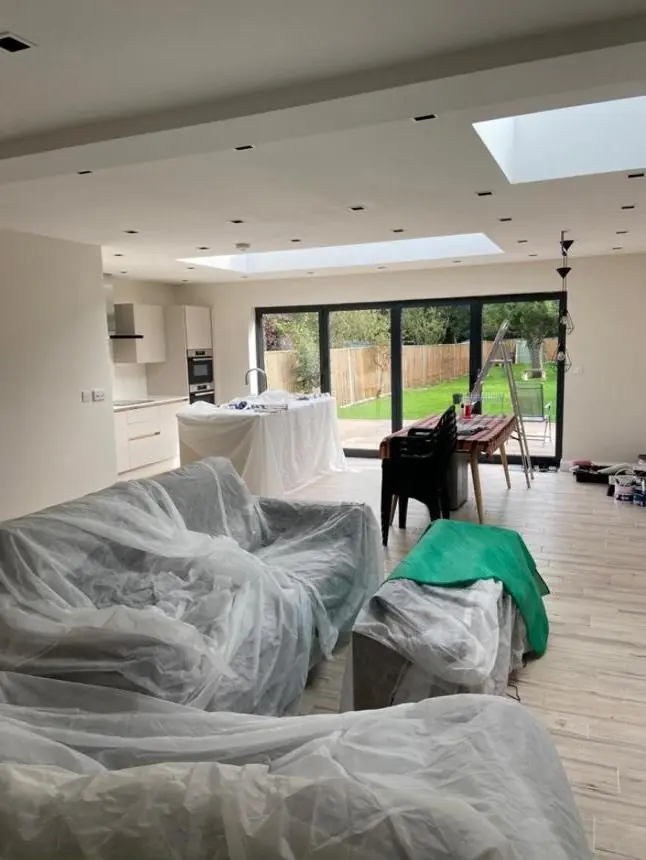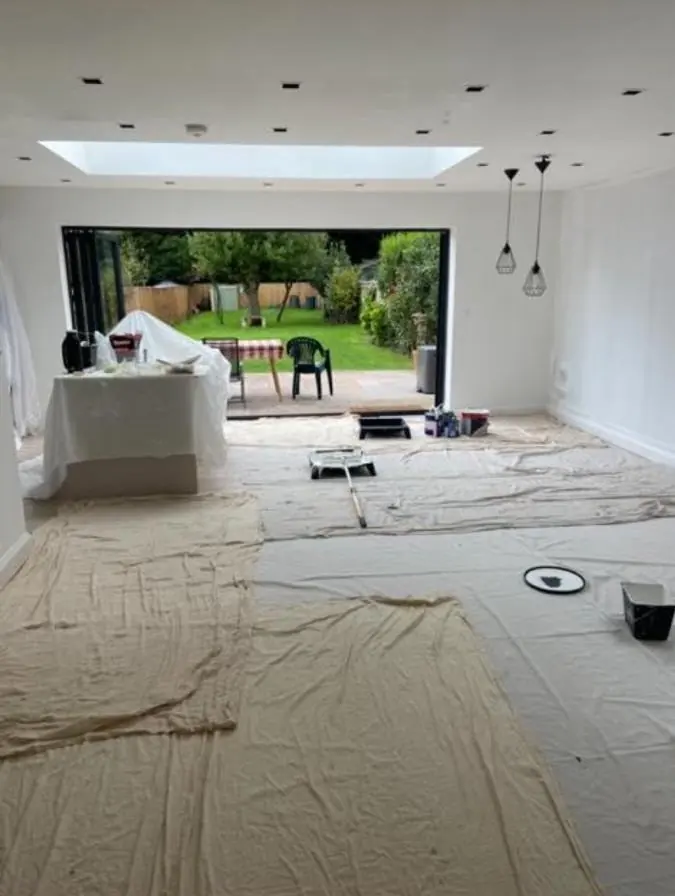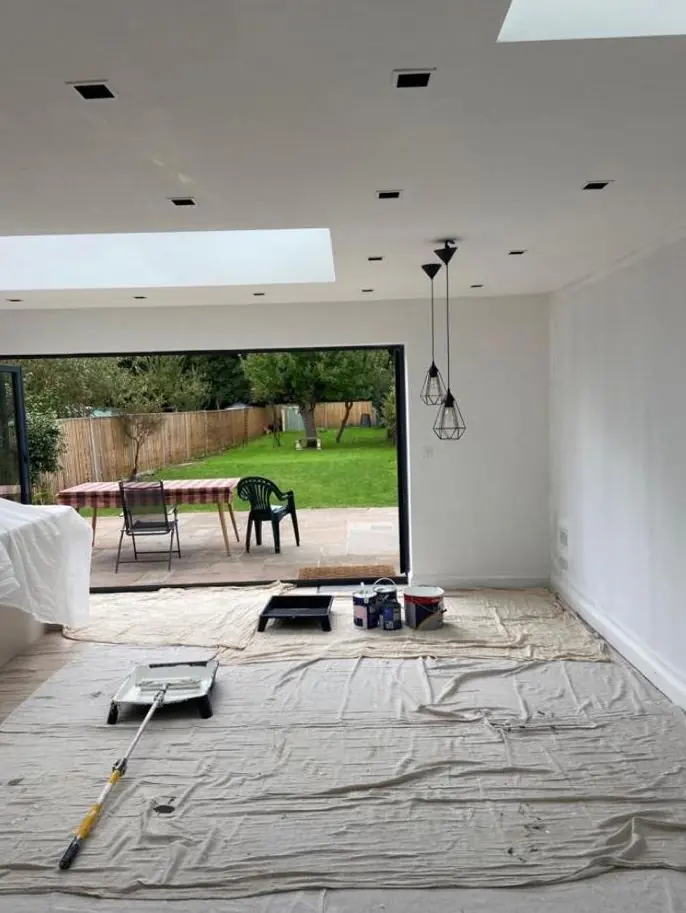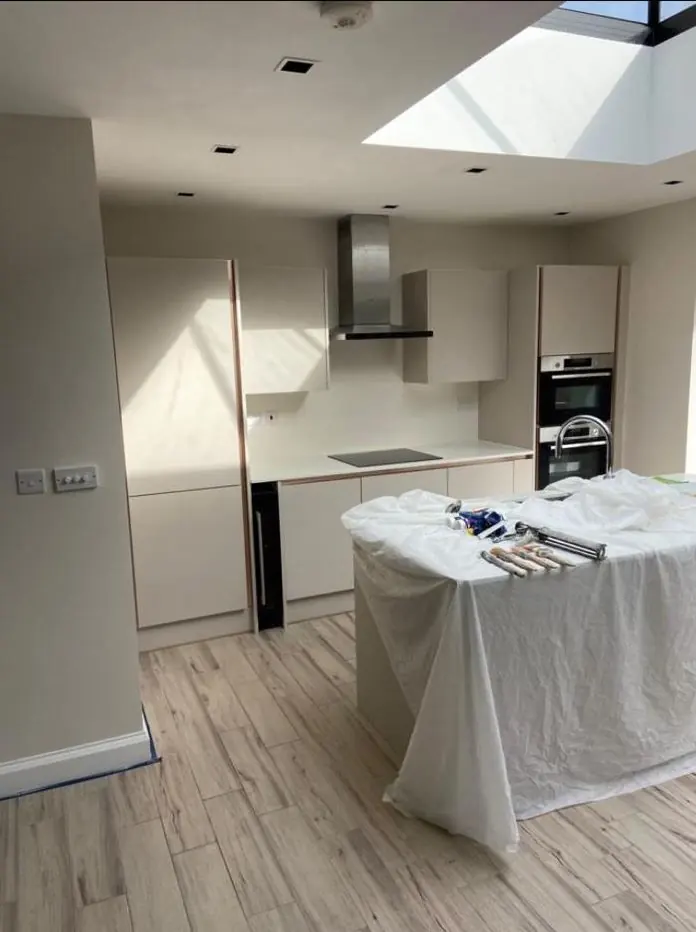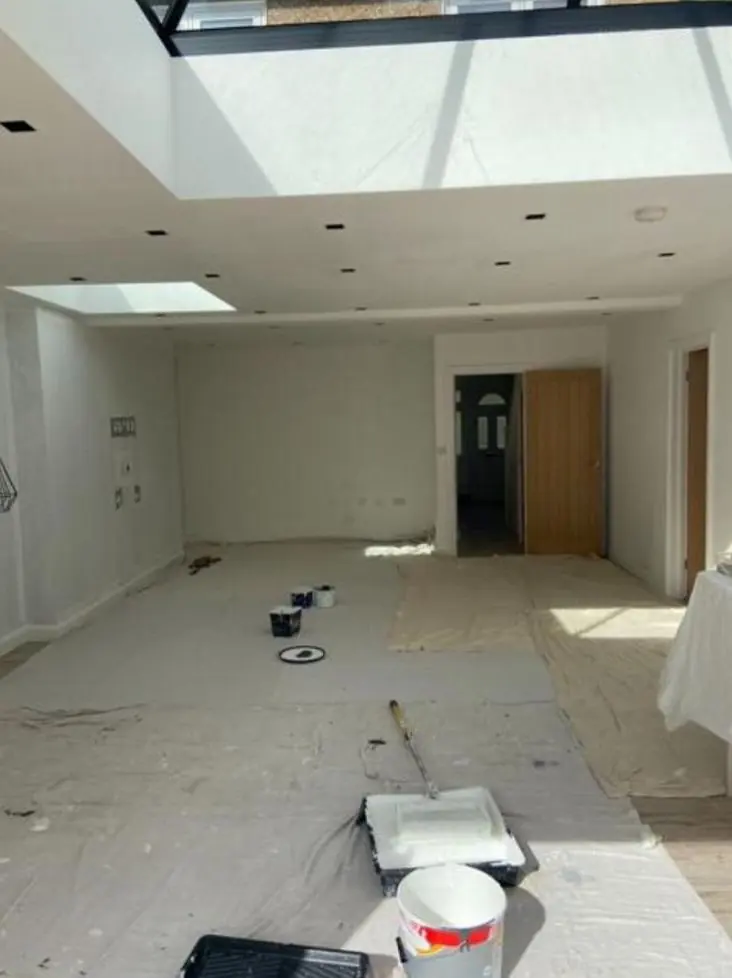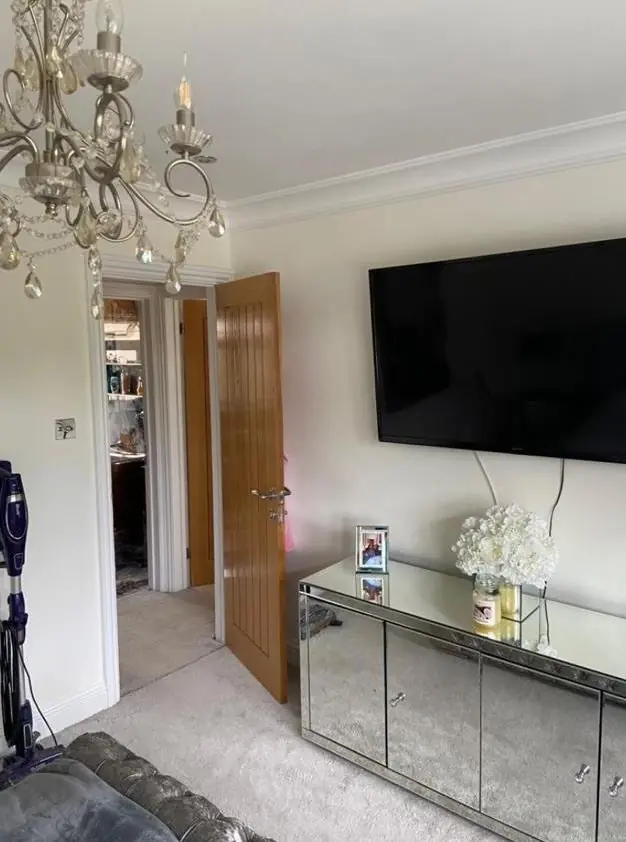
DH Painter & Decorator paints new plaster in Long Buckby, around 9 miles north-west of Northampton, from single-room extensions to new infill houses. Dean applies the right mist coat to fresh gypsum and takes extra care where a new extension meets an old lime-plastered cottage wall.
Where new plaster turns up in an old village
Most of Long Buckby’s housing is not new. The conservation area designated in March 2021 is full of 18th-century ironstone cottages and 19th-century brick terraces, and the estates around Salem, The Mounts and off East Street date from the mid 20th century onwards. Fresh plaster arrives in smaller doses: a kitchen extension at the back of a cottage, a loft room, a wall replastered after rewiring, or an infill house on a spare plot.
That may change. The draft West Northamptonshire Local Plan, out for Regulation 18 consultation in early 2026, includes Policy LB1, which proposes about 1,000 homes east of Three Bridges Road at Long Buckby Station. The parish council puts the village at about 1,900 dwellings today, so the proposal is large in proportion. It is a draft and nothing is decided, but if it goes ahead, new owners there will have bare plaster to seal and decorate once it has dried.
The joint between lime and gypsum
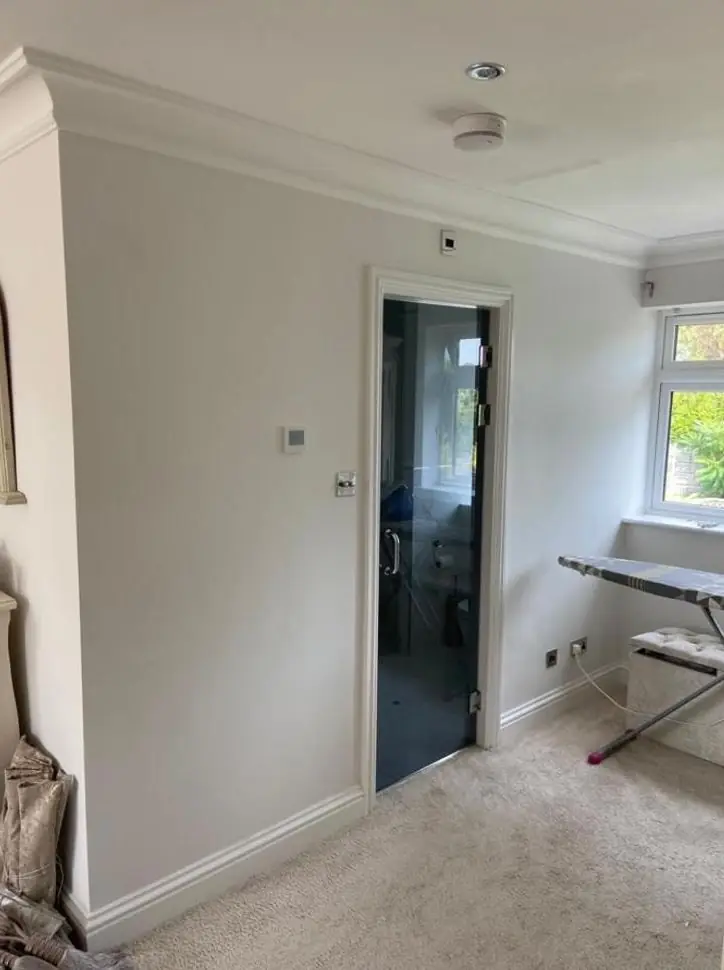
The trickiest new-plaster job here is an extension on an old house. A cottage built in coursed ironstone or rendered cob was plastered in lime, while a modern extension is normally skimmed in gypsum. The two behave differently. Lime stays slightly flexible and lets moisture pass through it; gypsum is harder and is usually finished in a less permeable emulsion. Where they meet, often at the old back wall knocked through into the new room, a hairline crack is likely to open as the materials settle at different rates.
So we treat the two sides of the wall differently. The new gypsum gets a mist coat once it is fully dry, and the old lime wall gets a breathable paint, in the same colour if you want the room to read as one. At the junction we rake out and fill with a flexible filler. Painting the whole room in one vinyl emulsion just because it is simpler can trap moisture in the old wall and lead to blistering later.
Drying time on a hilltop
Fresh skim has to dry right through before it is painted, and that depends on heating, ventilation and the season. Long Buckby sits on high ground with open views to the north and west, and an unheated extension there in a cold, damp spell can take longer to dry than people expect. We check the plaster has turned an even pale colour with no dark patches before mist coating, because painting too early traps moisture and causes flaking. Our mist coat guide explains why the first coat is thinned and by how much.
What a new-plaster job involves
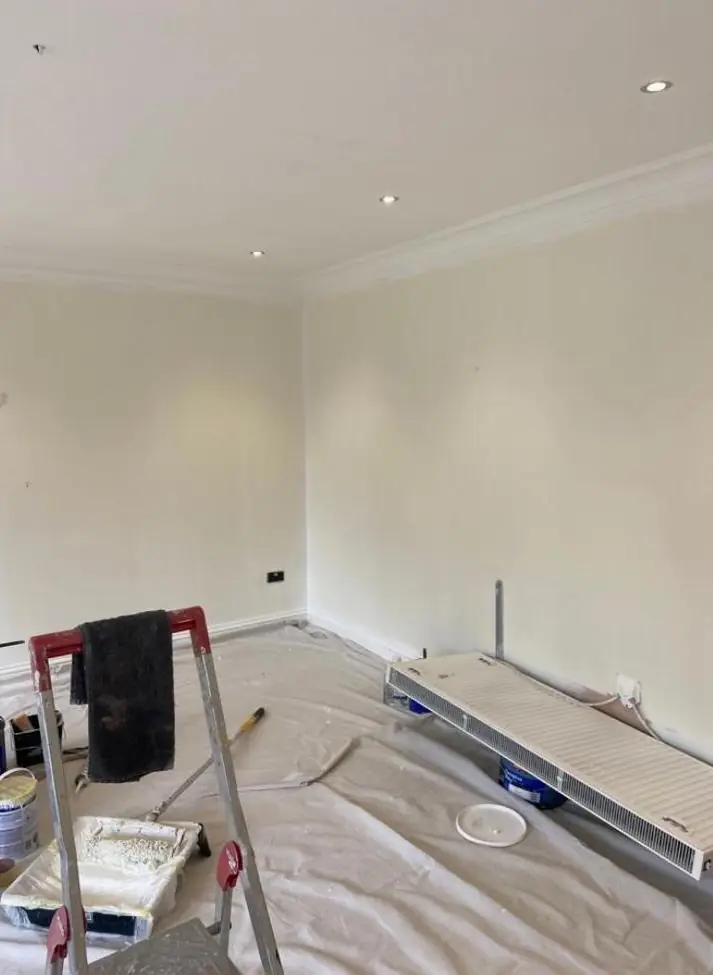
- Checking the plaster is dry, then removing dust and any plaster nibs
- A mist coat of thinned contract matt, worked well into the surface
- Filling and sanding the small dents and trowel marks the mist coat shows up
- Two full coats of the finish colour, with cut-ins done by brush
- Priming and painting the new skirtings, window boards and door linings
If your extension sits on a listed cottage, or in the conservation area, the inside is rarely affected by the appraisal, but new external joinery may be expected to match the white-painted timber of the original house. Our main new plaster and extension painting page goes through each stage in more depth, and the Long Buckby page covers the village’s older houses and their quirks.
Last updated by Dean, DH Painter & Decorator.