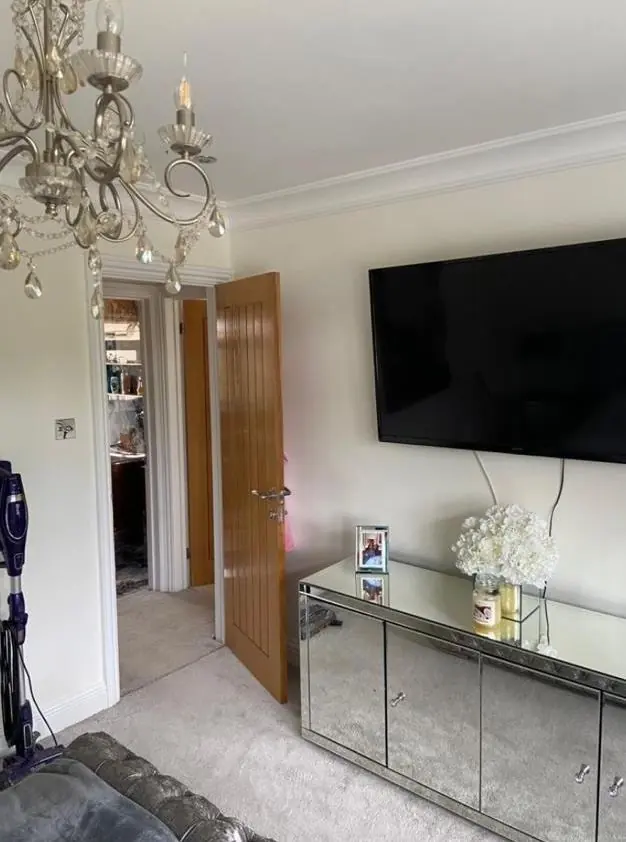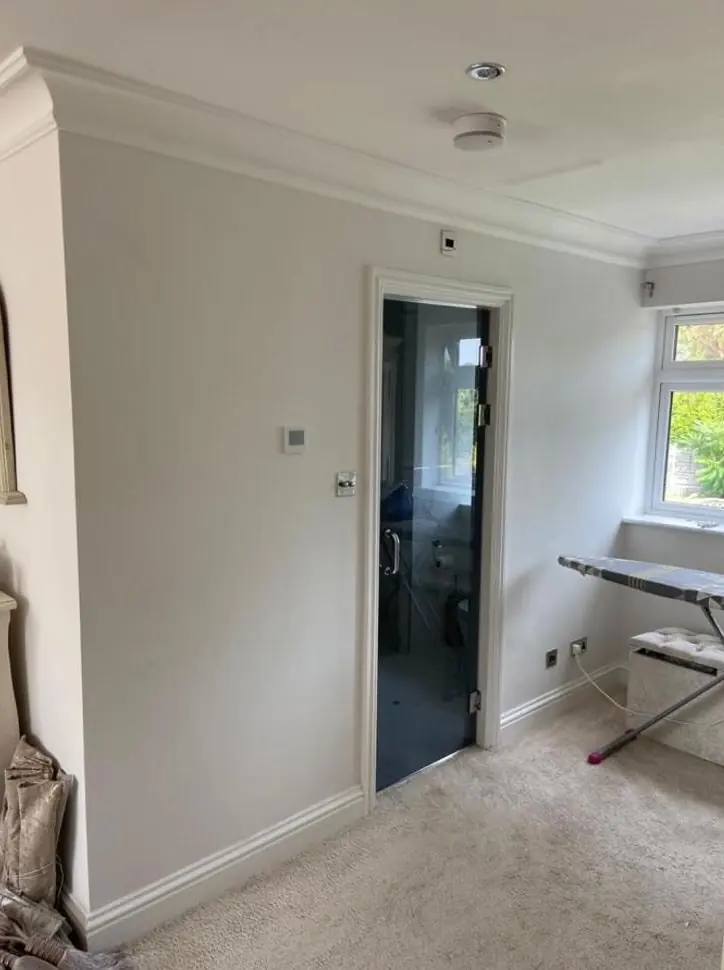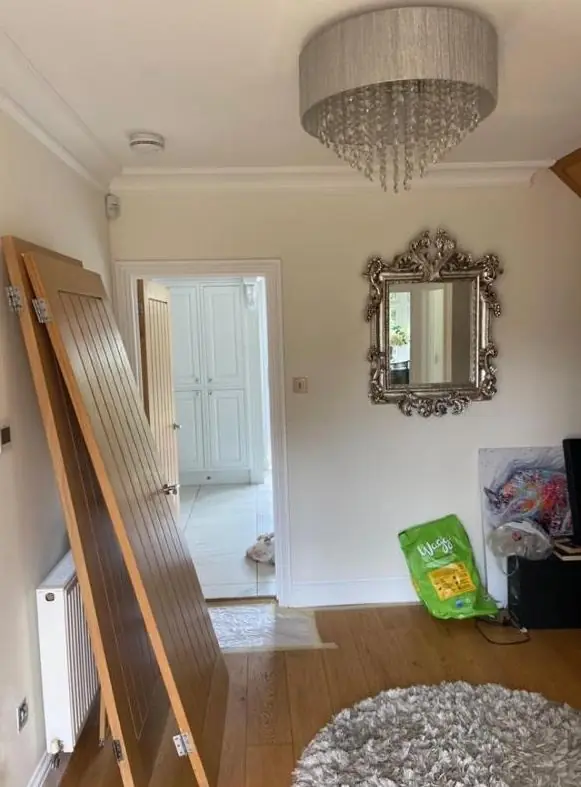
DH Painter & Decorator carries out decorative finishes in Long Buckby, a NN6 village about 9 miles north-west of Northampton. The work here leans towards traditional finishes: limewash on whitewashed and rendered vernacular buildings, and period detailing in the older stone houses and Victorian villas.
Limewash, the oldest finish in the village
Several of Long Buckby’s older buildings are whitewashed or rendered. The Peacock Inn is whitewashed, the Old King’s Head on West Street is rendered to the front, and 10-12 Harbidges Lane, thought to be the oldest house in the village, is rendered cob. The 2021 conservation area appraisal says masonry paints are often unacceptable on pre-1919 buildings and that lime render or limewash is more appropriate.
Limewash is a decorative finish in its own right. It goes on thin, in several coats, and dries to a soft, slightly uneven surface that changes with the light and weathers gradually rather than peeling. It lets cob and stone breathe, which plastic masonry paint does not.
- Old flaking limewash is brushed down, and loose material removed, rather than stripped back to bare wall.
- The wall is dampened before each coat so the limewash does not dry too fast.
- Coats are thin and built up over several days, with protection from rain and frost while they cure.
- Tinted limewash can match an existing cream or off-white, using earth pigments.
Because the village sits on an exposed hilltop, south and west-facing limewashed walls weather fastest and will need recoating first. Limewash is not a one-off job, and we will be straight with you about that.
Inside the 17th and 18th-century stone houses
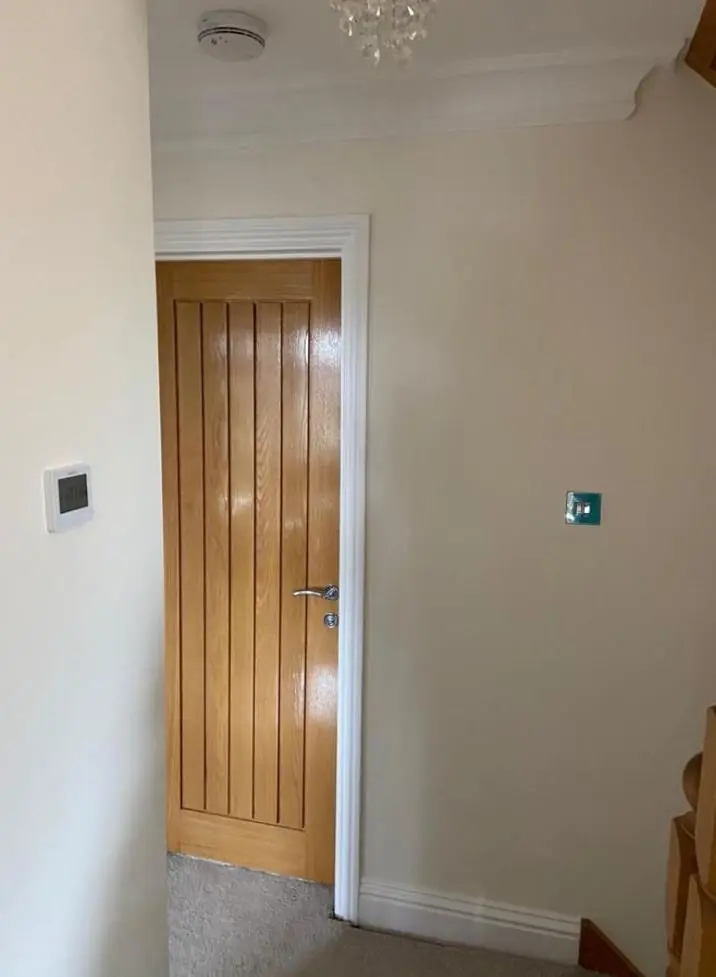
Long Buckby’s high-status older houses include Holly House on High Street, a 17th-century ironstone ashlar house with stone-mullioned windows (Grade II*), and 10 West Street, with a 1779 datestone and leaded casements. Inside stone houses of this age, the decorative choices are usually about restraint: distemper or limewash on old lime-plastered walls and ceilings, any surviving panelling in period colours, and leaded casements, like those at 10 West Street, kept clear of paint.
On listed buildings, removing historic finishes or changing the character of a room can need listed building consent from West Northamptonshire Council. Redecorating in a like-for-like finish is normally fine, but we check before quoting.
Victorian villas and picked-out detail
The Manse on Brington Road, built around 1819, and the later Victorian villas along Station Road and Rockhill Road belong to a period that liked decoration indoors. Where a house of this age still has cornicing, ceiling roses, dado and picture rails or panelled doors, picking these out in a second colour or a contrasting sheen brings them forward. Cornices are often clogged with decades of paint, so cleaning out the detail before repainting is part of the work.
A traditional three-part wall, with a dark lower section below the dado, a paper or colour in the middle and a light frieze above the picture rail, suits the tall hallways and front rooms of these houses.
Modern effects in newer homes
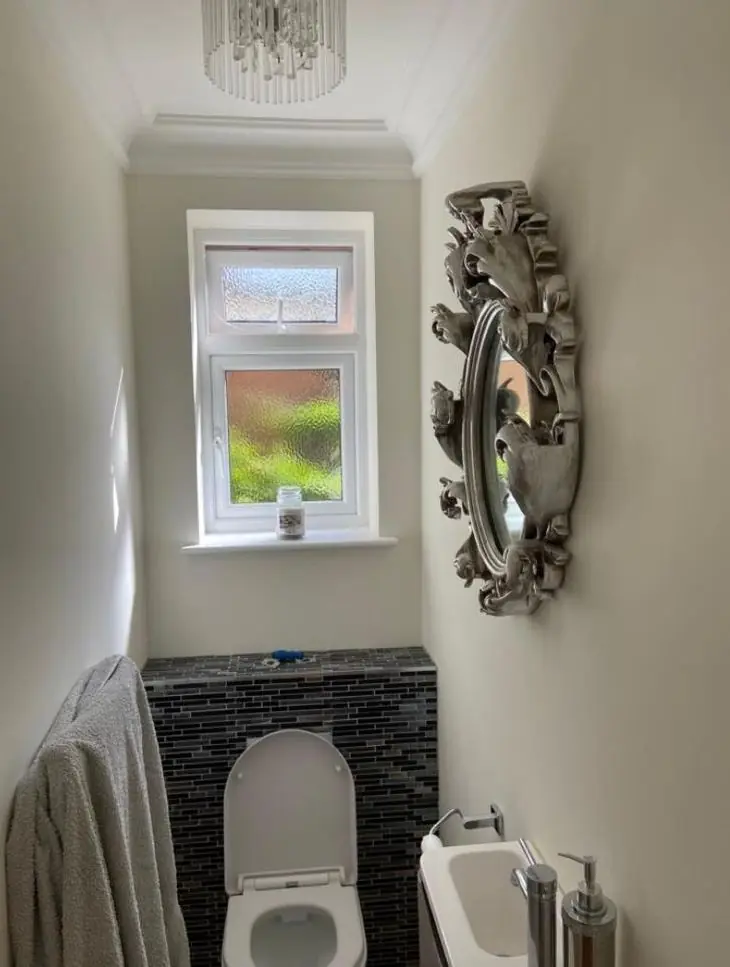
For estate houses in Salem and off East Street there are no historic constraints, so feature walls, two-tone colour blocks, painted panelling and faux finishes are all options. The prep underneath matters as much as the effect itself. The main decorative finishes page covers these in more detail.
Planning the work
Limewash needs mild, dry weather, so we book exterior work for late spring to early autumn. Our exterior painting seasons guide explains why lime needs that window. Dean visits from Northampton, about 9 miles away, to look at the existing surface and talk through what will suit it. For everything else we do in the village, see the Long Buckby area page.
Last updated by Dean, DH Painter & Decorator.