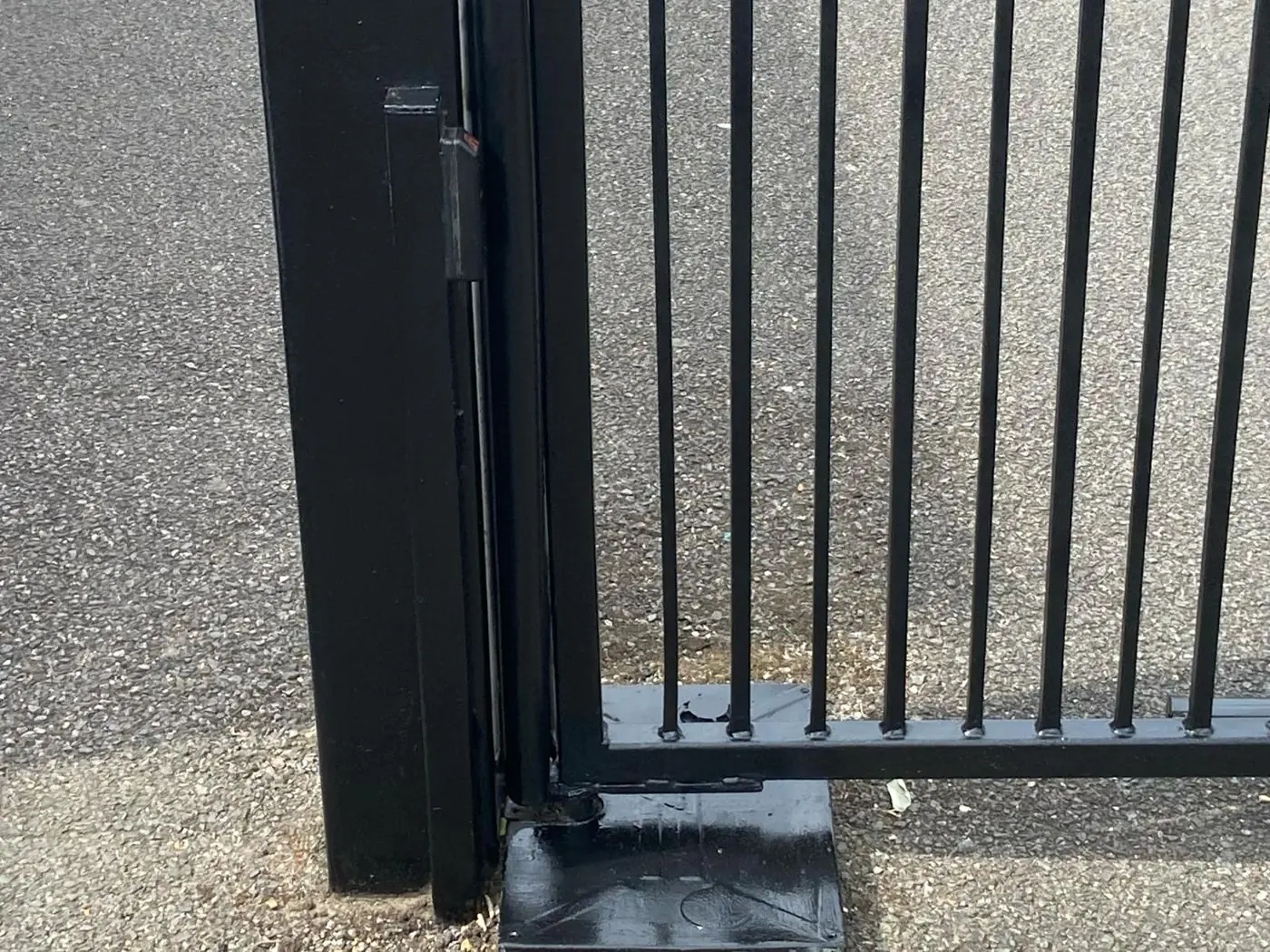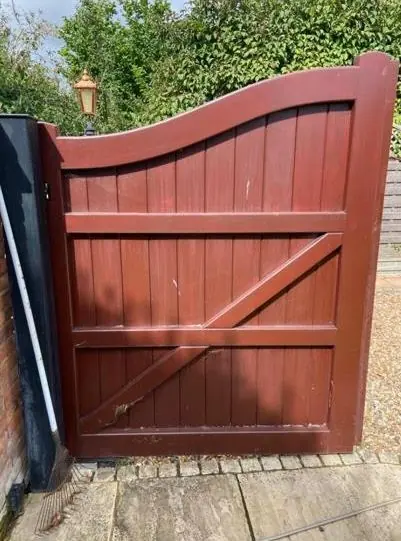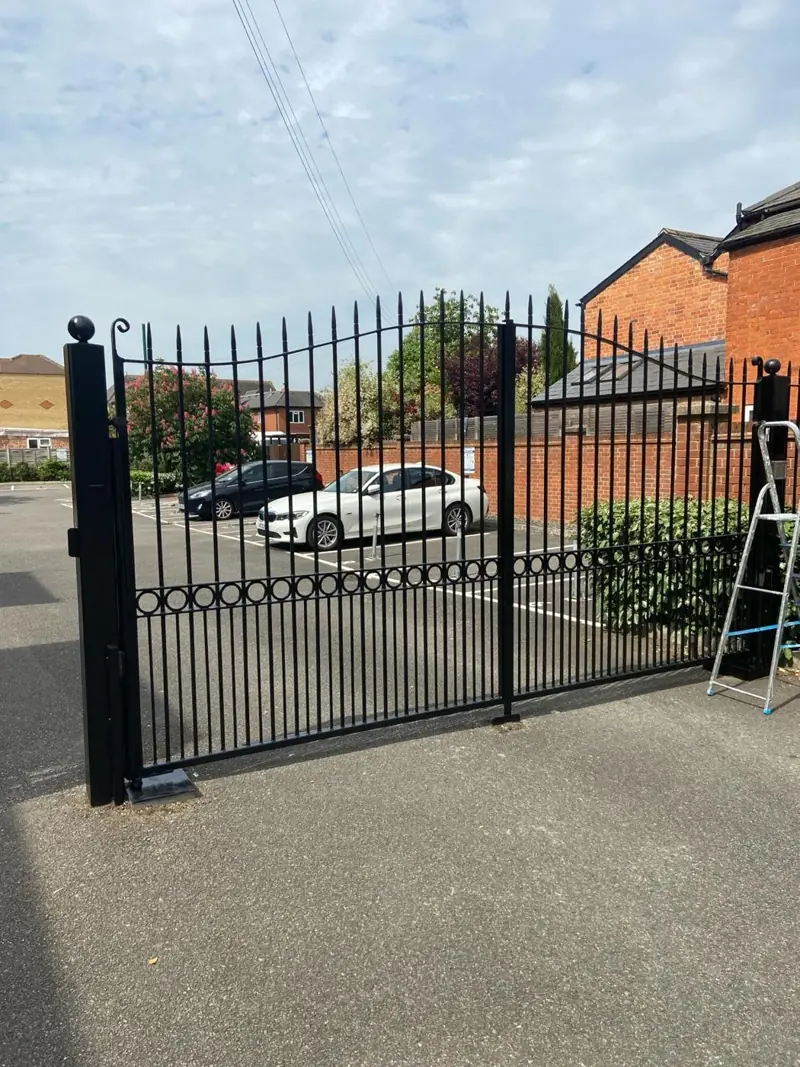
DH Painter & Decorator repaints metal gates, railings and ironwork in Rothersthorpe, NN7, about 3.4 miles south-west of Northampton town centre. Dean covers the village from our Northampton base. Railings are not a feature recorded here, so most metal jobs are farm gates, door ironwork and garden gates.
The metalwork you find in Rothersthorpe
Rothersthorpe is not a village of front railings. The historic core along Church Street and North Street is defined by stone and brick boundary walls, and none of the sources on the village records rows of railings in front of houses. That changes what a metal painting job usually means here. Three kinds of metalwork come up most:
- Ironwork on the plank doors of the early farmhouses: strap hinges, latches and studs.
- Farmyard and field gates on farm properties and converted farm buildings around the village.
- Garden and side gates on the 20th-century houses and small estates off North Street, Banbury Lane and Kislingbury Road.
If you do have railings, a boot scraper or an old iron gate in a wall opening, the same approach applies, and Dean will look at it during the quote.
Old iron on old doors
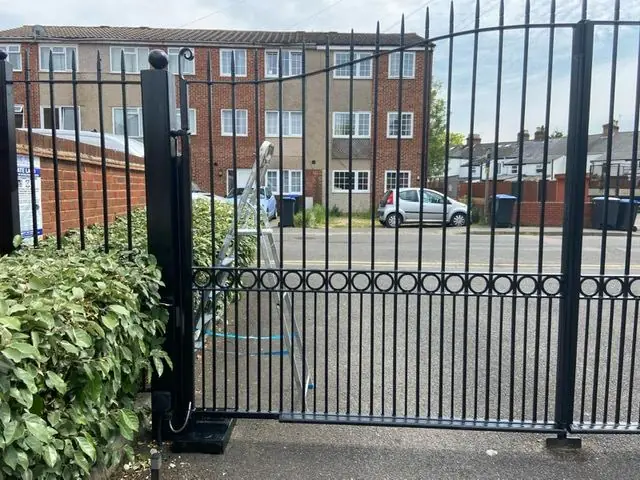
The 17th- and 18th-century farmhouses in the conservation area include plank doors with heavy ironwork, and that ironwork is as much part of the door as the timber. On houses of that age it is likely to be wrought or hand-forged iron, painted many times over, with rust working out from under the paint at the edges. Treating it properly means taking flaking paint and loose rust back to sound metal by hand, priming bare spots with a rust-inhibiting primer and finishing with an oil-based or dedicated metal paint.
We do this alongside the door rather than as a separate visit, so the colours and the order of work are planned together. On a listed building, and there are ten in the village including the Manor House at 1 North Street and Poplars House, the ironwork is part of the listed fabric. Keep the existing colour, or check whether consent is needed for a change. Black is the usual colour for door ironwork on traditional houses.
Farm gates and gates onto open land
Field and farmyard gates take harder treatment than anything in a garden. They are swung daily, knocked by vehicles, and on Rothersthorpe’s rural eastern edge they face the open countryside with no shelter. Older gates are often painted mild steel or wrought iron with rust at every joint. Newer ones may be galvanised, which needs a different primer, because ordinary metal paint does not grip a fresh galvanised surface.
The village stands on raised ground that falls away in all directions, so a gate on the edge of a field dries quickly in wind but also catches the rain. We check hinges and hanging posts for movement, since a gate that drags will scrape its paint off again within weeks. Where a gate opens onto a lane, we agree how long it needs to stay open or closed while the coats harden.
Garden gates on the newer houses
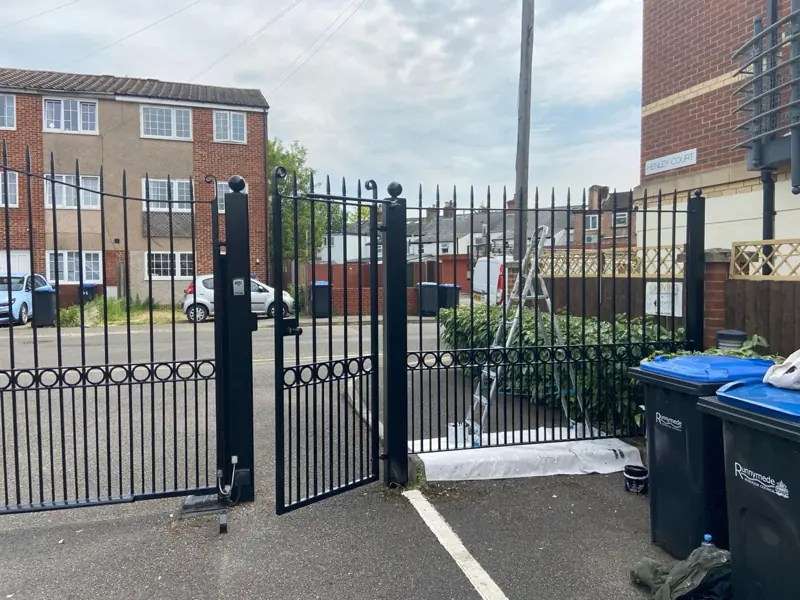
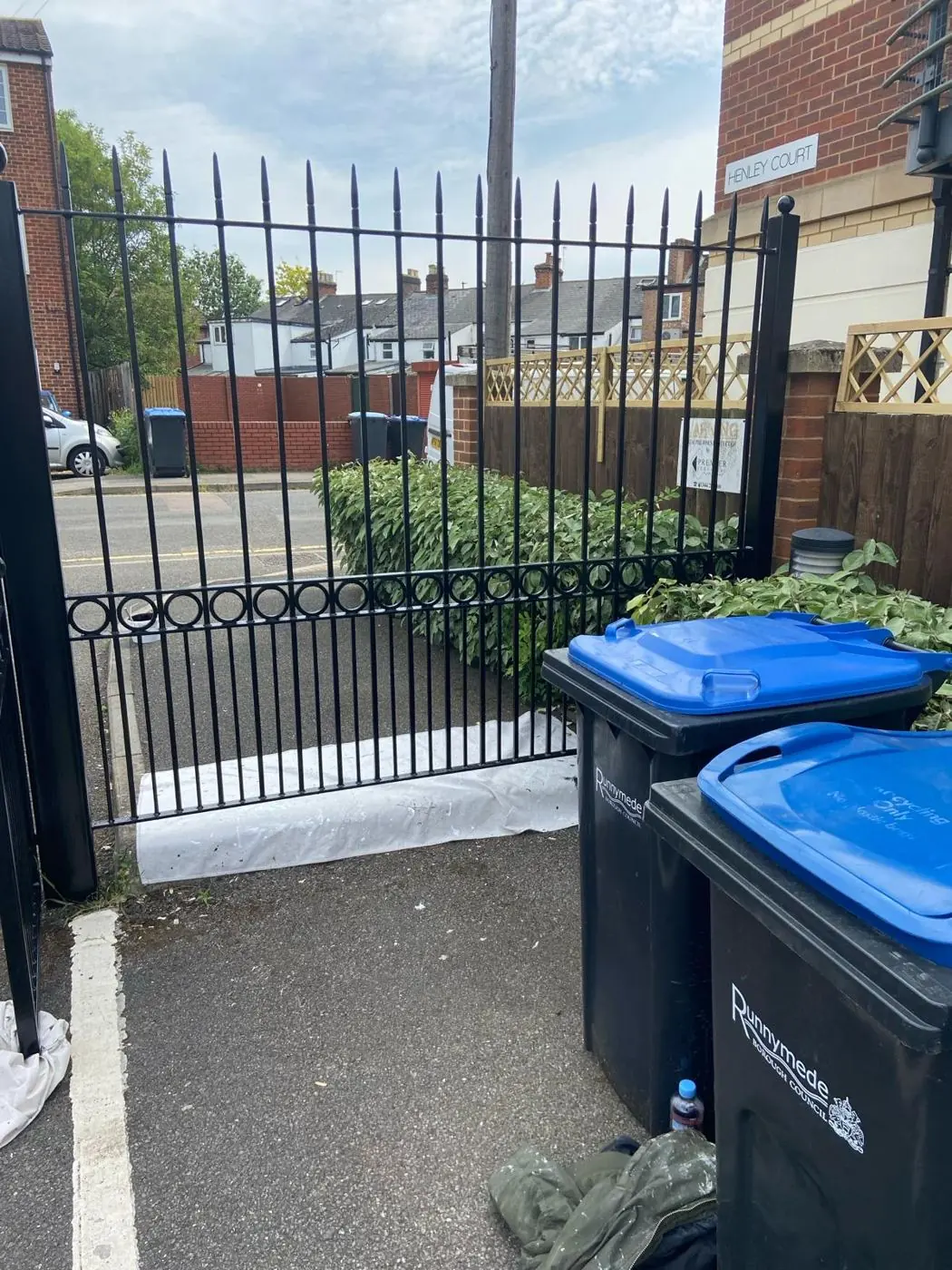
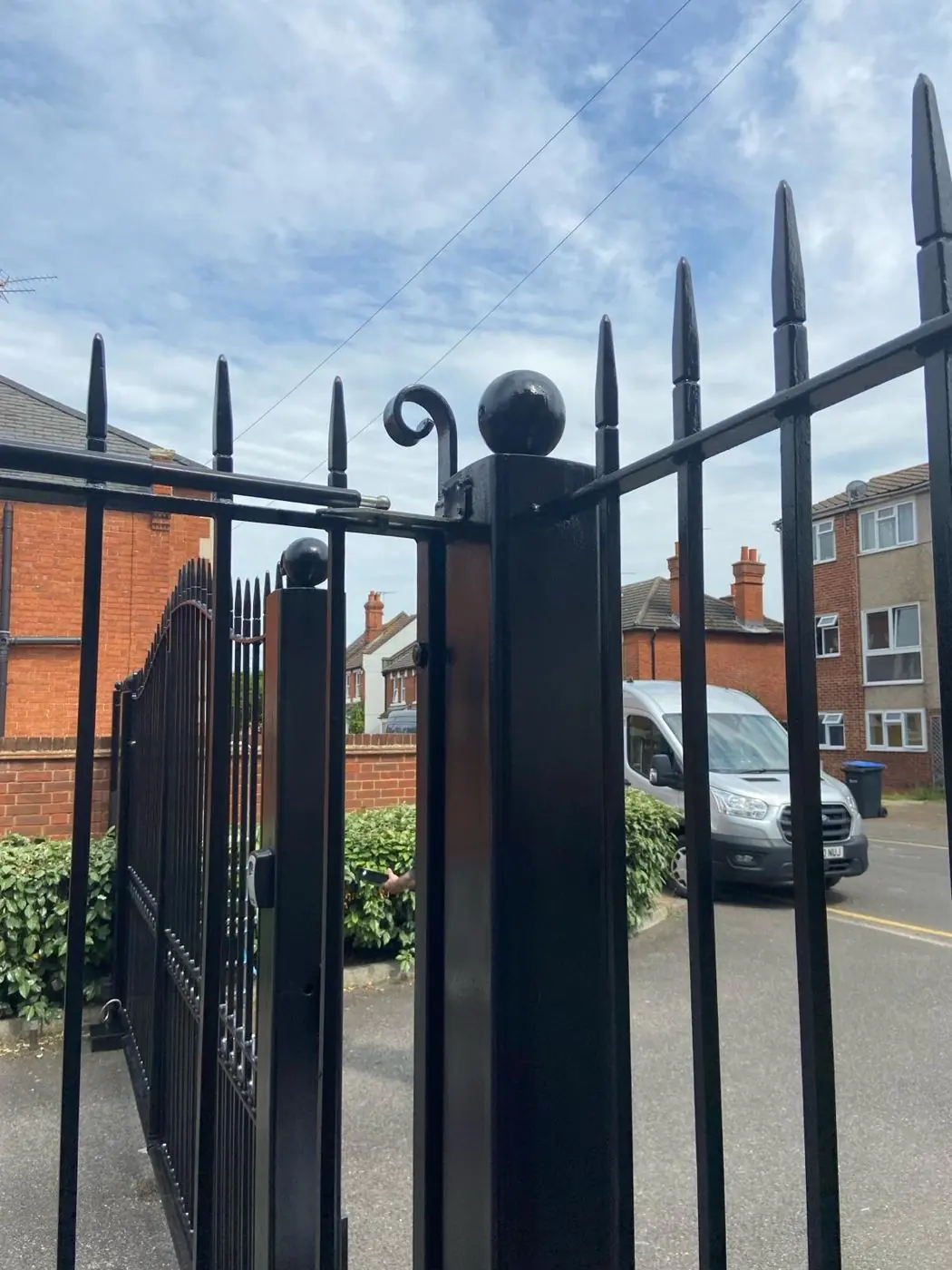
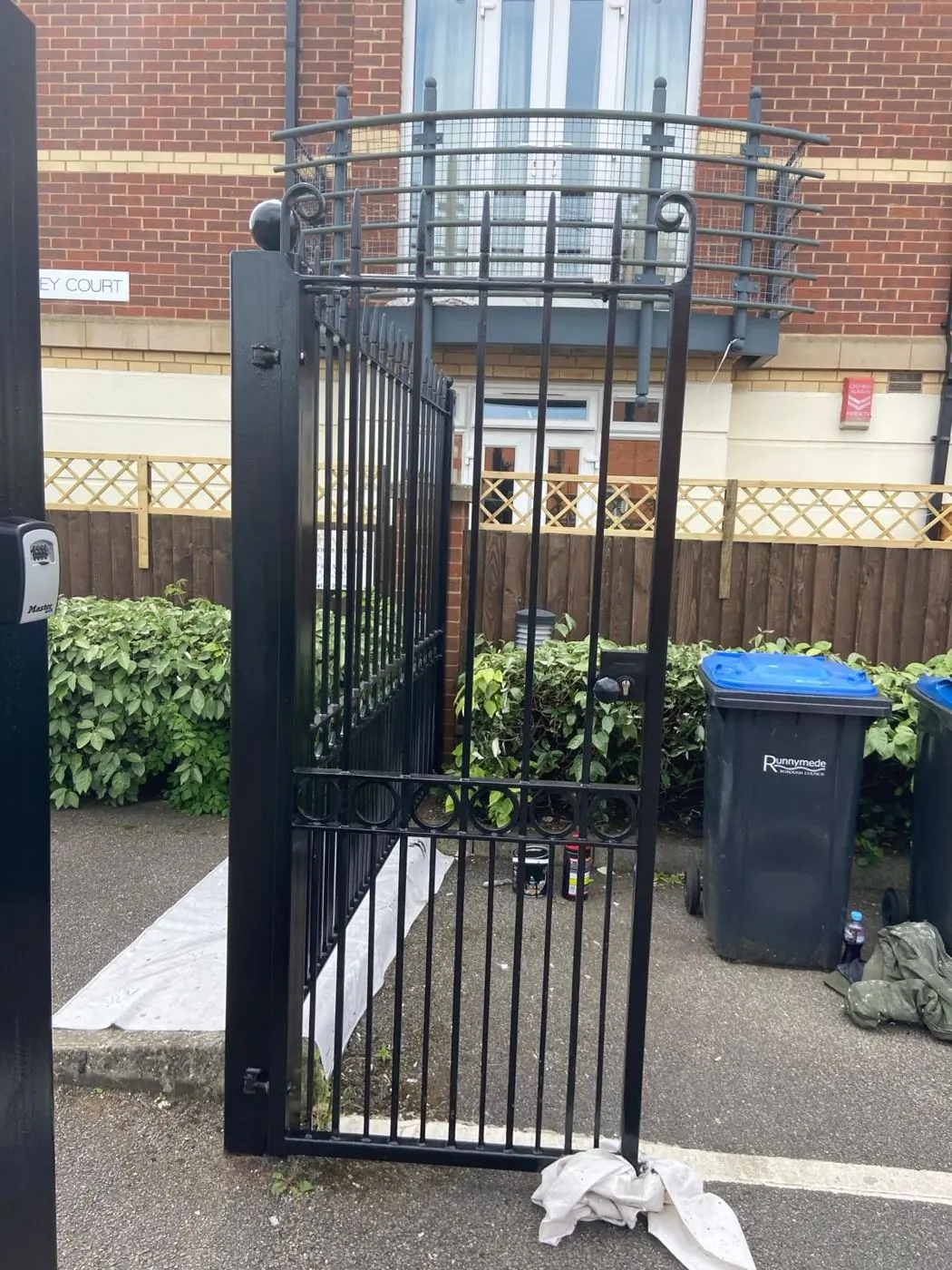
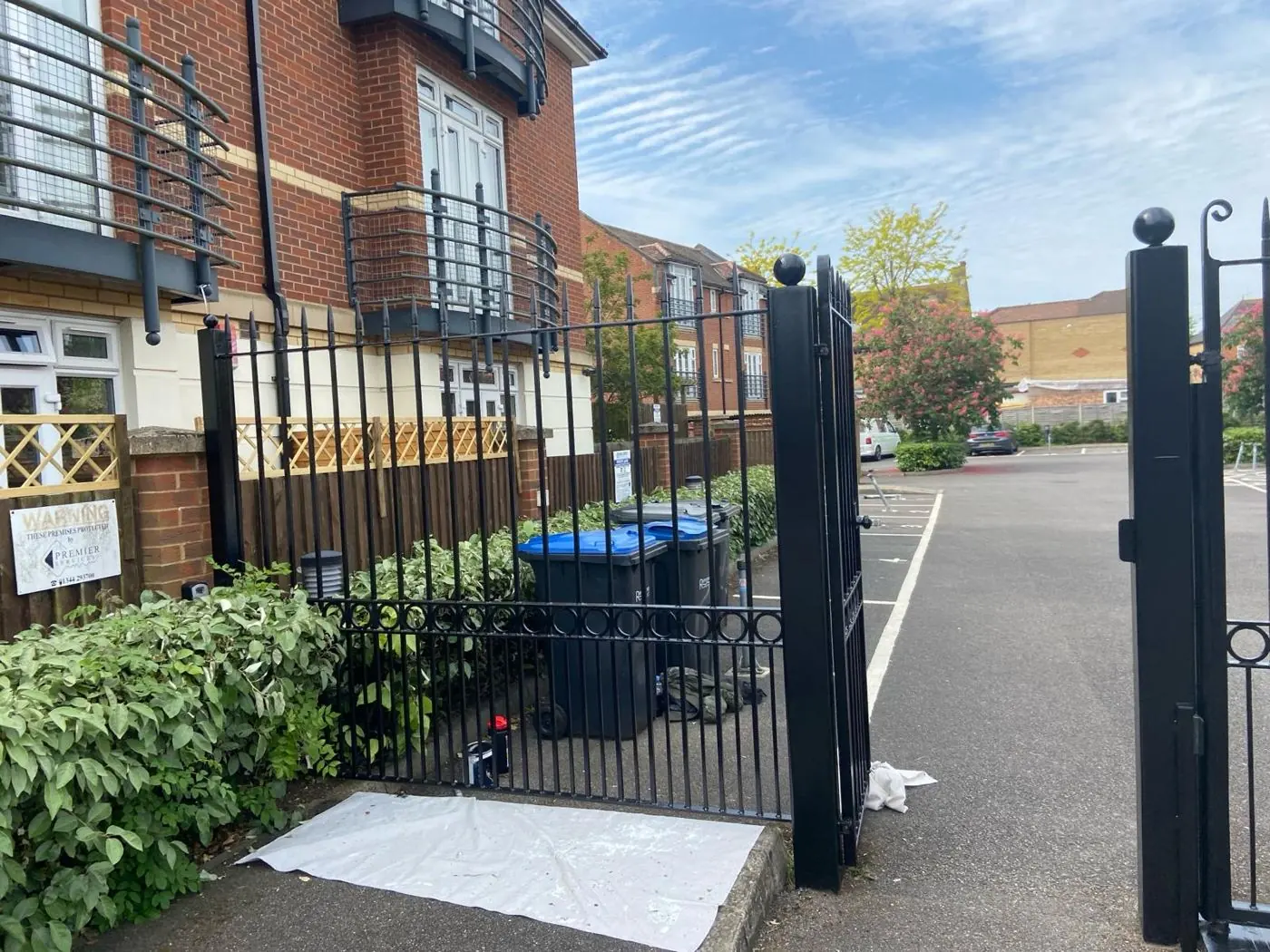
On the modern houses, metal gates are usually steel side gates or decorative front gates. These are straightforward: degrease, abrade, spot-prime any rust and apply two coats of metal paint in the finish you choose. Being outside the conservation area core, the colour is your decision. If the gate is set in a brick pier or wall, we mask the masonry carefully, because paint on facing brick is hard to remove cleanly and spoils the look of the pier.
For the full method and paint systems, see the main metal gate and railing painting service. Our cost guide explains what affects the price, and the Rothersthorpe page lists everything else we cover in the village.
Last updated by Dean, DH Painter & Decorator.