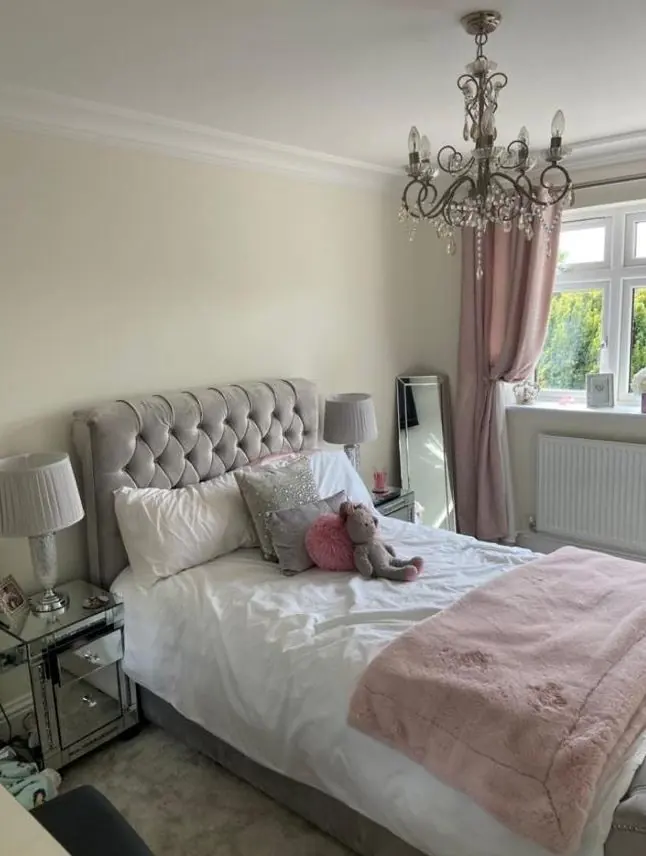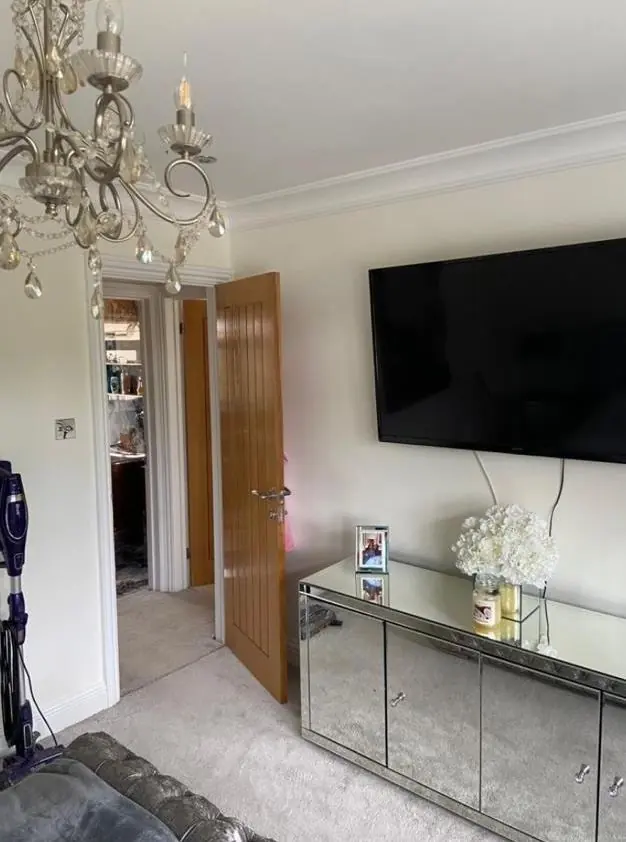
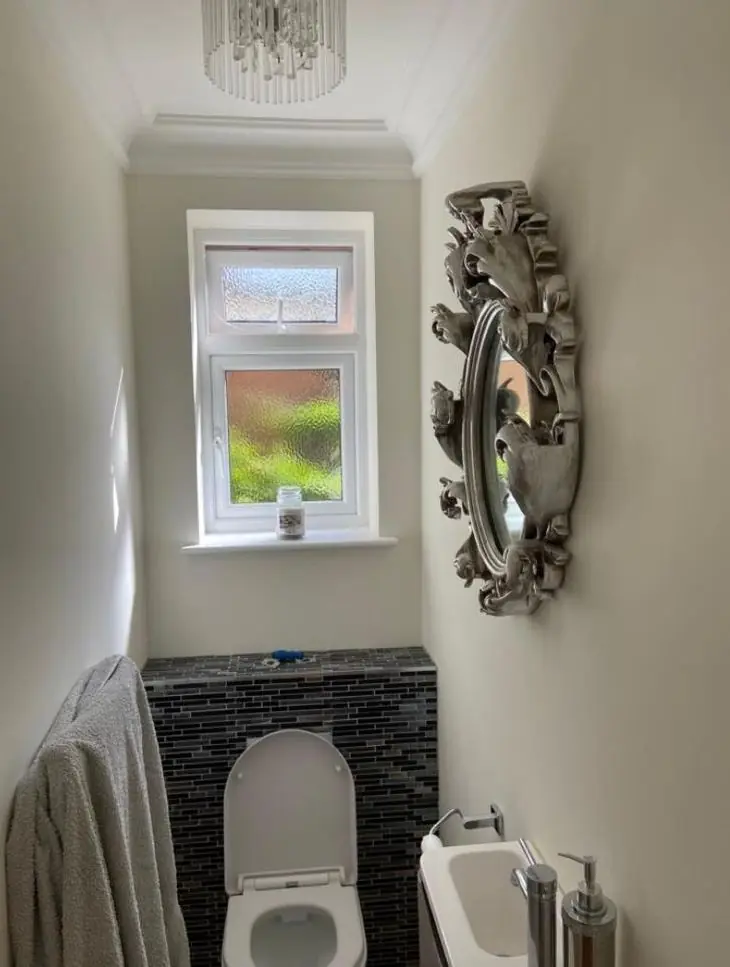
DH Painter & Decorator paints interiors in Moulton, the large village 4.3 miles north-east of Northampton town centre. Dean adapts the paint system to the house: breathable emulsions on the solid, often lime-plastered walls of the 17th and 18th century cottages, and standard preparation and finishes on the 20th century brick homes around the village edge.
Two very different kinds of wall inside one village
Moulton’s interiors split cleanly in two. The historic core around West Street, Church Street, Chater Street and Stocks Hill is made up of farmhouses and cottages built from coursed local ironstone and sandstone, most of them two storeys high and only one room deep. Several carry datestones from the second half of the 17th century. Around them, 20th and 21st century housing on streets such as Oakley Drive, Albone Close, Stewart Close, Jeyes Close and Lunchfield Lane was built in modern brick, and inside those houses you will mostly find plasterboard or gypsum plaster.
The paint that suits one of those walls can cause trouble on the other, so the first thing Dean does on a Moulton quote is work out which kind of wall he is looking at. In older cottages that are part-modernised, the answer can change from room to room.
Solid stone, lime plaster and breathable paint
A solid ironstone wall has no cavity. Moisture moves through it, and older lime plaster on the inside face is designed to let that moisture out again. Seal it with a modern vinyl emulsion and the damp has nowhere to go, which tends to show up as blistering, flaking or powdery patches low on the walls and around chimney breasts. In the cottages of the conservation area we therefore look for signs of lime before choosing anything:
- Softer, slightly uneven plaster that dents more easily than gypsum
- Earlier coats that have chalked or flaked rather than peeled in sheets
- Walls that feel cool and slightly damp to the touch on the outer face of the house
Where lime is likely, we use a breathable emulsion or a mineral paint and avoid acrylic sealers. Uneven walls are part of a house of this age, so we fill cracks with compatible materials rather than trying to skim the room flat. Low ceilings and beams take more cutting in than ceiling rolling. If the house is one of the 42 listed buildings in the parish, it is worth checking with the owner and the council before changing finishes, even indoors.
The fringe estates: plasterboard and builder’s finishes
The mid and late 20th century homes on Pytchley View, Grove Farm Lane, Carey Close and Pound Lane, and the newer infill at Honeystones and Church Mews, are a more familiar job. Walls are flat and dry, so a good-quality emulsion goes on without the breathability concerns. The usual tasks are filling the settlement cracks at ceiling joints, sanding back drips from earlier repaints and replacing tired builder’s magnolia with a considered colour scheme. Rooms in an extension or a converted outbuilding with fresh plaster need a diluted mist coat first, which our guide to painting new plaster explains.
| Moulton home | Typical wall | What we use |
|---|---|---|
| 17th-18th century cottage in the core | Solid stone, lime plaster, uneven | Breathable or mineral emulsion, lime-compatible filler |
| Victorian cottage or Georgian house | Solid wall, mixed old and repaired plaster | Assessed room by room |
| 20th century estate house | Plasterboard or gypsum skim | Standard emulsion, eggshell or satin on woodwork |
| Recent infill or extension | New gypsum plaster | Mist coat, then two full coats |
Victorian cottages and Georgian houses: the middle ground
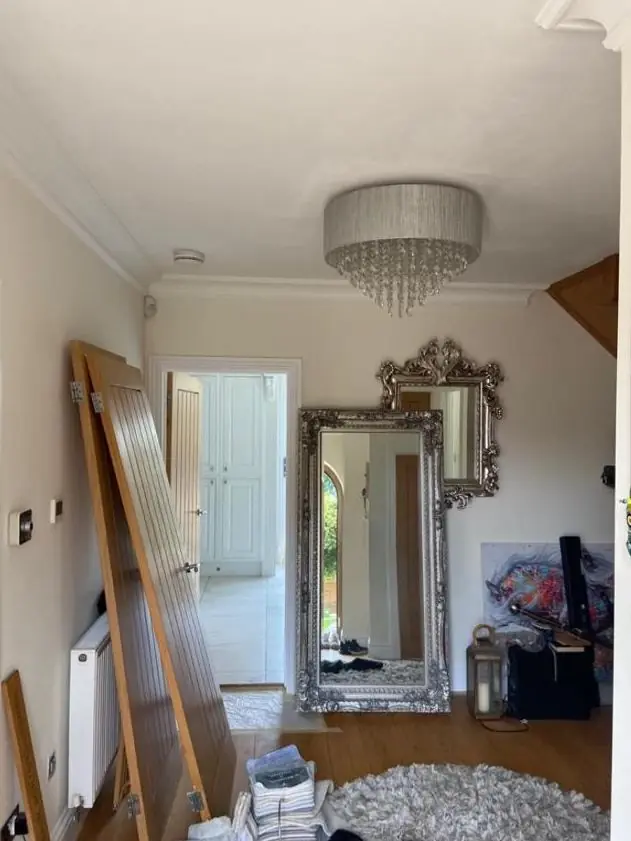
Between the oldest cottages and the estates sit houses such as the five Victorian cottages on West Street opposite the former Institute of Agriculture, Prince of Wales Row and the larger Georgian homes like Waterloo House. These usually have solid walls with a patchwork of old and repaired plaster, plus taller ceilings, sash windows and six-panelled doors. One room might be original lime, the next a gypsum skim from a past renovation, so Dean tests each wall rather than picking one paint for the whole house. Sash boxes and panelled doors add a good deal of cutting in.
The general method we follow on every room is set out on our main interior painting page. For an overview of the village as a whole, see our Moulton area page.
Last updated by Dean, DH Painter & Decorator.