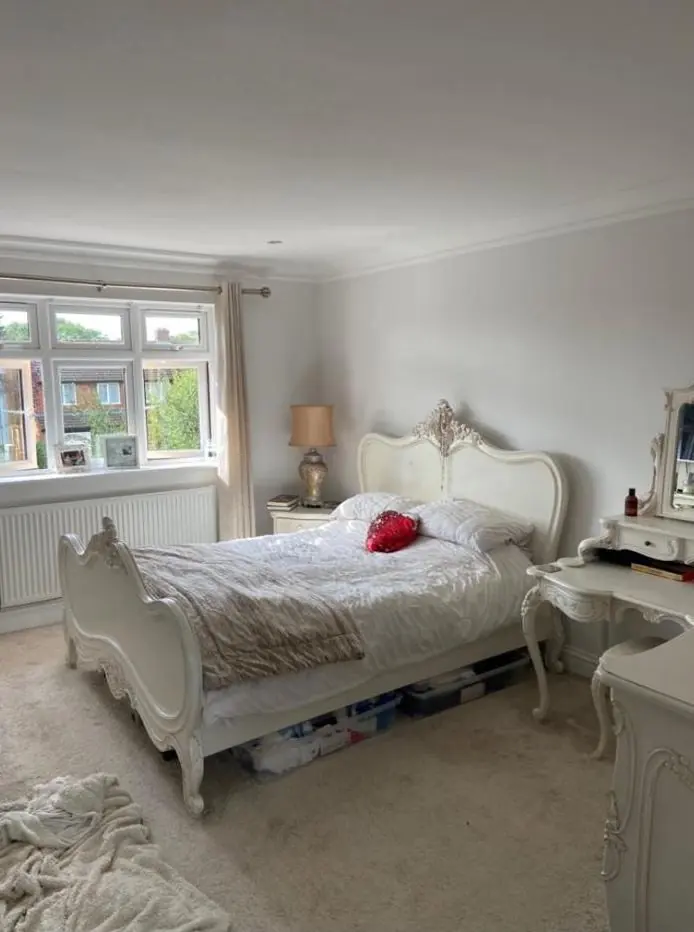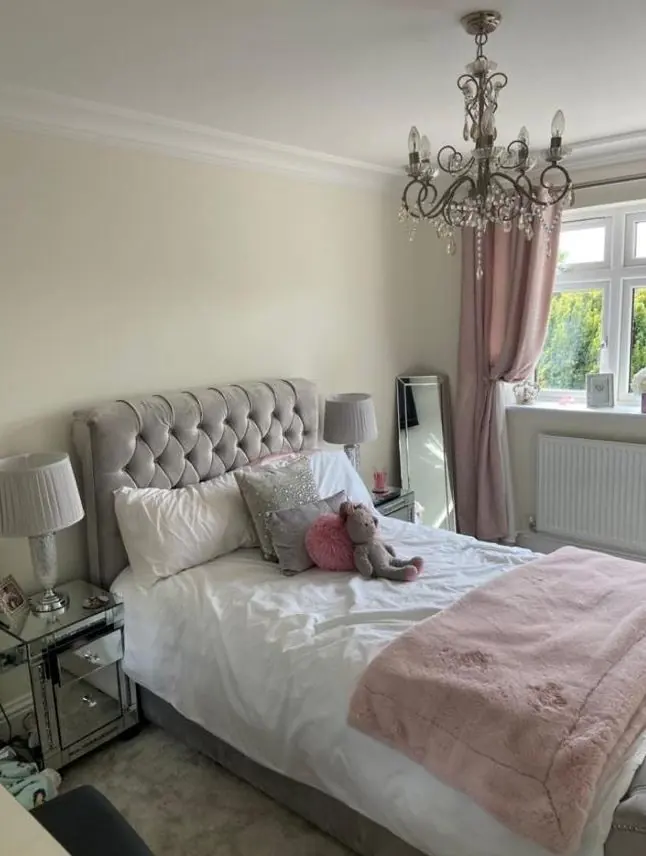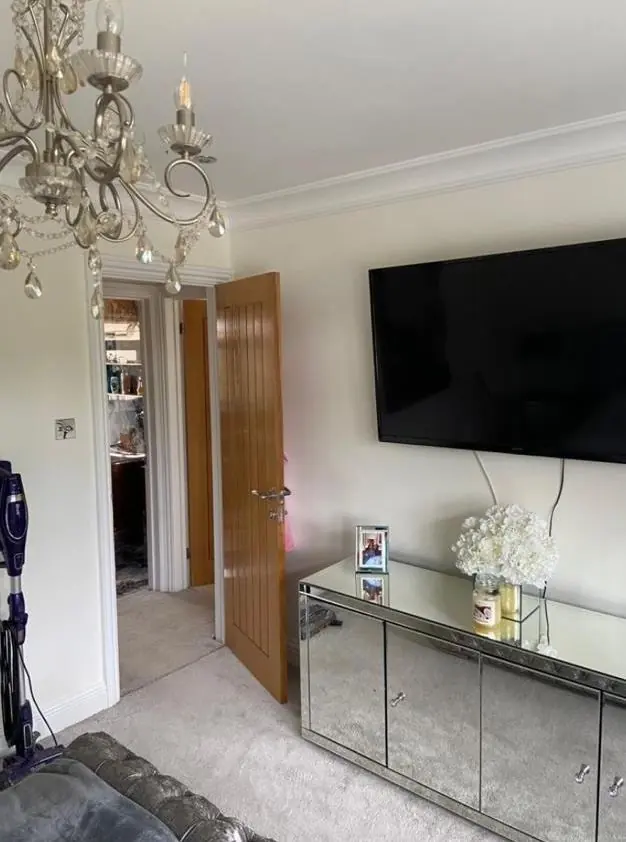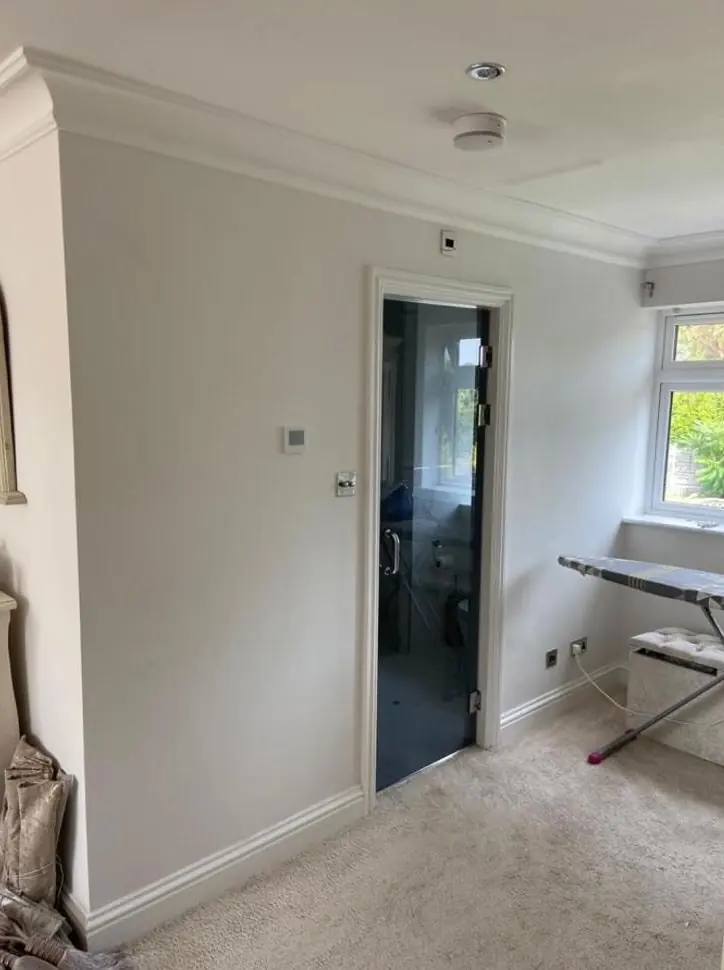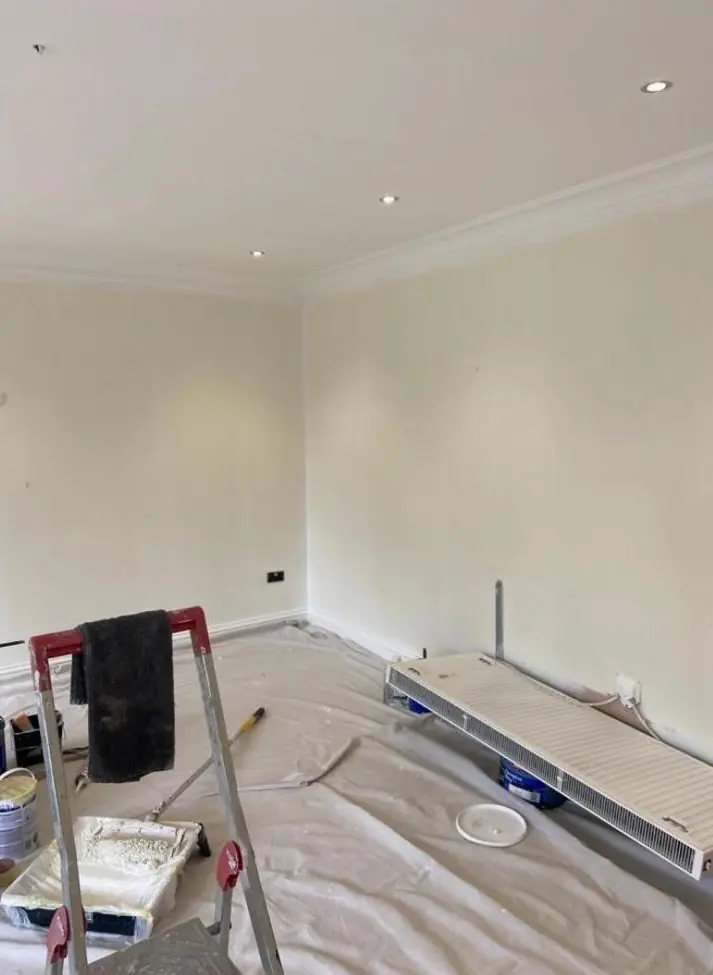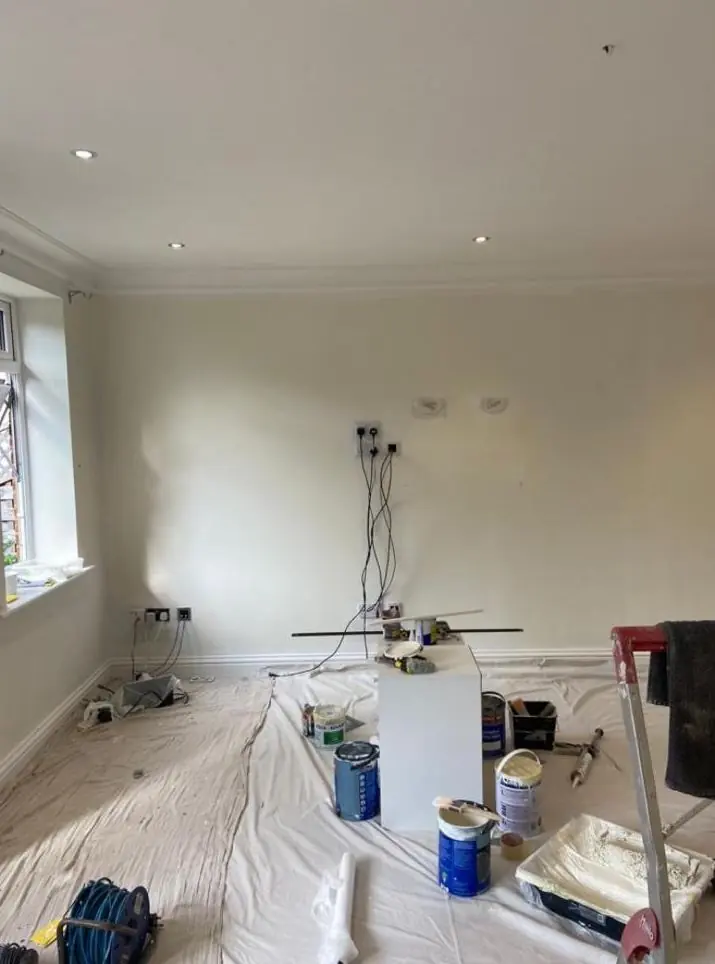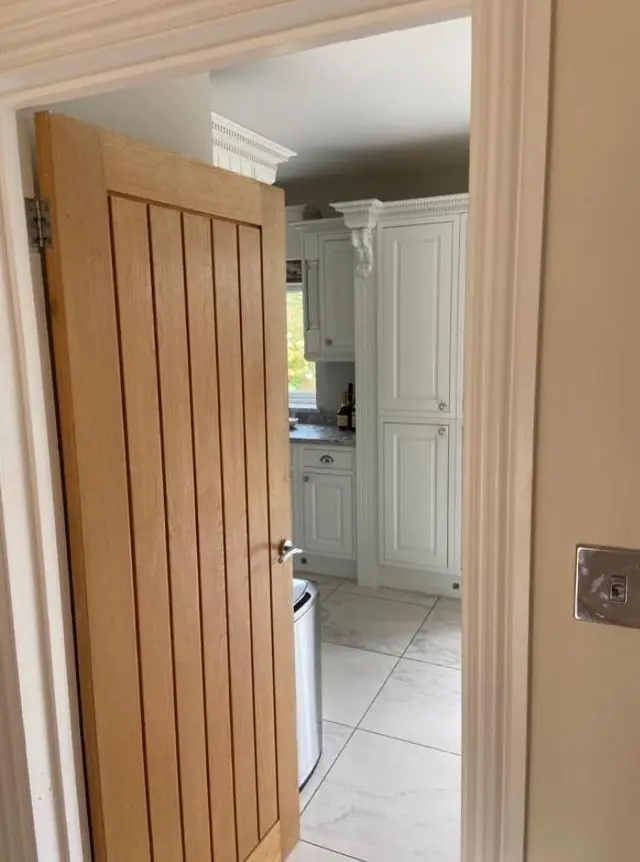
Dean paints the insides of Overstone Leys homes from our Northampton base; the estate lies 4.6 miles north-east of the town centre. On a neighbourhood where almost every house dates from 2016 or later, the work centres on replacing builders' contract emulsion with a washable finish and dealing with the cracks that open as new walls dry out.
What the housebuilder left on your walls
Overstone Leys opened up the Northampton North sustainable urban extension after outline consent in 2015, and its houses have gone up parcel by parcel under the big housebuilders since. That history decides how interior painting goes here. Nearly every room on Fern Way, Lilac Way, Kipling Way or Stratford Drive was finished by a site decorating crew working to a programme, and the paint they used is contract matt: a cheap, heavily diluted emulsion chosen because it touches up easily before handover.
It looks fine on completion. Within a year it marks when a chair rubs it, and a damp cloth takes colour off with the grime. Rolling a good emulsion straight over it is a gamble, because the new coat bonds to a chalky layer that is barely holding on itself. Our usual first step on these walls is a wipe test, then a sealing coat where the surface is powdery, and only then the finish you will actually live with.
Cracks in year one and year two
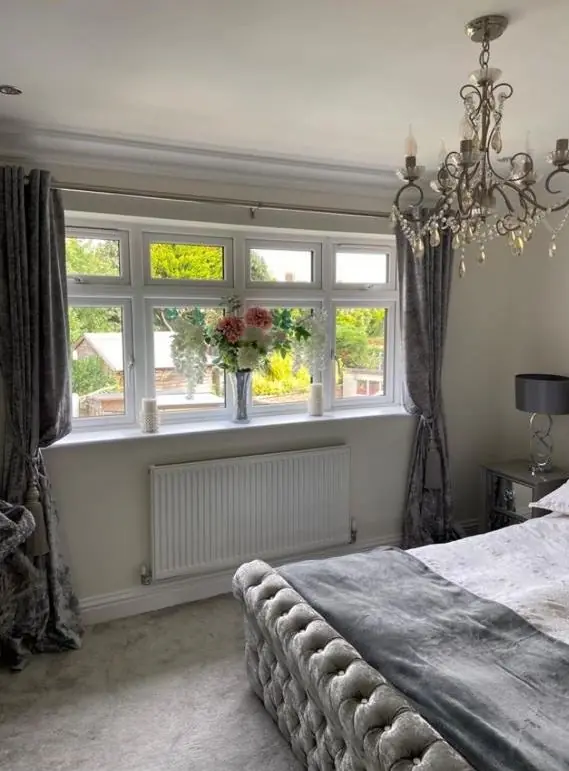
A house built in the last few years is still giving up the water that went into its plaster, timber and blockwork. As it dries, fine cracks open in predictable spots:
- along the line where wall meets ceiling, especially on upper floors
- at internal corners and where a stud partition meets an outside wall
- around door linings and above window reveals
We rake these out, fill them and run a flexible decorator’s caulk along junctions that will keep moving a little, so the new paint does not split along the same line by next winter.
Timing matters while the developer’s warranty still runs. Snagging visits can involve the developer’s own trades filling or re-skimming, and anything structural belongs on their list, not ours. Our advice is to let snagging finish first, then decorate once, rather than paying to paint a wall the builder later opens up. Where a snag repair leaves bare plaster, it needs a mist coat before anything else; the mist coat guide explains why.
Picking finishes for rooms that get used hard
The homes here run from two to five bedrooms, so the rooms that take a beating are predictable: the kitchen-diner, the downstairs cloakroom, children’s bedrooms and the hall. For those we normally suggest a durable or scrubbable matt, which keeps the flat look of the contract paint but stands up to a sponge. Ceilings stay in a standard matt white, because they were never the problem.
Ask about the woodwork while you are planning walls. Internal doors and skirtings on new houses arrive primed or in a basic satin that chips where feet and hoovers hit it, and a waterborne satin or eggshell resists that without turning yellow on the landing. Doing walls and joinery in one visit also avoids cutting a fresh wall line into old, scuffed trim.
Getting to you while the estate is still being built
Every route in starts on the A43. Some closes are narrow and some drives are shared, so we agree where the van goes before the first day. On parcels next to the live David Wilson Homes site or the construction land to the south, site traffic and mud can affect arrival times, and we plan around that rather than block a neighbour in.
Inside, we sheet floors and stairs fully; new carpet is the thing most owners worry about, and rightly. For the general approach to preparation and coats, see our interior painting service, and for what else we handle locally, the Overstone Leys area page. Rates are covered in our decorating cost guide.
Last updated by Dean, DH Painter & Decorator.