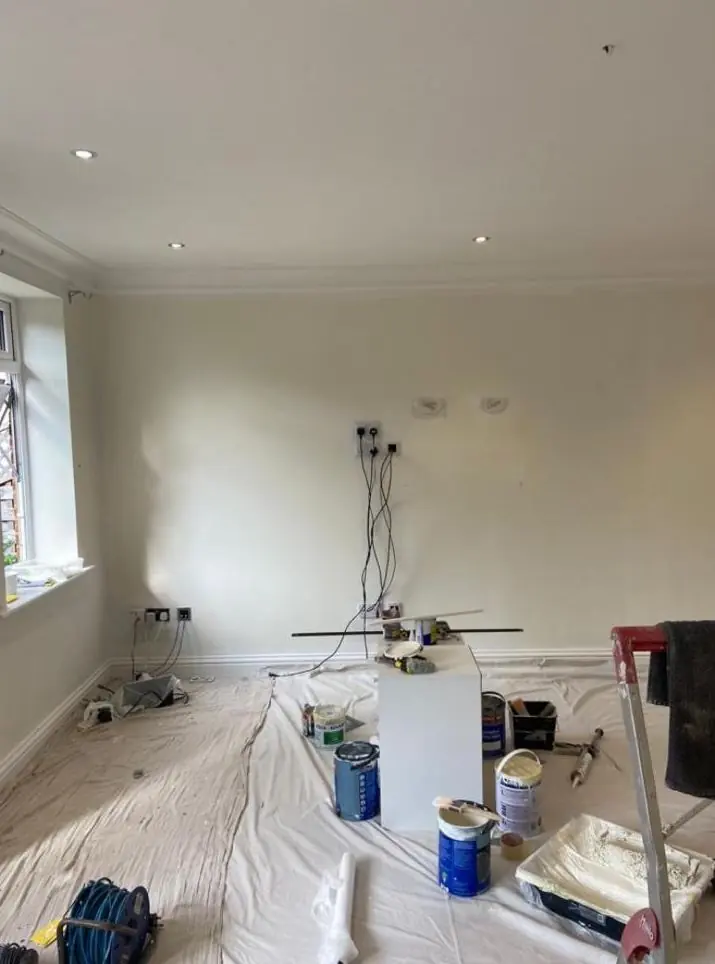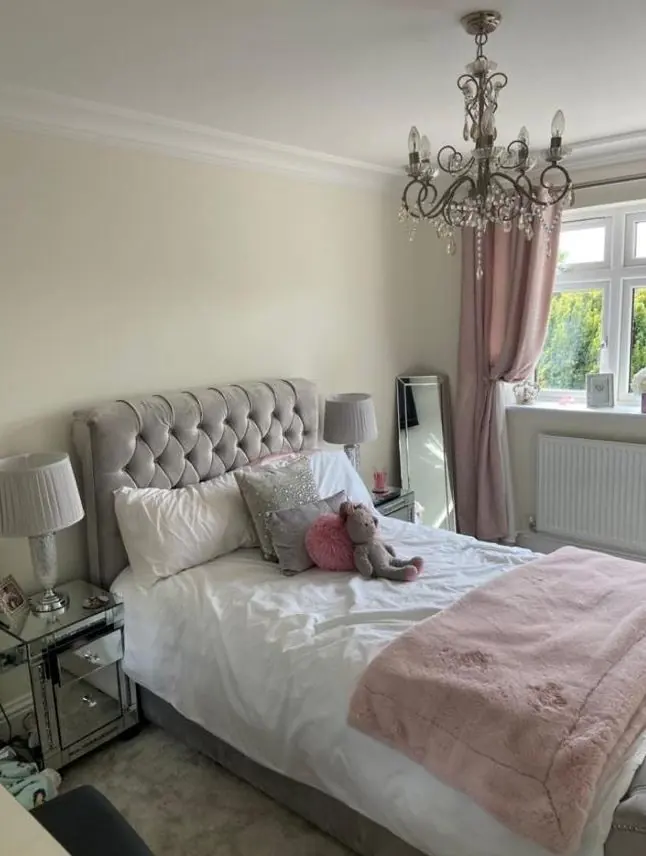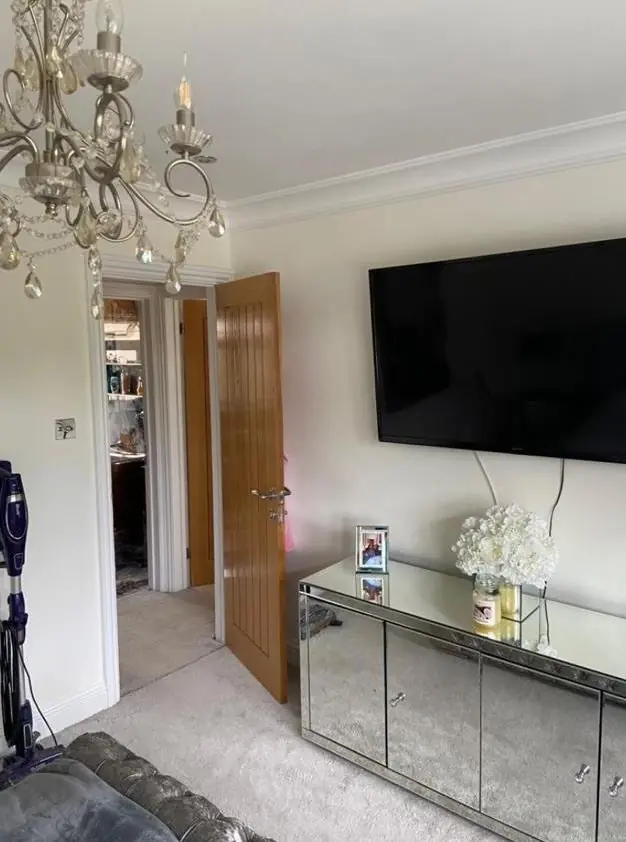
DH Painter & Decorator hangs wallpaper and lining paper in Moulton, about 4.3 miles north-east of Northampton. In the conservation-area cottages Dean usually lines out-of-true solid walls first and recommends breathable papers over vinyl, while the plasterboard walls in the village's newer houses take feature papers directly.
Out-of-true walls in the old village
Paper shows up every flaw in the wall behind it, and Moulton’s oldest houses have plenty. The cottages and farmhouses around West Street, Church Hill and Chater Street date mostly from the 17th and 18th centuries. Their solid walls of coursed ironstone and sandstone were never built to a straight line, and centuries of patching mean the plaster rises and dips across a single run. Corners lean, window reveals are deep and splayed, and ceilings are low enough that a ceiling line can wander noticeably from one end of a room to the other.
In rooms like that, Dean starts by hanging lining paper. It evens out the small hollows, bridges hairline cracks and gives the finishing paper a consistent surface to grip. Where the wall is very uneven, we cross-line, running the lining horizontally so its joints never coincide with the vertical joints of the paper above. A plumb line is still essential, but in a crooked room we also decide where any drift in the pattern will be least noticed, usually the corner behind the door rather than the chimney breast you see as you walk in.
Which papers suit lime plaster
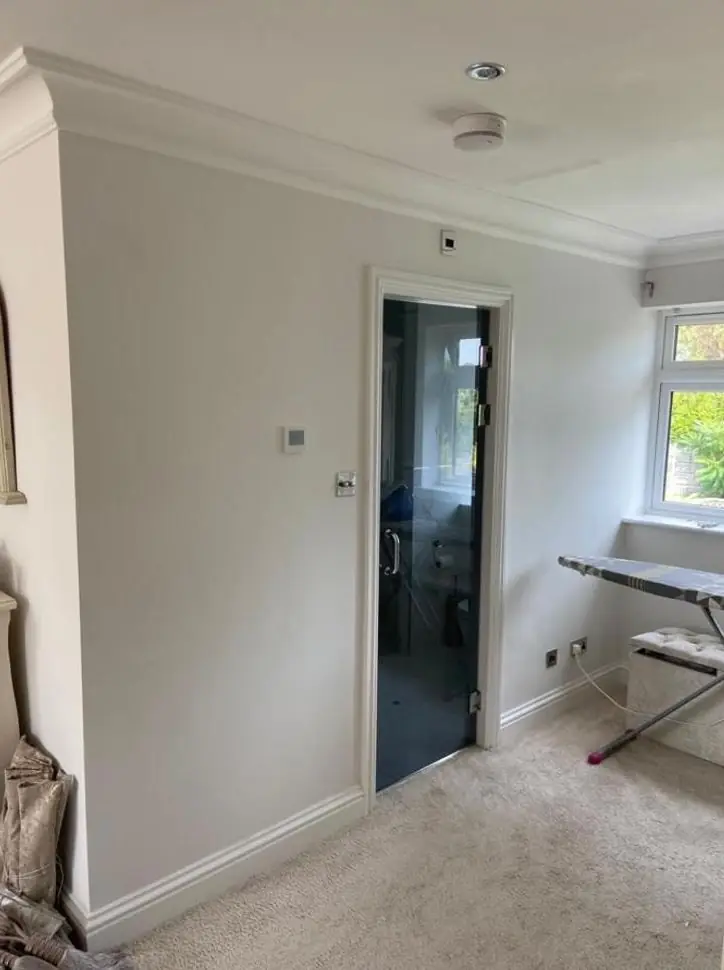
Many of these cottages have lime plaster on solid stone, and that plaster needs to breathe. Vinyl and vinyl-faced papers form a near-waterproof skin that can hold moisture against the wall, which is how mould behind paper and lifting seams begin. For the historic core we steer people towards:
- Traditional pulp or paper-backed papers rather than vinyl
- Non-woven papers with a breathable face, checked on the manufacturer’s data sheet
- Lining paper finished in a breathable paint where you would rather not paper at all
We use a paste suited to the paper and avoid heavy sizing products that seal the plaster. Before stripping anything old, we test a small area, because wet stripping and steam can loosen soft lime plaster that has been held together by decades of paper. If the house is listed, take advice before removing historic papers or linings.
Feature walls on Moulton’s modern streets
The other half of the village is far simpler to paper. Detached and semi-detached homes from the mid and late 20th century on Oakley Drive, Albone Close, Stewart Close, Jeyes Close and Lunchfield Lane, along with the more recent houses at Honeystones and Church Mews, have flat plasterboard or gypsum walls. Those suit a single papered wall behind a bed, a chimney breast in a lounge or a downstairs cloakroom where a bold print works in a small space. Vinyl is fine here, and in a bathroom or a busy hallway it is often the sensible choice for wipeability.
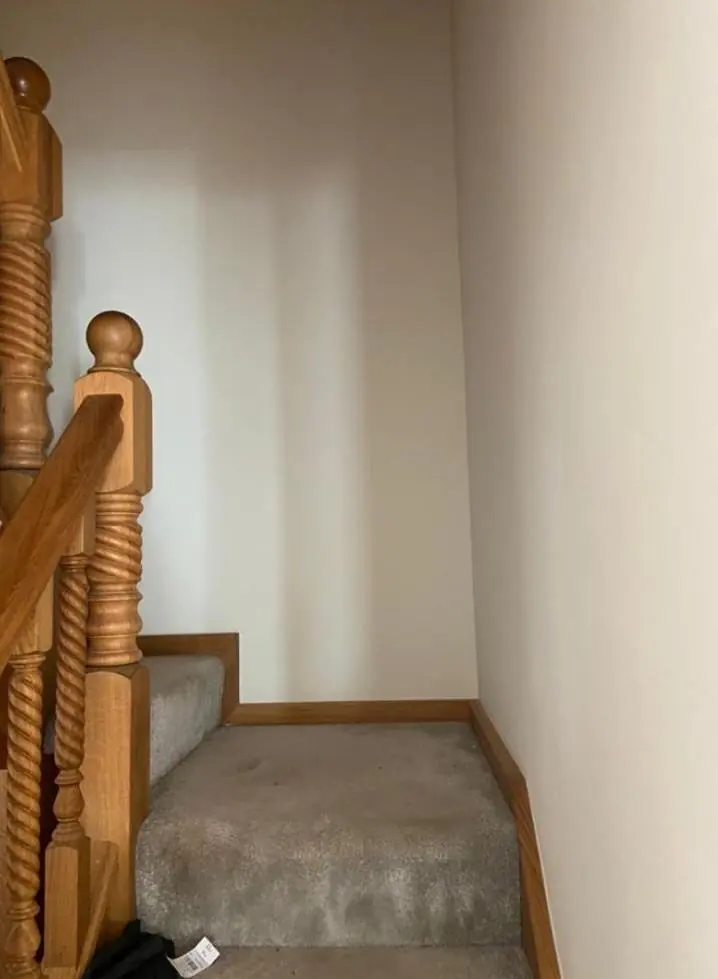
Taller, open stairwells in the larger detached houses need a tower or platform to hang long drops safely, and we bring that kit when a hallway is on the list.
Measuring a crooked cottage room
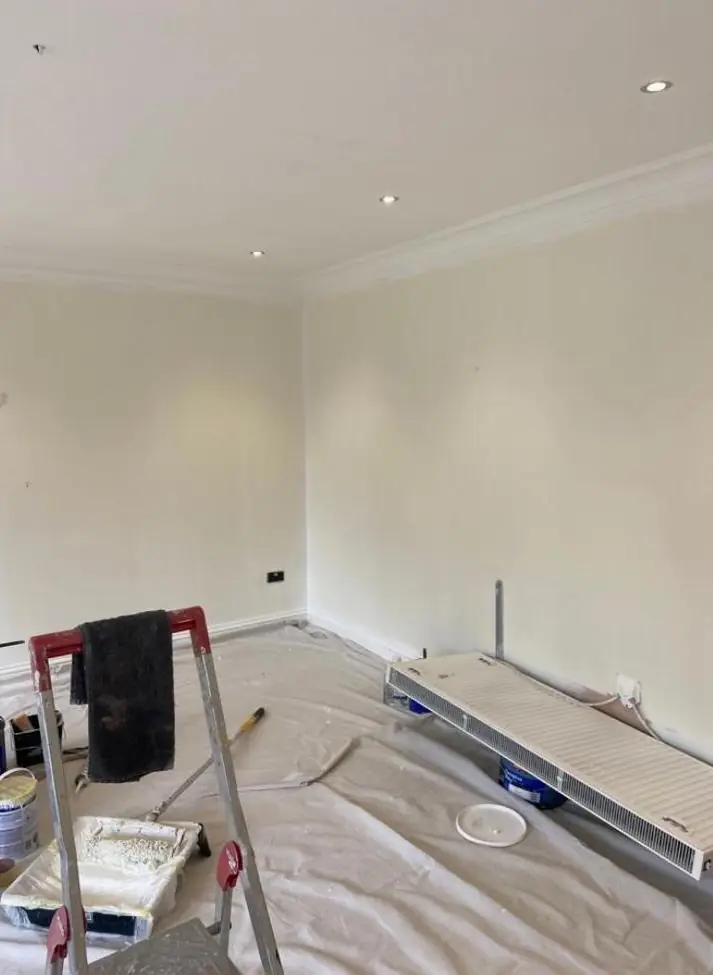
Roll calculators assume square rooms with level ceilings, and a one-room-deep Moulton cottage is neither. Leaning corners, splayed reveals and a ceiling line that drifts mean more waste in the trimming, and a large pattern repeat makes it worse. In the village core, measure with Dean at the quote rather than alone, and order from one batch with a spare roll in hand. Our main wallpaper hanging page covers stripping, preparation and paper types in more depth, and the Moulton area page covers the other work we do in the village. If you are comparing decorators, our guide to choosing a painter and decorator lists the questions worth asking.
Last updated by Dean, DH Painter & Decorator.