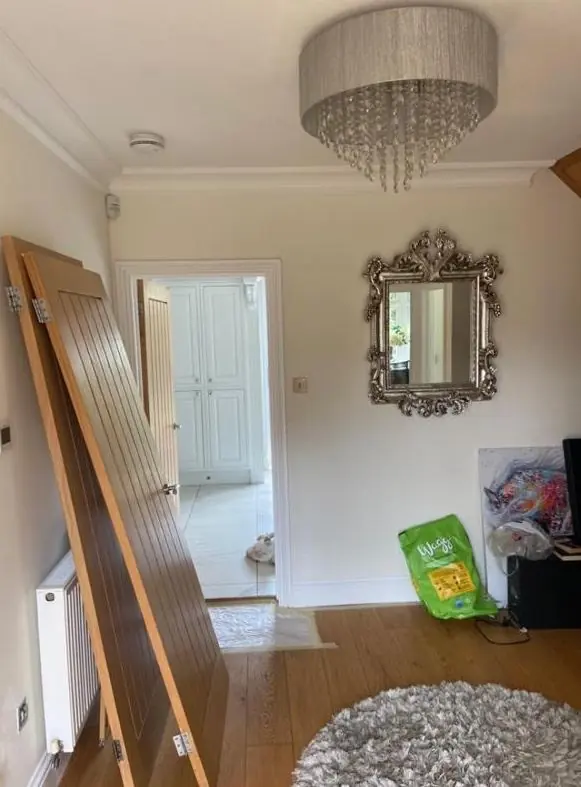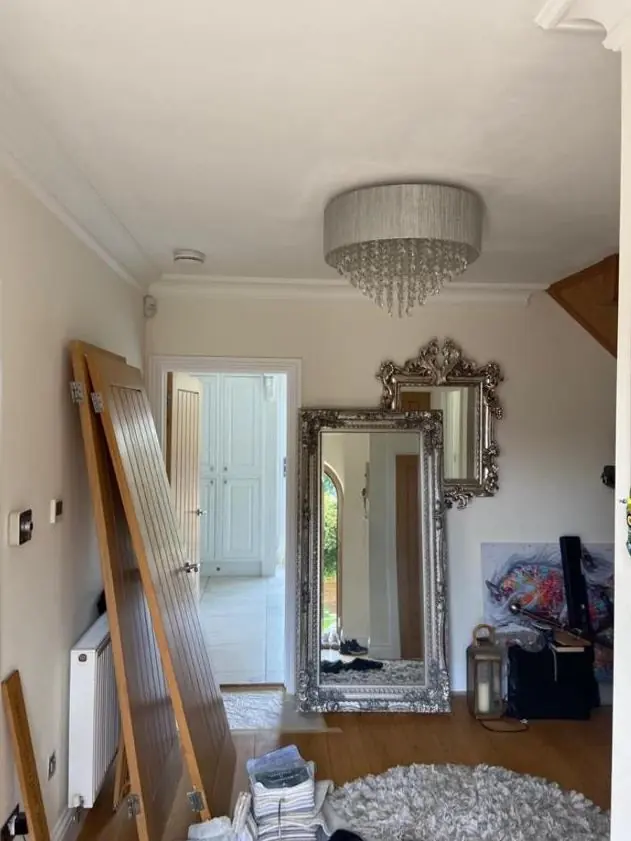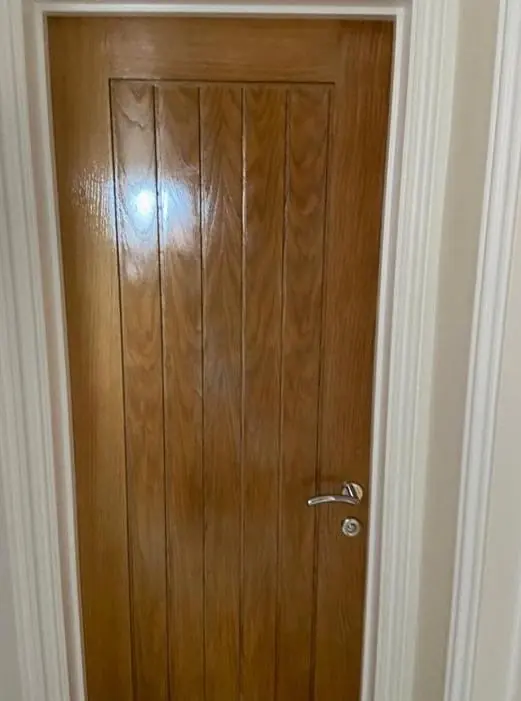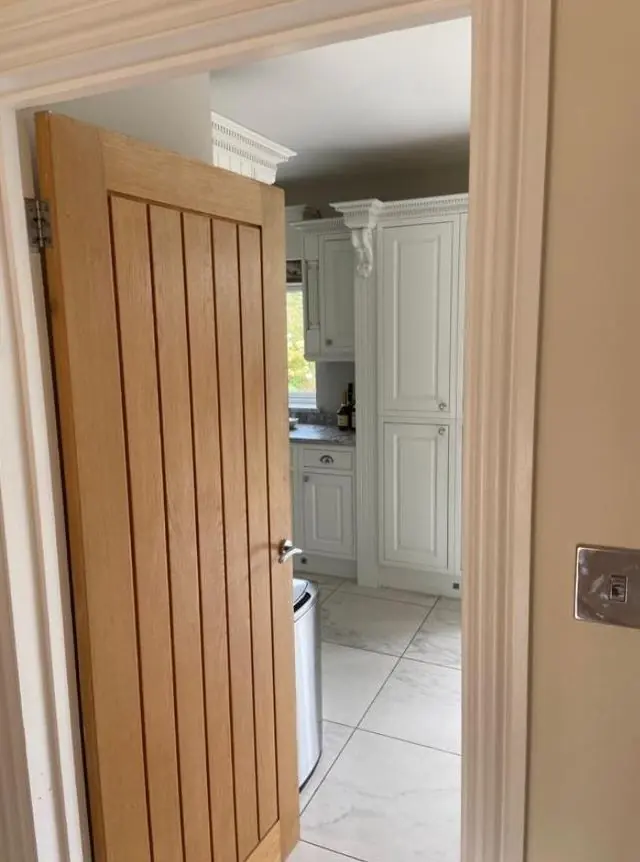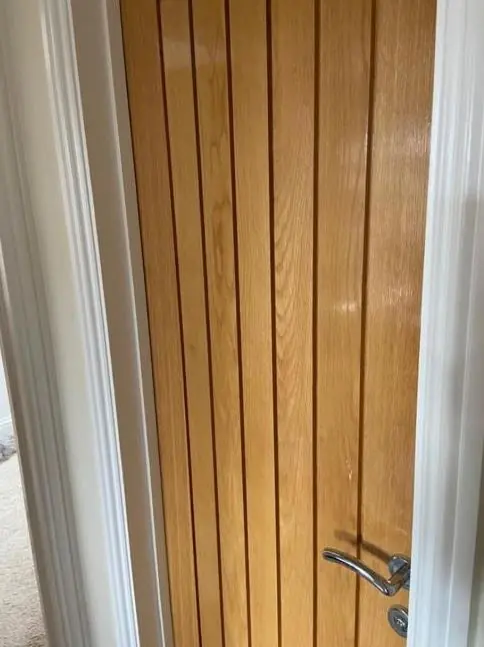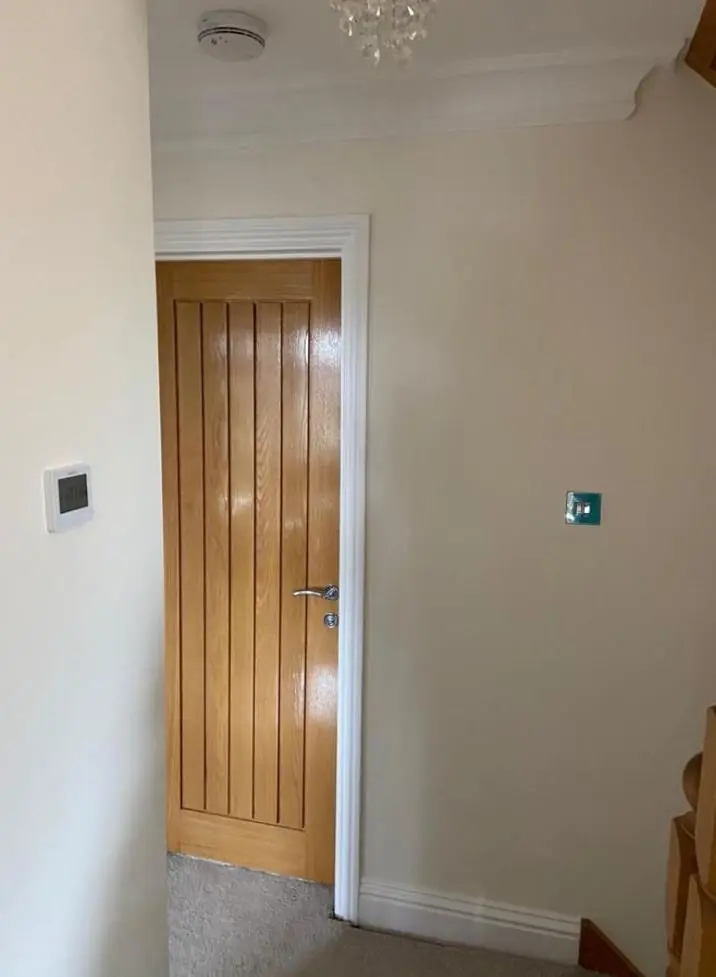
Dean paints doors, frames, doorcases, architraves and skirting boards in Moulton, the NN3 village about 4.3 miles north-east of Northampton town centre. That covers old plank and panelled doors in the conservation area core as well as the modern interior joinery in the 20th century estates around it.
Two kinds of woodwork in one village
Moulton’s joinery splits neatly by age. In the historic core around West Street, Church Street, Church Hill and Cross Street, the 17th and 18th century ironstone cottages were built with timber plank doors, and the grander late 18th and 19th century houses have six-panelled doors set in moulded wood doorcases, often with a fanlight above. The Manor House on Northampton Lane North is a listed example of that later style. Out on the estates, at Oakley Drive, Albone Close, Pytchley View, Stewart Close, Jeyes Close or Pound Lane, the doors and skirtings are standard modern joinery that mostly needs a clean, a key and fresh coats.
The two need different approaches, so Dean looks at the woodwork before quoting rather than pricing every door the same.
Plank doors, panels and doorcases in the old core
A ledged plank door is a run of boards with gaps, nail heads and generations of paint in the joints. Heavy filling hides the character people value in these houses, and the boards move with the seasons, so hard filler cracks out within a year. We rub down loose paint, fill only where wood is missing, and let the board lines show. Moulded doorcases get the same restraint: the aim is crisp mouldings, not mouldings softened by another thick layer of gloss.
- Old lead paint: doors in houses this old can carry lead-based layers, so we prepare with wet abrading rather than dry sanding.
- No heat guns near thatch: several cottages, such as Parade House and Rooty Hill, are thatched. Stripping on those properties is done chemically or by hand, never with a flame or hot air.
- Glass and stone left alone: fanlights, stone surrounds and ashlar dressings are masked and kept clean, never painted.
The paint is traditional oil or a good waterborne gloss, chosen to suit the timber and what is already on it.
Article 4 doors and listed buildings
Front doors are where Moulton’s conservation rules bite. The 2017 conservation area appraisal proposed removing permitted development rights for doors, paint and porches at Nos. 39-49 West Street, Nos. 14-30 Church Street and No. 10 High Street. On those addresses a new front door colour should be cleared with West Northamptonshire Council before we start. The parish also has 42 listed buildings, and a change of finish or colour on a listed door may need listed building consent. Like-for-like repainting is normally straightforward, but we agree the colour and finish with you before any work starts, and we won’t swap a historic door’s finish without that being settled.
Inside the house you have more freedom, though old cottage doors often look most at home in a soft, flat-sheen colour rather than bright brilliant white.
Skirtings on uneven floors and solid walls
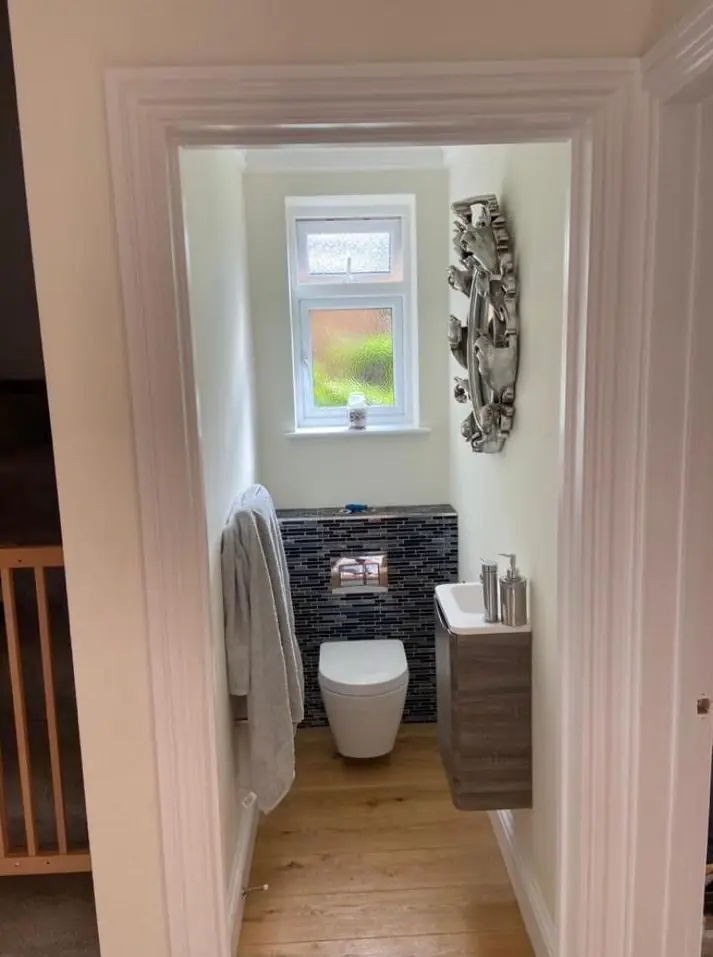
The older Moulton cottages are typically one room deep with uneven solid walls, and floors in houses that old are rarely level. Skirtings follow the floor, so they rise and dip, and the gap at the top often opens where wall and board have moved apart. We caulk that gap with a flexible sealant and paint to a clean line on the wall, rather than chasing a level that isn’t there. Where walls are lime plastered, the wall side of the cut-in needs a breathable emulsion, so we check what the walls are finished in before choosing products.
On the estate houses, skirtings are usually MDF or softwood with a factory primer. Cut ends and nail holes need sealing before the topcoat, and satinwood or eggshell holds up well in busy halls. The general method, including the oil versus water-based choice, is on our main door and skirting painting page.
One room deep: no spare room to work in
A cottage that is one room deep has no back room to lay doors out in, and the front door often opens straight into the living space with the street a step away. So in the old core most doors are painted in place, one or two at a time, with the house kept usable and the front door done on a dry day it can stand open to harden. On the estate houses, with a garage or a spare bedroom, doors can come off and be laid flat on trestles for a smoother finish. More about painting and decorating across the village is on our Moulton area page.
Last updated by Dean, DH Painter & Decorator.