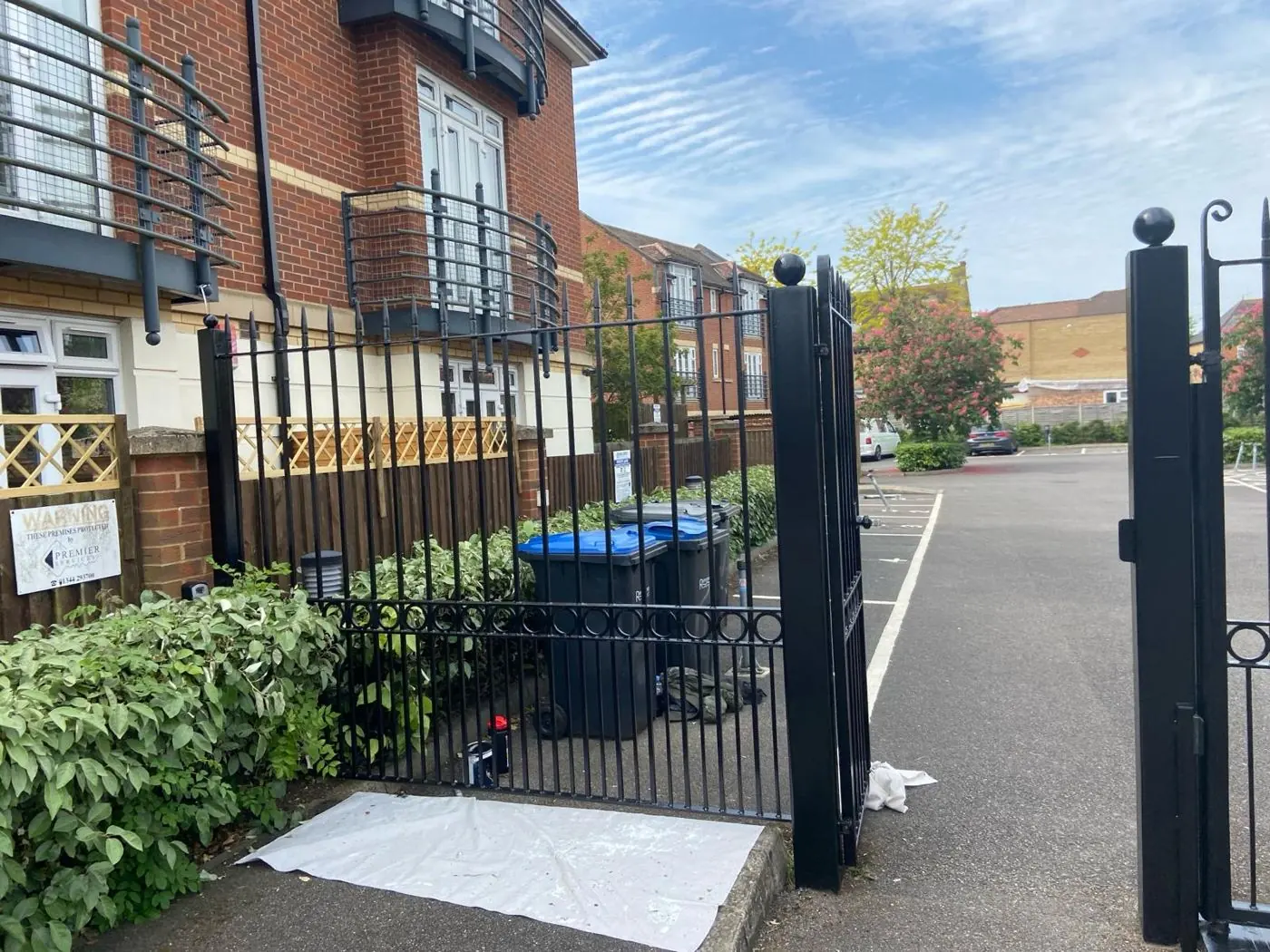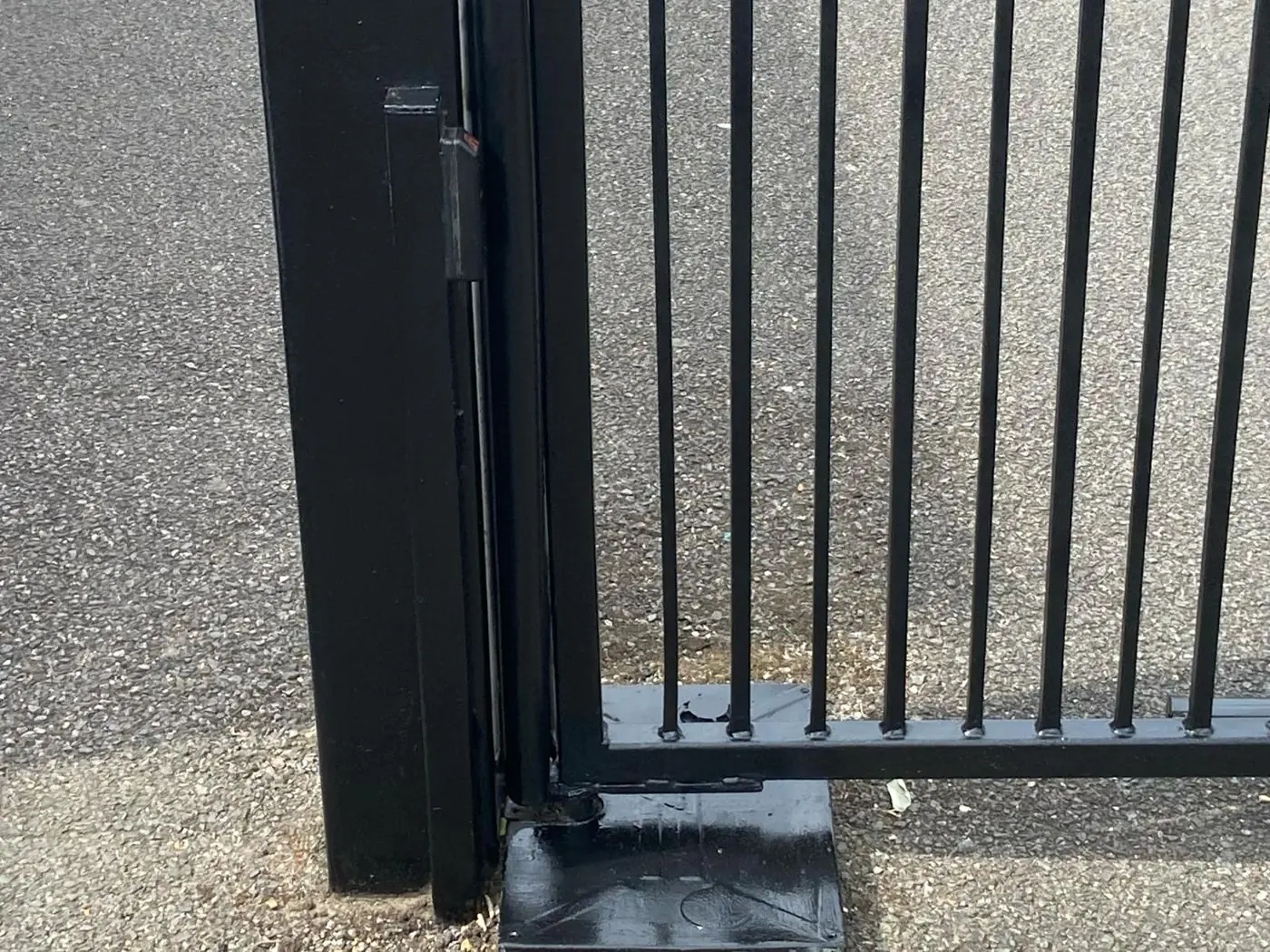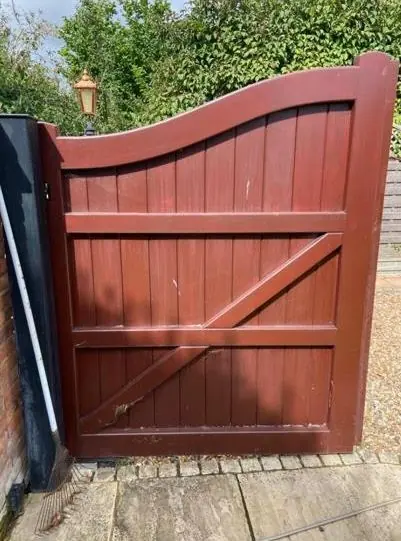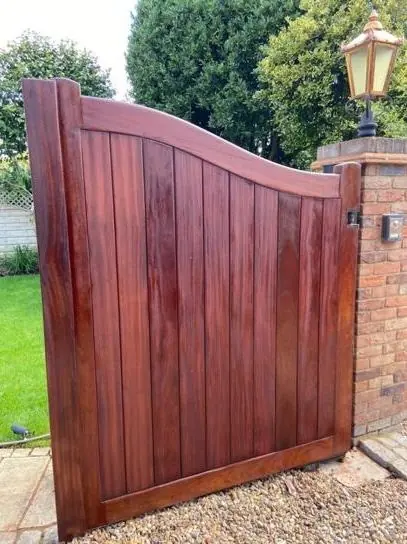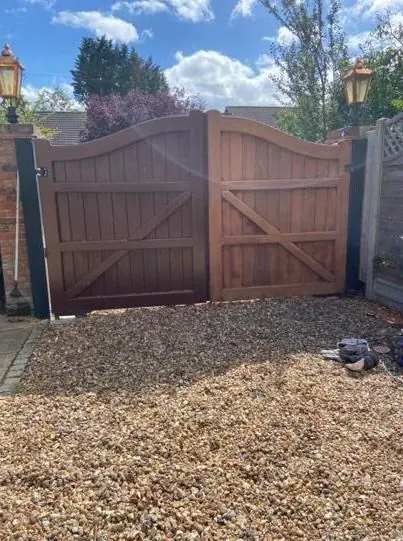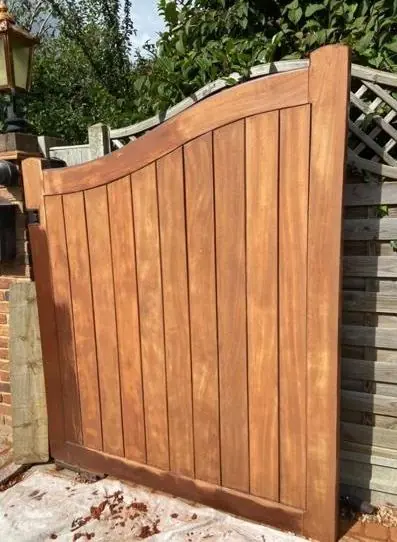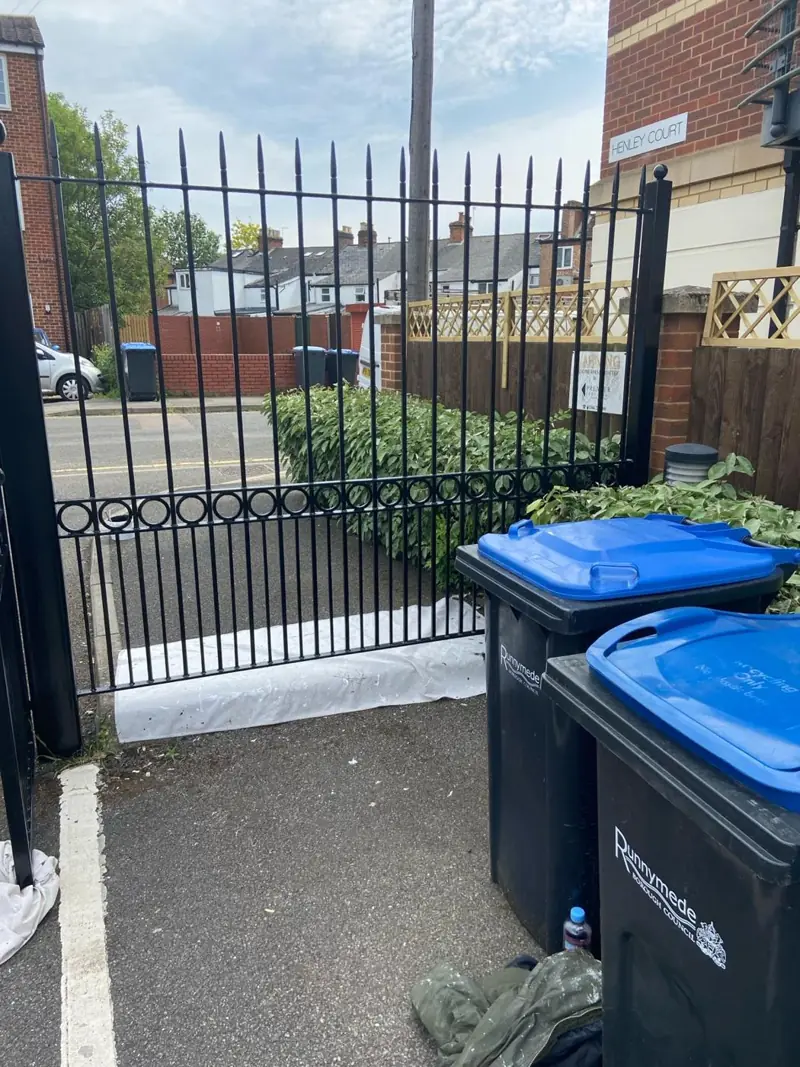
Dean repaints iron and steel gates and railings in Moulton, NN3, about 4.3 miles north-east of Northampton town centre. Much of the older ironwork in the village sits in stone walls in the conservation area, so the job is careful rust removal and a proper metal paint system without marking the stone.
What ironwork Moulton has
Railings and metal gates turn up all over the village: in front of houses, around its churches and chapels, and at the West Street corner. There are also gates of genuine local interest. Holly Lodge on Boughton Road has a notable Implement Gate dated 1955, an example of how metalwork in Moulton carries its own history and deserves more than a quick coat of black.
The older pieces, outside cottages and Georgian houses in the core, are likely to be wrought or cast iron carrying many layers of old paint. On the 20th century estates such as Pytchley View, Jeyes Close and Pound Lane, metal is more likely to be a fabricated mild steel driveway gate, or a galvanised one that needs a special primer. Telling them apart is the first step, and the method for each is set out on our main metal gate and railing painting page.
Iron set into stone
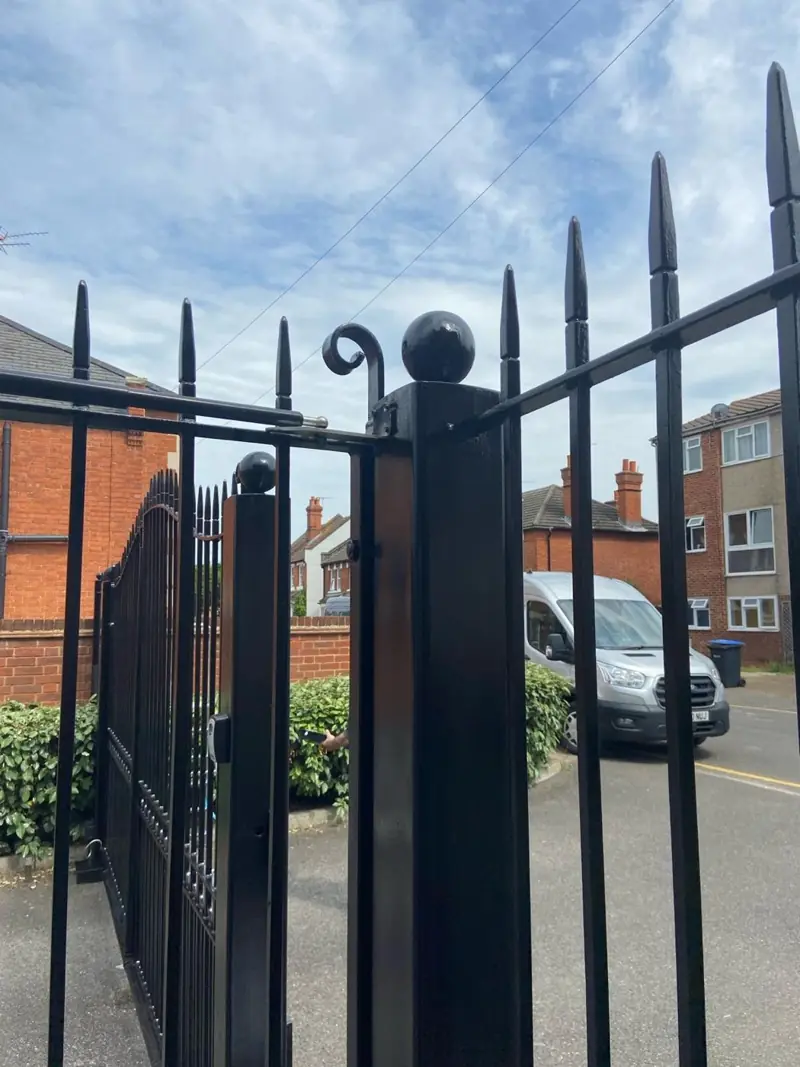
A lot of Moulton’s railing work is about the joint between metal and wall. When iron rusts inside a stone coping or plinth, it expands and can split the stone around it. Before painting, we:
- wire brush and scrape the bars back to sound metal, paying most attention to the feet where they enter the stone
- treat remaining rust and prime bare iron straight away so it does not flash-rust overnight
- keep primer and gloss off the ironstone and ashlar, which the conservation appraisal expects to stay unpainted
- tell you if a bar is so wasted at the base that a blacksmith or stonemason should see it before we paint
We use hand tools and gentle mechanical cleaning near brittle cast iron and soft stone, and no open flame anywhere near the village’s thatched roofs.
Colour in the conservation area
Black is the usual finish for railings in historic villages and suits Moulton’s ironstone well. Where a gate or railing belongs to a listed building, of which the parish has 42, or to one of the Article 4 properties at 24 and 39-49 West Street, 14-30 Church Street or 10 High Street, a change from the existing colour should be cleared with West Northamptonshire Council first. Repainting in the same colour is normal maintenance. Railings around the Grade I Church of St Peter and St Paul on Church Hill, or any of the chapels, are a matter for whoever manages the building, and we work to their instructions.
Working on the lanes
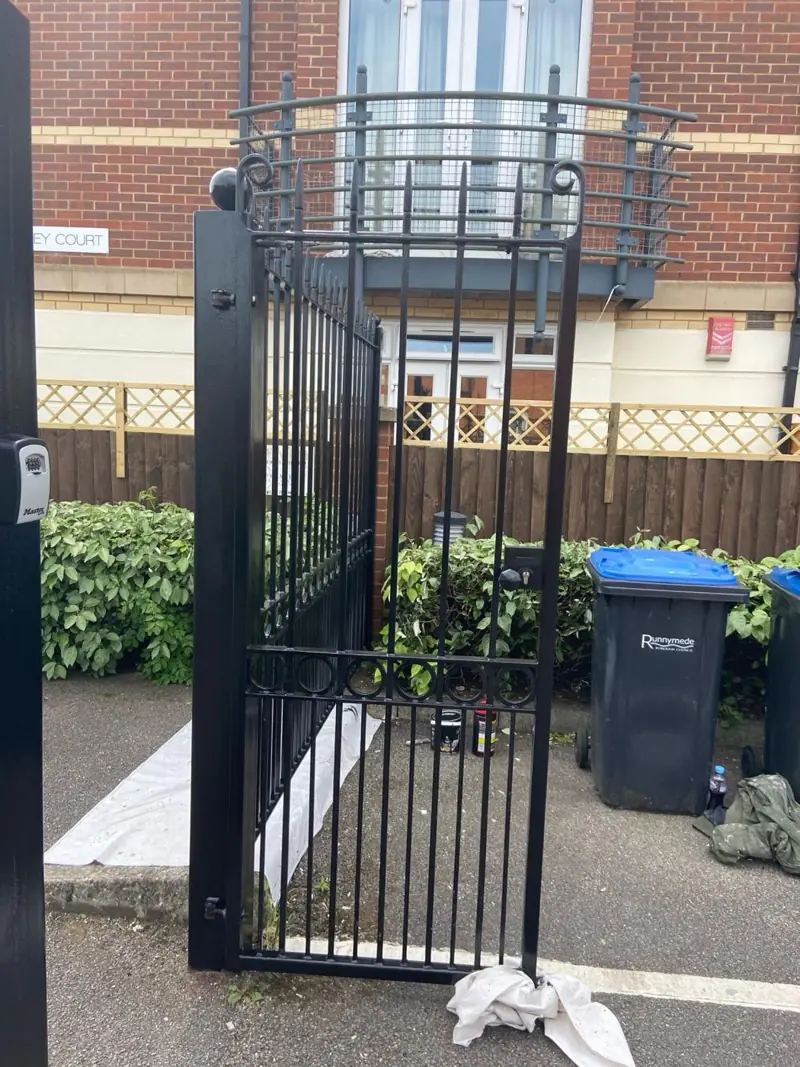
Most railings stand on the boundary, so in Moulton we are often working with our backs to the road. Cross Street and Church Hill are narrow, frequently without a pavement, and buildings are tight to the highway. Church Street, West Street and Chater Street have raised stone pavements with red brick edging and flights of steps. On a railing job here we keep dust sheets and tins tidy on the footway, sign wet paint clearly so passers-by do not grab a bar, and pick drier, still days, since wind blows grit straight onto wet gloss. Longer runs in busy spots may need a word with the council about traffic, which we would flag at the quote. Gates that open onto the lane are wedged shut or tied back until the gloss has hardened, so nobody swings a sticky gate into a passing car.
For anything else on the house or garden, see the Moulton area page, or read how to choose a painter and decorator before you get quotes.
Last updated by Dean, DH Painter & Decorator.