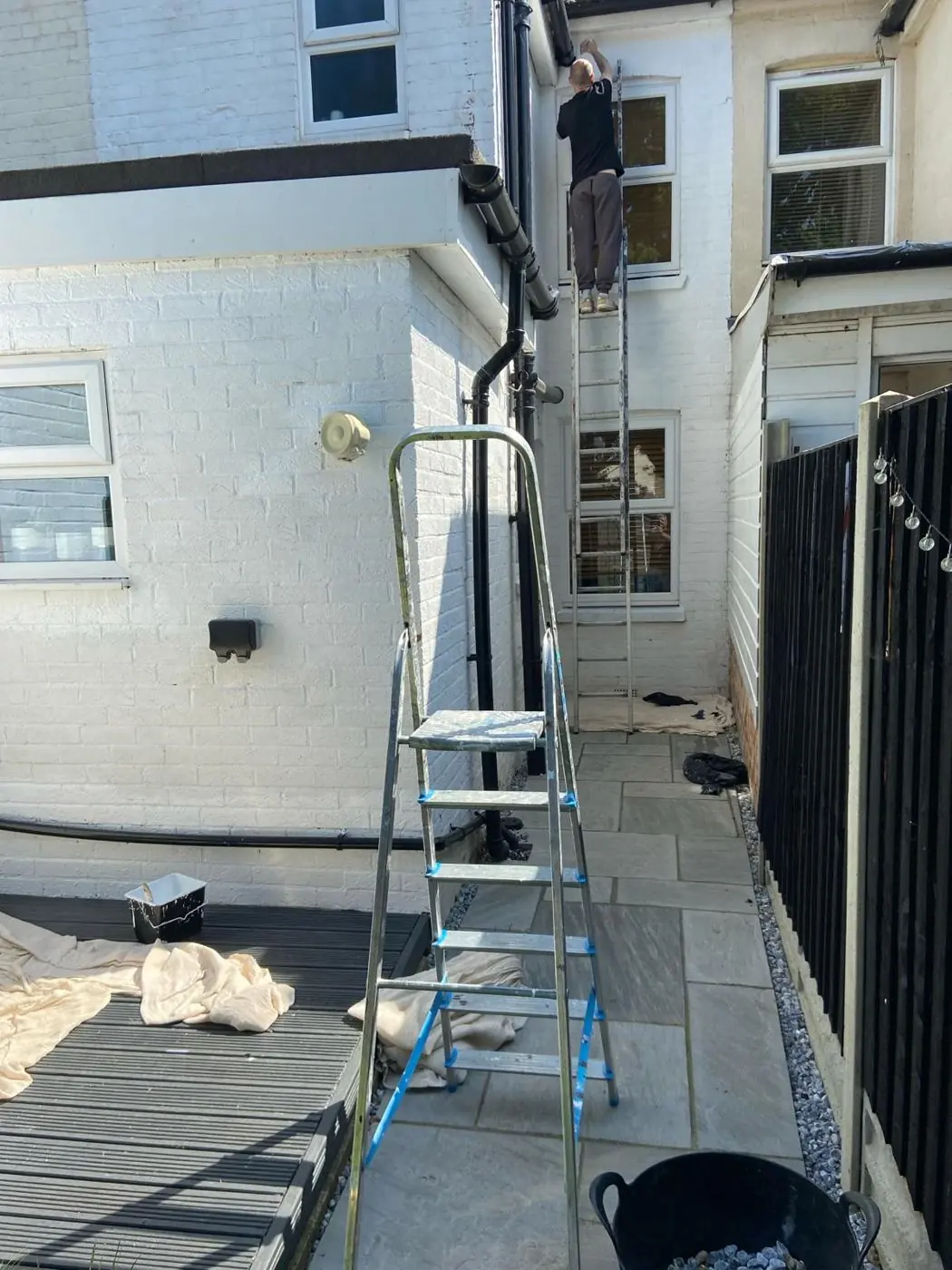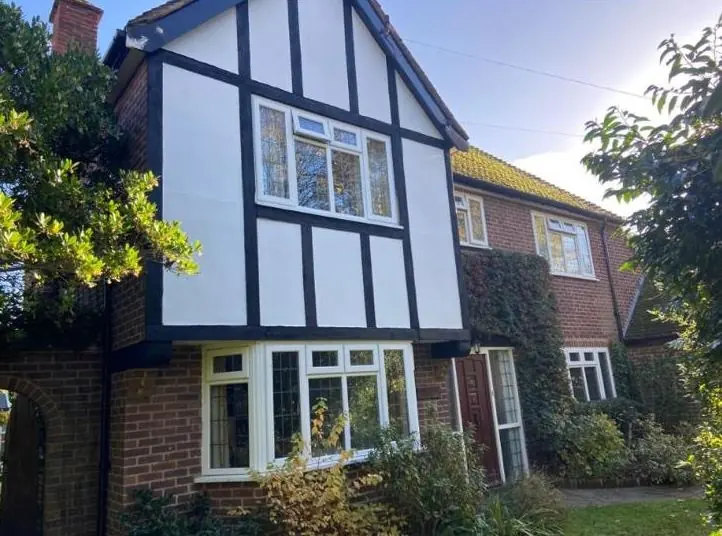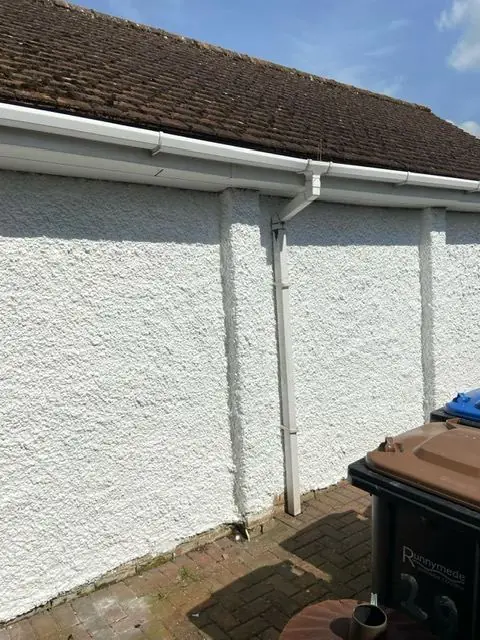
We paint rendered and previously painted walls on homes and premises in Moulton, NN3, about 4.3 miles north-east of Northampton town centre. Much of the village is bare ironstone that should not be painted, so Dean starts every enquiry by checking what the wall is made of and whether it is in the conservation area.
Most of Moulton should stay unpainted
This is an unusual page for us to write, because in Moulton the honest advice is often not to paint. The village core is built of regular coursed local ironstone and sandstone, which listing descriptions call coursed lias, with ashlar quoins and red brick detailing. The 2017 conservation area appraisal is direct about it: render on traditional stone buildings detracts from their character, inappropriate render and masonry paint can harm the stone’s breathability, and rendering of stone walls is resisted. Very few houses in the core are rendered.
The reason is practical as well as visual. Ironstone takes on moisture and needs to dry out through its face. Seal it with an acrylic masonry paint and the water stays in the wall, where frost and salts work on it. If someone asks us to paint a bare stone cottage on West Street or Church Hill, we will explain why we would rather not, and suggest the joinery and pointing get the attention instead.
Where masonry paint does belong
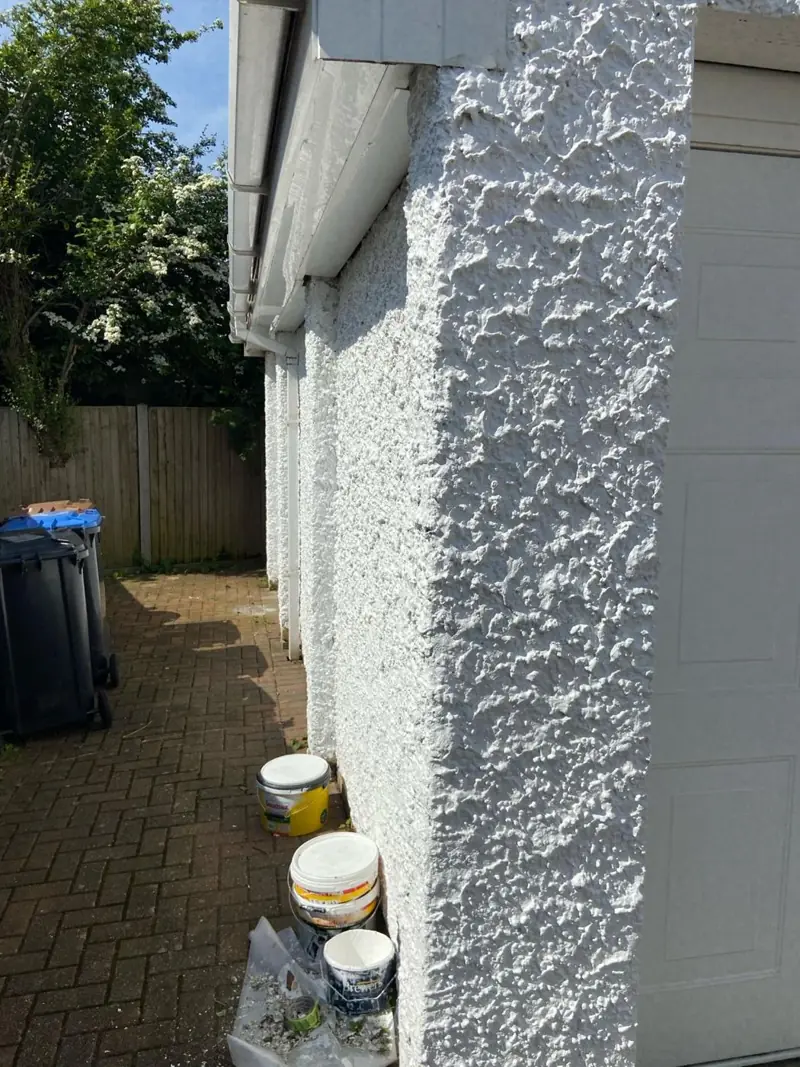
There is still real work for a masonry painter in the village, it just sits in particular places:
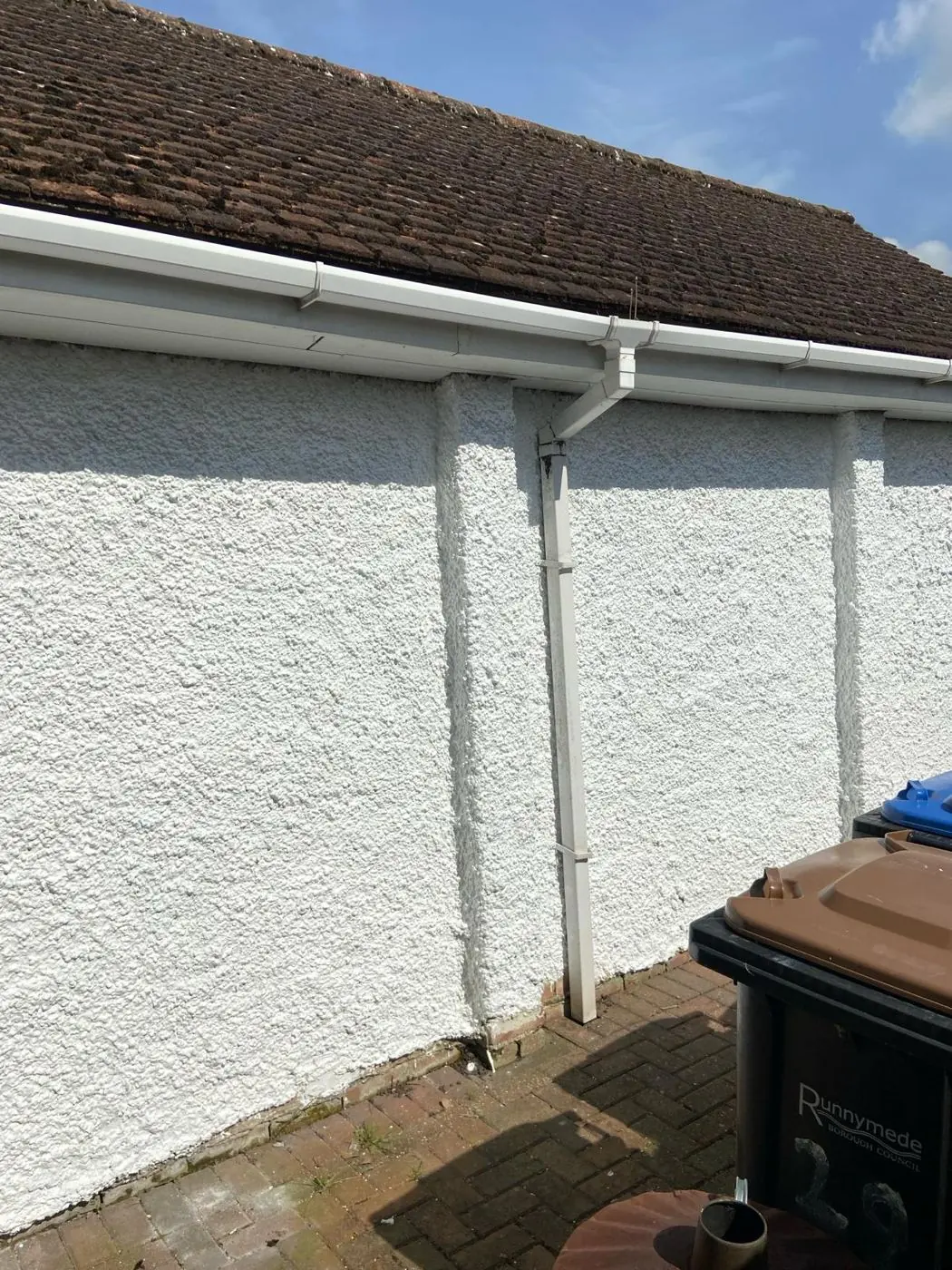
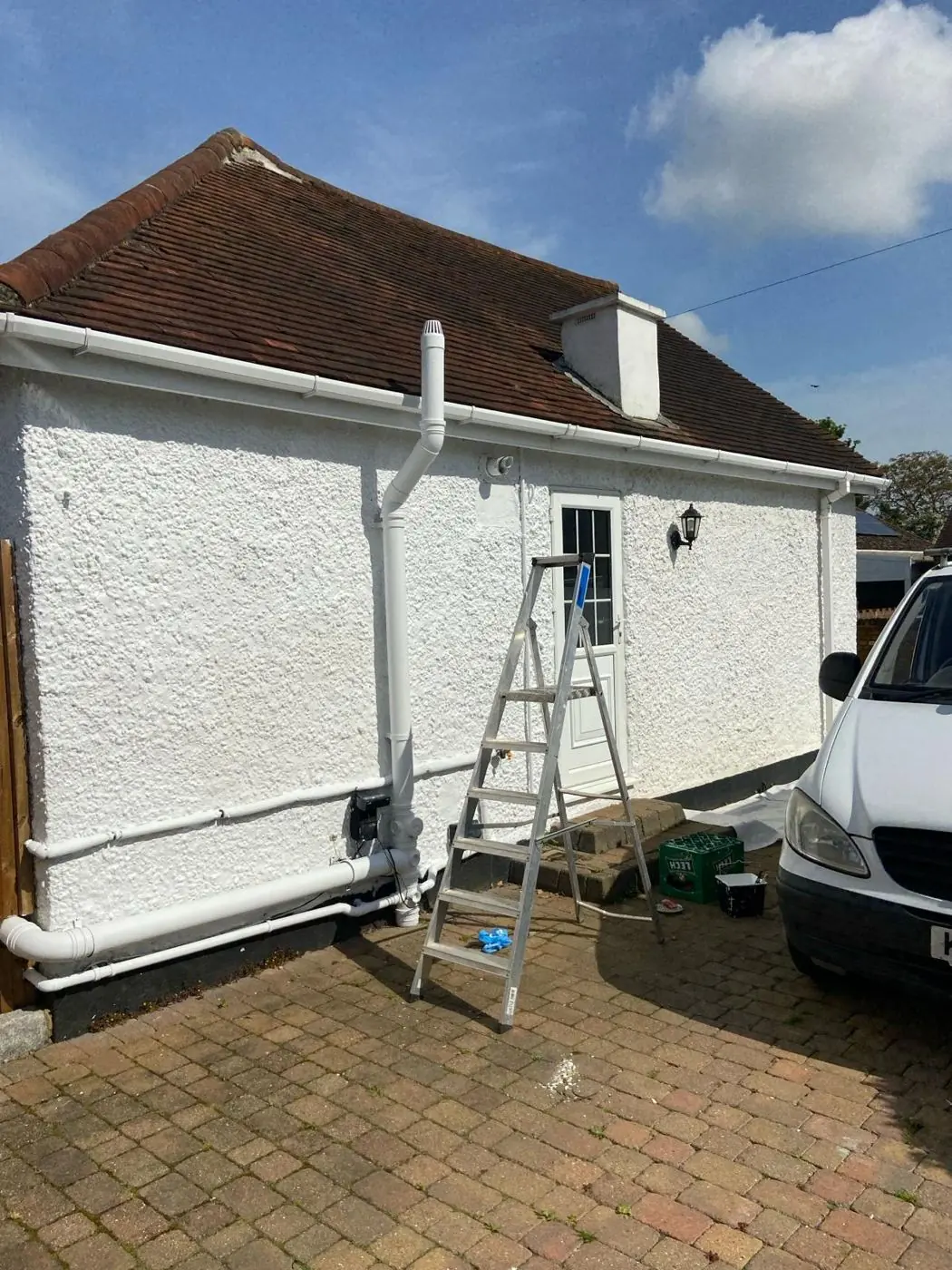
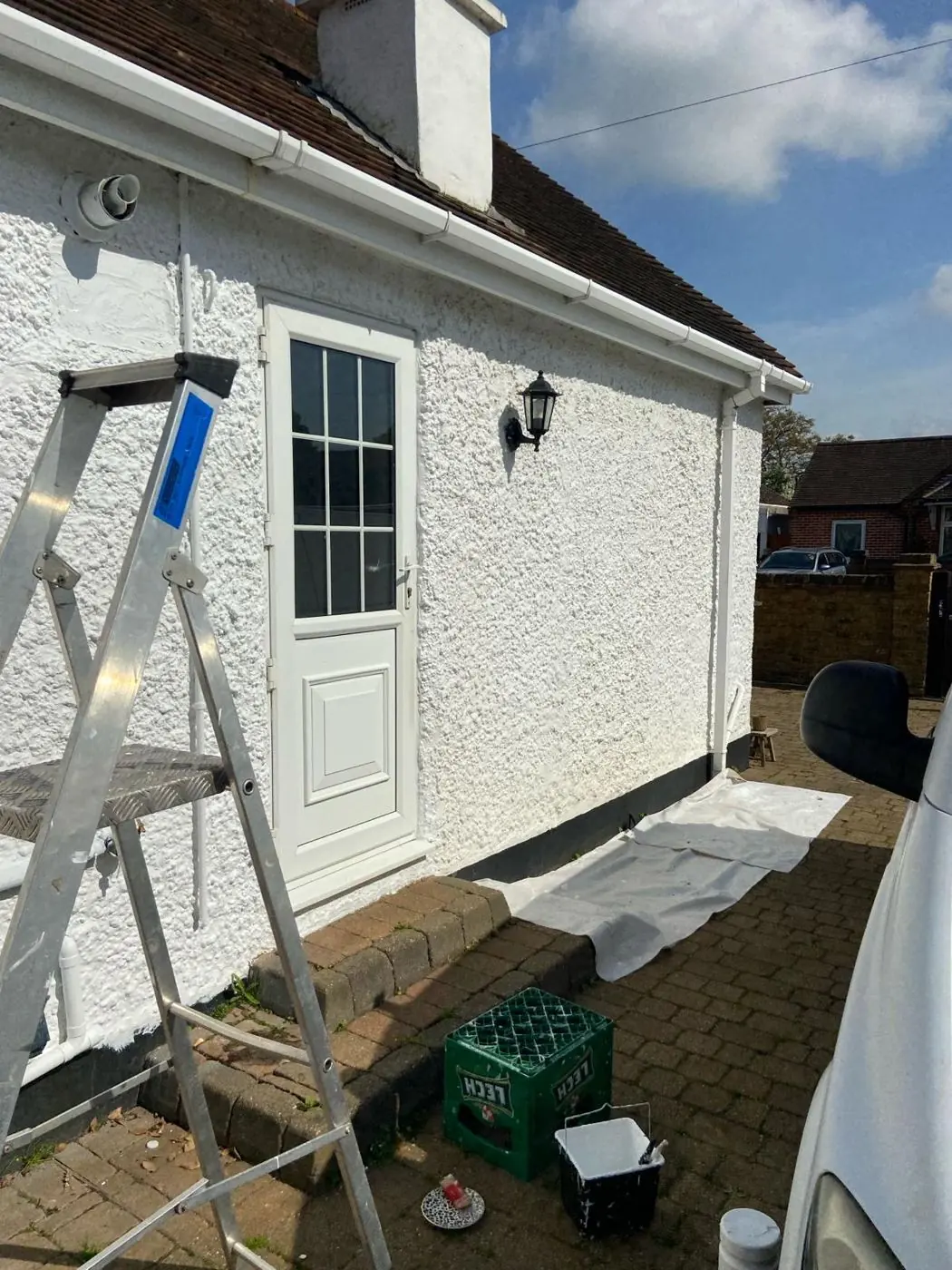
- Rendered 20th century homes. Some houses built in the mid to late 1900s around the village fringes have rendered panels or full render that was designed to be painted and needs recoating on a cycle.
- Stocks Hill commercial buildings. The appraisal notes rendered buildings around the village centre, where shops and businesses trade from older premises. Where these are already painted they can be repainted, ideally in a colour that sits quietly in the conservation area.
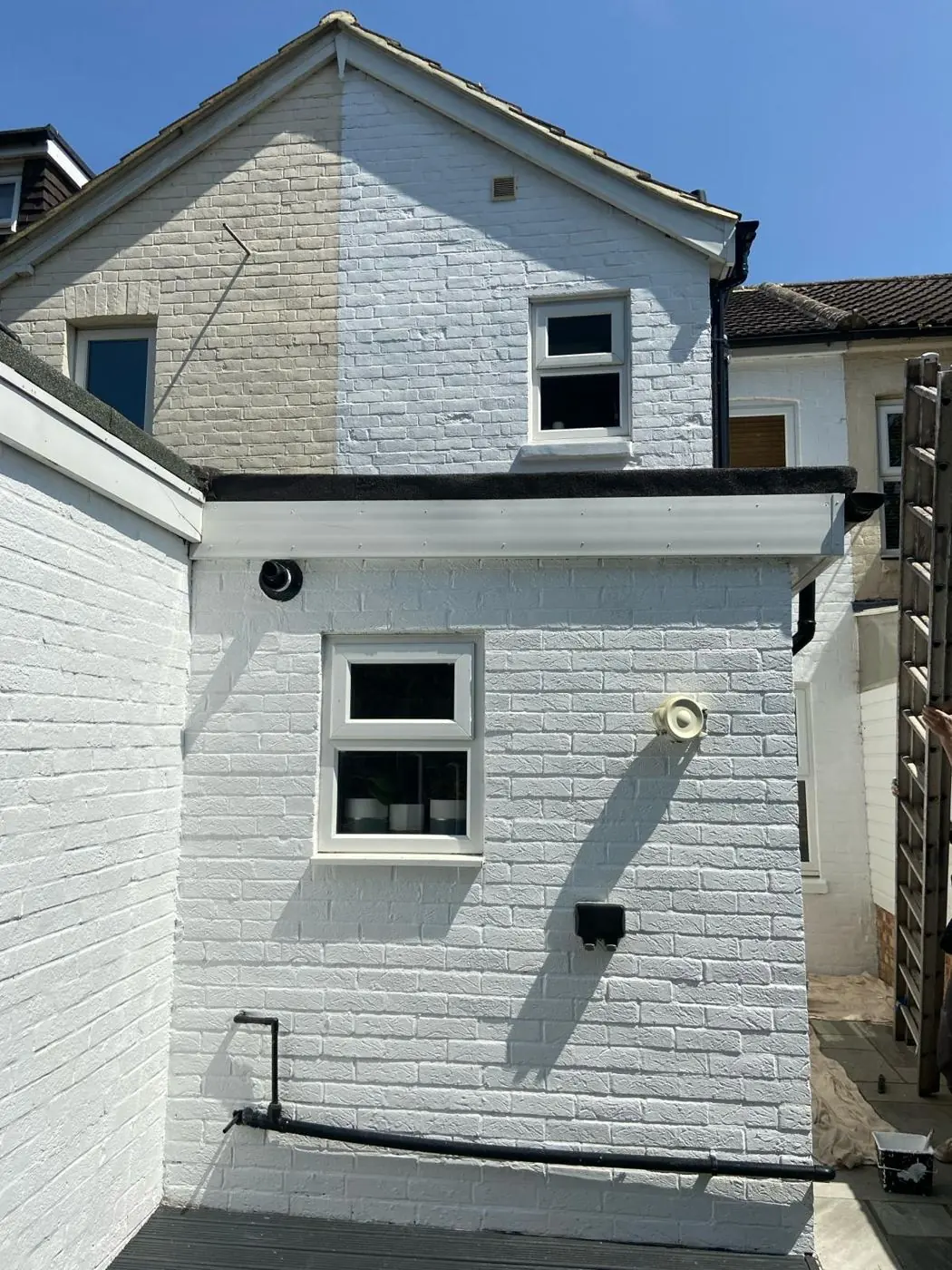
- Garden and boundary walls in brick or block that have been painted before and are now flaking.
Before any of these are coated we check for hollow render, cracks and leaking downpipes, and treat any growth. The full process is set out on our main render and masonry painting page, and the guide to painting render and roughcast explains the products.
Limewashed buildings need limewash
A few buildings in Moulton were traditionally limewashed. They should go back to limewash, or to a compatible mineral finish, and not to modern masonry paint. Limewash soaks into the surface and lets the wall breathe; it weathers gently and is renewed by applying another coat. Covering it with a plastic-based paint traps moisture and tends to peel off in sheets within a few winters, taking the face of the wall with it. If a previous owner has already done that, removing the paint is a slower, separate job we would talk through on site.
Listed walls, Article 4 terraces and the trees
The parish has 42 listed buildings, and the Church of St Peter and St Paul on Church Hill is Grade I. Painting or changing the finish on any listed wall may need listed building consent. The Article 4 properties at 24 and 39-49 West Street, 14-30 Church Street and 10 High Street have also lost permitted development rights for paint, so a new external colour there needs clearing with West Northamptonshire Council.
Moulton is also well wooded. There were 21 Tree Preservation Orders in the parish in 2017, with large trees behind plots and along The Grove, Pitsford Road, Overstone Road and Northampton Lane North. Rendered walls under that canopy stay damp and turn green, so a fungicidal wash and enough drying time are part of the quote. More on the village’s other work is on our Moulton area page.
Last updated by Dean, DH Painter & Decorator.