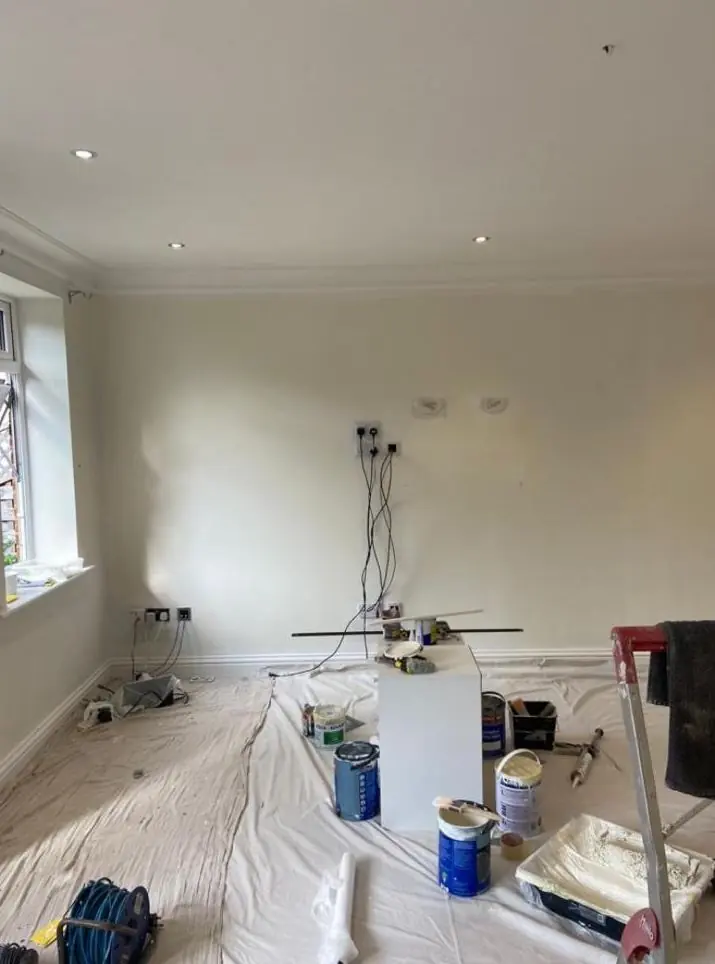
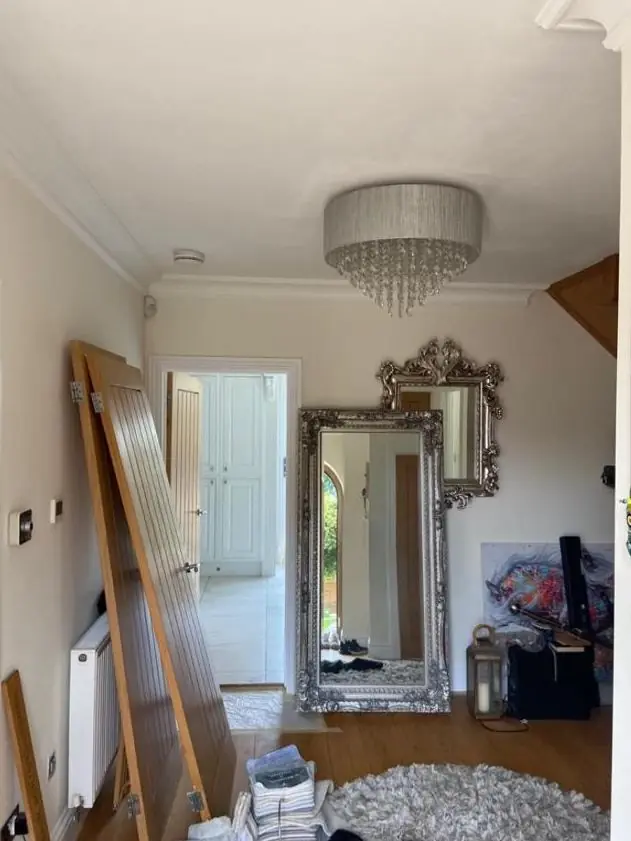
DH Painter & Decorator carries out decorative paint finishes in Moulton, a village 4.3 miles north-east of Northampton. Panelling, period-style schemes and hand-applied effects suit the 17th and 18th century cottages and the larger Georgian houses, provided the work stays inside and leaves listed or protected fabric untouched.
Period schemes that suit a 1650s-1690s cottage
Parade House, Stoneleigh and Holly Cottage carry datestones of 1658, 1660 and 1695, and The Artichoke is dated 1680. Houses of that age around West Street, Church Street and Stocks Hill were built one room deep with small casement windows, low ceilings and plank doors. A decorative scheme in a room like that sits most comfortably when it follows the building rather than fighting it.
Some approaches that fit:
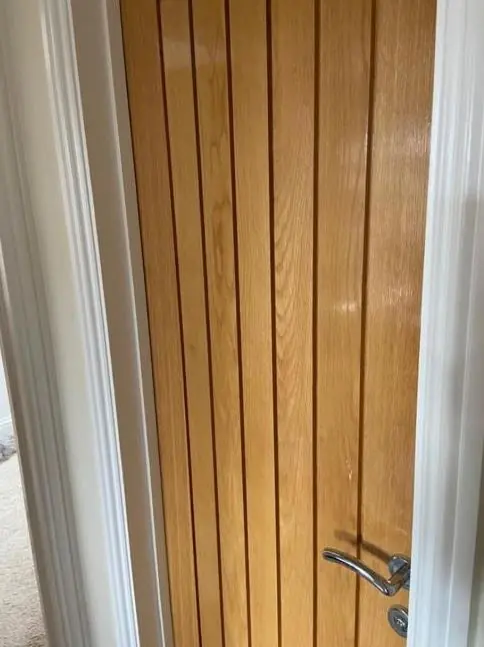
- Plank doors and simple boarded partitions picked out in a single deep colour, with walls in a soft limewash-style tone
- A lower band of stronger colour to roughly dado height, a practical choice in a small room that takes knocks, painted freehand to follow the wall rather than a ruler-straight line that exaggerates every bow
- Exposed beams left as they are, with the ceiling between them painted in a breathable finish
Because these walls are often lime plaster on solid stone, any effect needs a breathable base. Glazes and scumbles built from oil or acrylic sit uneasily on lime, so in the old cottages we lean towards mineral or clay-based paints and keep the effect in the colour and the brushwork.
Georgian rooms and the larger village houses
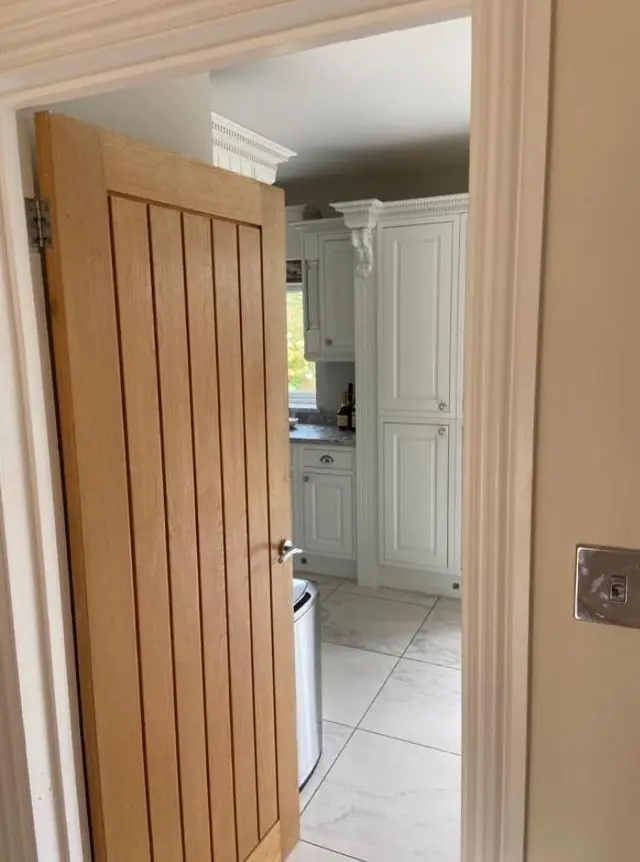
The later houses in the village are a different kind of space. The Manor House on Northampton Lane North, with its sashes, ashlar dressings and six-panelled door in a moulded wood doorcase, and Waterloo House are examples of the grander 18th and 19th century homes in Moulton. Interiors of houses from that period lend themselves to painted panelling, with the stiles and rails in one shade and the fielded panels a step lighter or darker. Moulded architraves and shutters can be picked out in a contrasting sheen, and plain walls can take a soft broken-colour finish such as colourwashing.
The Victorian cottages in the village, such as the five on West Street opposite the former Institute of Agriculture and those on Prince of Wales Row, sit between the two. Their rooms are plainer and a little taller than the 17th century cottages, so a picked-out fire surround, a painted dado rail or a two-colour scheme split at rail height gives a period feel without adding panelling to the walls.
What stays untouched
With 42 listed buildings in the parish, decorative work in Moulton comes with a clear boundary. Listed building consent can cover interiors, so original panelling, early plasterwork, leaded casements or stone mullions are not surfaces for a new effect. Our approach:
- Effects go on new or modern surfaces, or on finishes that are themselves later additions
- Historic timber is redecorated like for like, prepared carefully rather than stripped back with heat, which is also ruled out near thatch
- Where something might be original, we ask you to check with the council first
None of this applies to exteriors, where the conservation area appraisal expects stone to stay bare and windows to stay white. Decorative finishes in Moulton are an indoor job.
More freedom in the newer homes
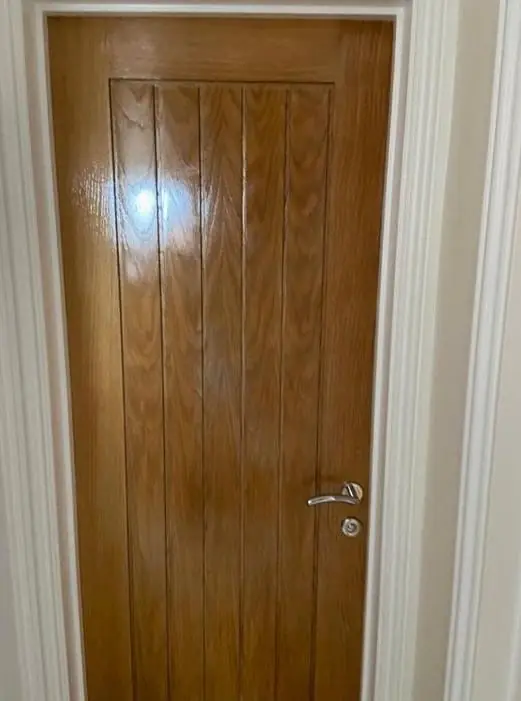
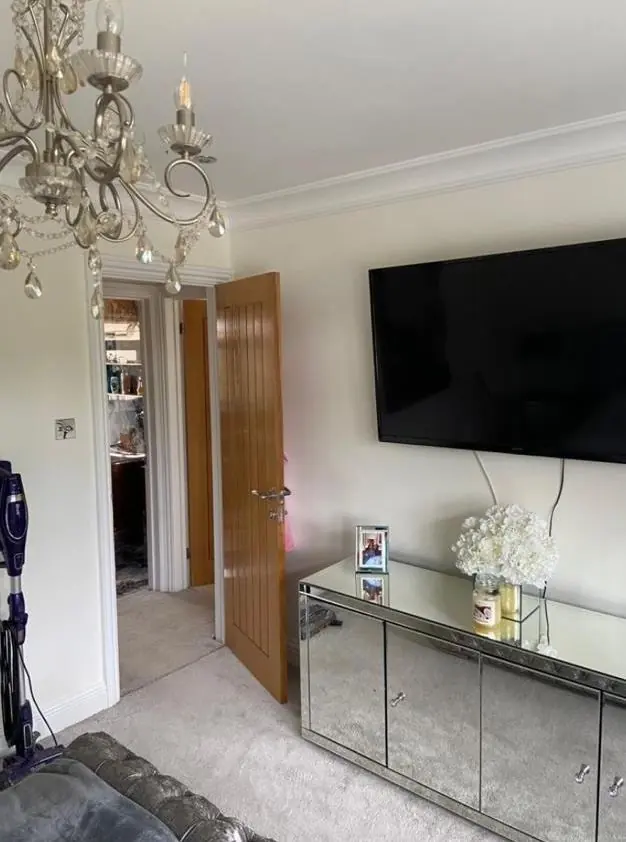
The brick houses on Oakley Drive, Stewart Close and Lunchfield Lane, and the stone-dressed infill at Honeystones and Church Mews, have no heritage limits indoors. A two-tone split across a lounge wall, a geometric panel scheme in a hallway or a picked-out alcove behind a dining table can all be done on flat modern plaster with any paint system you like.
The four types of decorative work we do, and how each is built up, are explained on our main decorative finishes page. The Moulton area page covers our other work in the village.
Last updated by Dean, DH Painter & Decorator.