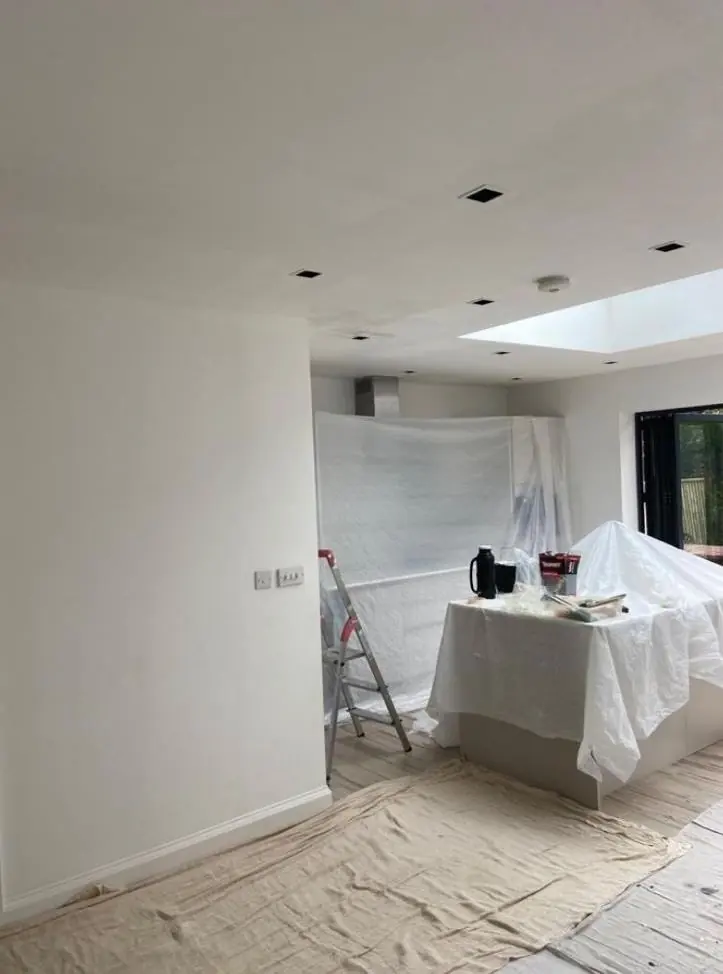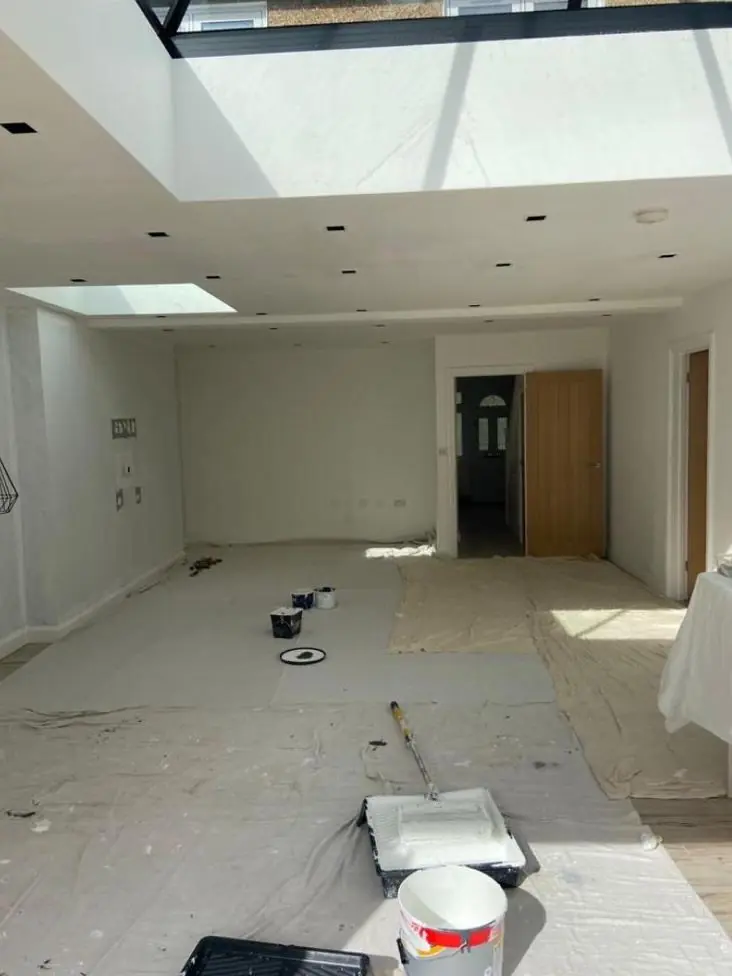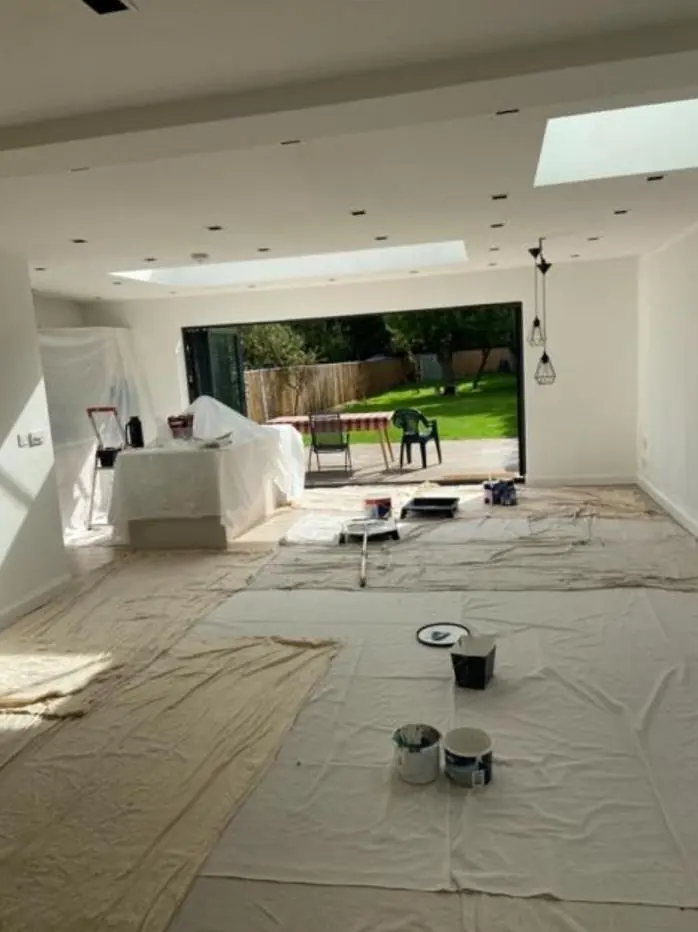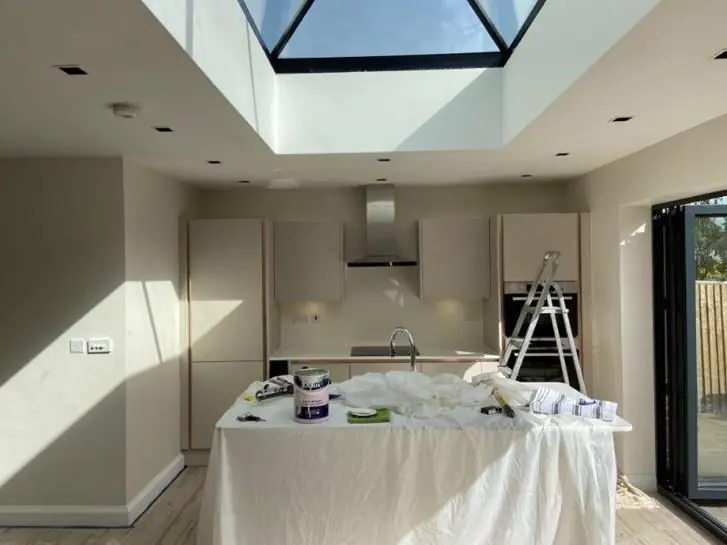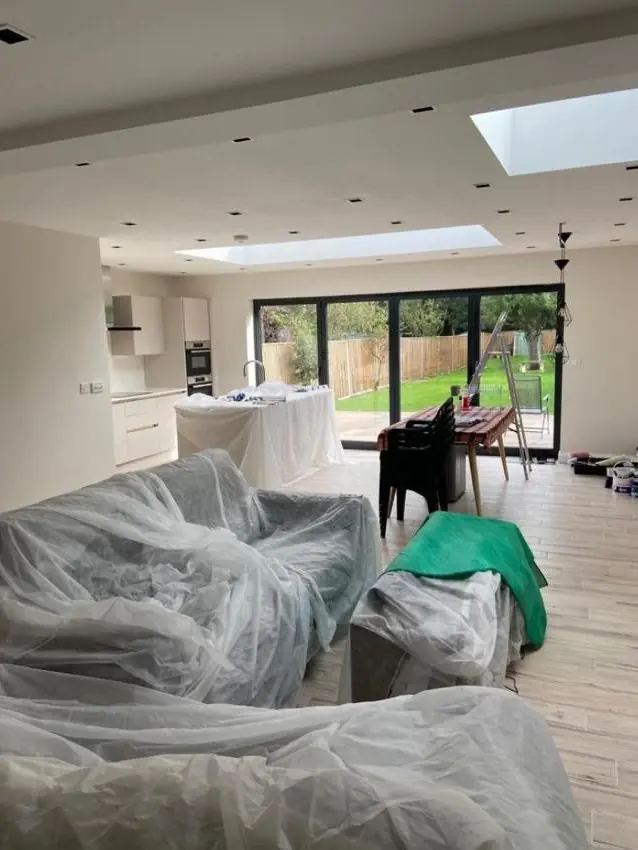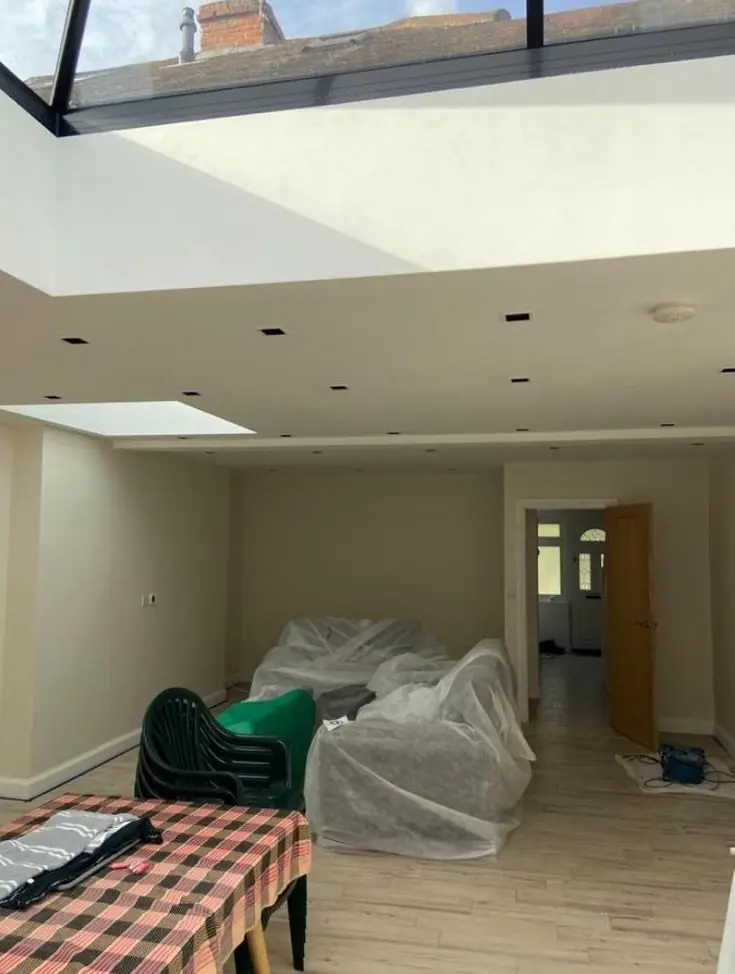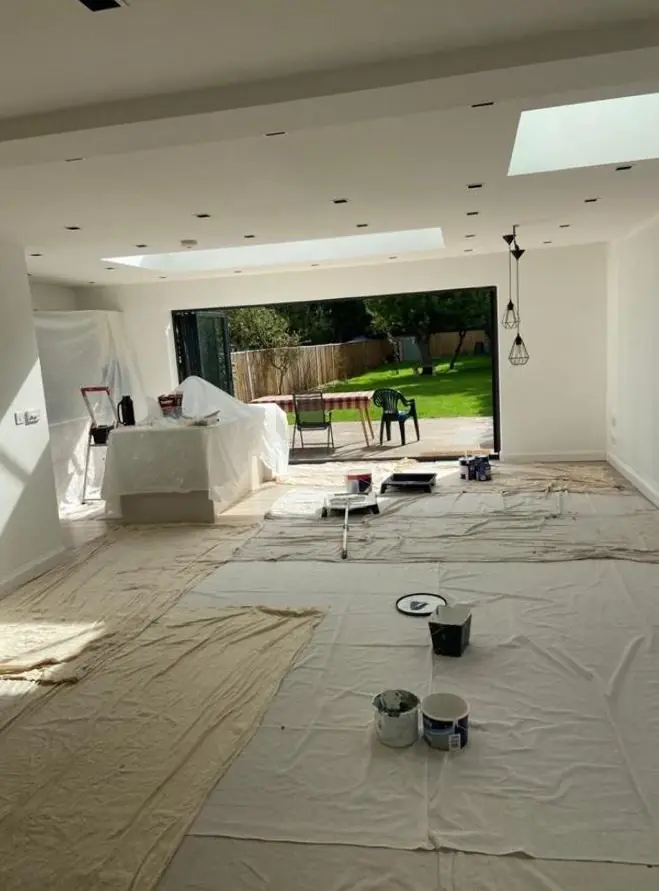
Dean decorates newly plastered walls, extensions and conversions in Moulton, about 4.3 miles north-east of Northampton in NN3. As the village grows through extensions, outbuilding conversions and infill homes, the key question on each job is what kind of plaster has gone on, because that decides the paint.
Gypsum or lime? Ask before the first coat
In most villages new plaster means gypsum skim, and the routine is simple: let it dry, apply a diluted mist coat, then two full coats. Moulton has a second case that is easy to get wrong. Repairs in the 17th and 18th century ironstone cottages, and sympathetic outbuilding conversions, are often done in lime plaster, and lime needs to keep breathing through whatever goes on it.
| Plaster | Where it turns up in Moulton | What it needs |
|---|---|---|
| Gypsum skim on plasterboard or block | Rear extensions, loft rooms, new-build infill, estate houses | Full drying, then a mist coat of thinned contract matt and two topcoats |
| Lime plaster repair | Patched walls in the old stone cottages and farmhouses | Longer curing, then a breathable mineral paint, limewash or clay-type emulsion, no vinyl |
| Both in one room | Where an extension opens into an old cottage room | A breathable system across the whole wall so the finish matches |
If you are not sure what your plasterer used, the invoice or a quick call to them settles it. Dean will also check before quoting.
Outbuilding conversions on the old plots
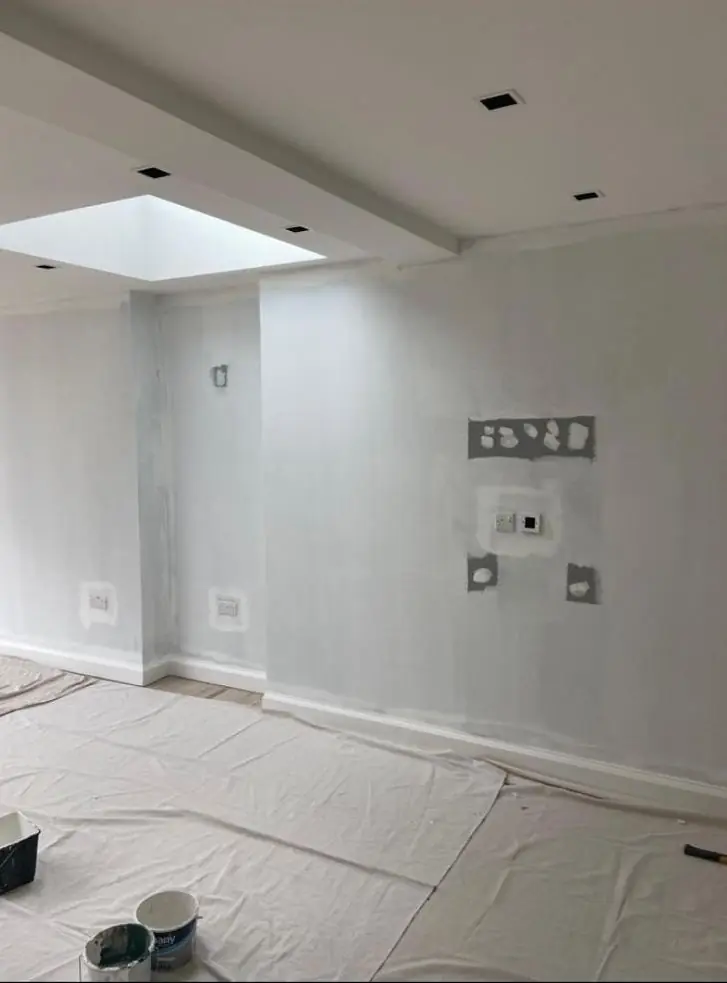
Many plots in the historic core have stone or timber outbuildings behind the house, and the 2017 conservation area appraisal treats outbuildings as heritage at risk. When one becomes a home office, annexe or studio, the inside is often a mix: new stud walls in plasterboard, old stone walls kept or lime plastered, and exposed timbers. Each surface gets its own treatment. Gypsum walls get a mist coat, lime walls get breathable paint, and old timbers are left unpainted unless you want otherwise. If the building is listed or in the curtilage of a listed house, a change of finish may need consent, so that is worth confirming before decorating.
Extensions and new homes on the edges
On the brick estates around the conservation area, such as Albone Close, Grove Farm Lane, Lunchfield Lane and Parade Bank, a rear or loft extension sits outside the heritage controls, so the decorating is straightforward gypsum work. Newer schemes including Honeystones, Church Mews, the former White Lion pub site and the Moulton College site development bring fresh plaster throughout. On these, the work is the familiar sequence:
- Wait until the plaster has dried to an even pale colour, usually several weeks for a skim and longer in winter.
- Mist coat to seal the surface and show up any defects.
- Fill and sand nicks, then apply two finish coats to walls and ceilings, plus primed joinery.
Our mist coat guide explains the drying and dilution in detail, and the main new plaster and extension page covers fitting around builders and kitchen installers.
Timing around Moulton’s weather and trees
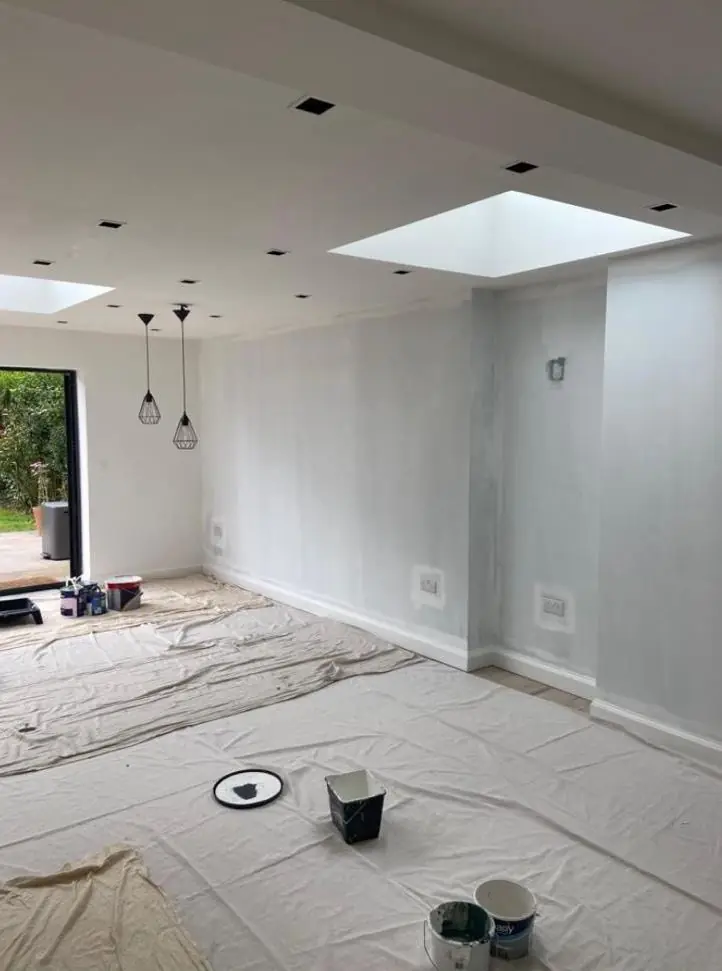
Moulton stands on undulating ground at roughly 400 to 600 feet, and many plots are shaded by large trees at the rear, some protected by the parish’s 21 Tree Preservation Orders. A rear extension under heavy tree cover can stay cool and damp, so new plaster there tends to dry more slowly than the same skim in an open, south-facing room. We go by the plaster’s colour and a moisture reading rather than a set number of days. Rushing a mist coat onto damp plaster is the main cause of peeling on new walls.
We cover the whole village from our Northampton base. For the other work we do here, see the Moulton area page.
Last updated by Dean, DH Painter & Decorator.