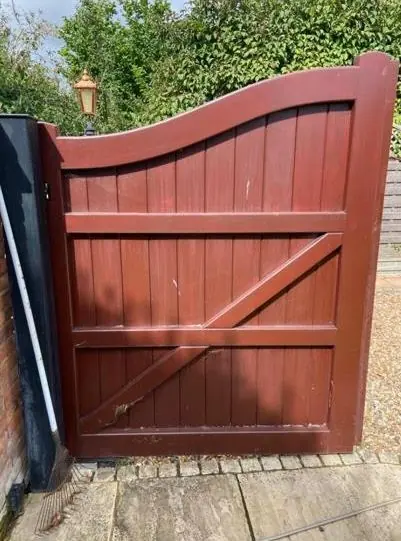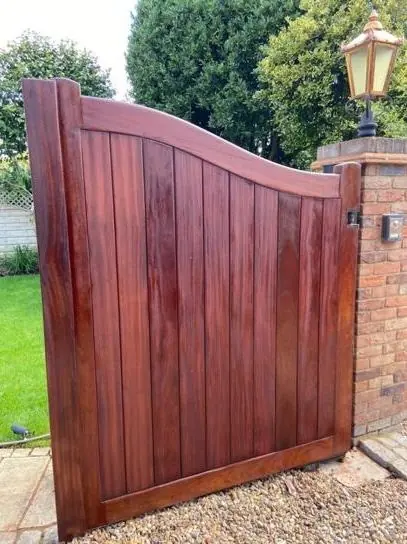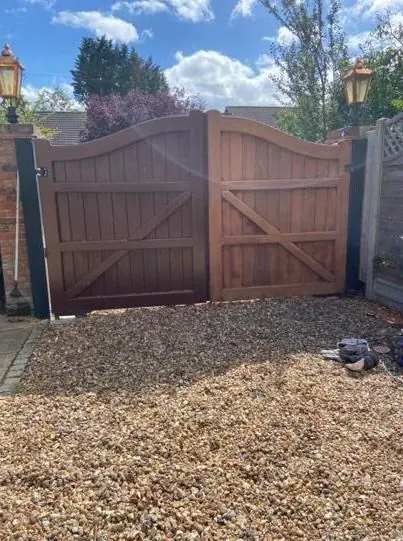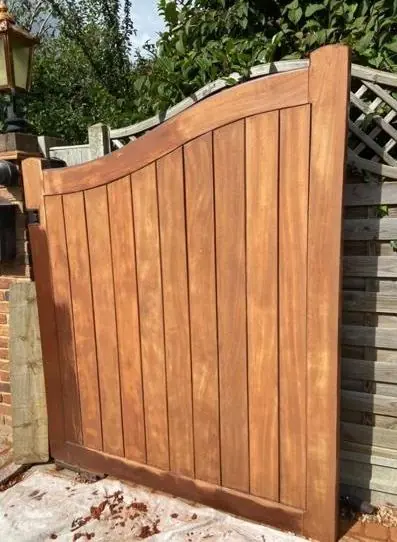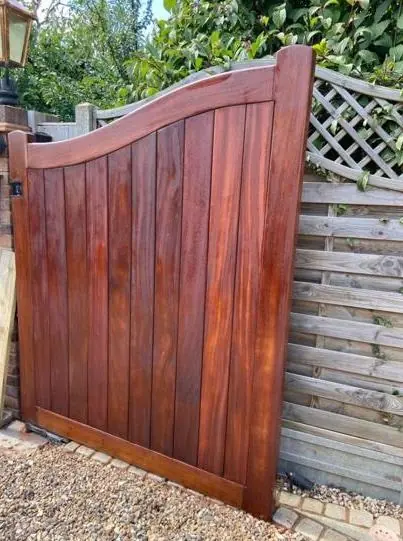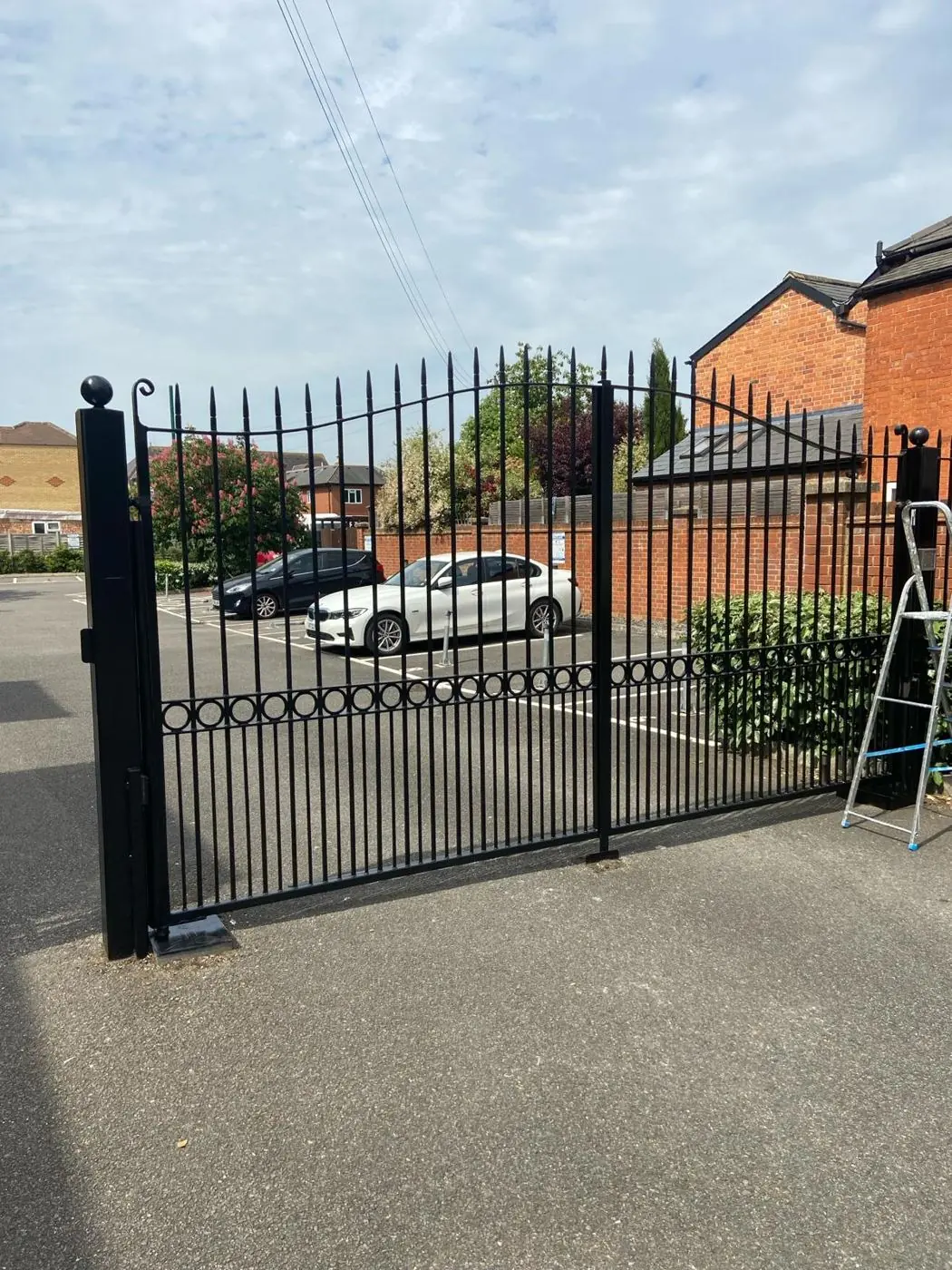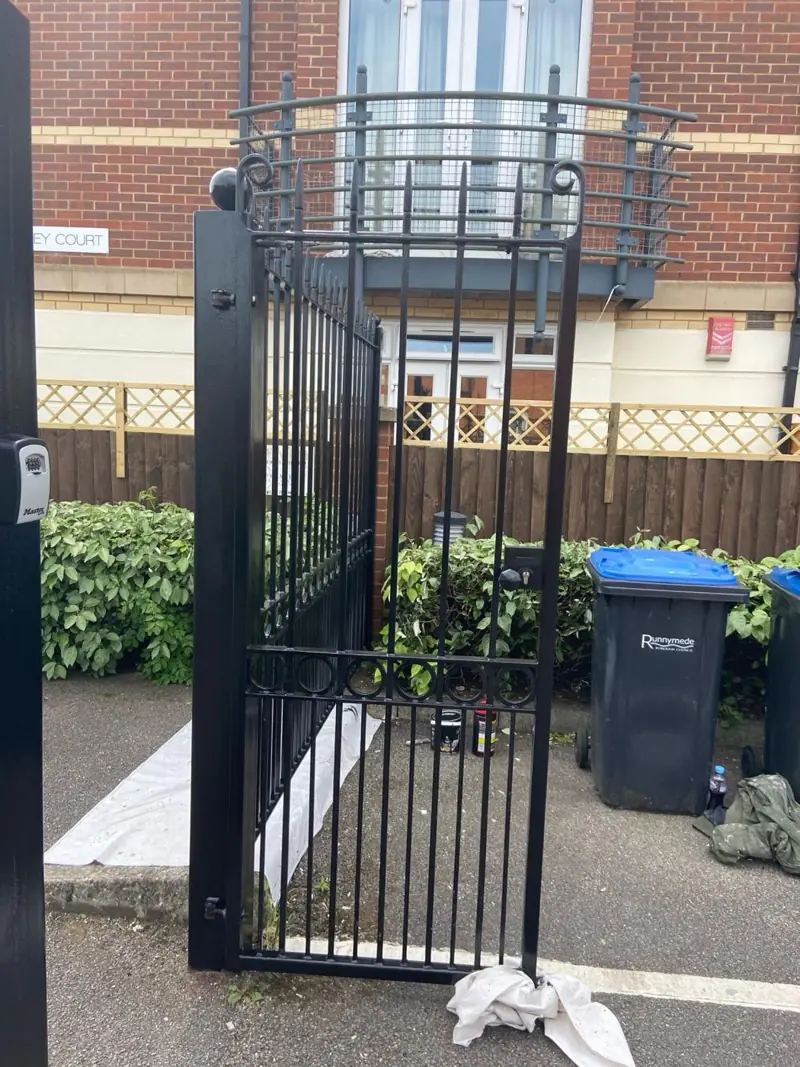
We stain and paint timber fences, gates and outbuilding doors in Moulton, NN3, a village about 4.3 miles north-east of Northampton town centre. Many gardens here sit under large, often protected trees, so Dean plans for cleaning off algae and letting the wood dry before any finish goes on.
Gardens under a heavy canopy
The thing that shapes fence work in Moulton more than anything else is the trees. In 2017 the parish had 21 Tree Preservation Orders, and the conservation appraisal points to large trees at the rear of plots and along The Grove, Pitsford Road, Overstone Road and Northampton Lane North, including veteran specimens. Gardens in their shade rarely dry out fully between showers. Panels and gates there turn green on the shaded face, gather moss along the bottom rail and grey off faster than timber in an open garden.
That changes the order of work. A Moulton fence under trees usually needs a fungicidal wash, time for it to act, a scrub down and a dry spell before any stain is brushed in. Stain over live algae does not soak into the grain, and it starts lifting in patches within a season. We would rather add a day for drying than come back to a fence that has failed.
Because protected trees cannot just be lopped to make room, we also work around low branches and roots, and keep stain off bark and planting near the base of the fence.
Outbuildings, plank doors and the old core
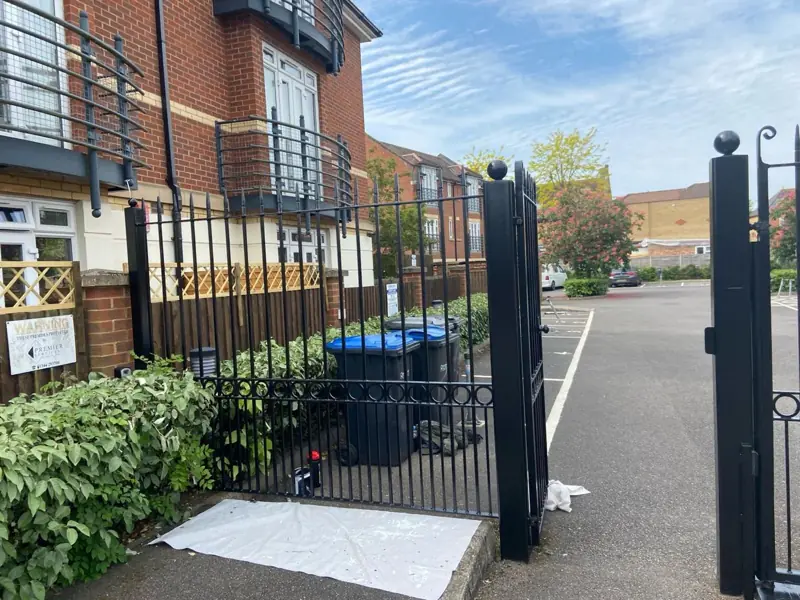
In the historic part of the village, around West Street, Church Street and Chater Street, many plots come with stone or timber outbuildings behind the cottages. The appraisal treats outbuildings as heritage at risk, and asks for the same care over materials as on the house. For timber doors and boarded gates on these buildings, that means:
- keeping to a colour that suits the setting, often a muted or traditional shade rather than a bright modern one
- using a breathable, microporous finish that lets old, weathered boards dry
- leaving the stone walls and lintels of the outbuilding unpainted
- checking with the owner, and the council if the property is listed or on an Article 4 terrace, before a colour change
Where a gate opens straight onto a lane without a pavement, as on parts of Cross Street and Church Hill, we put up a barrier and keep the gate pinned open or closed while the finish dries rather than letting it swing into the road.
Panels and posts on the newer estates
The 20th century estates, such as Oakley Drive, Pytchley View, Carey Close and Lunchfield Lane, are where the classic lap panel and feather-edge fence work sits. These gardens are outside the conservation area, so the colour is entirely yours. Where the trees along Overstone Road and Northampton Lane North reach over the back of a plot, the rear run is often in far worse shape than the side fences, so we price each run on its own condition rather than by the metre.
Moulton’s land rises and falls between ridges at Church Hill, Stocks Hill and Manor Farm, and some gardens step down a slope. Stepped fence runs leave exposed panel ends and post tops that weather first, so we give those cut ends extra attention.
Which finish, and when
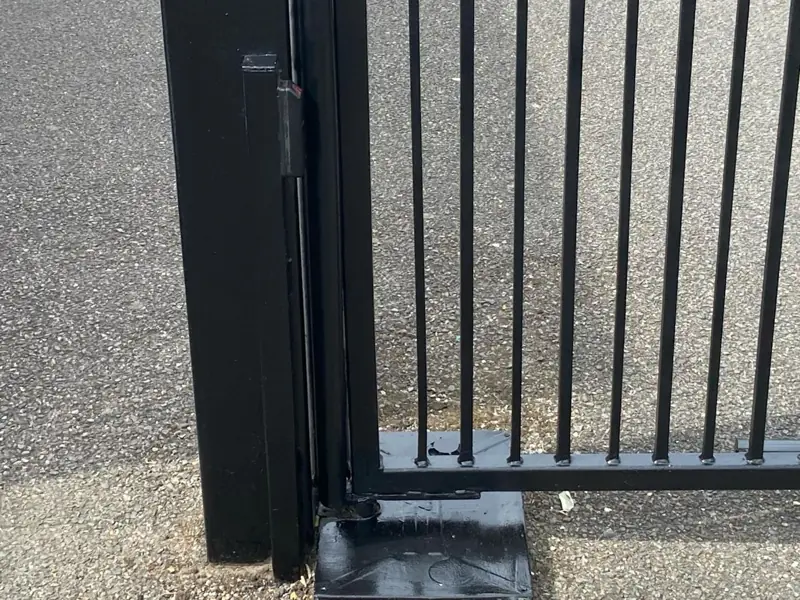
For heavily shaded boundaries we often suggest a more pigmented stain or a fence paint, as darker, more opaque finishes hide early green staining better and protect the surface for longer. In an open, sunny plot a translucent stain that shows the grain is a fair choice. Late spring to early autumn gives the drying time stains need, and in Moulton’s shadier gardens a run of dry days matters more than the calendar.
The product choice and preparation are covered in more depth on the main fence and gate staining page. You can also see what else we do locally on the Moulton area page.
Last updated by Dean, DH Painter & Decorator.