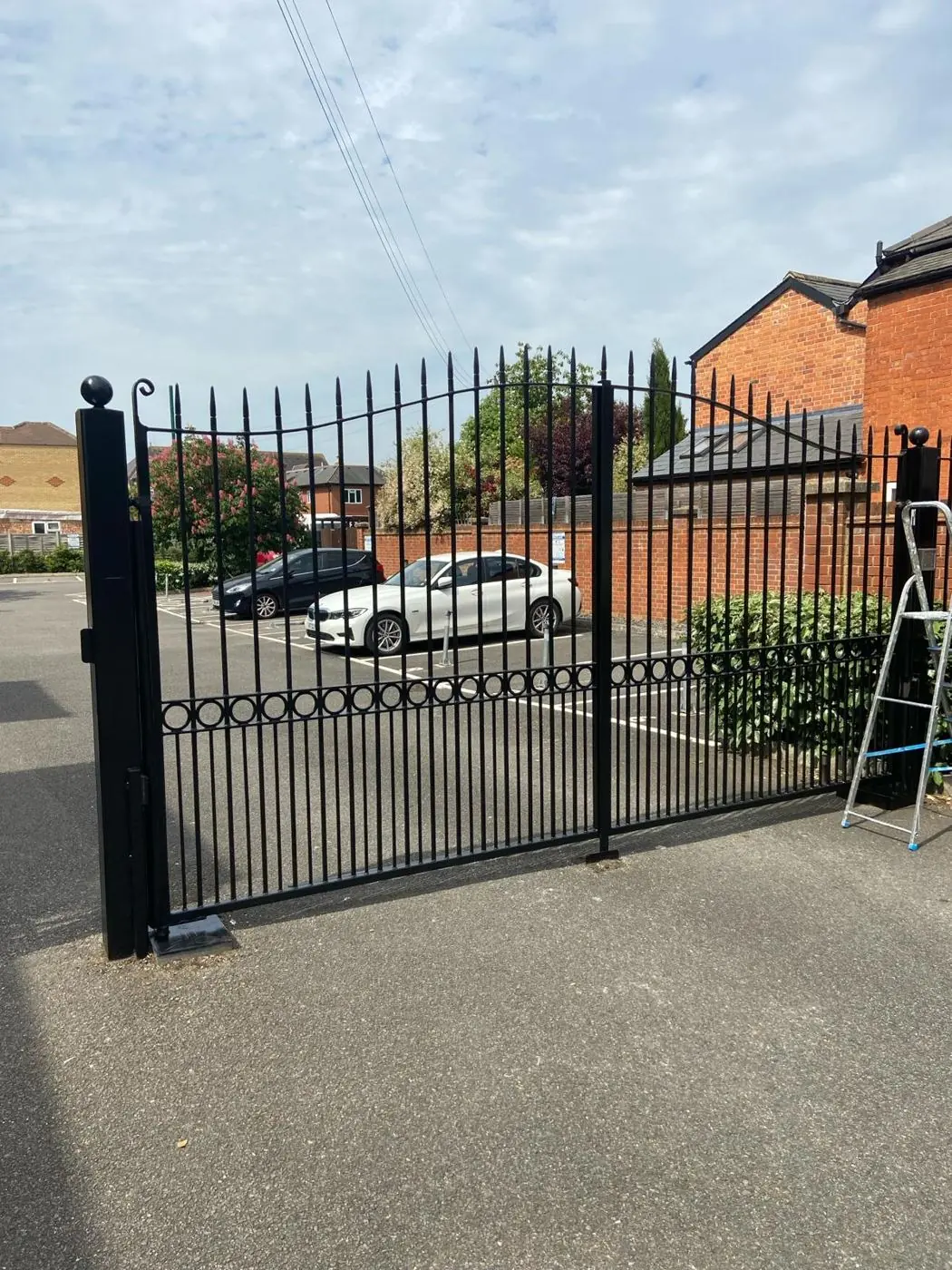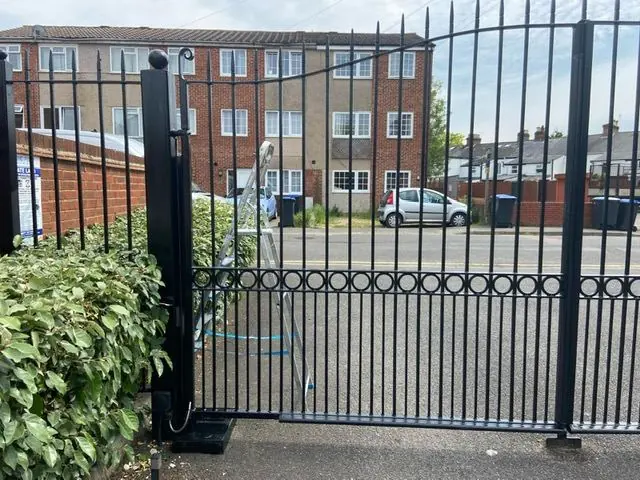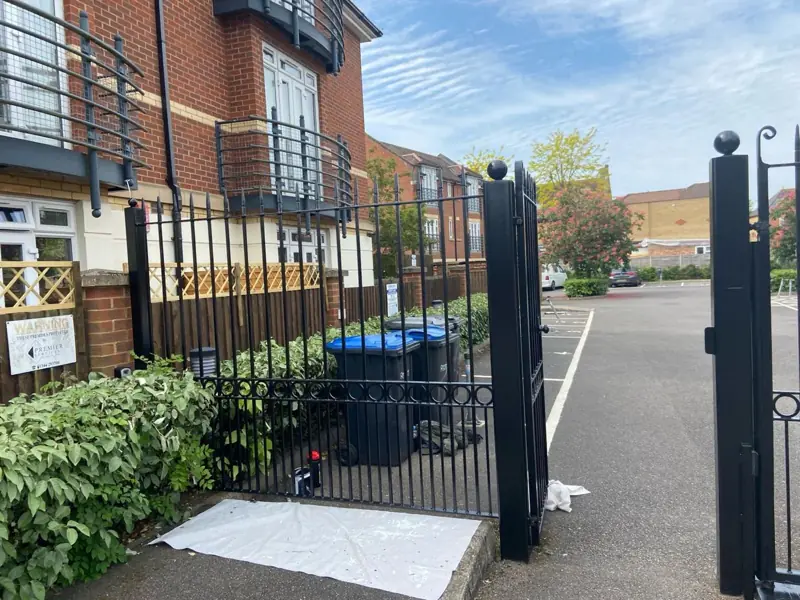
Dean paints metal gates, railings and balustrades on homes and premises in Overstone Leys, a 4.6-mile drive north-east from Northampton. Old wrought iron is rare on an estate built since 2016; the metalwork here is newer steel, which needs a different approach.
What metalwork you find on a new estate
Older Northampton streets have cast and wrought iron railings with decades of paint on them. Overstone Leys does not. The estate has gone up in phases since outline permission in 2015, so any metalwork is recent and probably fabricated steel. Typical examples on newer plots and around shared spaces include:
- side and driveway gates in mild or galvanised steel
- balustrades on steps, landings or raised areas
- railings along paths and public open space
- metalwork around non-domestic buildings such as the new primary school
Not every house has any of these. If yours has none, this is not a service you need, and Dean will not invent one.
Galvanised steel: new metal is harder to paint
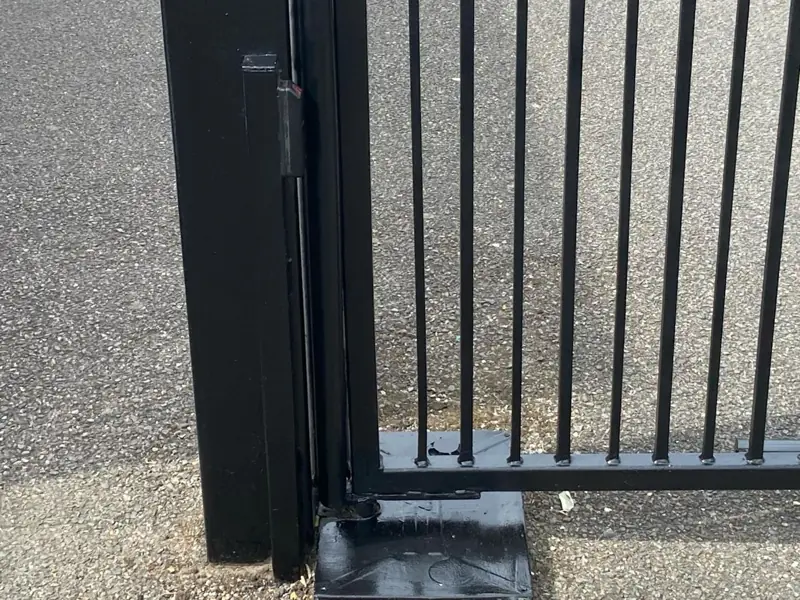
A lot of modern gates and railings are galvanised, meaning they have a zinc coating to stop rust. Bare galvanising looks dull grey and many owners want it black or a colour to match their door. The catch is that ordinary metal paint flakes off fresh zinc, sometimes within months. Painting galvanised steel properly means:
- Degreasing to remove any residue left from manufacture.
- Lightly abrading or using a mordant wash so primer can key.
- A primer formulated for galvanised and non-ferrous metal.
- Two topcoats of a metal paint suited to the primer.
Mild steel gates that were powder coated or painted at the factory are different. They only need attention where the coating has been chipped, often at hinges, latches and the bottom rail where a gate drags. Those spots rust first and creep under the surrounding coat, so they are wire brushed back to bright metal and primed with a rust-inhibiting primer before topcoating. The main metal gate and railing painting page covers primers and rust treatment in more depth.
Grime from the A43 and dust from the parcels
Metalwork on the western side of the estate collects a greasy film from the A43 Kettering Road traffic. Gates near active building parcels, including the central David Wilson Homes plot, pick up fine cement dust. Both stop primer bonding. So the first job on any metal here is a thorough degrease and rinse, and topcoats wait for a calm day if nearby building work is throwing up dust.
Gates also suffer from simple use. A side gate on a new plot is often hung before the ground has settled, and as posts move slightly the gate starts to drag or bind on its latch. Paint rubbed off at those points is where rust begins. Where we can see a gate is catching, we point it out before painting, because a fresh coat on a dragging bottom rail will be scraped off again within weeks. A small adjustment by whoever installed it, or a fencing contractor, fixes the cause.
Pytchley Gate is heritage work
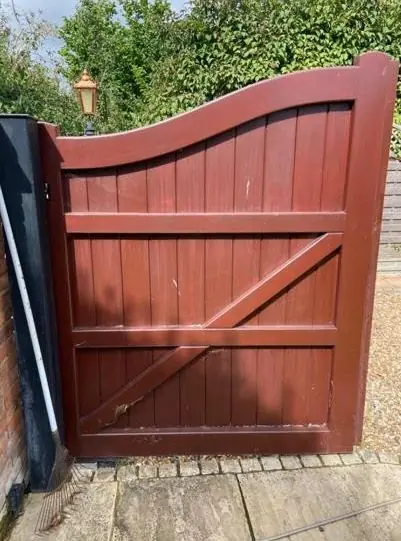
One gate here is in a different category altogether. Pytchley Gate, by the new school, is a Grade II listed landmark from the late 16th century and has nothing in common with a galvanised side gate. Any painting, cleaning or repair on or immediately around a listed structure needs the council’s listed building consent and a specialist approach. It is not ordinary redecoration, and we would not treat it as such.
For school, care and nursery buildings, which are occupied, metalwork should be painted with low-odour products during quiet periods, with wet paint clearly signed. Dean covers Overstone Leys from Northampton; see our Overstone Leys page for other work here, or the cost guide for what affects the price of metalwork jobs.
Last updated by Dean, DH Painter & Decorator.