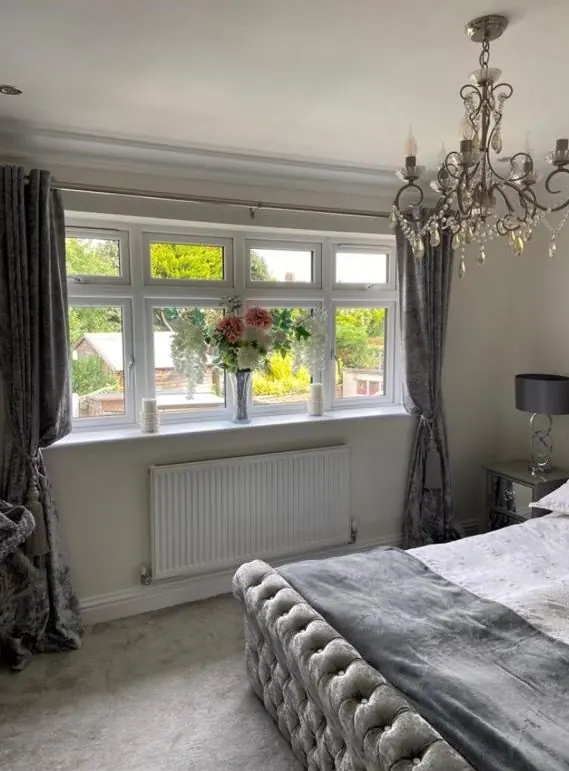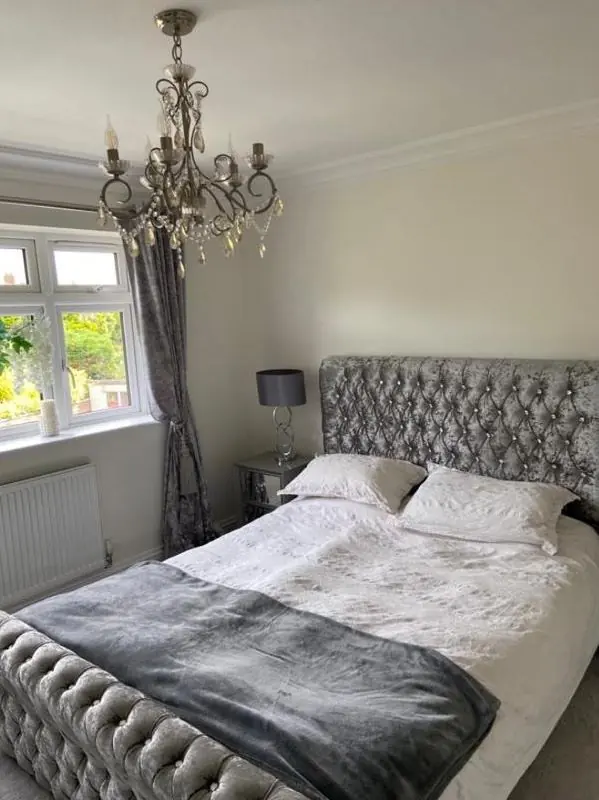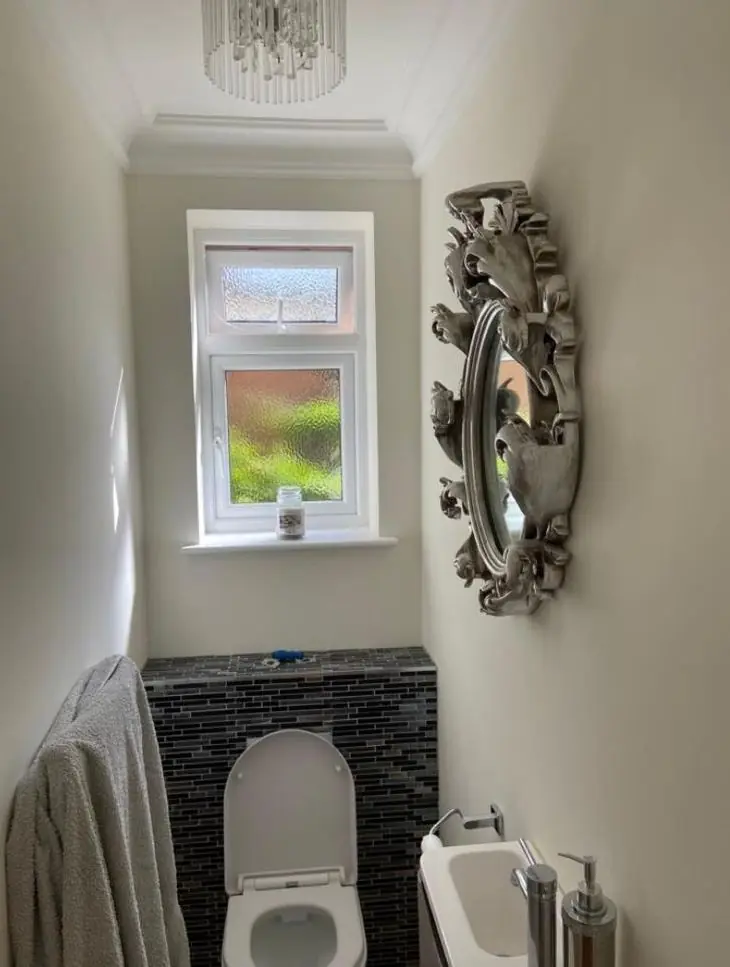
Dean helps Overstone Leys homeowners choose colours and sheens as part of a decorating job, travelling out from Northampton, 4.6 miles to the south-west. Most people here are replacing the housebuilder's neutral throughout with a scheme of their own, and they have unusual freedom on the outside too.
Starting from one neutral throughout
Most houses on this estate were handed over the same way: one pale contract colour on walls and ceilings, white joinery, nothing to react against. That sounds like a blank canvas, but most owners find it harder than redecorating an older home, because there is no existing fireplace, original door or tiled floor to set the palette. The questions are practical ones. Does the lounge go warm or cool? Should the open-plan kitchen-diner be one colour or two? What links the hall to the upstairs landing in a three-storey townhouse?
Dean answers those standing in the rooms at the time of day you use them, with sample patches on your actual walls. Contract paint is often slightly yellow or pink-toned, so we judge samples against a sealed patch rather than the old finish, which can make every neighbouring colour look off.
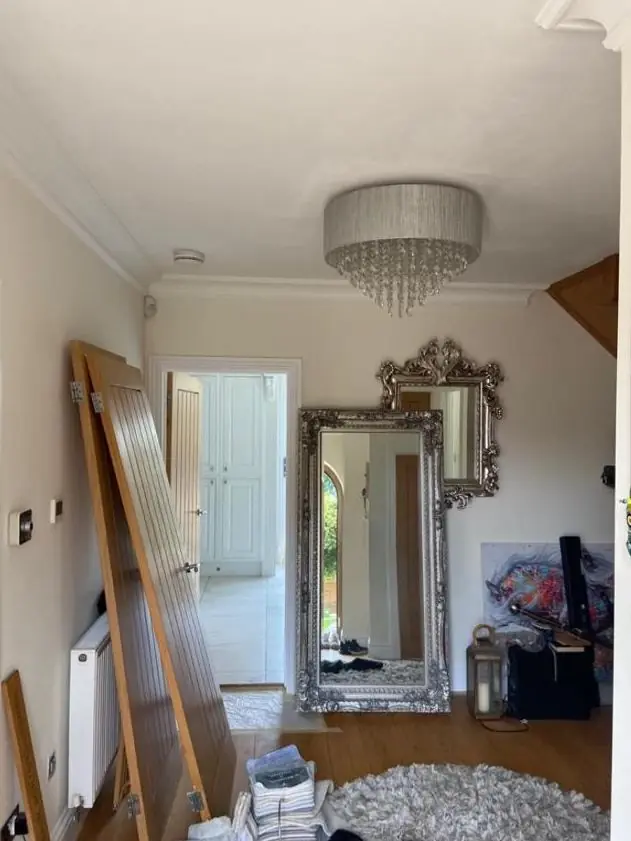
Flow between floors is the other recurring puzzle. In a two- or three-storey new build the hall, stairs and landings are one tall, connected space, visible from the front door. We usually suggest treating that column as a single scheme, perhaps one shade with a deeper tone below a painted dado line, and letting the bedrooms and lounge branch off it.
The outside is yours to choose
This is where Overstone Leys differs sharply from the village across the A43. Moulton’s conservation area and its Article 4(1) direction can bring front doors and window colours under control. West Northamptonshire Council lists no conservation area for Overstone, and the estate sits in the former Daventry district, outside the old borough’s directions. In practice, owners here can paint a front door sage, navy, terracotta or charcoal without a planning question.
Freedom still needs some judgement:
- Check your property deeds or any estate management rules for covenants on external appearance, which some new developments carry.
- Look at the brick and roof colour beside the door, not just the paint card; a cool blue-grey reads differently against warm red brick than against buff.
- Homes beside the A43 collect traffic grime, so a very pale door or garden gate there will show dirt quickly. Mid and dark shades hide it better.
Sheen is half the decision
New-build joinery comes primed or in a thin satin, and owners often want it upgraded at the same time as the colour changes. We generally steer people towards a waterborne satin or eggshell for doors, skirtings and stair spindles, because oil-based gloss yellows on landings where daylight is limited. For walls, the sheen depends on who uses the room: a flat matt for a calm bedroom, a scrubbable matt where children and dogs pass.
If the house is let or shared ownership through a housing association, durable neutrals and washable finishes still make sense, and associations often have their own paint standards for tenancy changes.
Planning colour around the build-out
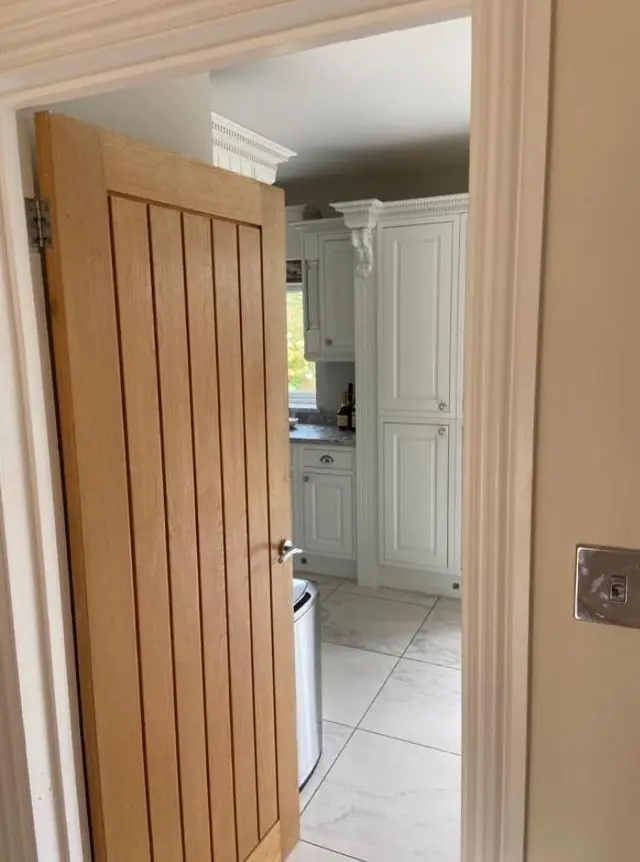
Building is still going on at the centre of the estate and to the south. If your street faces an active parcel, it is worth agreeing the exterior colours now but timing the actual painting for a quieter spell, when dust from the site will not settle on a wet front door. The exterior painting timing guide covers the weather side of that.
More on how Dean works through shades and undertones is on our colour and finish advice page. For the wider picture of decorating on the estate, see painting and decorating in Overstone Leys.
Last updated by Dean, DH Painter & Decorator.