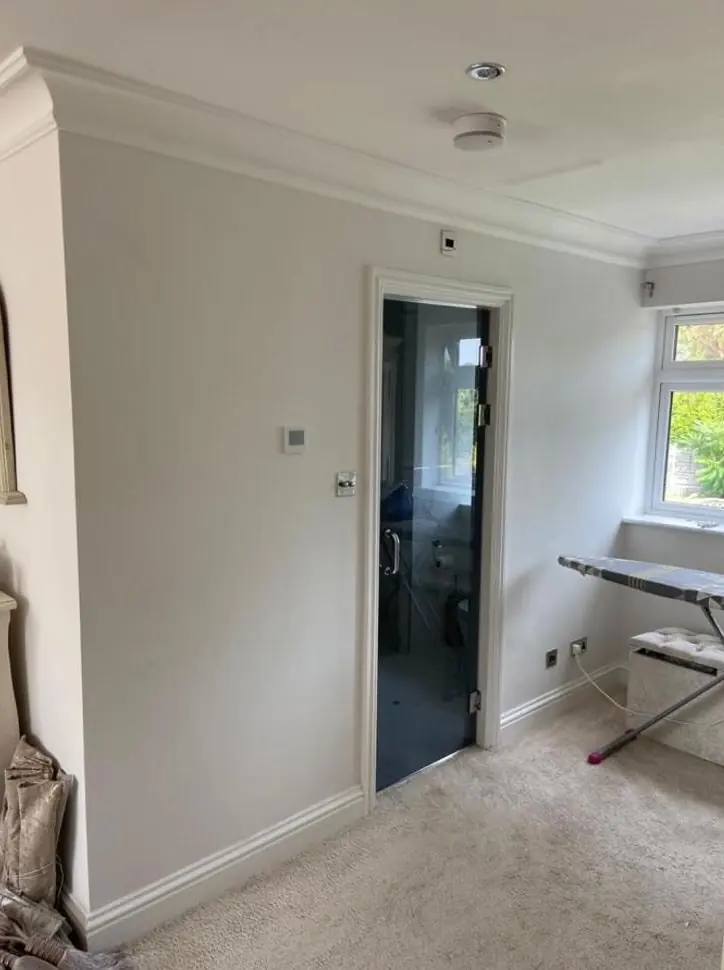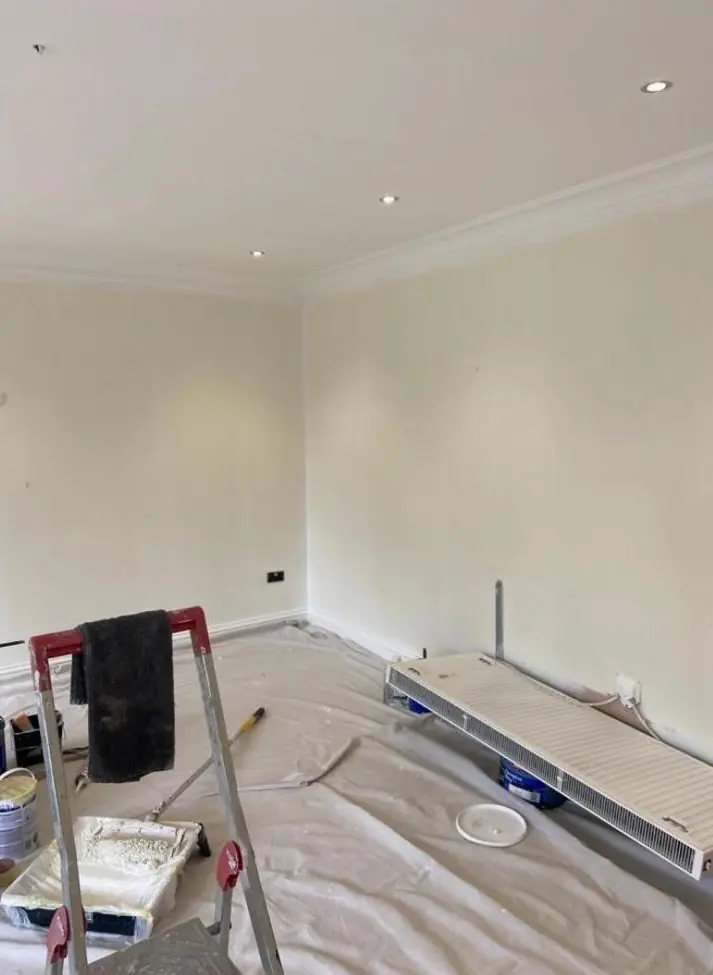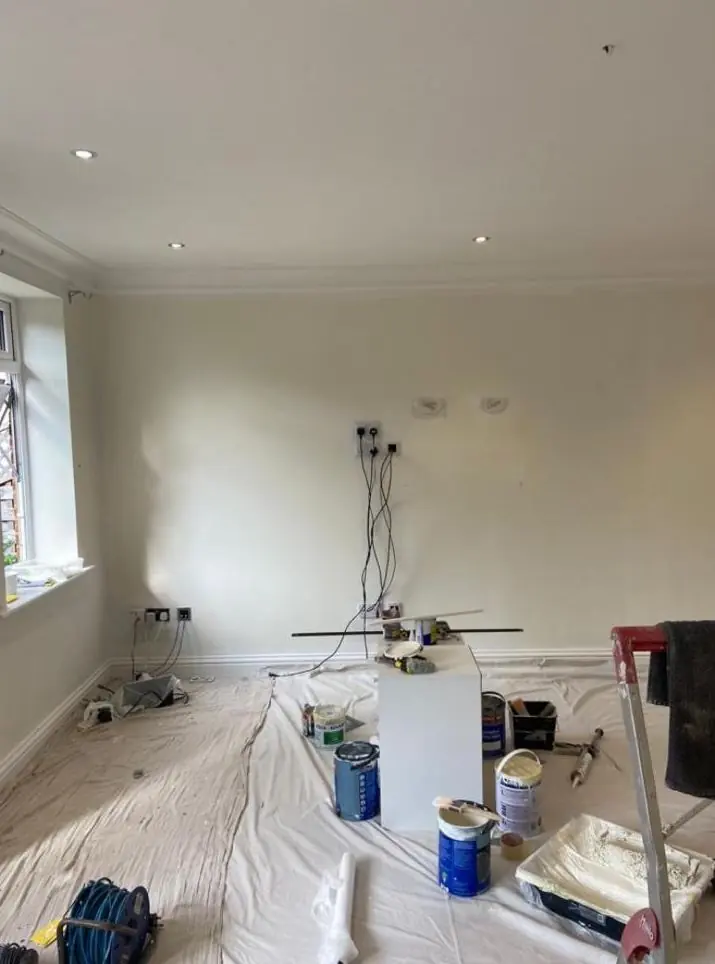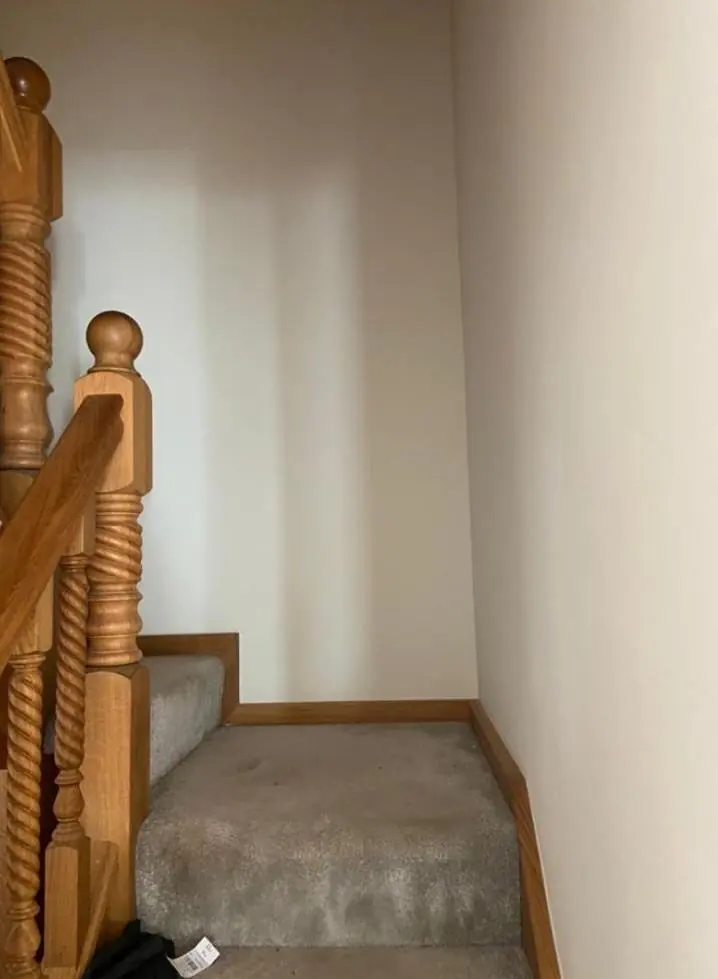
Dean adds decorative finishes to homes in Overstone Leys, the NN6 estate on the far side of the A43 from Moulton village. Because these houses have no cornice, dado or period joinery, most work here means creating detail from scratch: panelling, split walls and hand-painted accents.
Houses without a single moulding
In a Victorian house, decorative painting often means picking out the plaster details that are already there. Overstone Leys gives us nothing to pick out. The homes were built from 2016 onwards to a volume housebuilder’s specification, which typically means flat plasterboard, plain skirting and architraves, and no picture rail, dado or ceiling rose. Owners who want character have to add it, and that changes what a decorative finish job looks like.
The upside is that there is no old lead paint, crumbling lime plaster or wavy wall to fight, so applied detail sits straight and true from the start. The work goes into planning proportions, since every line you see is one we chose and fixed.
The options fall into three groups:
- Applied panelling, from simple box frames in MDF strip to full-height shaker-style boarding in a hall or bedroom
- Painted effects with no joinery at all: a two-tone wall split at dado height, a colour-blocked arch behind a bed, or a curved shape framing a reading corner
- Accent detail on new features, such as a contrast colour on stair spindles and newel posts or a painted alcove in a lounge
Panelling onto plasterboard
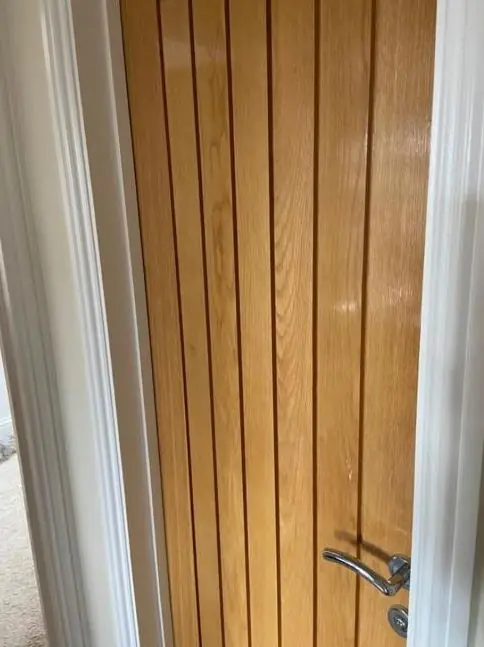
Panelling is the upgrade most new-build owners ask about, and plasterboard is a different base from solid plaster. Fixings need to find the studs or use the right adhesive, and long horizontal rails should be fixed so they will not move as the house settles. We set out the grid on paper first so the frames divide evenly around switches and sockets, which on a modern build tend to sit at standard heights and can land awkwardly inside a box.
Finishing is where panelling succeeds or looks homemade. Every pin hole is filled, every joint and mitre is caulked, and the boards get a primer that grips MDF before two finish coats. We usually recommend a durable eggshell on the panels with the wall above in a matching or contrasting matt, so scuffs on the lower half wipe off.
Timing it around the settling period
Like everything on a young house, decorative work has to respect the drying-out cracks that appear in the first year or two. Caulked panelling joints and sharp painted lines show any movement, so the cleanest results come once the housebuilder’s snagging is complete and the walls have stopped cracking. If you want something now, a painted two-tone or arch effect is the forgiving option; it can be retouched easily if a hairline crack crosses it.
Practical points for the estate
Panelling arrives as long lengths of board, and some closes here are tight, with drives shared between houses, so we fix where to park and unload before delivery day. Cutting is done outside where we can, with dust sheets and extraction inside, because new carpet and fresh flooring are common in these houses.
Affordable rent tenants should get their housing association’s agreement before any panelling is fixed, since it is a change to the walls rather than just paint. Shared owners usually have more freedom over interior decoration, though it is worth reading your lease.
The methods behind faux effects, detailing and panelling are covered on our main decorative finishes page. To see how this fits with the other work we do on the estate, visit our Overstone Leys hub, and for budgeting, the cost guide.
Last updated by Dean, DH Painter & Decorator.