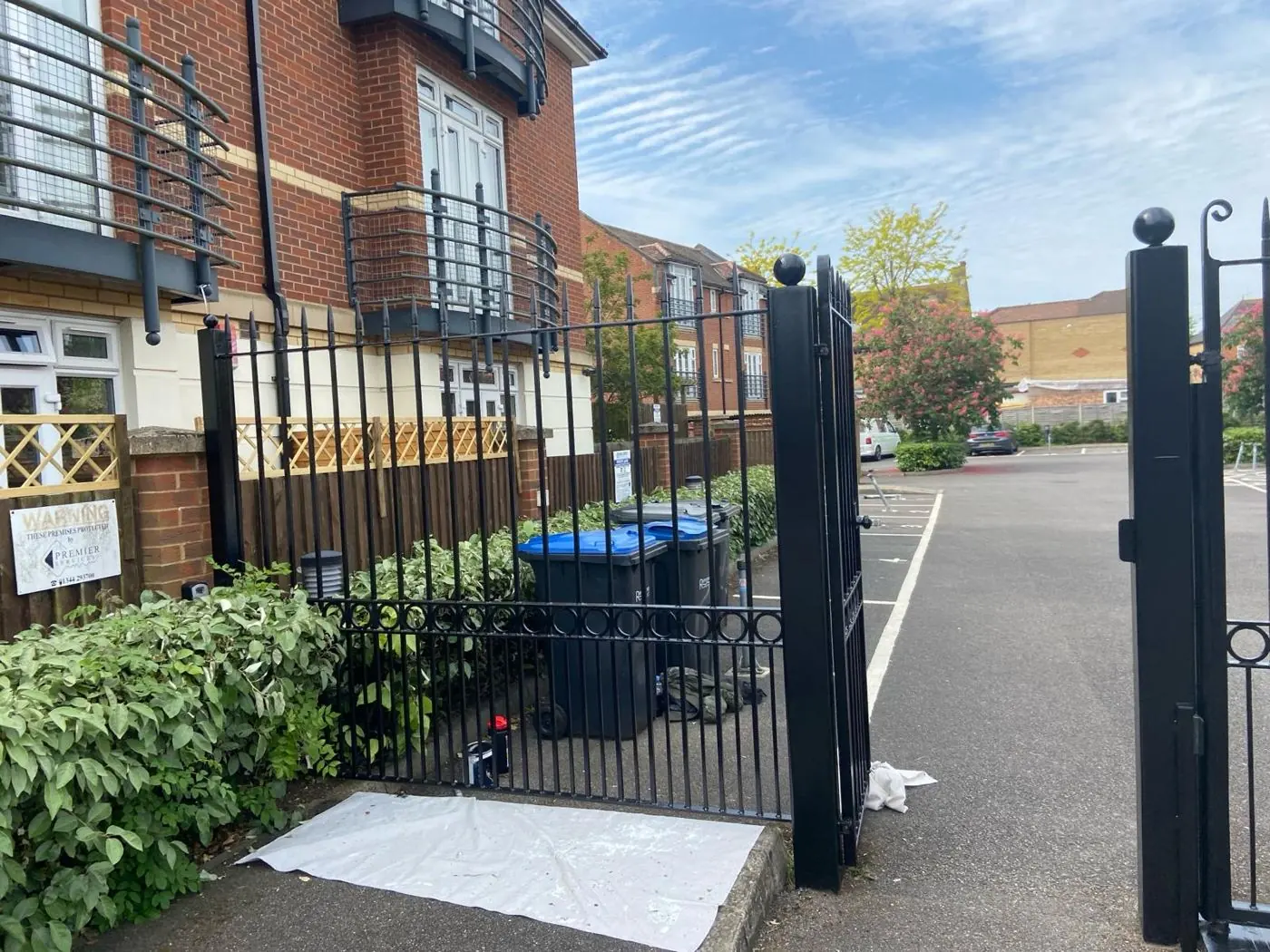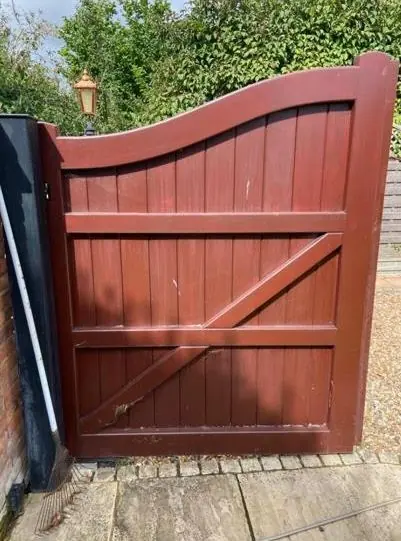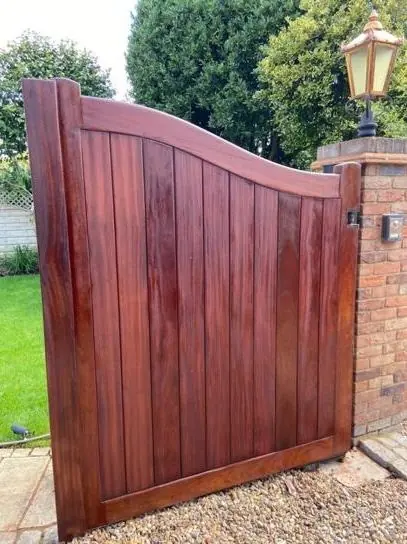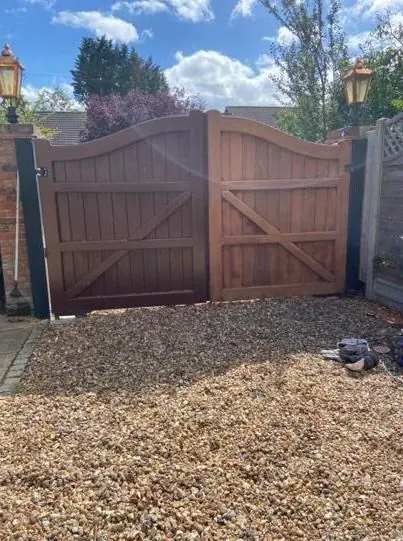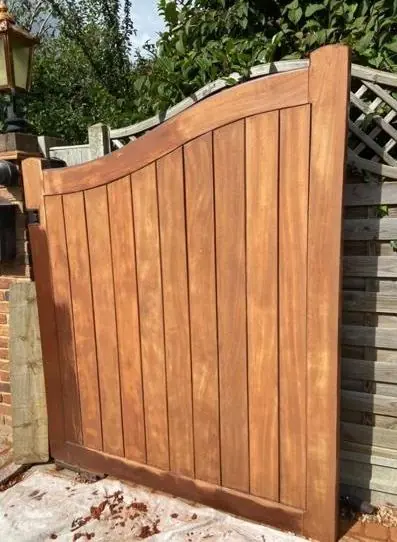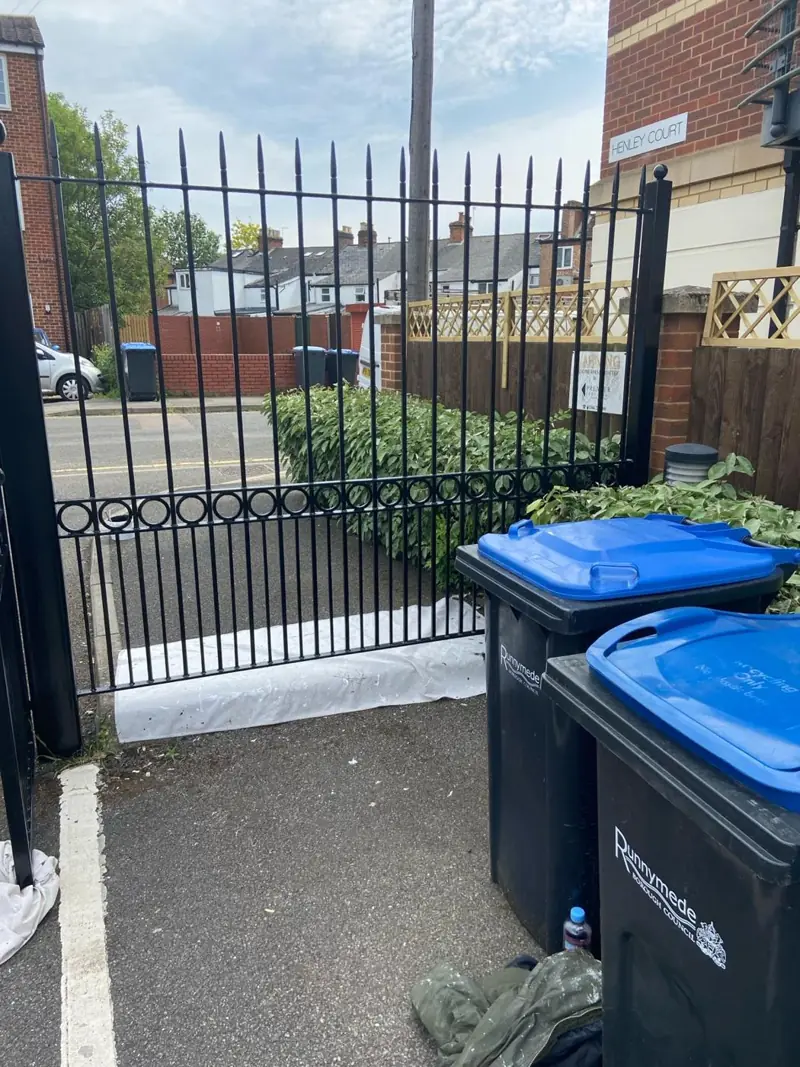
Dean stains and treats new fences, gates and garden timber in Overstone Leys, the estate 4.6 miles from Northampton town centre on the north-east side. Most fences here were put up by the housebuilder with no finish or only a dip treatment, so the job is usually the first proper coat.
New plots, bare boards
When a house is handed over in Overstone Leys, the garden fence and side gate tend to be either bare timber or dip-treated, the green or brown tint you see on new boards. Dip treatment helps against rot but it is not a weather finish, and it fades unevenly within a couple of years. On an estate where the housebuilders have been handing over homes in phases since 2016, there are fences at every stage: some just installed, some going grey, some already stained by owners.
The right moment for a first coat depends on that stage. Freshly treated timber holds a lot of moisture, and stain applied too soon sits on the surface and peels or blotches. Dean checks the boards, and if they are still wet, he will tell you to wait rather than take the job early. Our guide on timing exterior work through the year explains how the seasons affect drying.
Agreeing a colour along a shared boundary
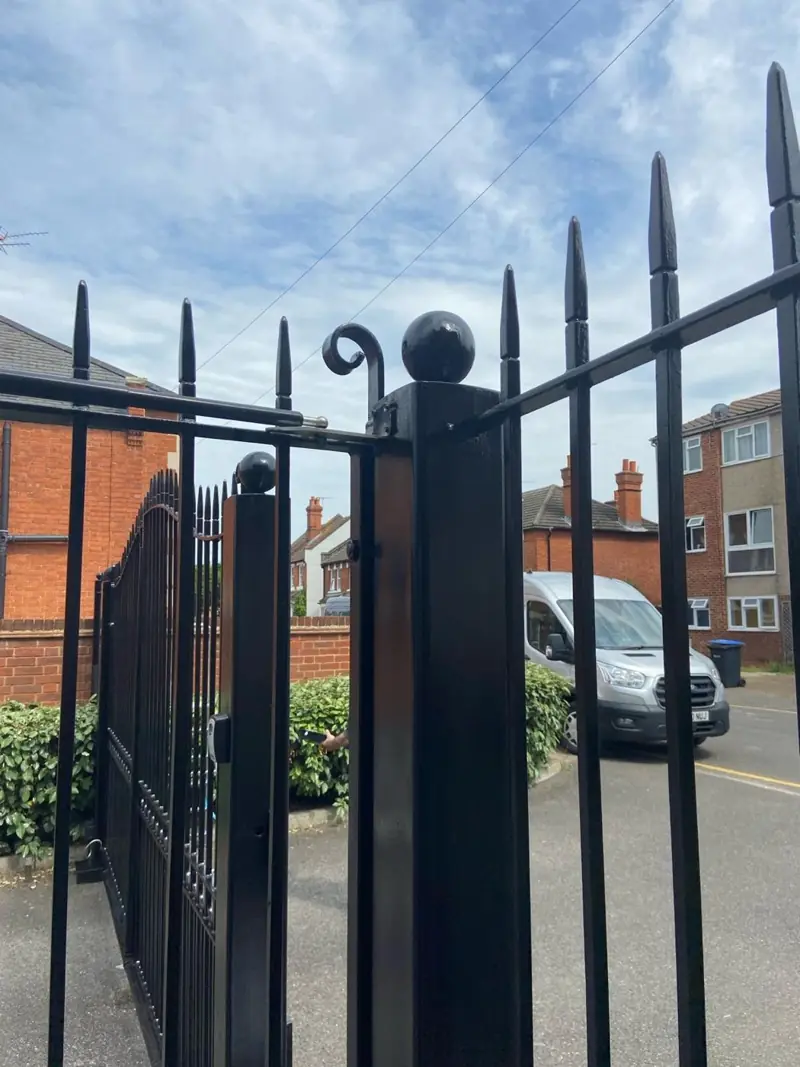
New estates pack gardens side by side, and most fences here run between two neighbours. Each side of a close-board fence can be a different colour, but the posts, capping and gravel boards are seen from both gardens. Before starting, it is worth:
- checking your plot plan or transfer to see who is responsible for the fence
- telling your neighbour what colour is going on and when, especially if the stain may drip through gaps
- agreeing access if their side needs work too, or limiting the job to your face only
Dean is happy to stain one side only, and protects the neighbour’s side from runs where the boards overlap.
Housing association homes on affordable rent are a separate case. If you rent from Accent or another association, garden fences may be the landlord’s responsibility, and some tenancies ask you to get permission before changing their colour. Shared ownership buyers usually look after their own fences, but it is worth a quick check of the lease before booking.
Stain, oil or opaque paint for a young fence
| Finish | Suits | Worth knowing |
|---|---|---|
| Translucent stain | New close-board you want to keep looking like wood | Shows grain; wears gradually, easy to recoat |
| Solid-colour fence paint | Matching a modern scheme, such as grey or black | Hides the patchy dip-treated tint; needs recoating more evenly |
| Clear treatment or oil | Hardwood gates and garden furniture | Lets timber colour show; little UV protection unless tinted |
Because there is no conservation area here, you are free to choose bold colours. More on finishes is on our main fence and gate staining page.
Damp ground, open edges and dust
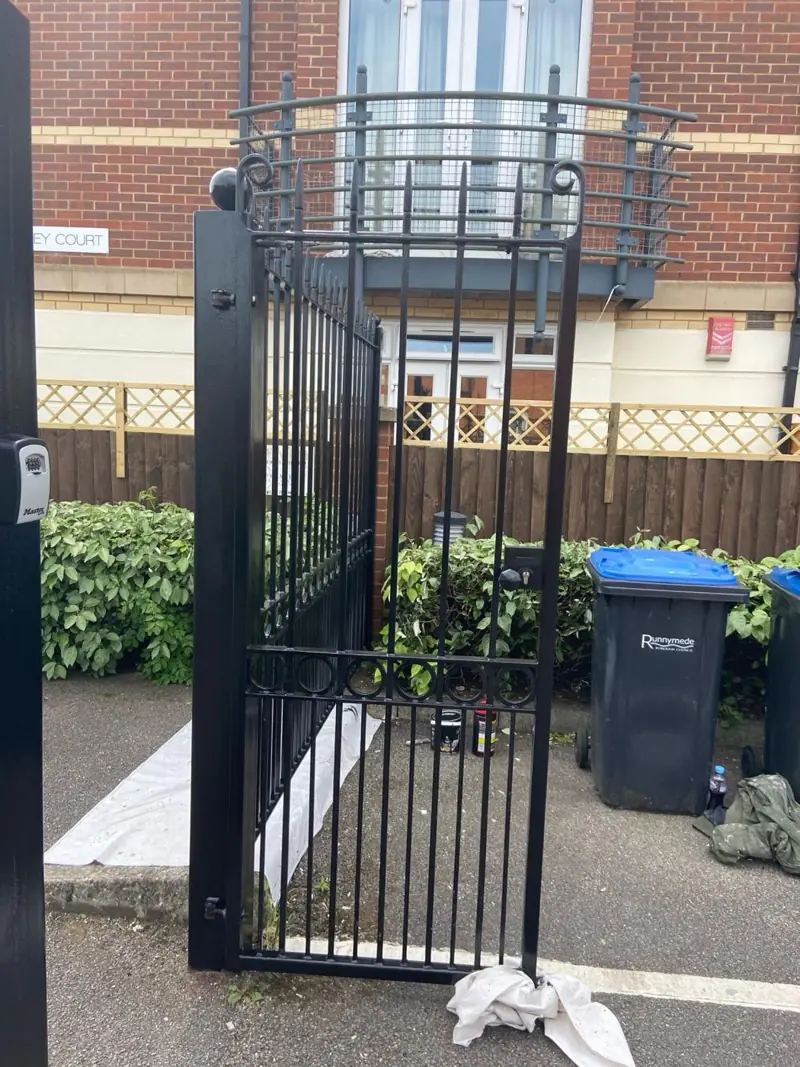
Overstone Leys sits on former farmland between Moulton and Overstone. Small streams cross the site, several in culverts under the new roads, and there is a drainage basin in the southern open space of Taylor Wimpey’s parcel. Fences backing onto open spaces, hedgerows or lower ground stay damp at the bottom for longer. That is where gravel boards and post bases are coated with extra care, with stain brushed well into the end grain at the base of each board. Garden-side fences near live construction parcels also collect dust, so they are brushed down immediately before staining, and work waits for a still day if a nearby site is busy.
Fences, sheds and gates can be booked together with a front door repaint. For the other work we cover in the neighbourhood, see our Overstone Leys page.
Last updated by Dean, DH Painter & Decorator.