
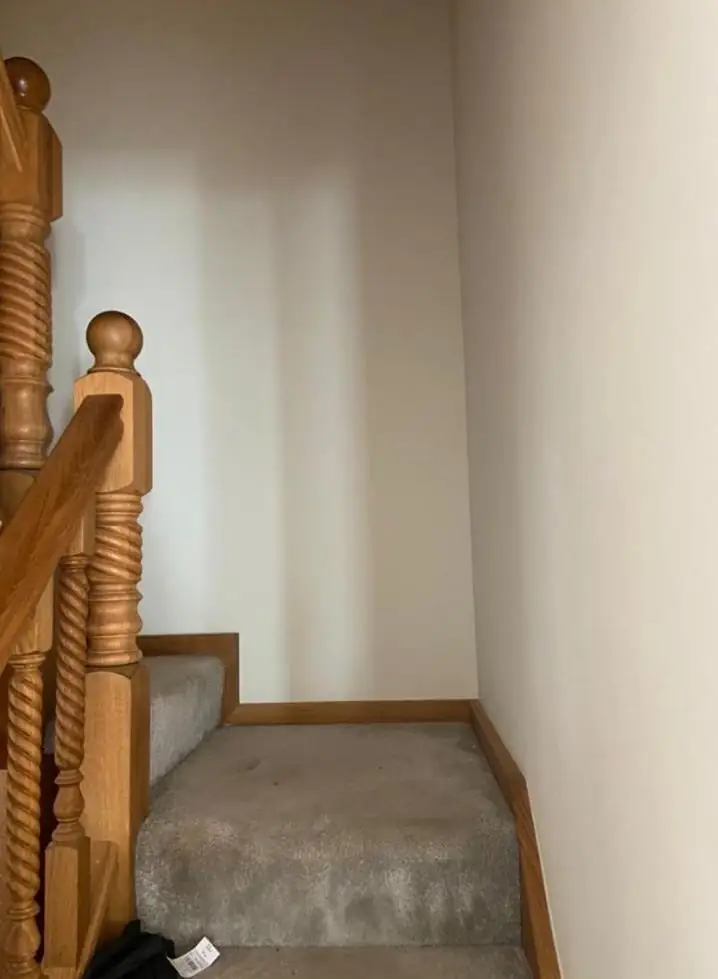
Dean gives colour and finish advice as part of decorating jobs on Rectory Farm, 4.2 miles from Northampton town centre. The estate has no heritage colour controls, but a large share of shared-ownership and housing-association homes means the first question is often what your lease allows.
Shared owners and tenants: who gets a say on the door colour?
Shared ownership is far more common in parts of Rectory Farm than in the district around it. In the Bridleways streets, built in 2009-10 on the northern edge, 42.4% of households were shared owners at the 2021 Census and another 43.4% rented from a housing association. Across West Northamptonshire as a whole, shared ownership was 1.5%. In the four northern 1970s output areas it was 5.8%, alongside council and housing-association tenancies.
For anyone in those homes, the inside is usually yours to choose, but the outside often is not. Front doors, frames, porch timbers and anything else the public sees may be covered by the lease or the housing association’s rules, and some providers keep an approved range of colours. Before a sample pot is opened, it is worth a quick email to the provider asking two things: is consent needed for an exterior colour change, and is there an approved range? Dean can work to an approved colour as easily as to one you picked, and it saves repainting a door you were never allowed to change.
| Fact | Detail | Source |
|---|---|---|
| Shared ownership, Bridleways | 42.4% of households (West Northamptonshire 1.5%), Census 2021 | Nomis (ONS) |
| Conservation area on the estate | None (planning.data.gov.uk, checked Nov 2026) | planning.data.gov.uk |
| Nearest conservation area | Great Billing, designated 13 April 1976 | West Northamptonshire Council |
| Listed building over the boundary | West Lodge Farmhouse, Ecton: Grade II, squared coursed lias, plain-tile roof | British Listed Buildings |
| Two-bed homes, northern streets | 28.9% of households (Census 2021) | Nomis (ONS) |
Does Rectory Farm have colour rules like Great Billing?
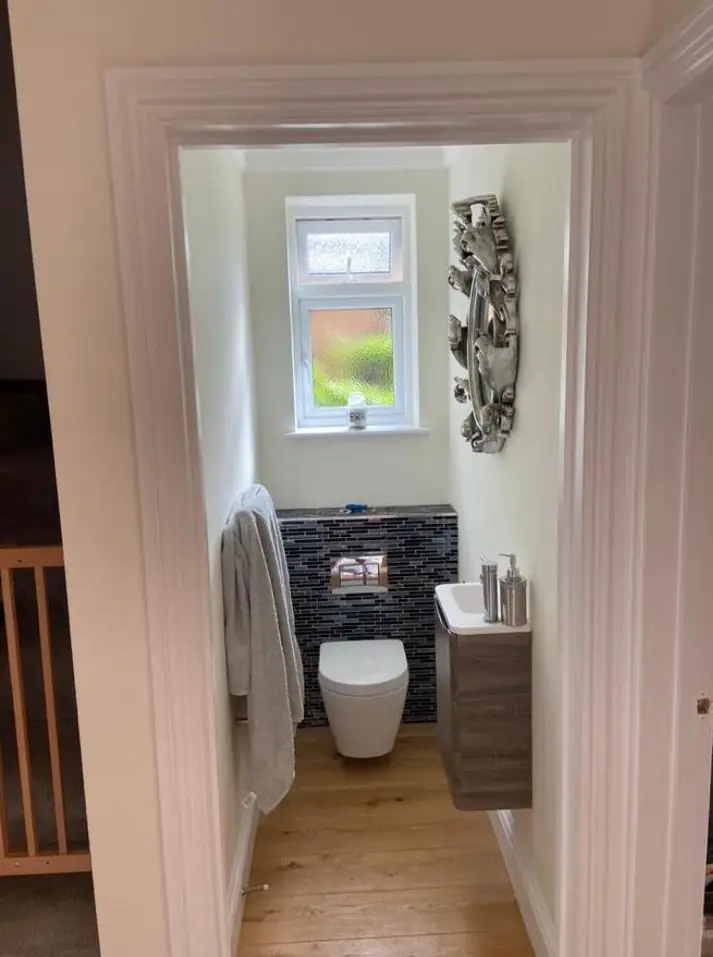
No. A search of the national planning dataset found no conservation area intersecting the estate and no heritage Article 4 direction. The nearest conservation area is Great Billing, designated on 13 April 1976, south of Great Billing Way, where the character of the old village is protected. Rectory Farm’s houses mostly date from 1973 to 1992 and are not covered by anything similar, so an owner-occupier off Deansway or in the Berrydale closes can choose any front door, garage door or joinery colour without asking the council.
The one historic building in view is just over the eastern boundary in Ecton parish: West Lodge Farmhouse, a mid-18th-century Grade II farmhouse of squared coursed lias under a plain-tile roof, about 350-500 m east of Allard Close and Bentley Close. Its earthy stone colours are worth seeing, but they are not a guide for the estate’s brick houses, which look better with colours chosen against their own brick and roof tiles.
Light colours for two-bed rooms, depth for four-bed ones
The northern and southern halves of the estate need different thinking about colour, mainly because of room size. In the north, 28.9% of households have two bedrooms and many have three in a compact terrace, with some Olden Road houses at 47-48 m² in total. In the 1982-1992 south, 56.8% of households have four bedrooms or more.
| Home | What tends to work |
|---|---|
| Compact northern terrace or flat | Pale colours with a high light reflectance value on walls; one white on all ceilings and woodwork so small rooms read as one space |
| Bridleways timber-frame home | Mid-tone walls in a wipeable matt; plasterboard shows every bump in a high-sheen finish |
| Detached house in the Berrydale group or car-named closes | Room for a deeper accent in a dining room, study or extension; a linked family of colours through hall, stairs and landing |
| Detached bungalow | Every room opens off one hall, so colours are chosen as a set seen from that hall |
Sheen matters as much as shade. A flat matt hides the small ripples common on older patched walls, while kitchens, bathrooms and children’s rooms are better in a durable matt or eggshell that takes a wipe.
Exterior colours on an exposed edge
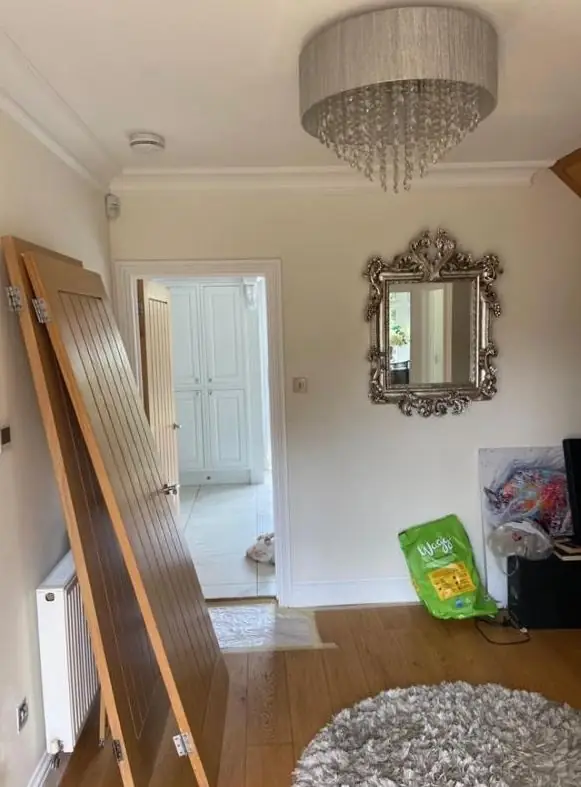
The estate falls from about 107 m above sea level at its north-west corner to around 80 m on its eastern side, and the east-facing backs of Berrydale, Hilberry Rise, Bentley Close and Allard Close face open farmland. Strong colours on fully exposed timber fade faster than soft ones, and very dark colours on sunny elevations absorb heat, which works joints and makes timber move. A deep colour on a sheltered front door is a sensible place for something bold, with lighter, more forgiving shades on garage doors and joinery facing the open side.
The main colour consultation page explains light direction, undertones and sheens in detail. For the painting itself, see exterior painting in Rectory Farm or the Rectory Farm area page, and our guide to choosing a decorator covers what to ask before booking.
Rectory Farm: colour & finish advice questions
Anything else you want to ask? Ring 07539 779 036.
I am a shared owner in Bridleways. Can I paint my front door a new colour?
Possibly, but check first. Bridleways is 42.4% shared ownership and 43.4% housing-association rented, and exterior changes on those homes are usually controlled by the lease rather than the council. Ask your provider whether consent is needed and whether there is an approved colour list. Inside your home, colour choice is normally yours.
Do I need planning permission to change my house colour on Rectory Farm?
Not for repainting in a different colour. There is no conservation area or heritage Article 4 direction on the estate, so ordinary repainting of doors, windows and joinery is not controlled by the council. Lease terms, covenants or housing-association rules may still apply, so check your paperwork if you do not own the freehold outright.
What colours make a small Olden Road terrace feel bigger?
Pale walls with a high light reflectance value, and one white used on every ceiling, door and skirting so the eye does not stop at each frame. Some Olden Road terraces are only 47-48 m², so keeping the hall, stairs and landing in one colour also helps. Save a stronger shade for one wall rather than a whole room.
Should our colours match the old farmhouse beyond Allard Close?
There is no need. West Lodge Farmhouse in Ecton parish is an 18th-century lias building with a plain-tile roof, listed Grade II, and its colours suit stone. Rectory Farm houses are mostly 1970s to 1990s brick with modern roofs, with the timber-frame Bridleways homes from 2009-10. Colours chosen against your own brick and tiles will sit better than copying a building of a different age and material.
Which paint finish copes best in a busy family hallway on the estate?
A durable matt or a soft eggshell. Hallways in the northern terraces are narrow and take bikes, buggies and school bags, so walls get knocked daily. A scrubbable matt hides patching better than eggshell, which shows the shape of the wall more. Woodwork in the same hall is best in a water-based satin, which stays white longer than old oil gloss.
Sources
- Census 2021 TS054 tenure, Rectory Farm output areas, Nomis (ONS) (accessed 2026-11-16)
- Census 2021 TS050 number of bedrooms, Rectory Farm output areas, Nomis (ONS) (accessed 2026-11-16)
- Conservation areas intersecting the estate, planning.data.gov.uk (accessed 2026-11-16)
- Great Billing Conservation Area appraisal (2018), West Northamptonshire Council (accessed 2026-11-16)
- West Lodge Farmhouse, Ecton (Grade II), British Listed Buildings (accessed 2026-11-16)
- Listed building entry 1040760, planning.data.gov.uk (accessed 2026-11-16)
- EU-DEM 25 m elevation lookups, OpenTopoData (accessed 2026-11-16)
- Energy performance certificates, Rectory Farm postcodes, GOV.UK EPC register (accessed 2026-11-16)
Last updated .


