DH Painter & Decorator takes on commercial painting for hospitality and leisure premises in Pattishall parish, about 6.5 miles south-west of Northampton. We plan the work around opening hours, listed building rules and, at Fosters Booth, traffic on the A5.
Hospitality, not high streets
Commercial decorating in most Northampton suburbs means shops and offices. In Pattishall parish it doesn’t. We have found no record of shops or business parks here. The premises that need commercial-grade painting are the Eastcote Arms on Gayton Road, the listed 17th-century building at Fosters Booth on the A5, Cornhill Squash Club at Cornhill Manor, and the parish’s working farm. Each is a different kind of building with its own constraints, so we price and plan them separately rather than with a standard commercial package.
A listed village pub on Gayton Road
Before it was the Eastcote Arms it was the Rose and Crown. The mid-18th-century rubble-stone building is Grade II listed and its slate roof replaced earlier thatch. For a painter, that means:
- The stone walls stay bare. Masonry paint on limestone rubble traps moisture and is very hard to undo.
- Timber casements and doors are prepared by hand and painted with brush-applied microporous or linseed-type paint, not sprayed.
- Any change to the external colours or finish of a listed building may need the council’s listed building approval, so we keep to the existing scheme unless consent is in place.
- Bars, dining rooms and toilets inside can be done in stages around opening hours, with hard-wearing finishes in the areas that take the most wear.
The A5 frontage at Fosters Booth
The listed former restaurant building at Fosters Booth is 17th-century ironstone remodelled in the early 19th century, with rendered side walls, canted bays, a hipped slate roof and pargetting on one side showing a huntsman, hounds and a hare. Three things shape any painting work there:
| Feature | What it needs |
|---|---|
| Pargetting relief | Gentle cleaning and a breathable paint applied thinly, so the modelled detail stays crisp |
| Rendered side walls | A breathable masonry or mineral finish rather than a plastic coating |
| Roadside elevation | Washing down traffic grime first, and planning safe working space beside the A5 |
Buildings directly on a trunk road get dirty faster than village frontages, so plan a regular wash and touch-up on the joinery between full repaints. Our guide to painting render explains why breathable coatings matter on older rendered walls.
Timing work around trade and weather
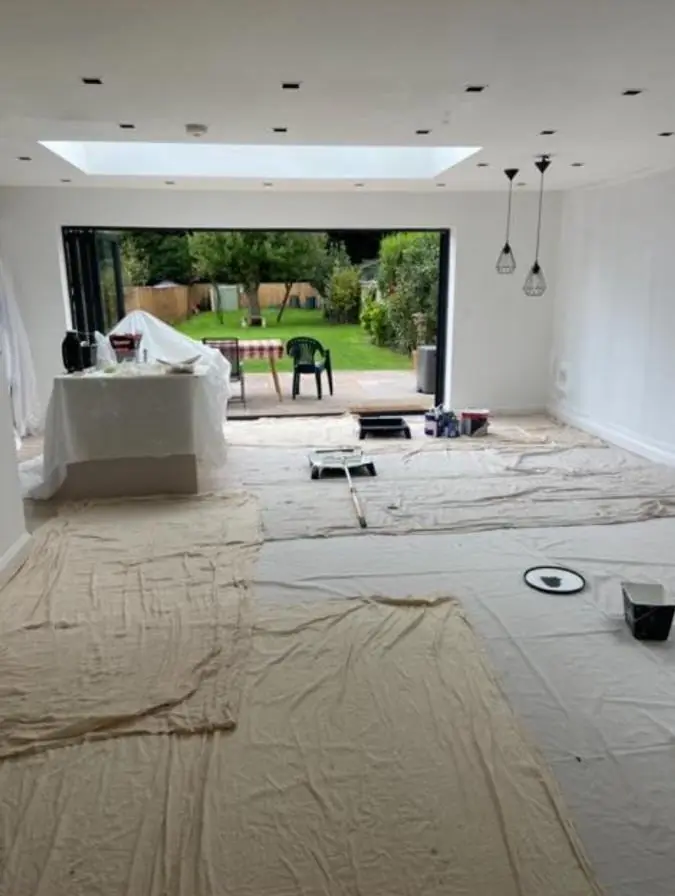
For the pub and the club, outdoor painting weather and the busiest trading weeks tend to arrive together, so we suggest the exterior joinery early in the season and indoor rooms in quieter months. The hilly, open setting matters too. Elevations that face the weather across open farmland lose their paint faster than sheltered ones, so we look at each side of the building separately and may suggest repainting the exposed side more often rather than doing the whole building every time. On a listed building, keeping on top of joinery in this way also protects old timber casements and doors from rot, which would otherwise mean repairs that need consent.
Club rooms and farm buildings
A squash club usually has changing rooms, corridors and a social area, and at Cornhill these sit within the grounds of a listed manor. Those spaces suit scrubbable, moisture-resistant finishes, and the work can be done around court bookings or in a quiet week. A working farm may need durable paint on doors, timber cladding or metal gates, and we can schedule that around the farming year. On every commercial job we agree the working hours, protect floors and fittings, and leave each area usable at the end of the day. We are fully insured for commercial premises. Read more about how we plan business jobs on our main commercial painting page. Dean’s number is 07539 779 036.
Last updated by Dean, DH Painter & Decorator.