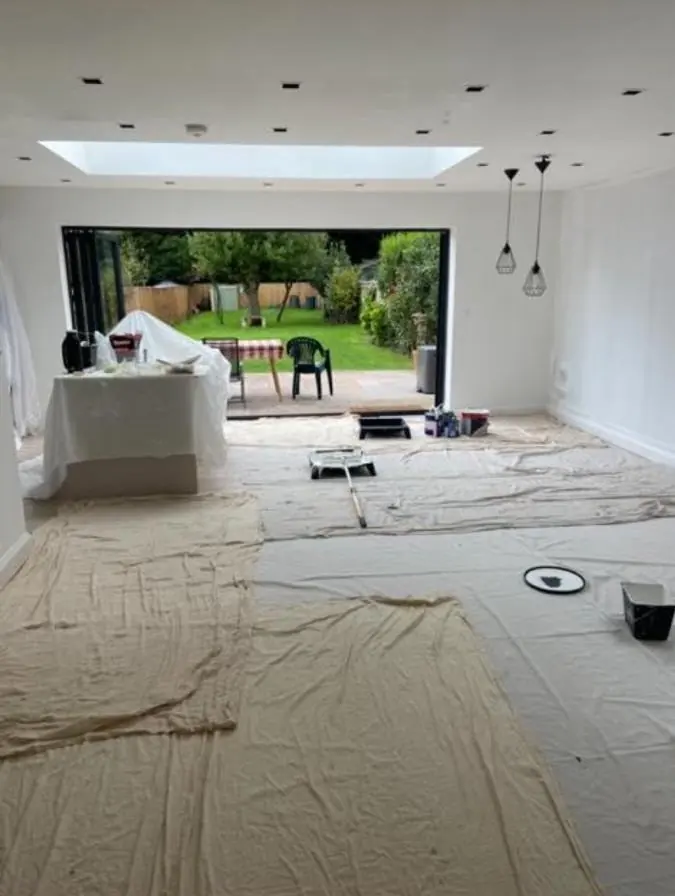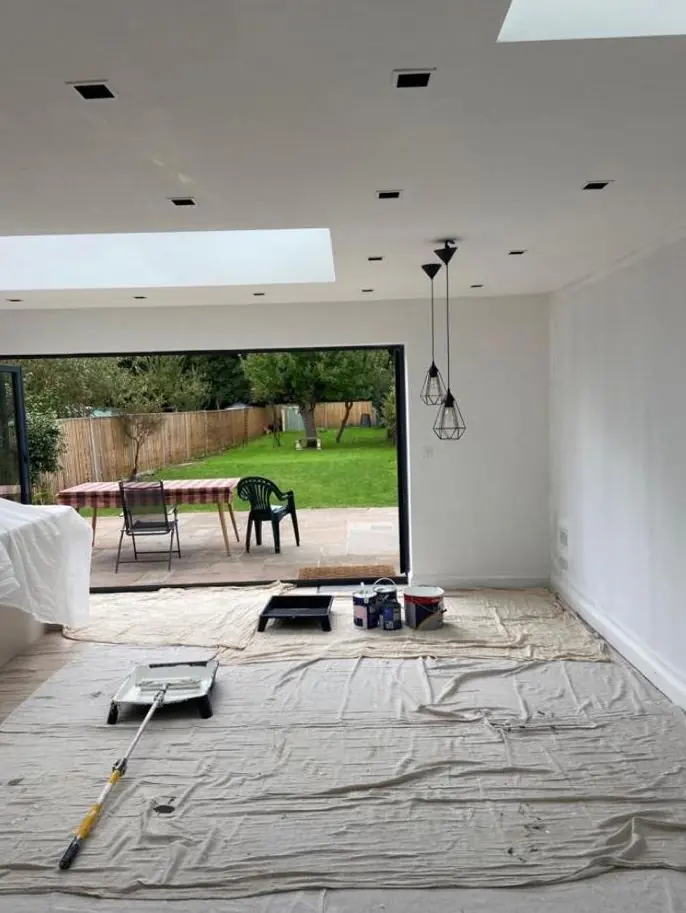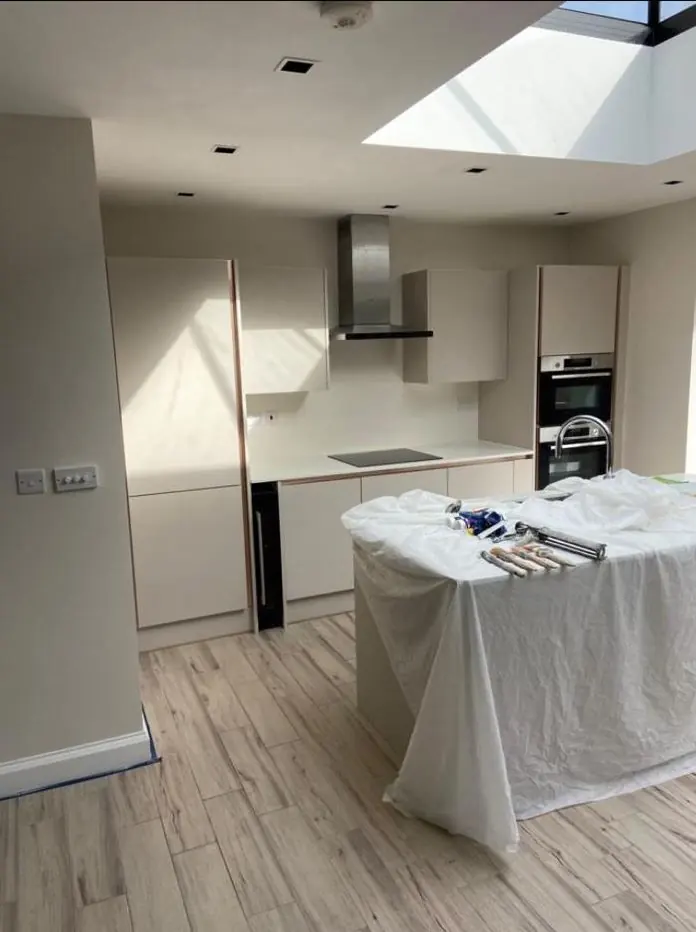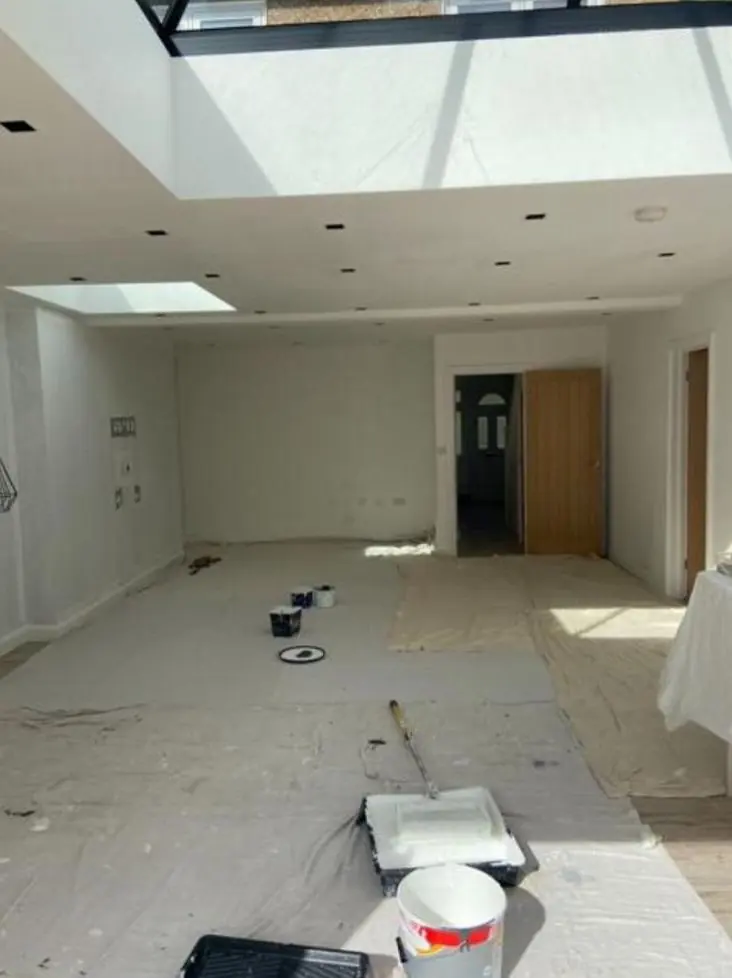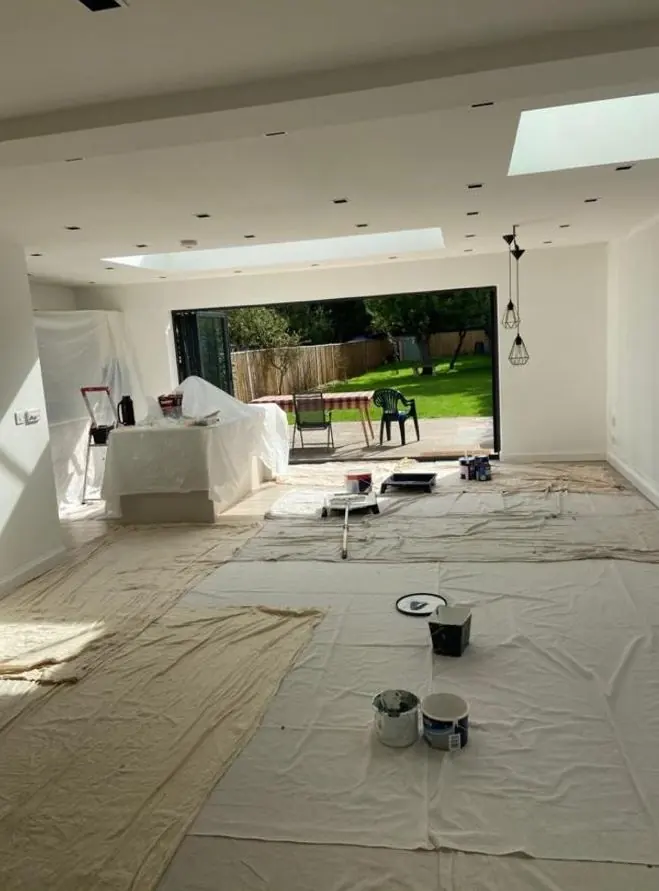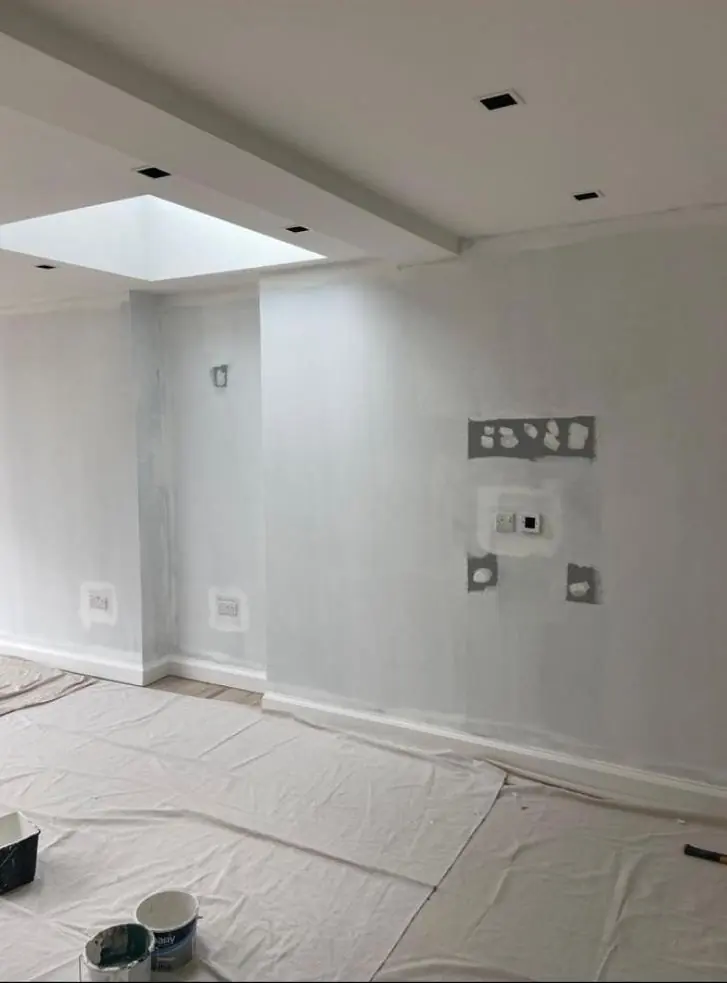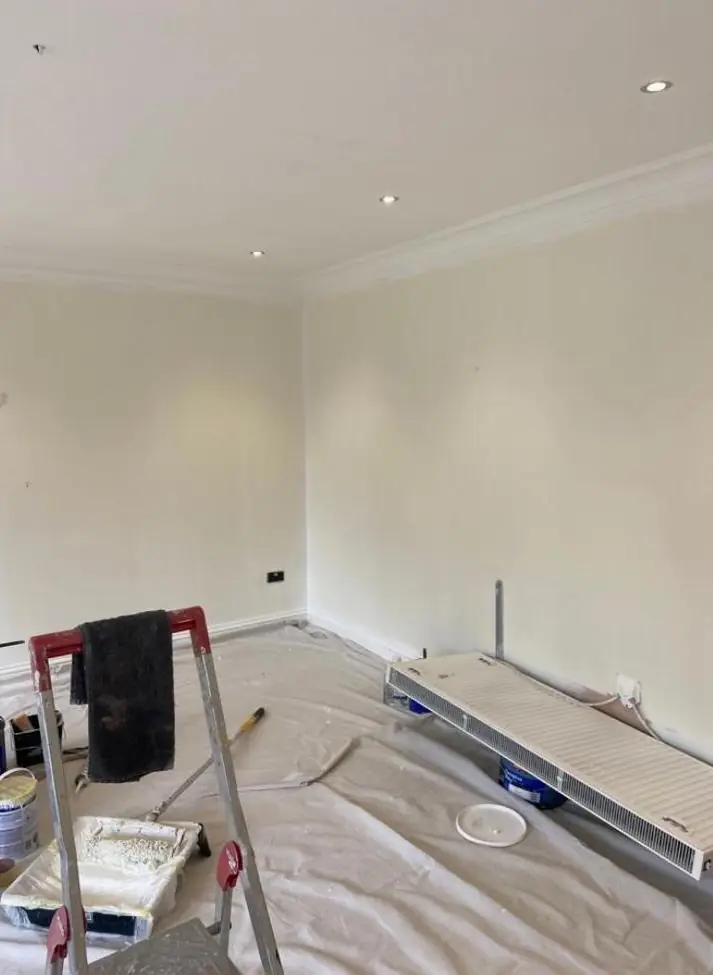
DH Painter & Decorator decorates new extensions and freshly plastered rooms across Pattishall, Eastcote, Astcote and Fosters Booth, about 6.5 miles south-west of Northampton. How we seal and paint depends mainly on the plaster: gypsum gets a mist coat, while lime in an old stone house needs a breathable system.
Start with the plaster, not the paint
In Pattishall, new plaster usually means one of two things. In the 20th-century homes on the higher ground, it is almost always gypsum, laid on plasterboard or as a skim over old walls in an extension, a knock-through or a re-plastered bedroom. In the older stone houses down the hill and in the hamlets, a plasterer working on a listed building may have used lime plaster on limestone rubble. The two need opposite treatment, so the first question Dean asks on any new plaster job here is which one you have.
- Gypsum: dries to an even pale pink, then needs a thinned mist coat so the finish coats grip rather than peel.
- Lime: takes weeks rather than days to cure, stays porous, and should be finished with limewash, a mineral paint or a breathable clay or matt emulsion. A vinyl mist coat seals it and traps moisture in the wall.
Extensions on the post-war houses
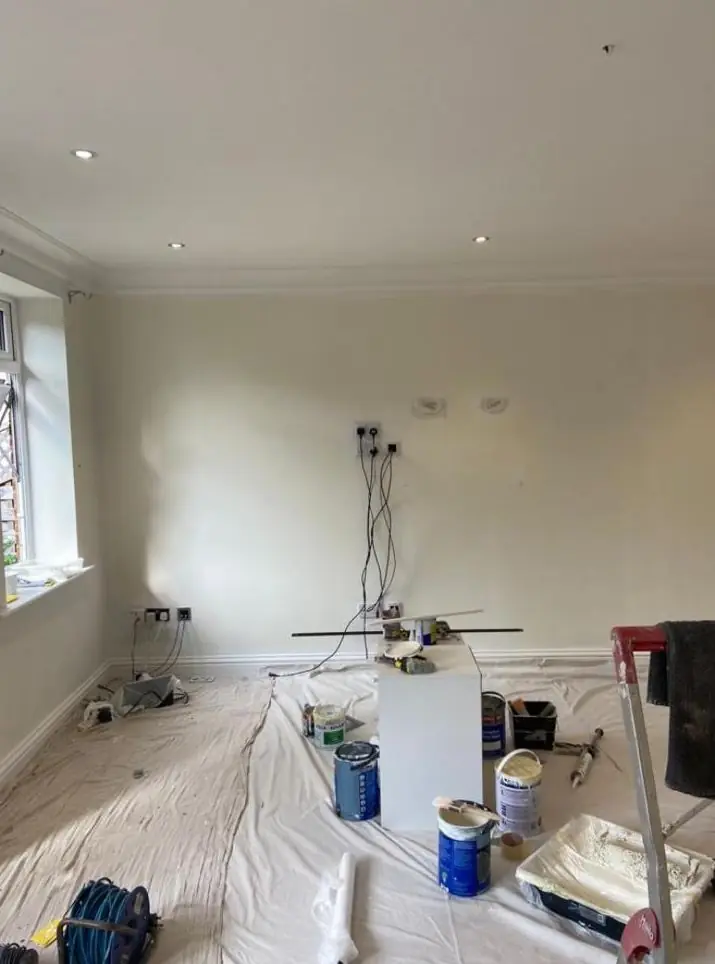
Most extension work in the parish is likely to be on the newer homes uphill, where there is room to build out at the back. These are standard jobs for us: check every wall and ceiling is dry, including reveals and behind radiators, apply a breathable mist coat, fill and sand the cracks it shows up, then apply two finish coats. New MDF skirtings, architraves and doors are sealed, primed and painted at the same stage. The full sequence is on our new plaster and extension painting page, and the reasons behind the mist coat are covered in our mist coat guide.
The hilly ground and open setting mean some elevations here are more exposed to the weather than in the town. If your extension has new timber outside, such as a fascia, barge board or door frame, have it primed promptly rather than left bare through a winter.
Where new work meets 17th-century stone
The harder case is an extension or repair on one of the old limestone and ironstone houses, such as the Grade II homes on Church Street, Gayton Road and Astcote High Street. Here new plaster often runs straight up against old lime-plastered walls, beams and chamfered timbers. We treat that junction carefully:
- We check with you or your builder which plaster has gone on each wall before choosing any paint.
- Where gypsum meets lime, we use one breathable finish across both so the colour matches and the old wall can still dry out.
- We mask off bare beams and bressumers, because thinned mist coat splashes soak into old timber and are very hard to remove.
- We cut in along ironstone dressings and quoins wherever they show inside, rather than painting over them.
With 22 listed entries in the parish, check that any new finish on a listed building has been agreed with West Northamptonshire Council as part of the building work.
Booking us after the plasterer
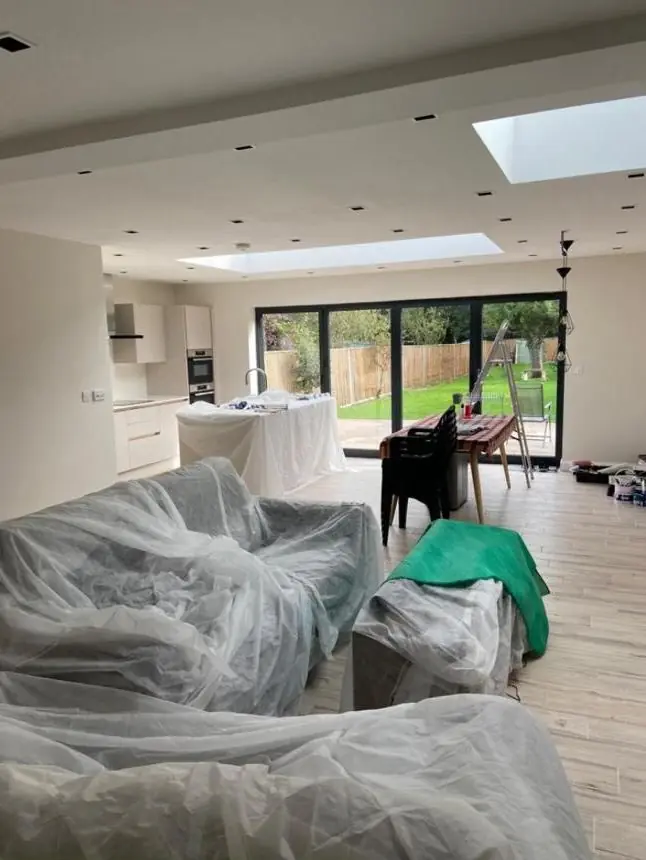
We prefer to see the plaster before quoting, ideally once it has started to change colour. Gypsum in a heated extension is often ready for its mist coat within one to two weeks of skimming. Lime needs much longer, and painting it too early is one of the main causes of failure on old houses. Tell us which settlement you are in when you book, because the lanes between Eastcote, Astcote and Dalscote are narrow and we plan parking around the builder’s skip and deliveries. For what affects the price of an extension repaint, see our cost guide.
Last updated by Dean, DH Painter & Decorator.