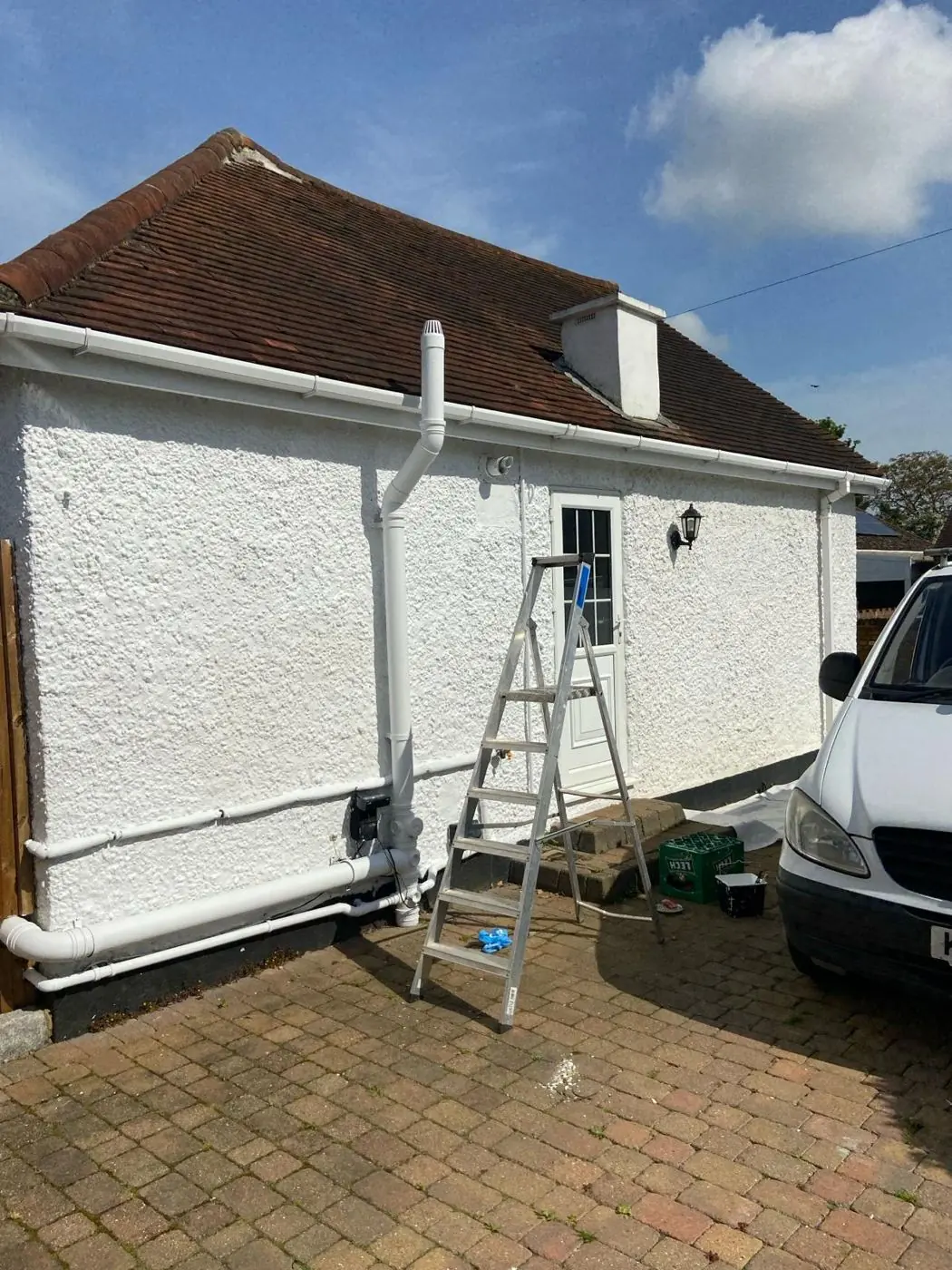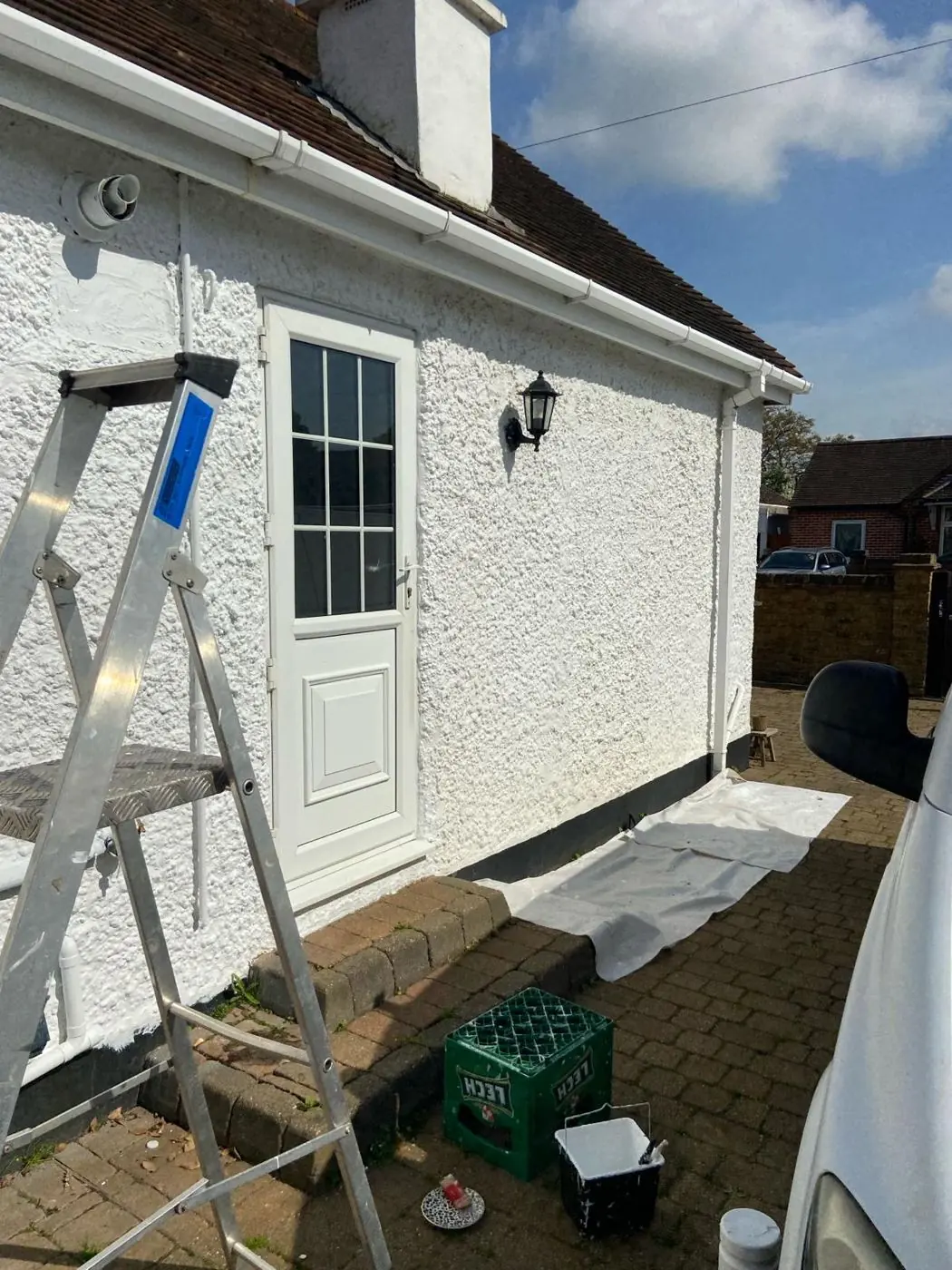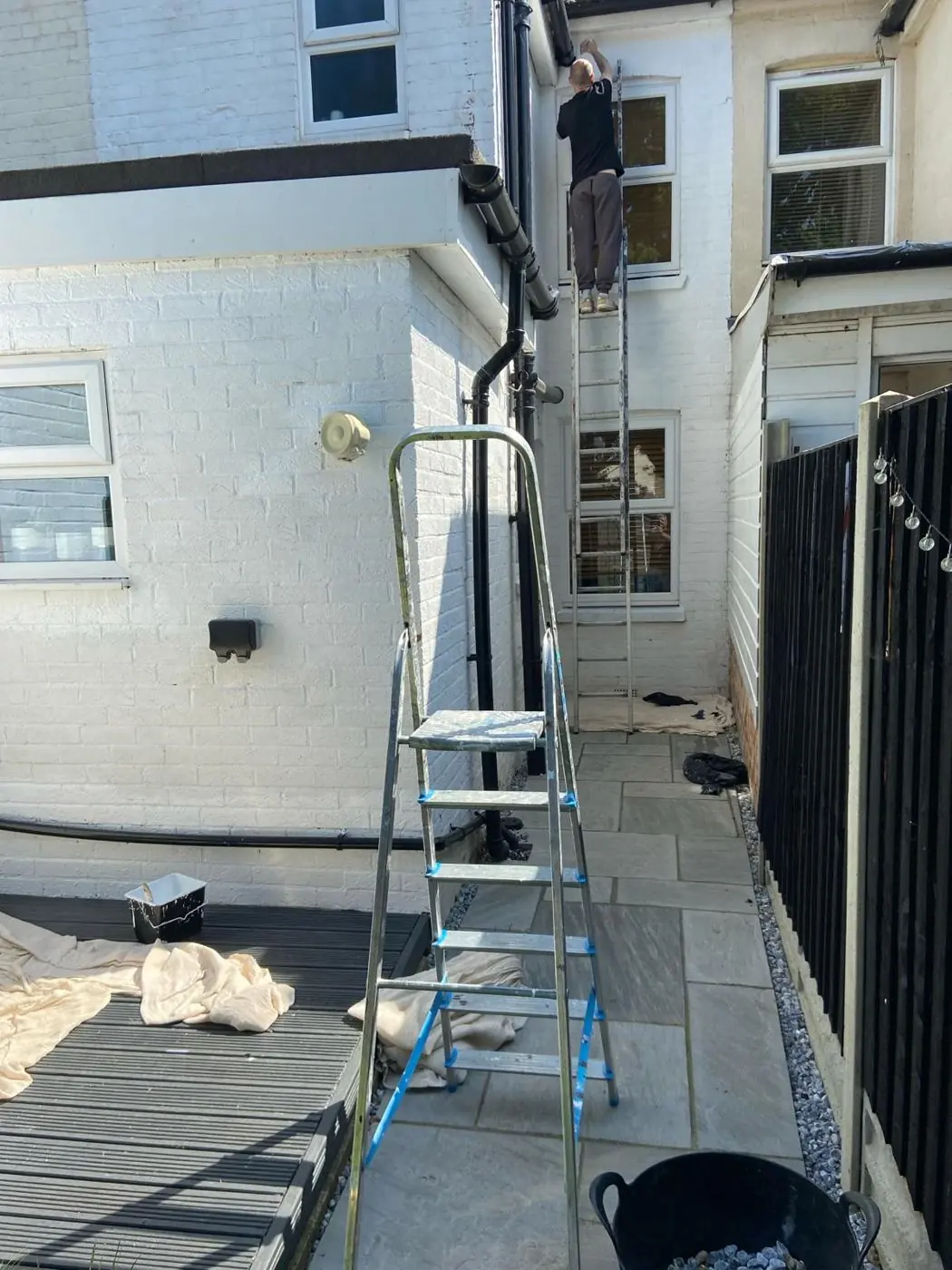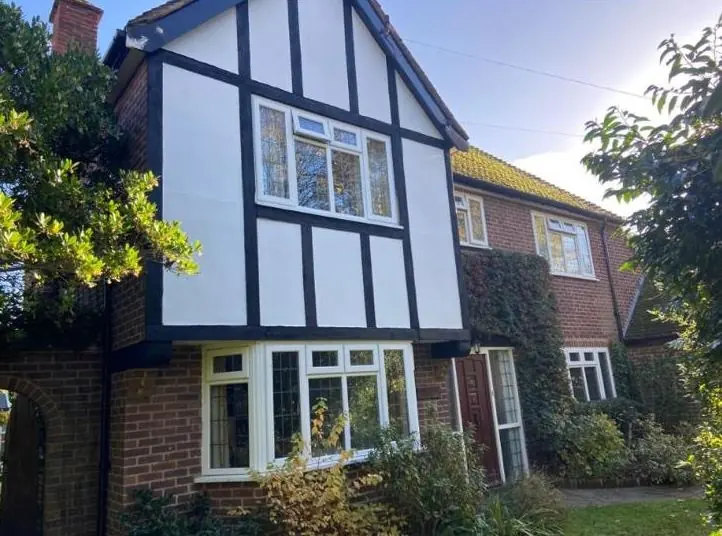
We paint rendered and previously painted masonry in Pattishall, NN12, about 6.5 miles south-west of Northampton. Much of the parish is bare limestone and ironstone that should stay unpainted, so this service mostly covers rendered elevations, existing limewashed walls and newer homes with painted masonry.
Start with what should stay unpainted
Most of the older walling in Pattishall, Eastcote and Astcote is coursed limestone rubble or squared stone, with ironstone dressings and quoins in a warmer brown. Kirkholme on Church Street, Cromwell House in Astcote and The Manor on Gayton Road are all recorded that way. Walls like these need to breathe. Rubble walls take on moisture and must be able to release it, and an acrylic or plastic masonry paint seals it in, which over time can push off the paint and damage the stone face. If your house is bare stone, our honest advice is usually to leave it bare and spend the budget on the joinery instead.
That two-tone stonework also matters to the look of the parish. Painting over the ironstone quoins and dressings loses the contrast that defines these houses, and once paint is in the texture of rubble stone it is very hard to remove.
Where render does appear: the Fosters Booth building
The clearest rendered walls on record in the parish are on the listed roadside house at Fosters Booth on the A5. It is 17th-century coursed squared ironstone, remodelled in the early 19th century, with rendered side walls, a hipped slate roof and canted bay windows. Rendered walls on an old building like this sit over solid masonry, so the finish has to be breathable: a mineral paint or limewash rather than a modern acrylic masonry coating. Because it fronts Watling Street, the render also picks up traffic grime, so it needs a gentle wash and a thorough rinse before anything is applied.
The huntsman, hounds and hare
One side elevation of that building carries pargetting showing a huntsman, hounds and a hare. Decorative plasterwork in relief is easily lost to heavy-handed work. Our approach to anything like it:
- clean by hand with soft brushes and low-pressure water, never a pressure washer
- remove only paint that is loose, leaving sound layers rather than scraping into the modelling
- apply thin coats of breathable paint so the edges of the figures stay crisp
- agree colours and method with West Northamptonshire Council first, since the building is listed
The same care applies to any moulded render or lime plaster detail you have elsewhere in the parish.
Limewash, mineral paint and the listed buildings
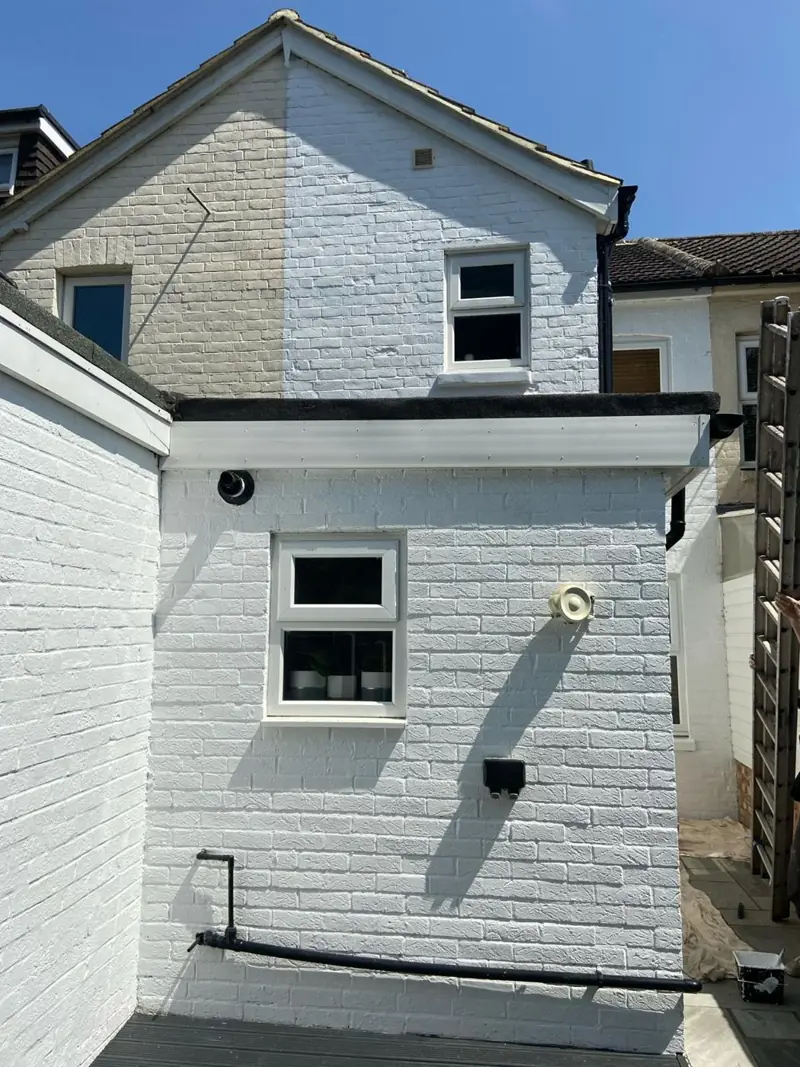
With 22 listed entries across the parish, from farmhouses in Eastcote to Cornhill Manor, there is a fair chance an older rendered or limewashed wall is part of a listed property. Changing its finish or colour may need listed building consent, and swapping limewash for a modern masonry paint counts as a change of finish. Unlisted rendered homes face no conservation area controls, since none is listed for the parish. More on how render and roughcast should be treated is in our guide to painting render and roughcast.
Newer homes on the higher ground
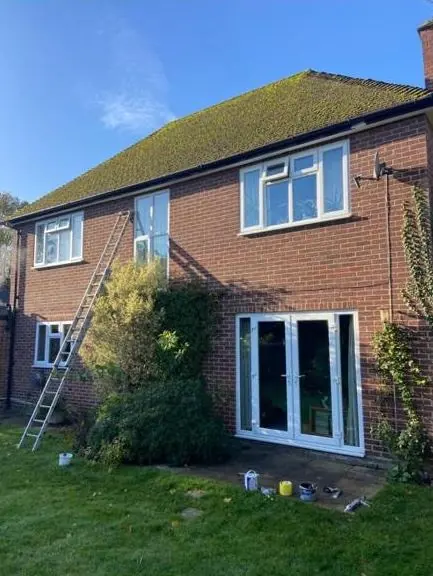
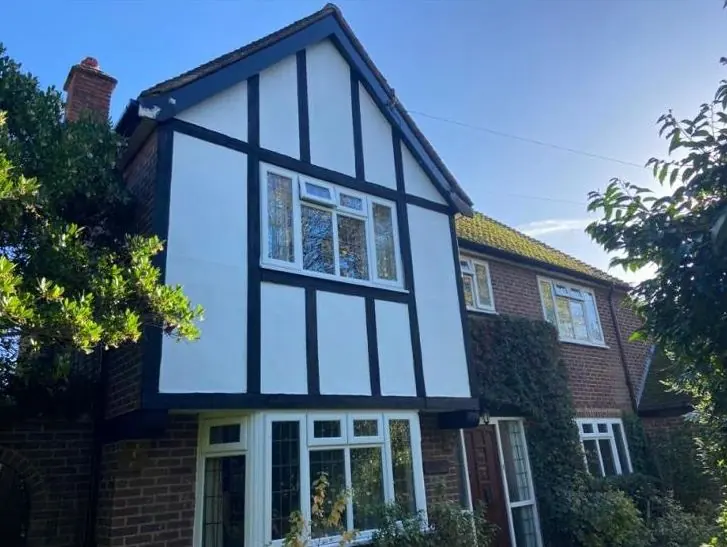
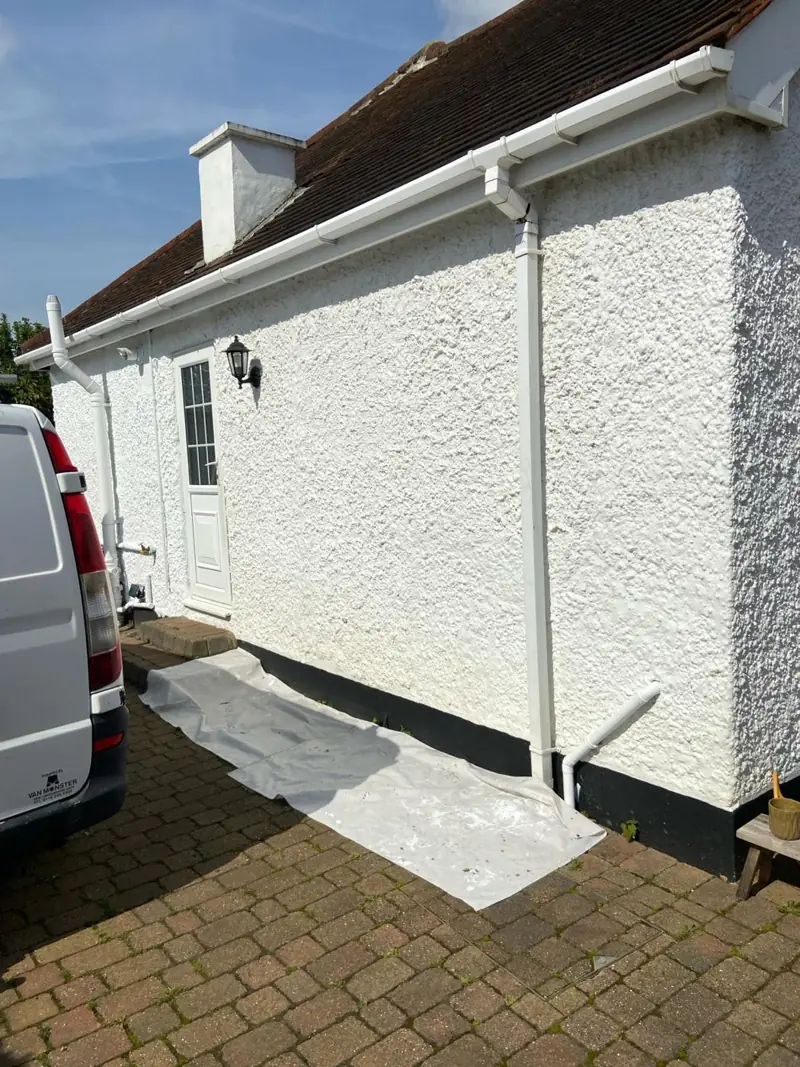
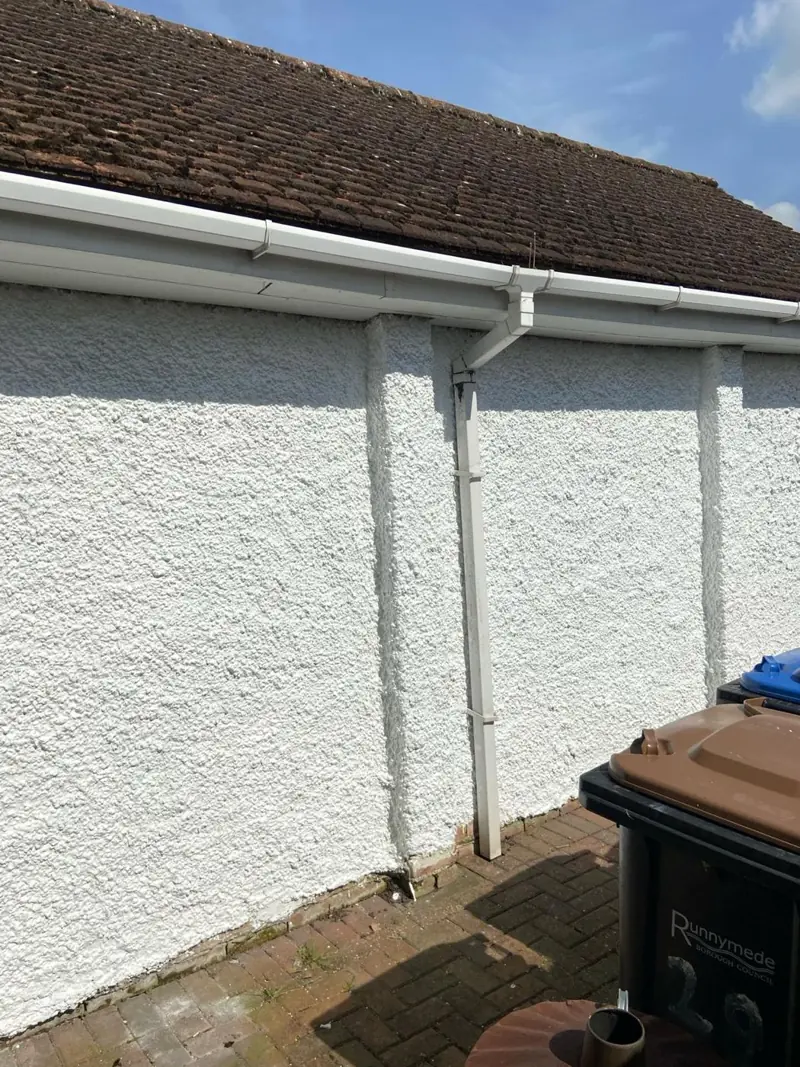
We have no record of what the 20th-century houses above the old village are built from, so we check on site. If yours has rendered panels, painted brick or pebbledash, it can take a conventional breathable masonry system, and the exposed hillside position is a good reason to choose a finish rated for driven rain. The full process, from algae treatment to crack repair, is covered on our render and masonry painting page, and the parish as a whole is described on our Pattishall area page.
Last updated by Dean, DH Painter & Decorator.