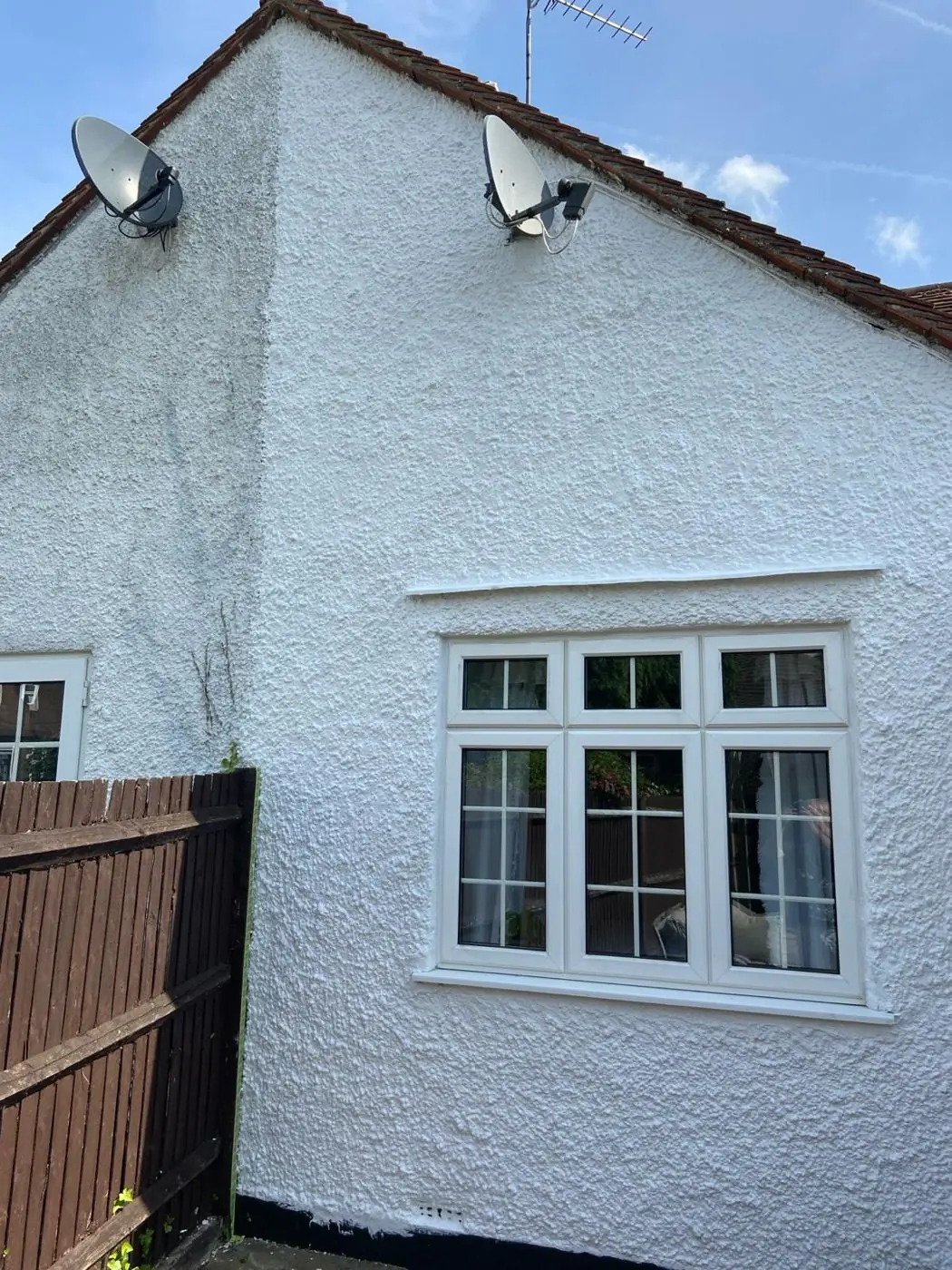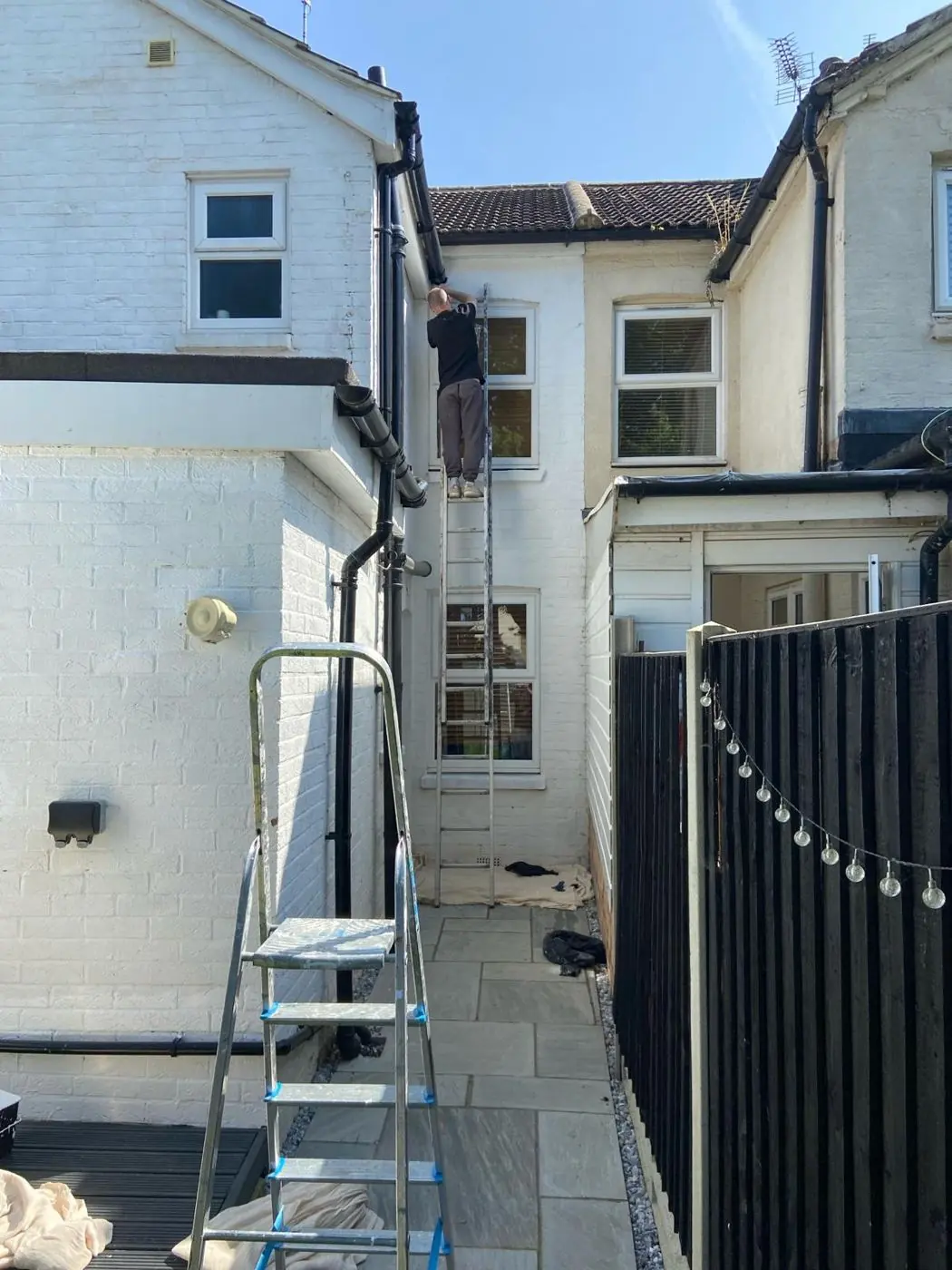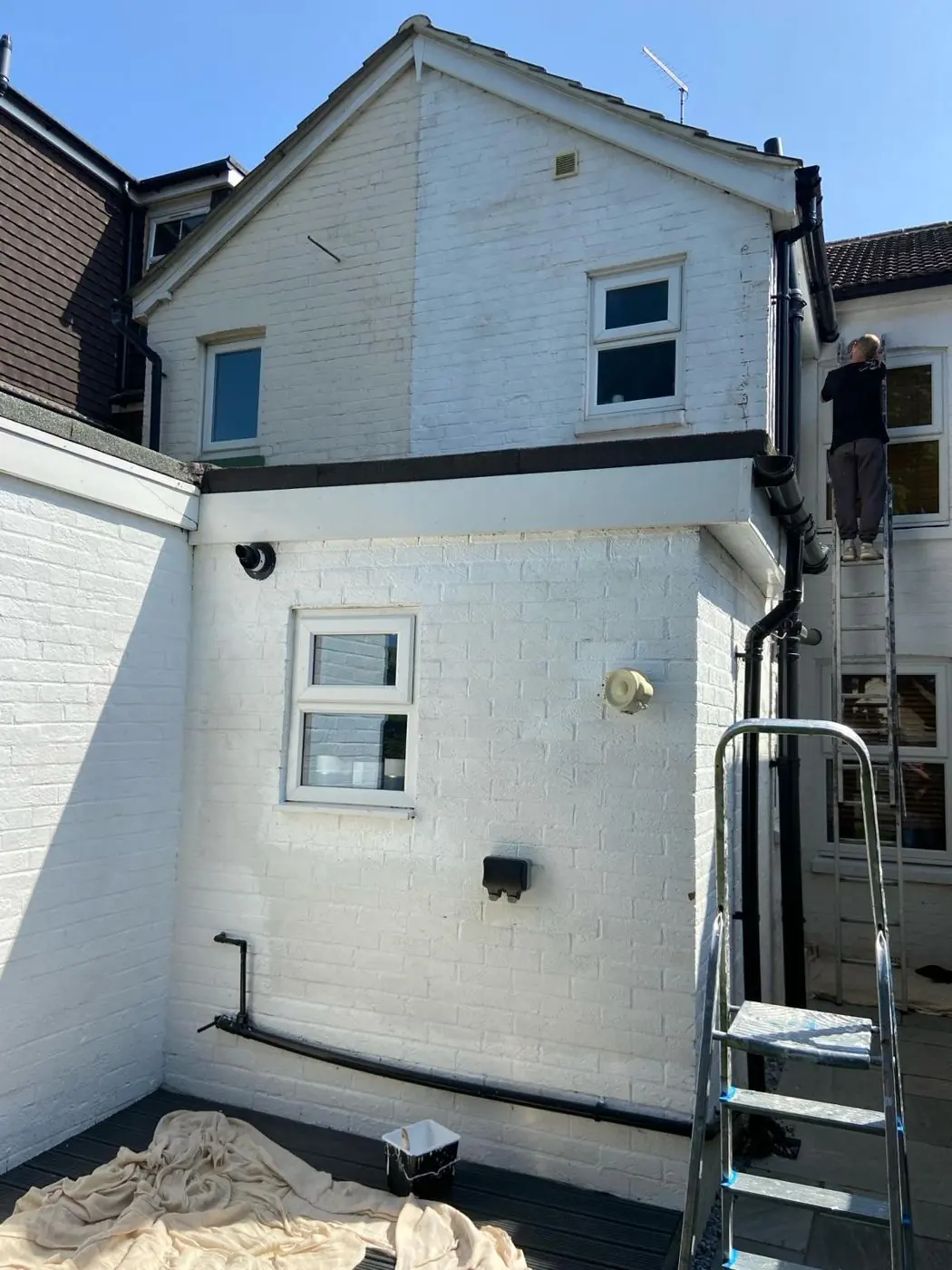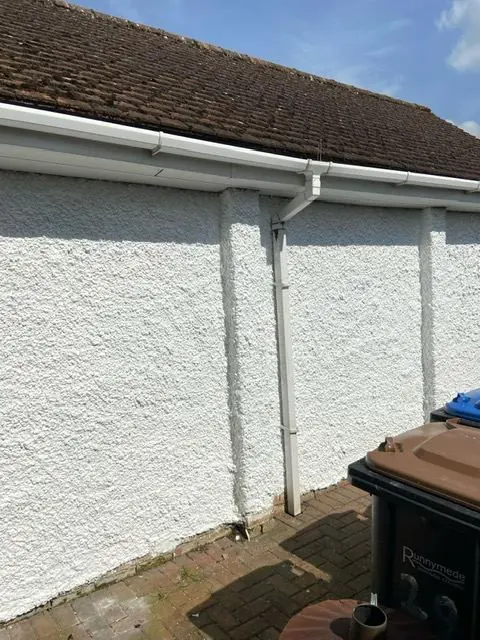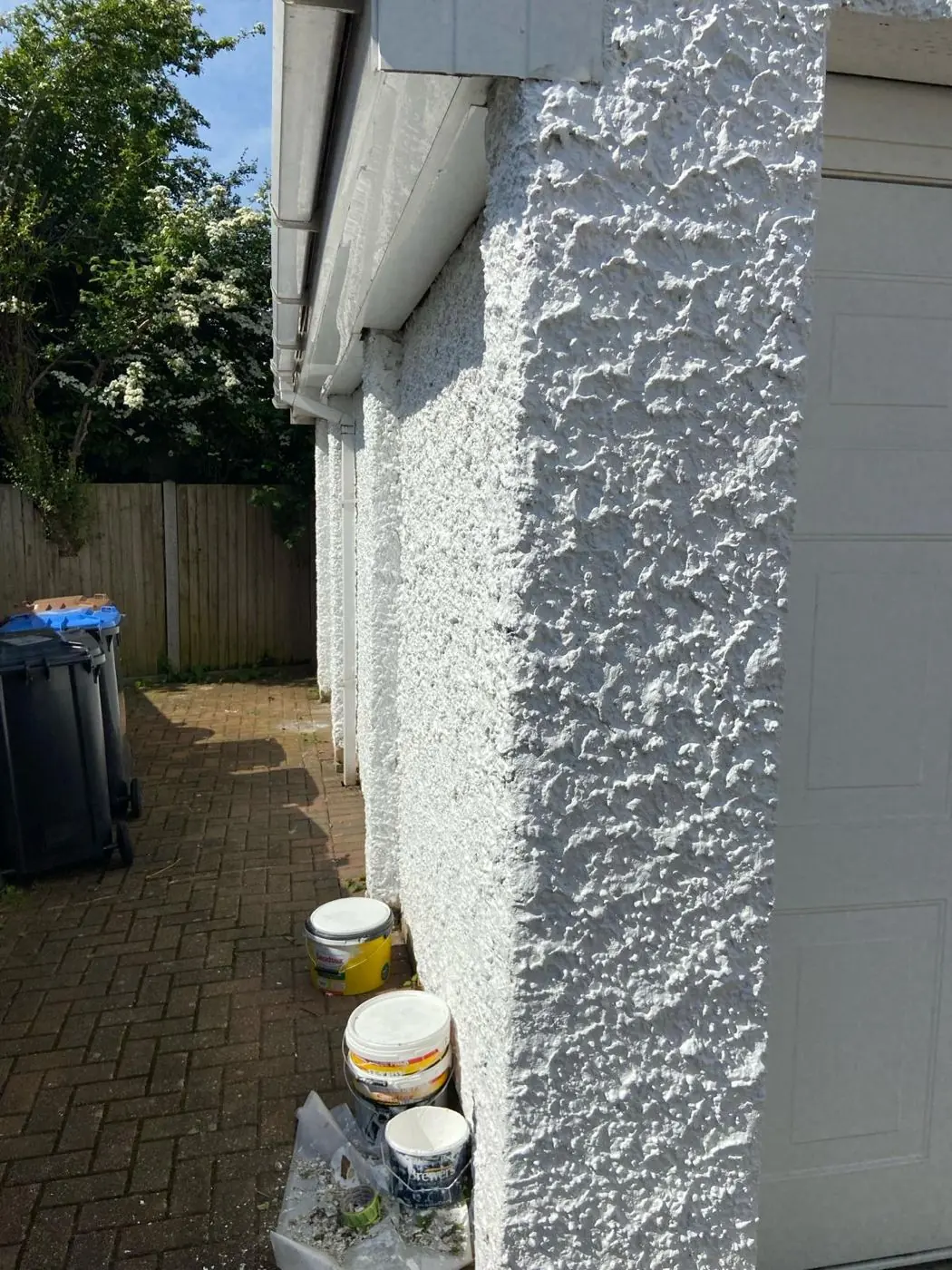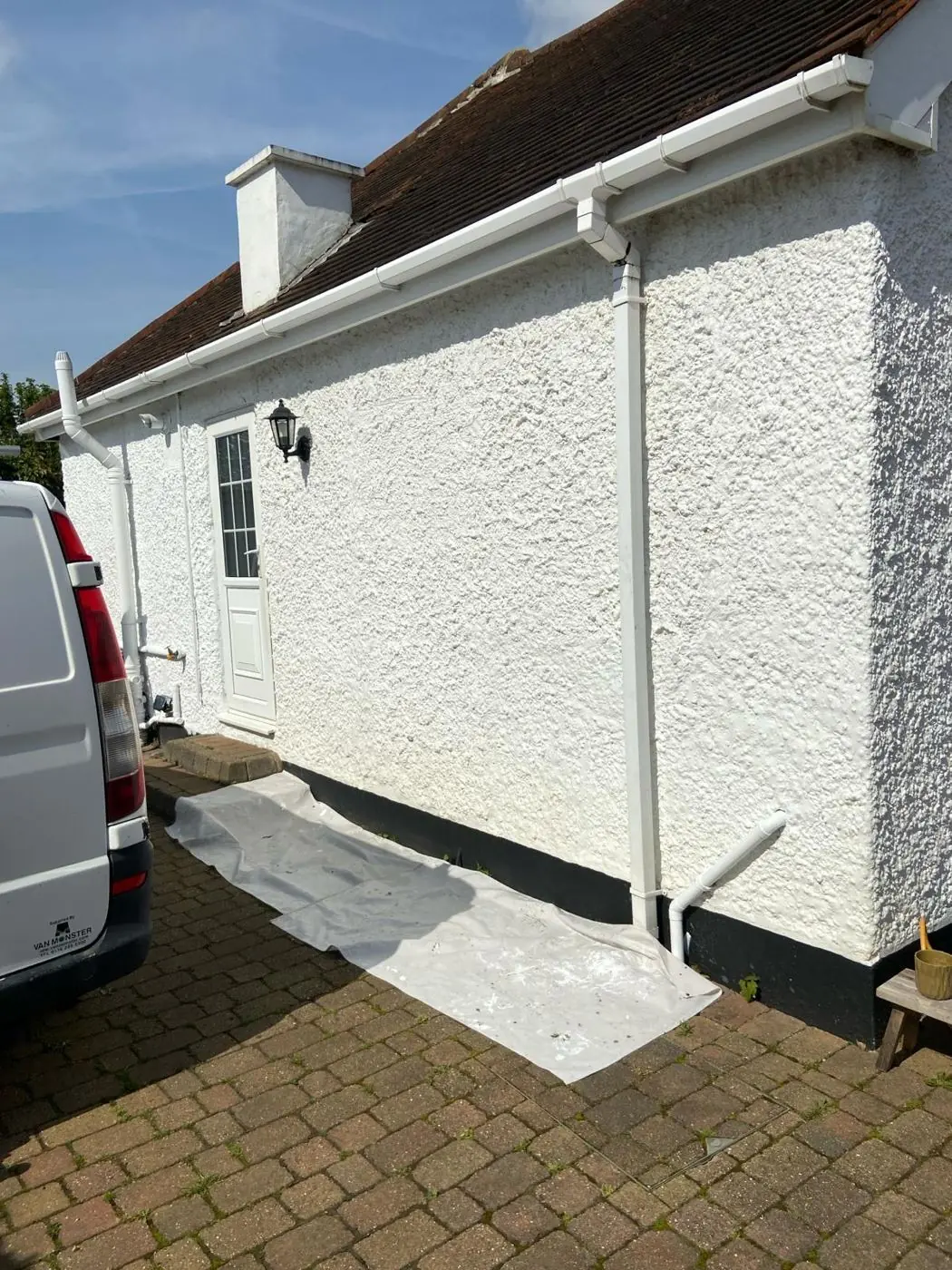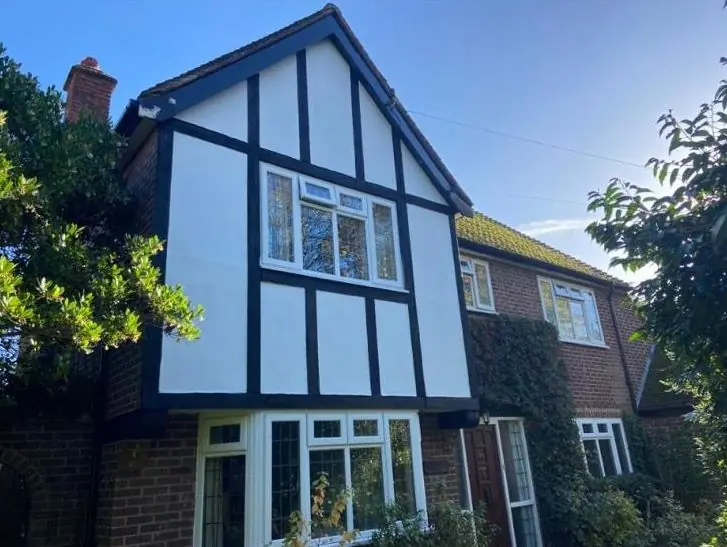
Dean paints fascias, soffits and barge boards in Pattishall, NN12, around 6.5 miles south-west of Northampton. The work splits between timber eaves and barge boards on the parish's stone houses and the uPVC-era rooflines of the 20th-century homes on the higher ground.
Two kinds of roofline in one parish
Look up at the eaves around Pattishall and you see two quite different jobs. The 17th to 19th-century stone houses in the older part of the village, in Eastcote and in Astcote have slate or plain-tile roofs, often with stone-coped gables. Those usually carry timber barge boards on the gable ends or simple timber eaves rather than deep boxed fascias. The 20th-century homes on the higher ground are more likely to have a conventional fascia and soffit run, and many of those date from the period when uPVC replaced timber.
Before we price anything, Dean checks which you have. Timber can be rubbed down, repaired and repainted. Weathered uPVC can be painted too, but only after a thorough clean and with a primer made for plastic, and only if the boards are sound.
Why the higher ground wears paint faster
Pattishall sits in hilly country, with the newer housing above the older village and open farmland around much of the parish. Elevations that face the weather across that open ground get more wind and driven rain, and fascias and barge boards are among the most exposed timber on a house. In practice that means:
- paint on the exposed gable ends tends to crack and lift before the sheltered side
- bottom edges of barge boards and the ends of fascias, where water runs off, are the first to soften
- a roofline in an open position benefits from being checked every few years rather than left until it fails
Catching soft timber early means a filler repair rather than a new board.
Working around stone-coped gables
A stone-coped gable has the coping stones running up the slope of the roof, and the barge board or verge timber tucked below or inside it. Getting a brush to every face of that timber means planning access around the whole gable, not just setting a ladder against the eaves. On a two-storey stone house with attics, like several of the 17th-century homes in the parish, that can mean a tower rather than ladders. The limestone and ironstone below is masked off, since drips on bare stone are hard to clean.
Many of these houses are listed, so on those we repaint the roofline timber in its existing colour unless West Northamptonshire Council has agreed a change.
Fosters Booth and the A5
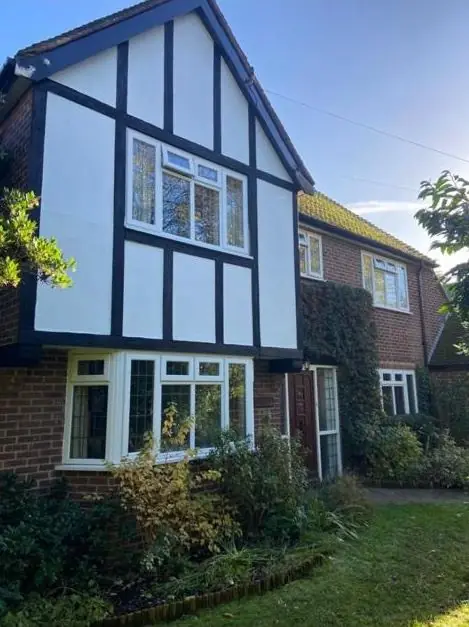
The listed house at Fosters Booth has a hipped slate roof rather than gables, so its eaves run all the way round. The side facing Watling Street catches traffic spray, and the underside of the eaves holds onto grime. That timber is washed and rinsed before sanding so the new paint bonds properly. On a hipped roof there is no gable to plan around, but the eaves on the roadside face have to be reached with traffic passing below, so ladder positions and any barriers are agreed before the day. Owners of roadside property should expect that front run of eaves to need repainting sooner than the rear.
Getting to the house
Because the parish is spread across Pattishall, Eastcote, Astcote, Dalscote, Fosters Booth and Cornhill, tell us which settlement you are in. Roofline work needs room for a van and long ladders or a tower, and some of the older streets are narrow. Gutters and downpipes can be painted on the same visit; the details, including what can and cannot be done with uPVC, are on our fascia and soffit painting page. Our Pattishall area page covers the rest of the parish’s property types.
Last updated by Dean, DH Painter & Decorator.