DH Painter & Decorator hand-applies decorative finishes in homes across Pattishall parish, about 6.5 miles south-west of Northampton. In the old stone houses that usually means limewash and traditional finishes on walls and beams; in the post-war houses, feature walls, panelling and paint effects.
A huntsman, hounds and a hare on the A5
The clearest clue to decorative work in the parish is on a side wall at Fosters Booth. The Grade II building beside the A5, listed as Peggottys Restaurant, is 17th-century ironstone remodelled in the early 1800s, rendered to the sides, and one side elevation carries pargetting showing a huntsman, hounds and a hare. Pargetting is raised ornamental plasterwork, and it is not a job for a roller.
Relief plaster like that is cleaned gently by hand, never jet-washed, and painted with a breathable limewash or mineral paint in thin coats so the detail stays crisp rather than clogging up. Because the building is listed and sits on the trunk road, any work would need listed building consent and traffic planning first. We mention it here because it shows the standard of hand work the parish’s older fabric expects, not because it is a job we have done.
Limewash and soft finishes in the stone houses
The 17th-century houses, such as Kirkholme on Church Street and Cromwell House in Astcote, are built from limestone rubble and squared stone, and their inside walls suit limewash better than any modern emulsion. Limewash goes on thin, in several coats, and dries to a soft, slightly mottled surface that changes with the light. On uneven old plaster that variation looks right in a way that flat vinyl paint never does.
It can be tinted with earth pigments to sit alongside the warm brown of the ironstone outside, from a pale buff to a soft ochre. It is breathable, so moisture in rubble walls can escape, and it can be refreshed over the years without stripping back. The trade-offs are honest ones: it marks more easily than emulsion and rubs off a little on clothes, so it suits sitting rooms and bedrooms better than a busy hall.
Picking out beams, doors and old joinery
Several listing descriptions in the parish record spine beams, chamfered beams and bressumers, plus plank, panelled and part-glazed doors. These are the features worth emphasising. Options include:
- leaving beams bare and limewashing the plaster between them, so the timber stands out
- picking out a chamfer stop or a door’s panel mouldings in a contrasting tone
- a traditional linseed paint on plank doors, which wears in rather than chipping
- a dark painted dado band in a cottage hall to hide the scuffs
Old beams should not be sanded aggressively or sealed in gloss varnish. In a listed house, stripping or altering historic timber is the kind of change that may need consent from West Northamptonshire Council.
Feature walls and panelling up the hill
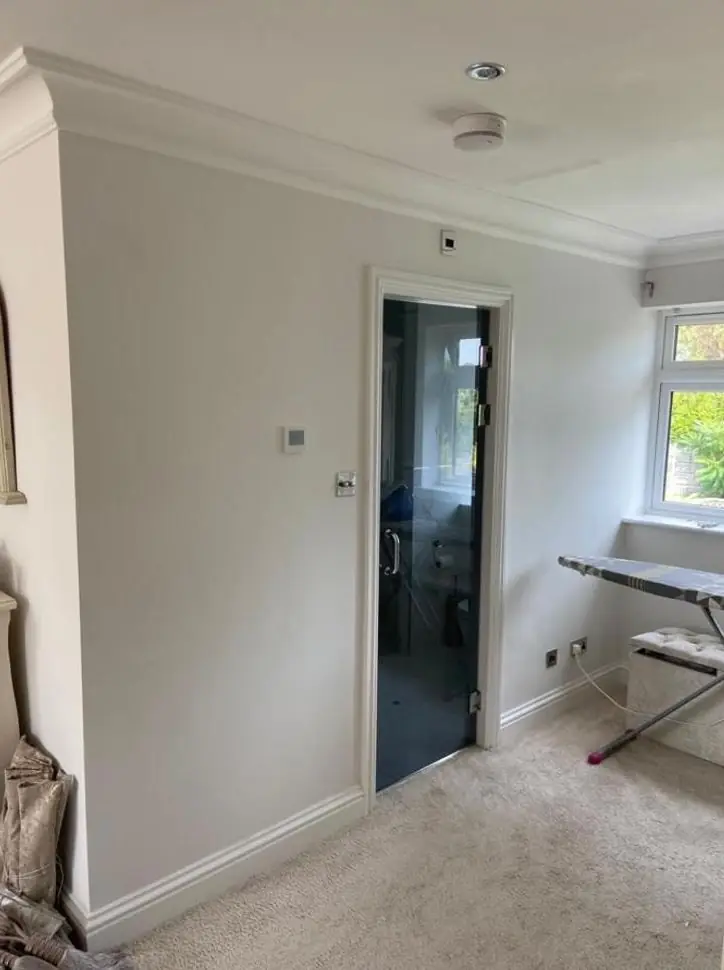
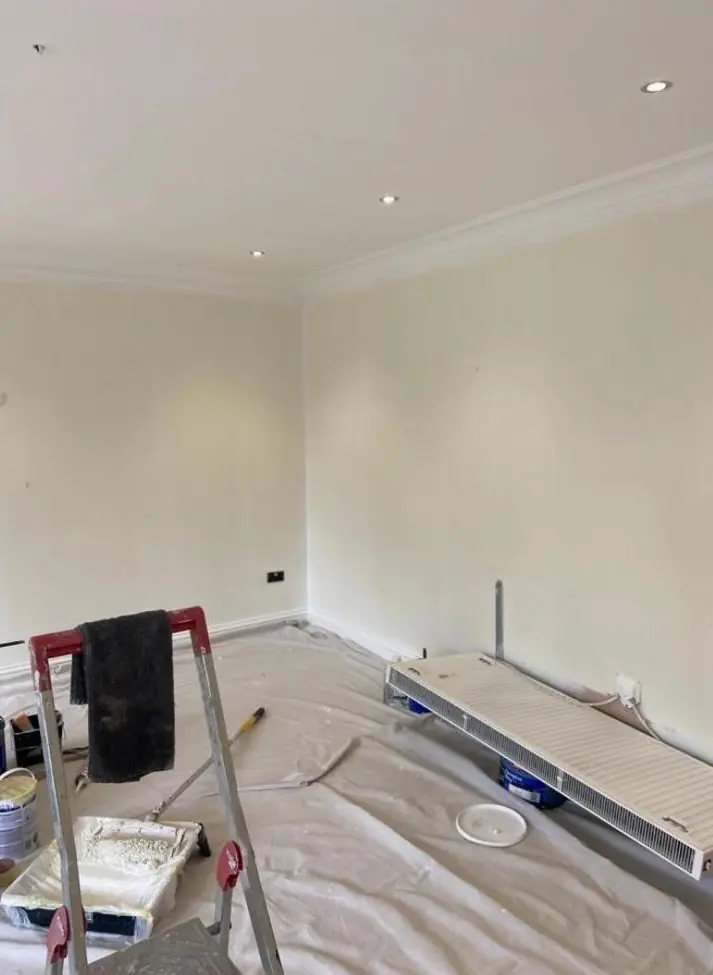
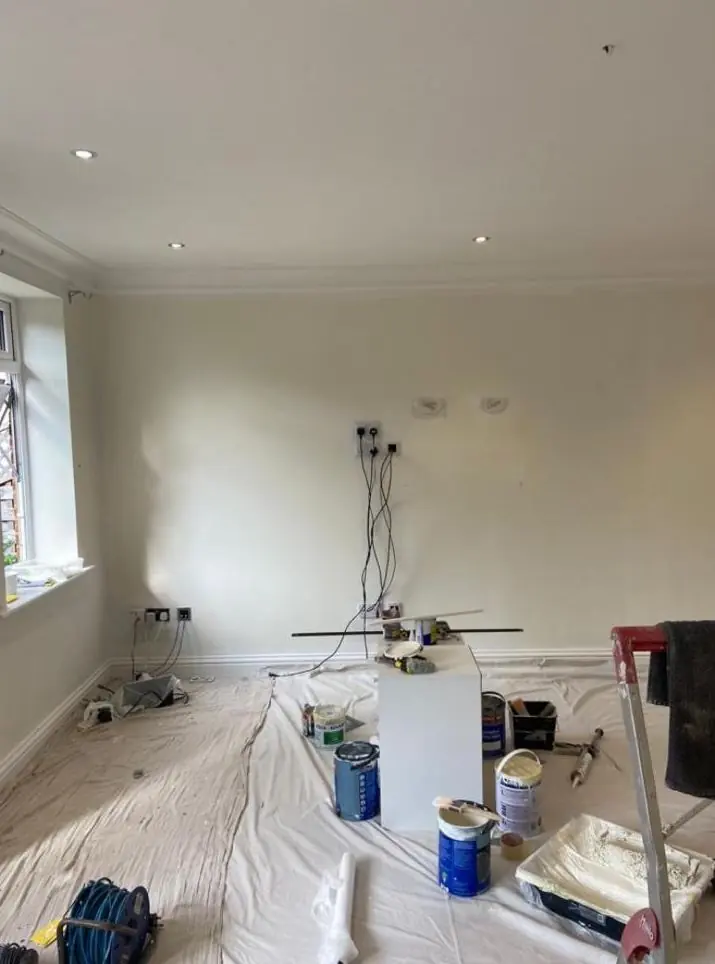
The 20th-century houses on Pattishall’s higher ground have flatter walls and standard rooms, which is where modern effects work well: a two-tone split at dado height, colour-drenched snugs where walls, woodwork and ceiling share one shade, new MDF panelling painted so the joints disappear, or a single wall in a polished or textured effect. These finishes need a smooth base, so the preparation underneath gets as much time as the effect. Our main decorative finishes page describes each type of effect and how it is built up.
Dean works across Pattishall village, Eastcote, Astcote, Dalscote, Fosters Booth and Cornhill from our Northampton base, about 6.5 miles north-east of the parish. Every one of those settlements has its own lanes and parking, so tell us which you are in when you ask for a quote. Our Pattishall area page covers the other services we offer in the parish.
Last updated by Dean, DH Painter & Decorator.