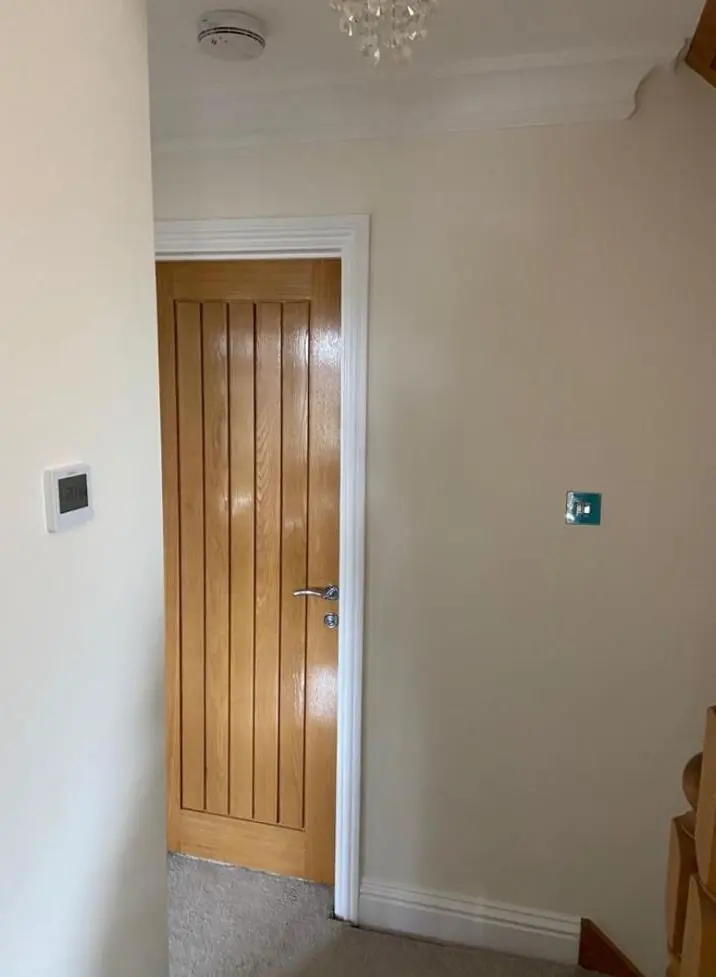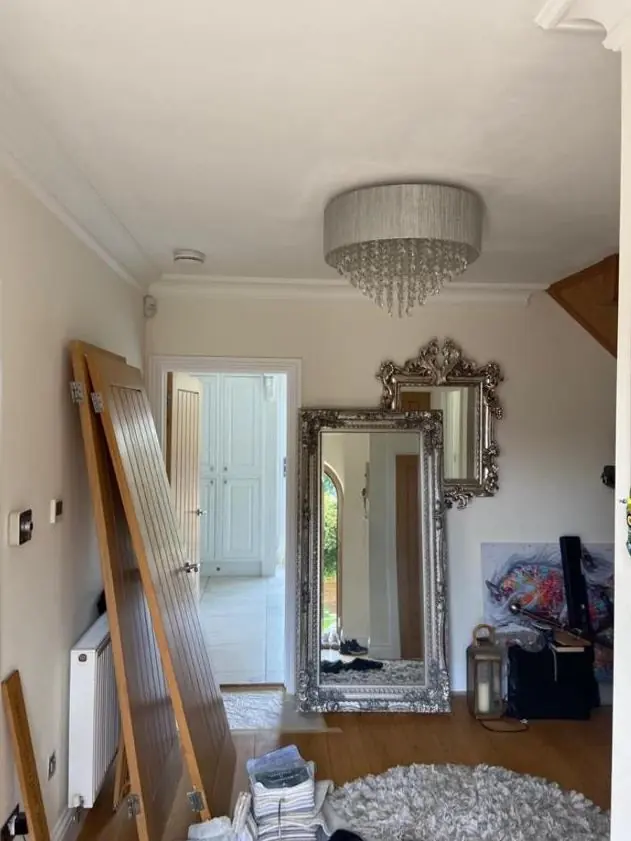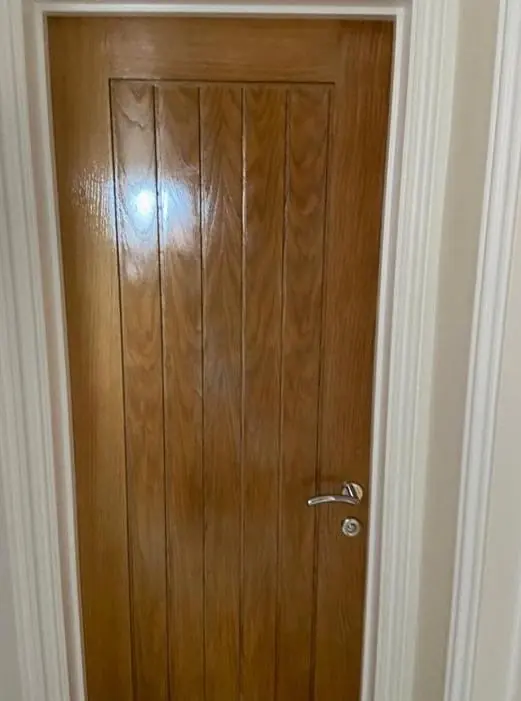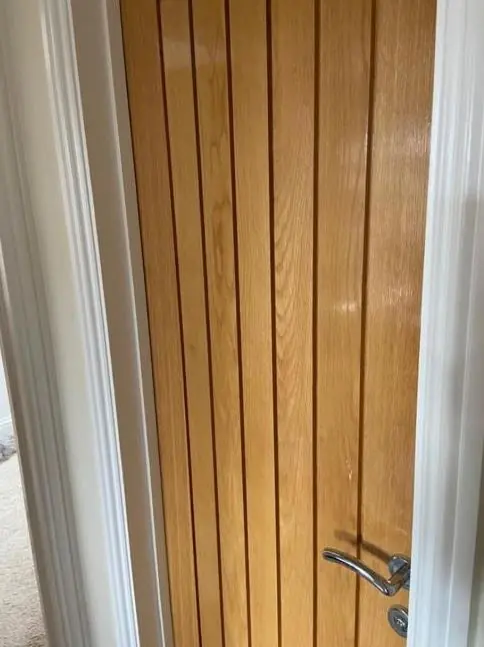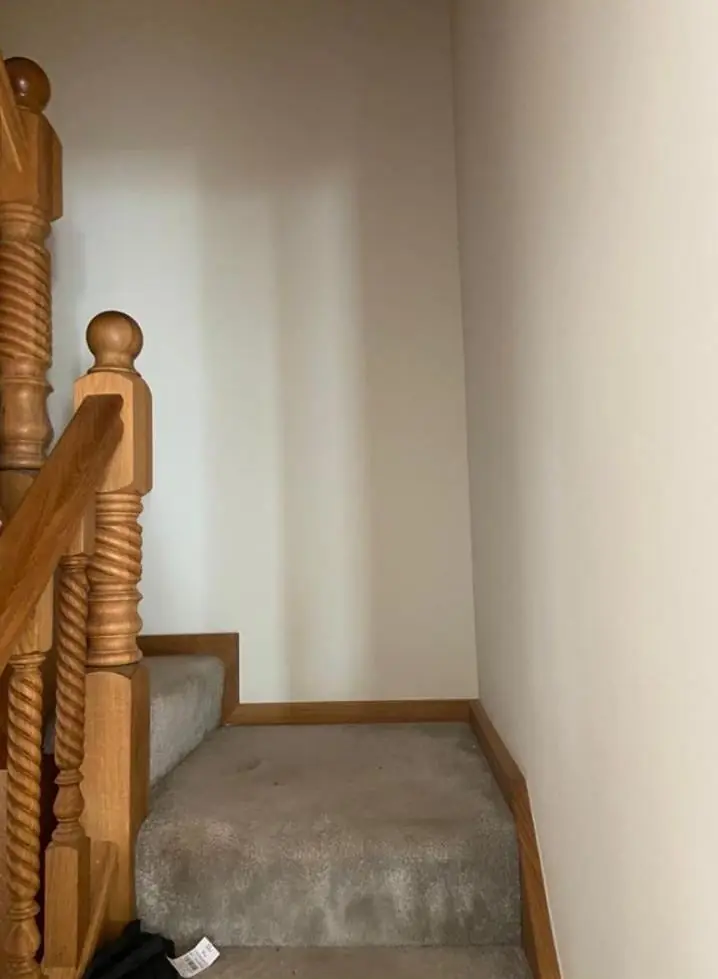
We decorate hallways, staircases and landings in Pattishall and its hamlets, about 6.5 miles south-west of Northampton town centre. Dean sets up stair platforms to suit each staircase, whether it is a winding stair in an old stone house or a straight flight in a 20th-century home.
Why stairwells vary so much across the parish
A stairwell is shaped by the house around it, and the houses in Pattishall parish were built over about four centuries. Kirkholme on Church Street is a 1648 house. Astcote’s Cromwell House dates from the mid to late 17th century and has a stone stair turret. Some of the parish’s 17th-century stone houses have attic rooms above two storeys. The 20th-century houses above the old village, by contrast, have the standard straight flight and landing found across the county. Each needs different access and different paint.
| Stair type | Where you find it | What it means for the decorating |
|---|---|---|
| Stone stair turret | Cromwell House, Astcote | Curved walls, very little room for platforms, breathable paint on old plaster |
| Tight cottage stair to an attic | 17th- and 18th-century stone houses | Low headroom, short boards and hop-ups rather than tall ladders |
| Straight flight and landing | Post-war homes on the higher ground | Standard stair platform, tall wall over the stairs, hard-wearing finishes |
Winding stairs and turrets in the old stone houses
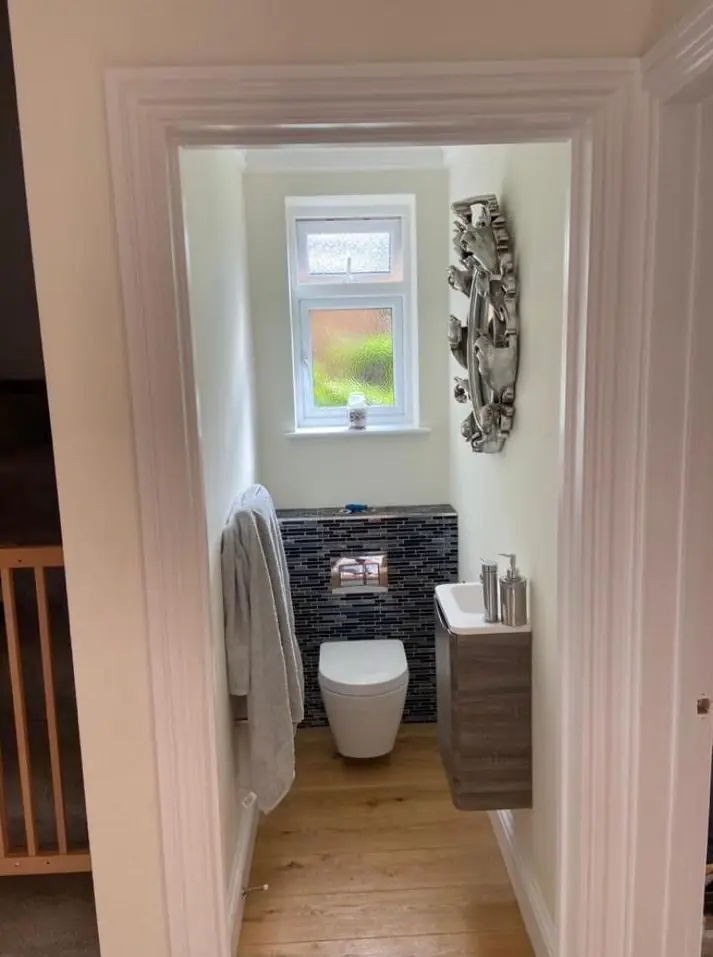
Cottage stairs in houses of this age are often narrow and can turn on themselves, so the long staging boards used in a modern stairwell won’t fit. We work from short adjustable platforms and small steps placed on individual treads, moving them as we go. The walls are likely to be lime plaster on limestone rubble, so they are uneven and need to breathe. We don’t skim them flat or seal them with vinyl silk. A breathable matt emulsion or a mineral paint lets moisture pass through the wall and lasts much better on that kind of wall.
Handrails, newel posts and treads in these houses may be bare timber or painted many times over. We agree with you beforehand what gets painted and what is masked off. In a listed house, any change of finish on historic joinery may need the council’s approval, so plain like-for-like redecoration is the safe default.
Post-war hallways: tall walls and heavy wear
In the 20th-century houses on the higher ground, the difficult part is the tall wall over the stairs. We reach it with a stair platform that has independently adjustable legs and a staging board, never a ladder resting on a tread. Hallways here take mud from gardens and country lanes, along with pushchairs, bikes and shopping bags, so we normally suggest a scrubbable matt or eggshell on the walls and a durable satin on the spindles, skirtings and doors. The stairs stay usable while we work, with one side kept clear and wet paint marked. Where a newer house has a glazed front door or a side light, we also look at the condition of its frame and threshold, since those take the brunt of the weather on the exposed plots up the hill.
The full method, including how we protect carpets and banisters, is on our main hallway, stairs and landing decorating page.
Arriving in the right hamlet with the right kit
Pattishall parish includes Eastcote, Astcote, Dalscote, Cornhill and part of Fosters Booth, and the older houses face narrow village streets such as Church Street and Gayton Road. When we book a stairwell job, we confirm the hamlet and where the van can park, because stair platforms and boards have to be carried in through the front door. On a tight cottage frontage, we unload once, set up indoors and leave the street clear. If you are weighing up quotes from several decorators, our guide to choosing a painter and decorator lists the questions to ask about stairwell access.
Last updated by Dean, DH Painter & Decorator.