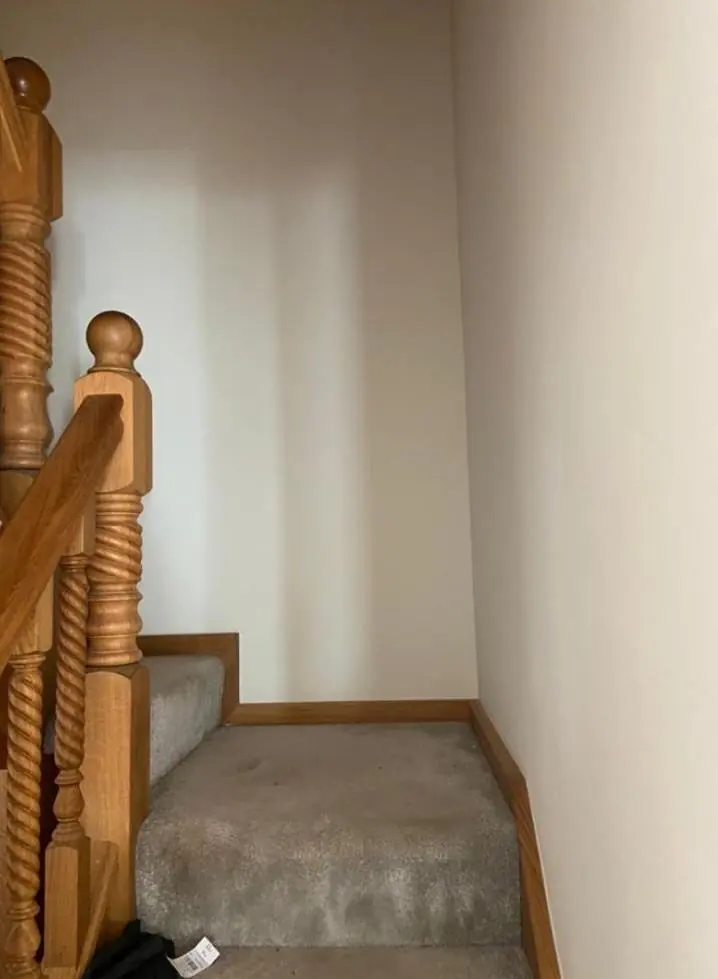
Dean hangs lining paper and wallpaper in homes across Pattishall parish, around 6.5 miles south-west of Northampton. In the older stone houses that means lining crooked walls and working around beams; in the 20th-century houses it is mostly feature walls and full rooms on sound plaster.
When a wall was built in 1648, nothing is plumb
Paper shows up every flaw in the wall behind it, which matters in Pattishall more than most places. Take Kirkholme, the 1648 house in Pattishall’s Church Street, or Cromwell House in Astcote, put up a few decades later. Houses of that age are built from coursed limestone rubble with ironstone dressings, and their inside walls tend to bow, lean and change thickness from one end to the other.
On walls like that we do not start with the patterned paper. We start by finding a true vertical with a plumb line, because the corners are no help, and by deciding where the pattern will drift out of square least visibly. Usually that is behind a door or into the corner furthest from the window. A small-scale or irregular pattern hides the movement. A bold stripe or a large geometric repeat will make every lean in the wall obvious.
Lining paper first, then the paper you chose
Old plaster on rubble is rarely smooth enough to take a finish paper directly. A layer of lining paper, hung horizontally so its joins never line up with the joins of the top paper, evens out small hollows and gives the wallpaper paste something consistent to grip. On walls that need to breathe, a traditional paper on lining with a starch-based paste is kinder than a heavy vinyl, which behaves like a plastic sheet on a damp wall.
Listing descriptions for several houses in the parish note spine beams and chamfered beams. Paper is cut neatly to beam edges by hand rather than tucked under them, and in attic rooms with sloping ceilings, as in some of the two-storey-plus-attic houses, we plan where each drop lands on the slope before any paste is mixed. If older layers come off and reveal anything that looks historic, such as early printed paper or stencilling, we stop and let you decide. In a listed house it may be worth asking West Northamptonshire Council before removing it.
The 20th-century houses on the higher ground
Up the hill the walls are a different proposition: straighter, flatter and usually skimmed plaster. That opens up the papers that need a near-perfect surface, such as:
- large-repeat and drop-match designs on a living-room chimney breast
- non-woven papers hung by pasting the wall, which are quick to strip in a few years’ time
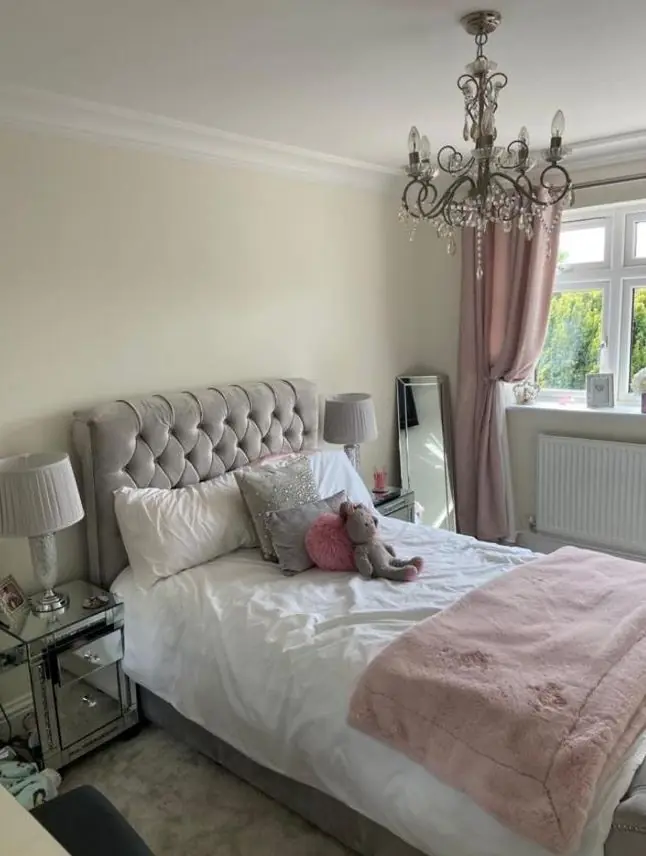
- a papered wall behind a bed with the other three walls painted to match
- washable vinyls in a hall or a child’s room
Here most of the preparation is stripping previous paper, filling and sizing. Our main wallpaper hanging service page runs through that process in detail.
Planning a papering job in the parish
Paper is bulky to carry, and the pasting table needs a space of its own. In a listed cottage on Gayton Road or Church Street with little room inside, we usually set up in the largest downstairs room and agree the order of rooms with you on the first morning. Tell us whether you are in Pattishall village, Eastcote, Astcote, Dalscote, Fosters Booth or Cornhill, since each hamlet has its own parking situation.
Order an extra roll or two from the same batch number, especially for older rooms where out-of-square walls use more paper to keep the pattern matched. We cover the parish from Northampton, about 6.5 miles away. Our Pattishall area page covers the other decorating services for the village.
Last updated by Dean, DH Painter & Decorator.