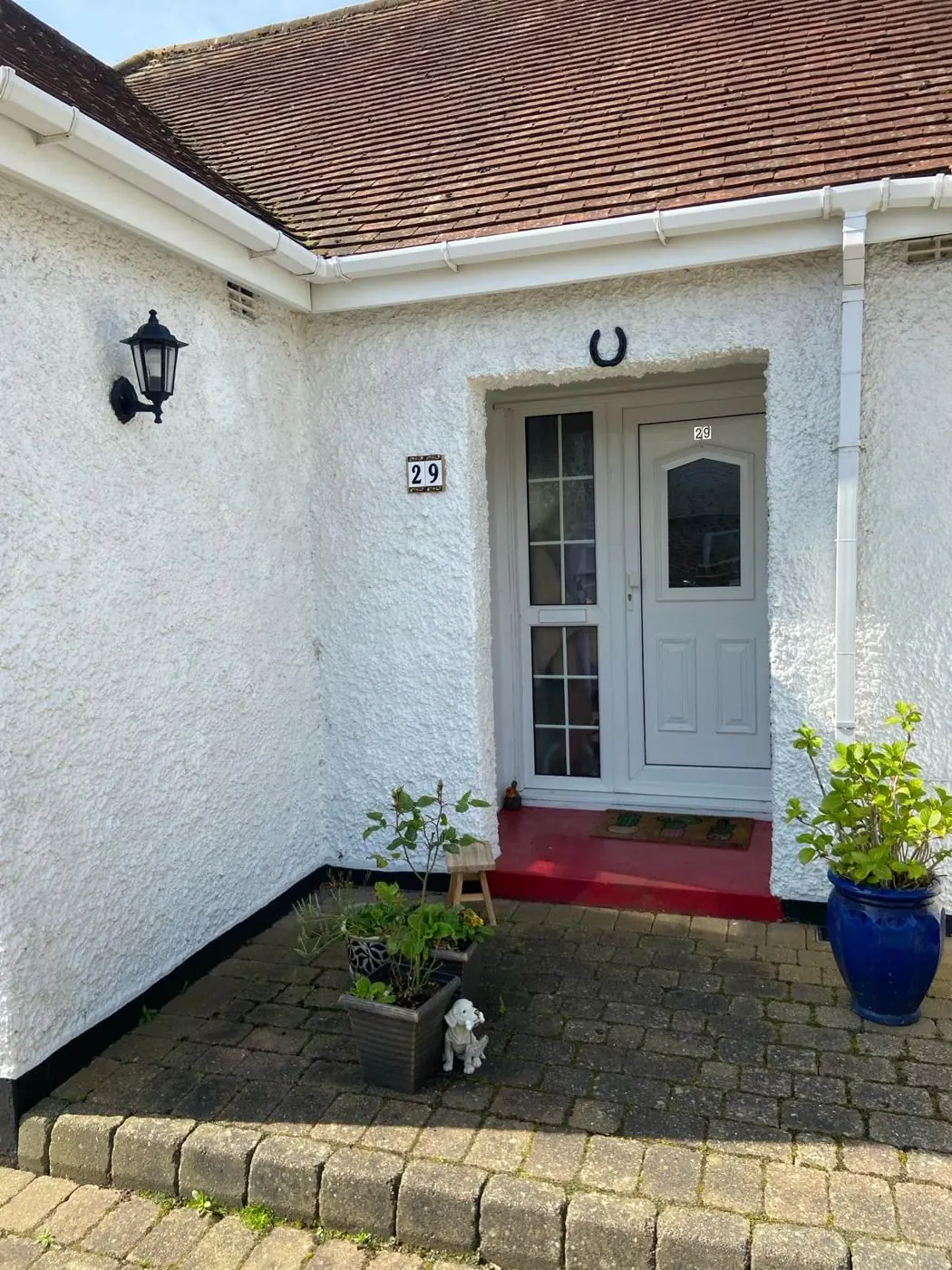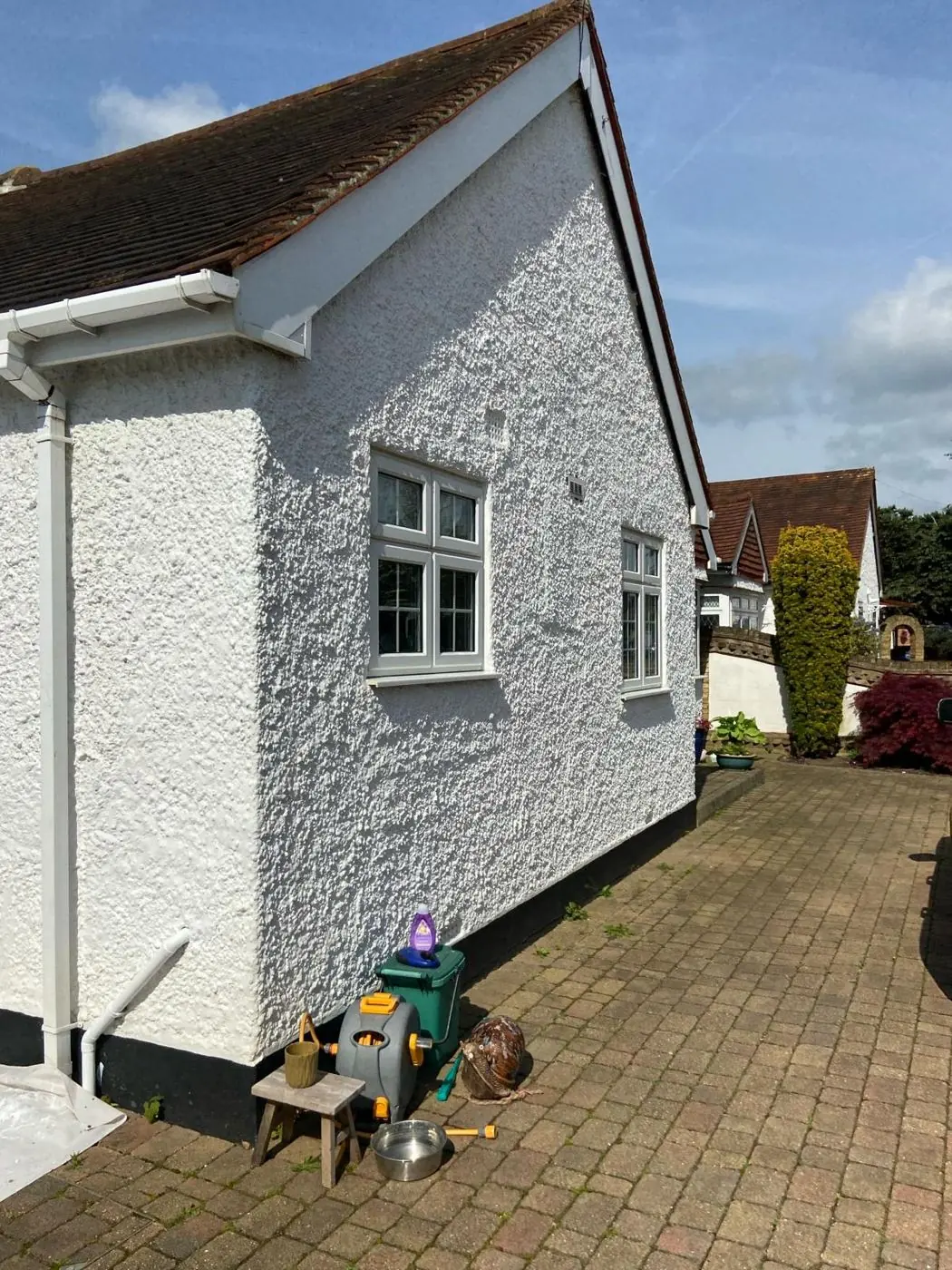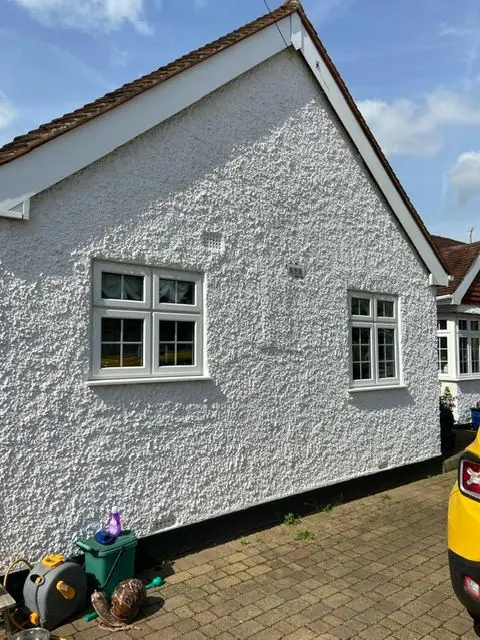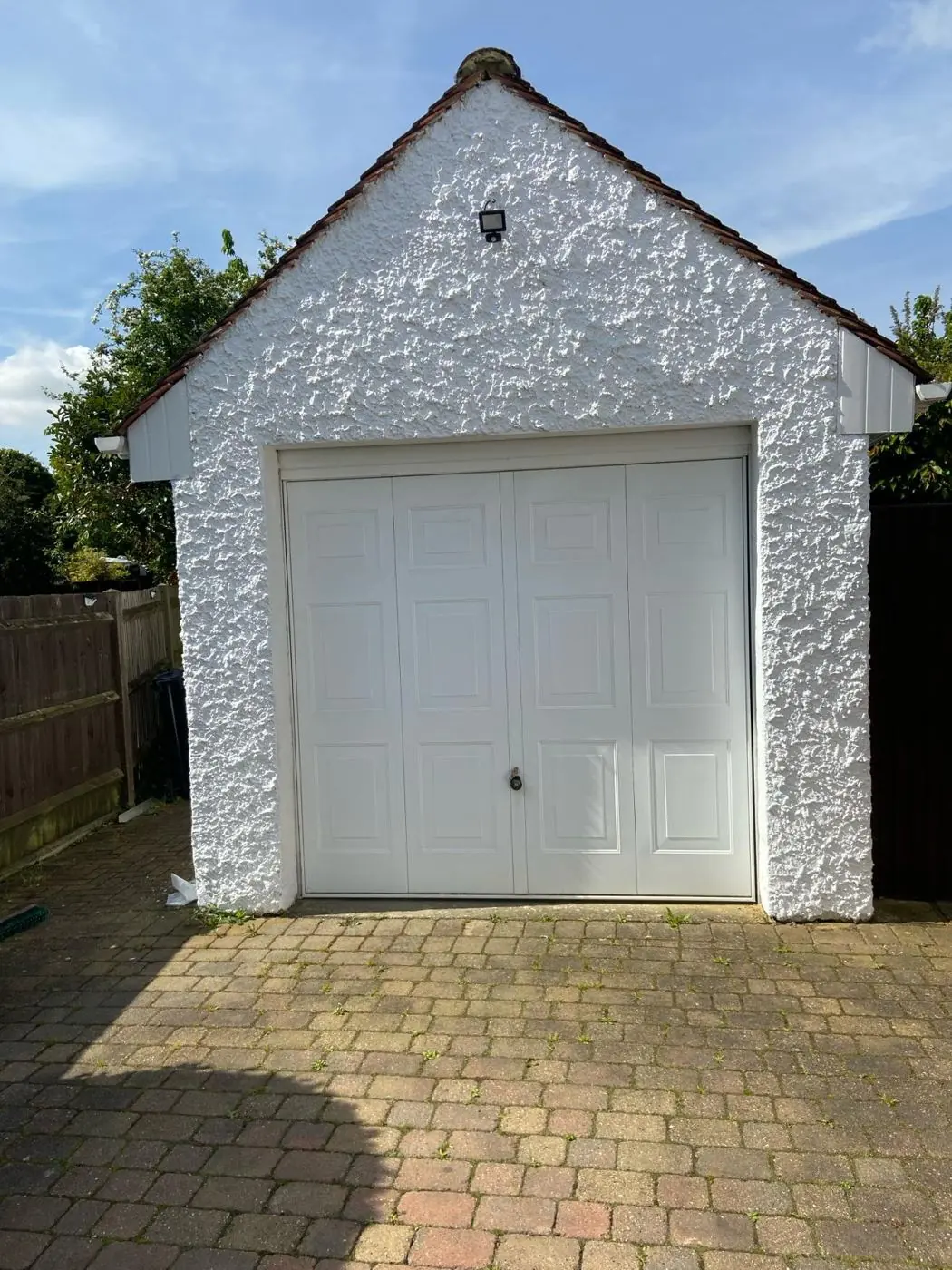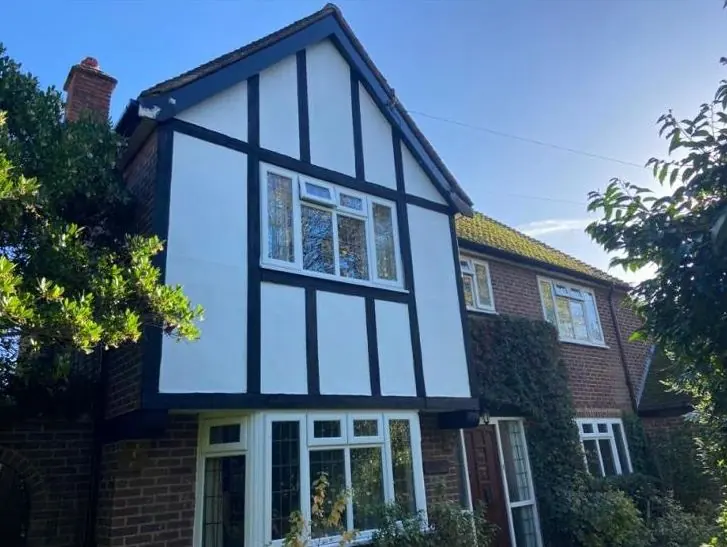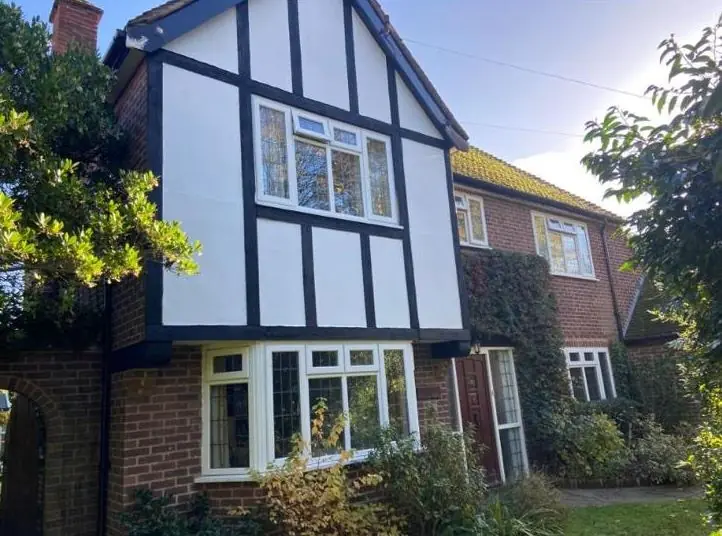
Dean paints house exteriors across Phippsville, about 1.3 miles north-east of Northampton town centre, off the Kettering Road. Most jobs here mean timber sashes and canted bays on brick villas with stone dressings, or rendered upper storeys on the Edwardian houses towards Abington Park, prepared and painted surface by surface.
Three generations of house on one walk
Phippsville was laid out by the Phipps brewing family in the 1880s as a well-to-do suburb east of the Racecourse, and it kept filling in for the next forty years. A short walk from St Matthew’s Church towards Abington Park takes you past three quite different exteriors, and each asks for a different plan.
| Period | What faces the street | Where the painting effort goes |
|---|---|---|
| 1880s-1890s villas, e.g. The Drive | Brick; 5 The Drive, for example, has ashlar dressings, a two-storey canted bay with sashes and a half-timbered dormer gable | Joinery: sashes, bay frames, gables and doors. The brick and stone usually stay bare. |
| c.1900-1925 semis and bay-fronted terraces towards the park | Red brick below, pebbledash or smooth render above, white-painted sashes and casements | Render coats on the upper storey plus a full set of white joinery |
| 1920s and interwar housing, e.g. north side of Wellingborough Road east of Beech Avenue | Houses outside the conservation area boundary | A freer choice of colours, with the survey deciding which surfaces need work |
The rule we apply to the villas is simple: paint what was painted before. Unpainted brick and ashlar get a clean rather than a coat, because masonry paint would hold damp in them for good. Stone that a past owner has painted is kept up with a breathable product.
A lot of joinery per house
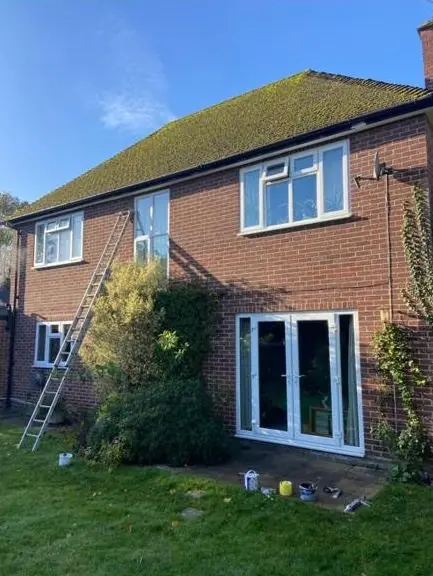
A two-storey canted bay is three windows, a bay roof and a run of mouldings, so a single villa can carry a great deal more exterior timber than a later semi of similar width. We look at each sash for soft wood at the bottom rail and sill, cut out and splice or fill where the timber allows, and then prime bare wood before undercoat and gloss. Upper bays usually need an access tower or ladders standing in the front garden, so we plan where they go before the first day.
On the Edwardian semis the half-timbered gables are the detail people notice. We keep the black and white contrast crisp, use products made for exterior timber, and reach the high gables from a tower or scaffold rather than an overstretched ladder.
Houses on the Kettering Road
The A5123 is a bus route and was once a tram route, and the traffic leaves a grey film on every frontage that faces it. Paint laid over that film does not bond well. Main-road houses get a thorough wash and degrease before any sanding, then time to dry. Bus stops limit where a van can stop, so we arrange materials and access before we start. Our guide to timing exterior work explains why we wait for settled, dry weeks.
Villas now divided into flats
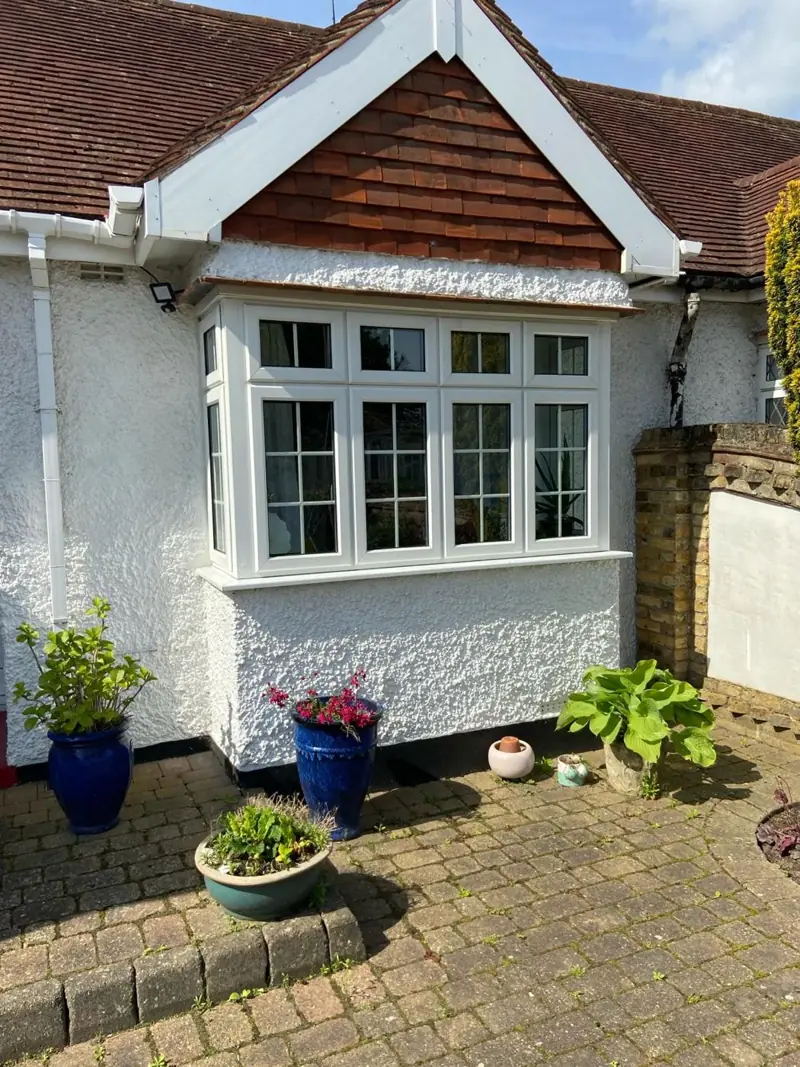
Most of the big original houses are now flats, which means the outside belongs to a freeholder or is managed by an agent, while several households live behind the front door. We quote the person who holds responsibility for the exterior, agree access dates that the occupiers can work with, and keep entrances usable throughout. Where trees on the Abington Park side shed sap and leaves, we sheet below the work and avoid the heavy leaf-fall weeks.
The interwar semis are a smaller job, but the same survey applies. We look at sills, door frames and the bottom of each window for soft timber, check where gutters have dripped onto walls, and note which surfaces were painted originally. The written quote then lists each surface and what it needs, so you can see where the time goes. If you are weighing up quotes, our guide to choosing a decorator sets out what a quote should include.
For the general approach to preparation, products and coats, see our main exterior painting service. We cover Phippsville from our Northampton base.
Last updated by Dean, DH Painter & Decorator.