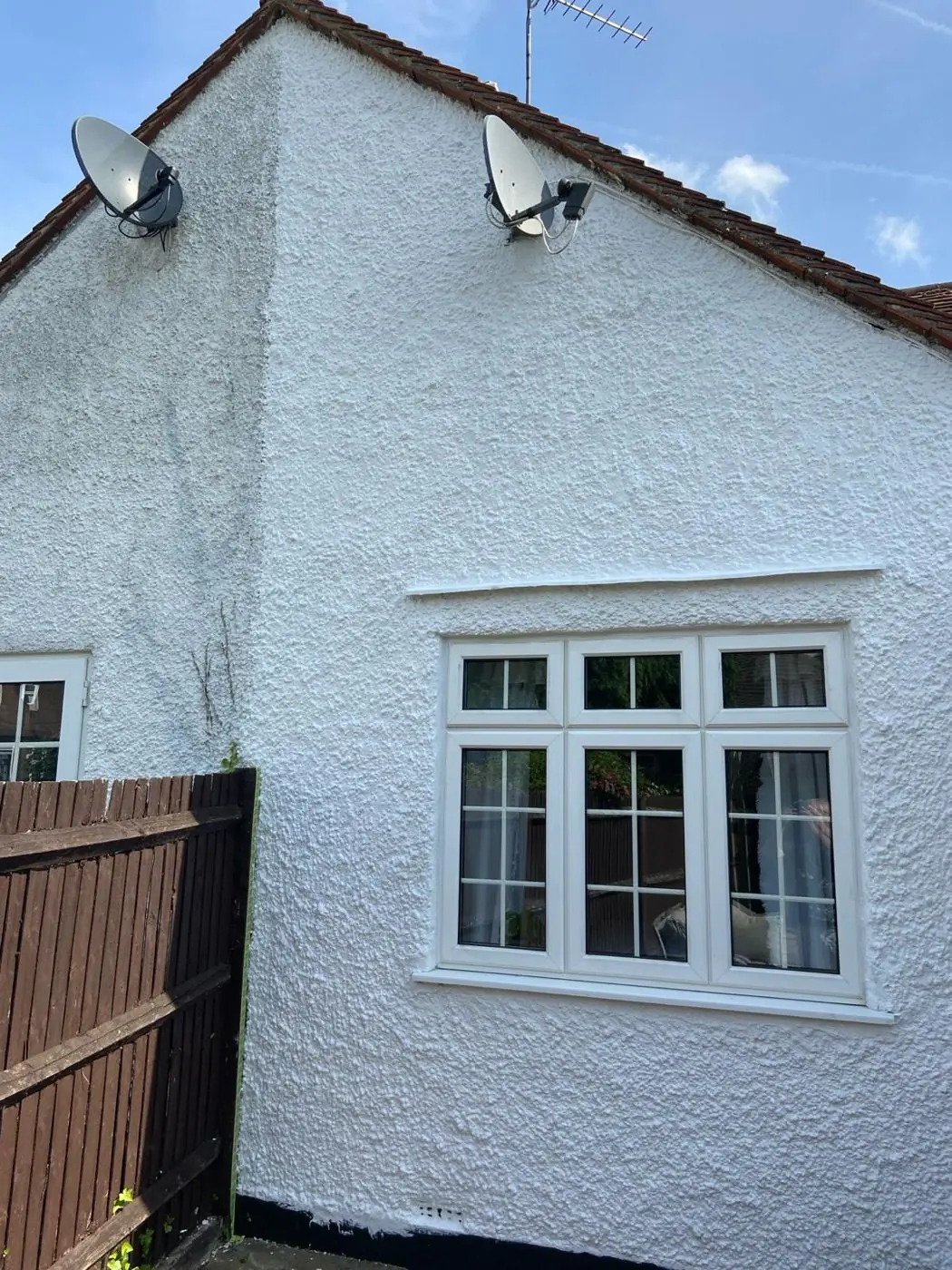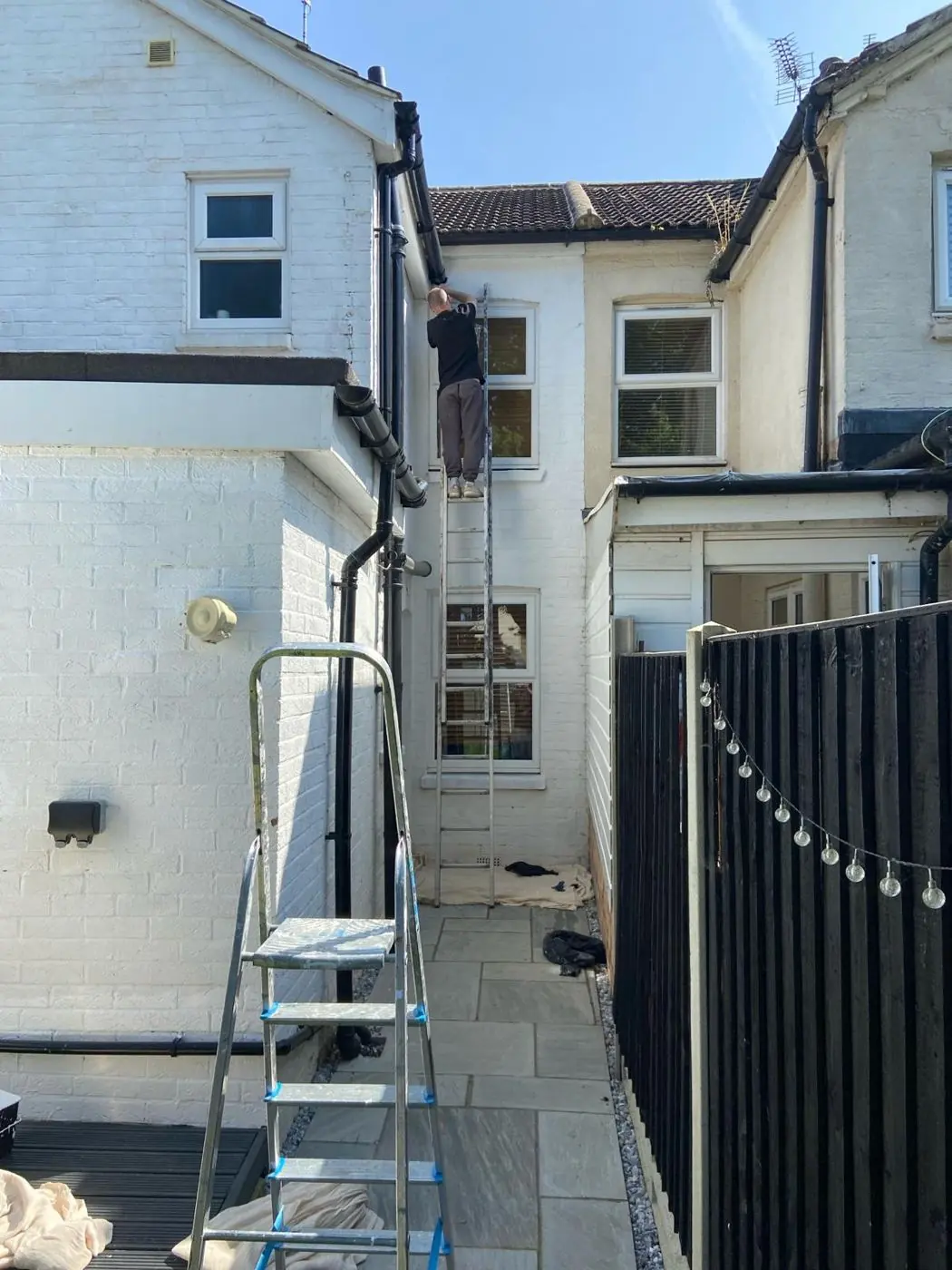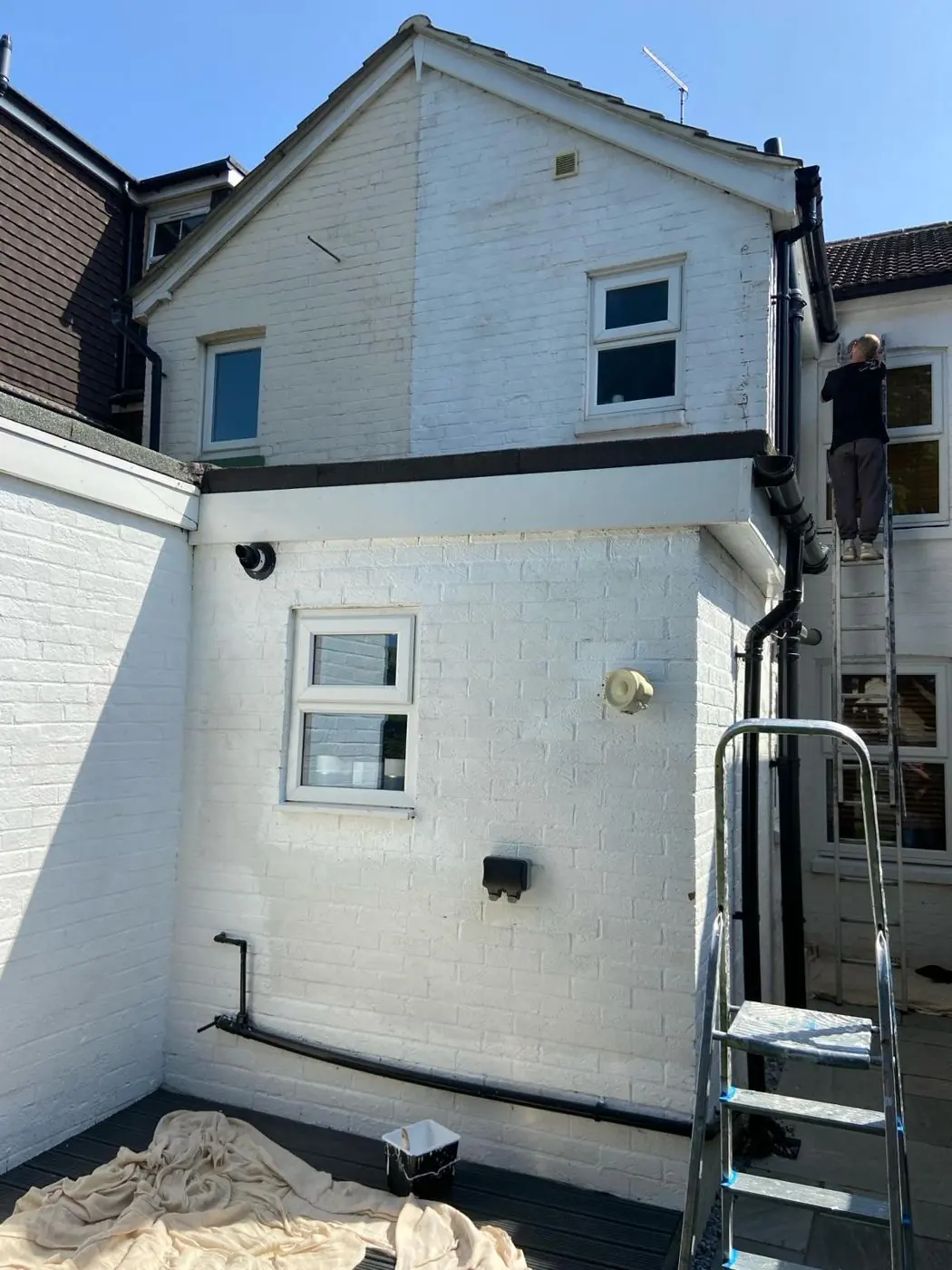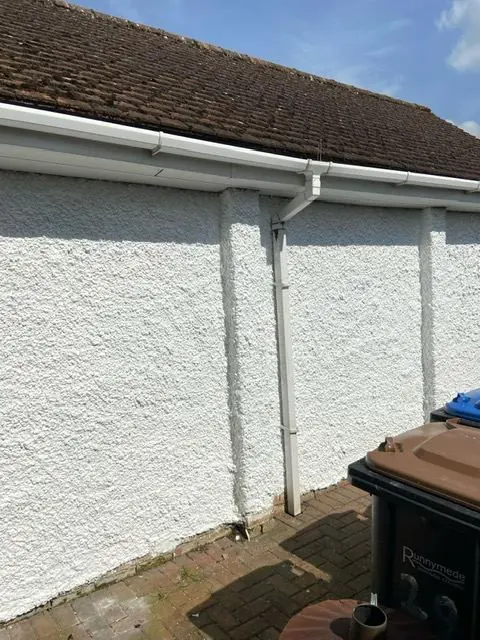
DH Painter & Decorator paints the outside of houses in Abington, the NN1 district built around Abington Park and the Wellingborough Road. Dean covers it from our Northampton base, about 1.6 miles from the town centre, and quotes for walls, woodwork, rooflines and boundaries after seeing the house.
Terrace fronts that open onto the pavement
On many of Abington’s Victorian terraces the front wall of the house opens straight onto the footway. That changes how an exterior job is run. A ladder footing goes on a public pavement, so we keep the footprint narrow, put out barriers while someone is up, and never leave kit standing when we step away. Parking is on-street, so deliveries are small and timed, and the van may be a few doors down rather than outside.
Front elevations on these terraces are mostly about joinery: sash boxes, sills, the front door and its frame, and sometimes a painted bay. Local listings say many Abington houses still have original features, which means timber with a long history of paint layers. On anything that might predate the 1960s we treat old coatings as possibly lead-based, so we wet-sand or scrape rather than dry power-sand, and we sweep the pavement as we go.
Getting to the back when there is no back gate
Town Council planning minutes from 2023 describe Cedar Road as terraced homes where bins have to be carried through the house to the kerb. Other terraces in the district may work the same way. If your rear wall, back windows and any rear addition can only be reached through the hallway, then every ladder, sheet and tin goes in the front door. We cover the hall floor and stairs before anything comes in, bring ladders through in sections where we can, and agree with you which day the back is done so the house is only disrupted once. Short ladders with a stand-off usually cover a low rear addition from the yard; anything taller is discussed at the quote.
Houses facing Abington Park
The larger houses on parts of Christchurch Road, Park Avenue South, Abington Park Crescent and Wellingborough Road fall within the Abington Park Conservation Area, designated in 2006. The county Historic Environment Record singles out their quality and consistency, built mostly between 1900 and 1925, as unique in Northampton for that date. A colour that jars with the run of houses works against what the designation protects. For front doors, windows, porches and boundary details we suggest shades that sit well with the neighbours, and if you plan anything that changes the character of the front, check with West Northamptonshire Council first.
These houses look out onto the park’s mature tree avenues, some planted in the 1740s and 1790s. Shade and leaf fall bring green algae to north-facing walls and window heads, so a fungicidal wash, and time for it to work, goes into the programme before any paint.
Surfaces we will advise you not to paint
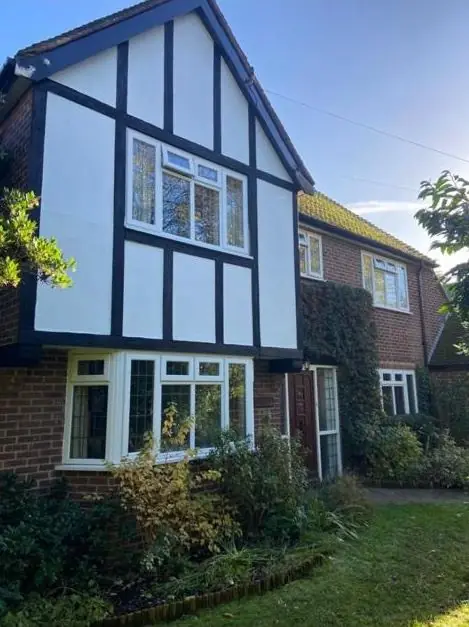
Abington has several listed squared-rubble stone buildings, including Archway Cottages on Wellingborough Road, The Cottage on Christchurch Road and 1-4 Abington Cottages on Abington Avenue. Masonry like this should stay unpainted, and any work to their joinery needs breathable traditional materials and possibly listed building consent. The same goes for carved stone dressings on red-brick commercial frontages: the Abington Hotel’s listing criticises the black and red paint on its ground-floor stonework. If your house has stone sills, lintels or a stone bay, we paint the timber around them and leave the stone alone.
Our main exterior painting service covers products and preparation in general, and the guide to timing exterior work explains why outside jobs are booked for drier months. For interiors and other services in the district, see the Abington area page.
Last updated by Dean, DH Painter & Decorator.