We stain and paint garden fences, side gates and other outdoor timber in Phippsville, about 1.3 miles north-east of Northampton town centre. The Edwardian and interwar houses have the most garden timber, and plots near Abington Park sit under mature trees that shade and stain it.
Gardens under big trees
On the Abington Park side of Phippsville, gardens back towards mature trees. Shade is pleasant in July but hard on a fence. Timber that rarely gets direct sun stays damp longer, grows green algae and black mould, and collects sap and leaf litter along the tops of panels and the rails of gates.
That changes how we prepare. A fence in shade gets a fungicidal wash first, left to work and then scrubbed off, and we wait for it to dry fully before any stain goes on. Stain brushed onto damp wood sits on the surface and wears unevenly. We also pick our weeks: late spring and early autumn dry spells suit shaded gardens better than a humid spell, and we avoid the heavy leaf-fall weeks, when debris sticks to wet stain. Our seasonal guide to exterior work goes into the weather side.
Trees you cannot cut back
On the park-edge streets inside the Abington Park Conservation Area, a tree thicker than 3in (76mm) is protected, and works to them need six weeks’ notice to the council. If an overhanging branch is in the way of a fence line, we work around it rather than trim it. If you want branches cut back before the fence is stained, that is a matter for a tree surgeon and the council, and it is worth starting that conversation early so the six weeks do not hold up the job.
Which timber, which finish
Fences and gates on Phippsville’s Edwardian and interwar houses tend to fall into a few groups, and each suits a different finish:
- Front garden gates on the period houses, where painted timber can match the white sashes on Park Avenue and Abington Avenue. Paint suits these better than stain, so the gate matches the house.
- Rear lap or feather-edge fencing between semis, usually pressure-treated softwood. A spirit or water-based stain lets the grain show and wears away gradually rather than peeling.
- Weathered grey panels that have been left bare for years. An opaque fence paint covers uneven colour better than a translucent stain.
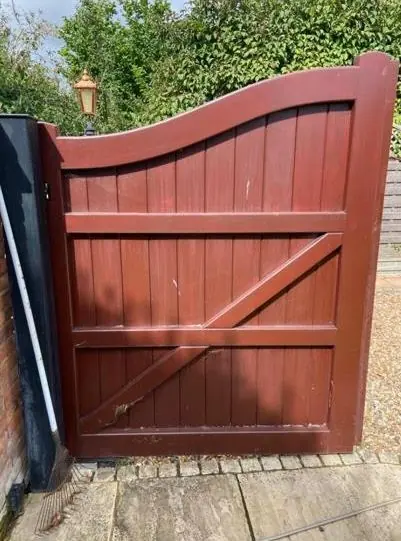
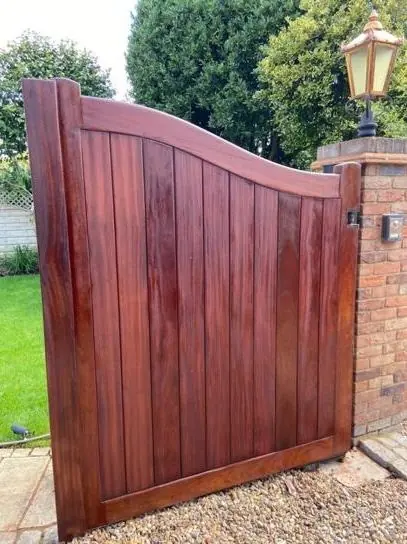
- Hardwood side gates that get an oil or a clear finish to keep the timber colour.
We will tell you after seeing the fence which one makes sense for its age, shade and condition.
Gates need a little more than fences. Hinges, latches and the bottom rail take the most wear, and a gate that drags on the path has usually dropped at the hinge side. We ease and adjust where it is a simple fix, sand back the bottom edge, and seal the end grain on the underside, which is where rot starts on a timber gate. Fixings are masked or taken off rather than painted over.
Reaching the back garden of a terrace
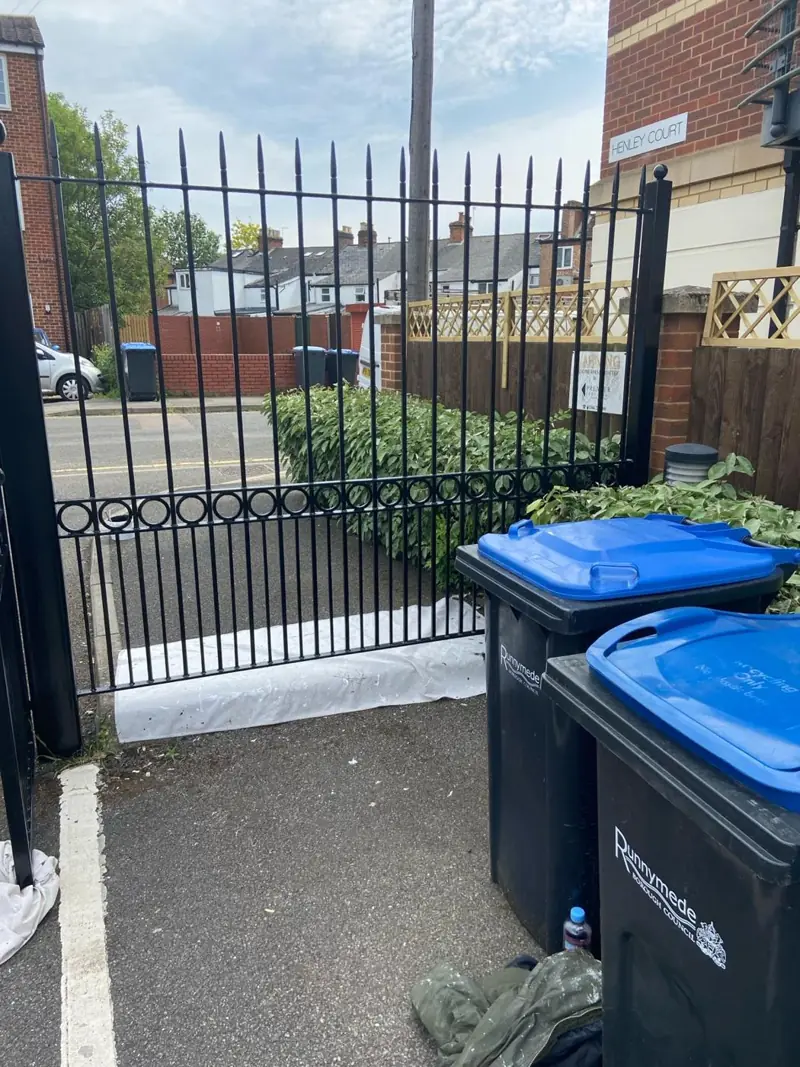
Some of Phippsville’s Victorian terraces have no rear access, so tins, brushes and dust sheets go through the house. We lay protection from the front door to the back garden and keep the walk-through short by bringing what we need in one go. Shared fences between flats in a converted villa can belong to the freeholder rather than one resident, so check who is responsible before booking.
Our main fence and gate staining page explains stains, paints and preparation in full. Read more about the area on our Phippsville page.
Last updated by Dean, DH Painter & Decorator.