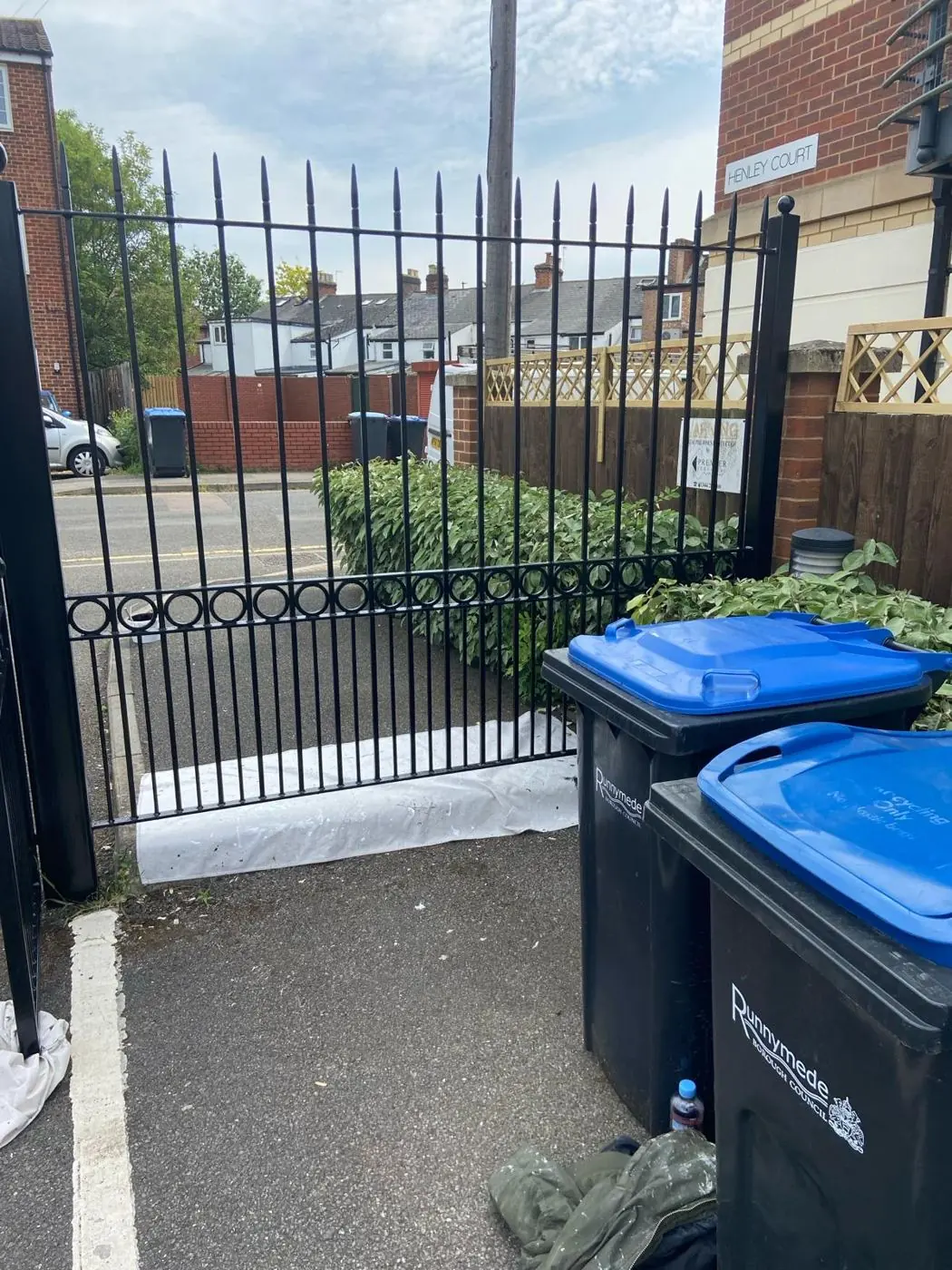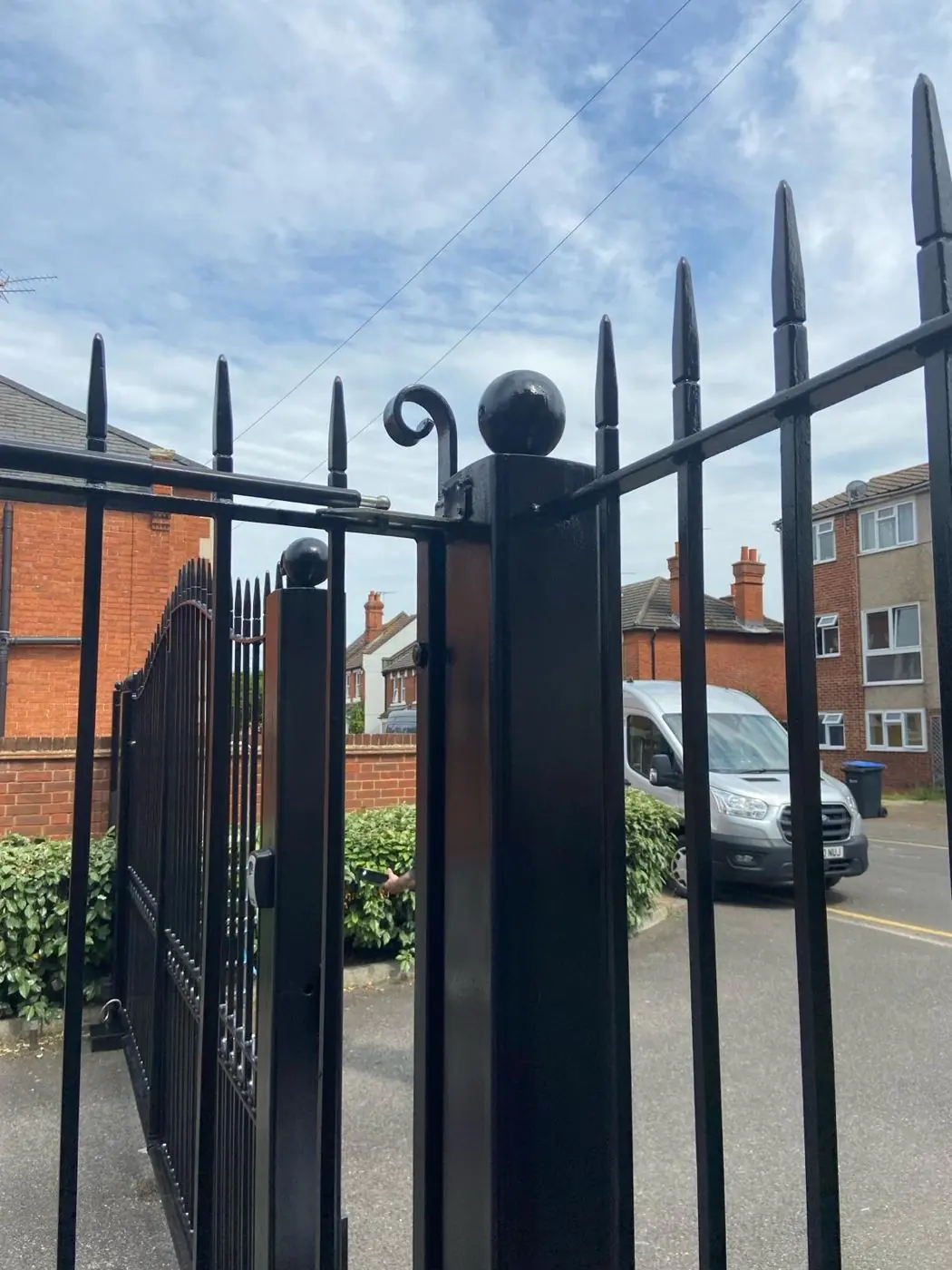
Dean treats rust and repaints metal gates and railings in Phippsville, about 1.3 miles north-east of Northampton town centre. Most of the work is on front-garden boundaries of period houses facing the main roads, where Kettering Road traffic grime speeds up corrosion.
Front boundaries on a main road
Phippsville runs along the south-east side of the Kettering Road (A5123), a bus route that once carried trams as far as St Matthew’s Church. Period houses facing that road and the other main routes often have a low front wall topped with railings and a metal gate. Traffic coats them in a grimy film that holds moisture against the metal, and once the paint is chipped by a bag or a bin, rust starts quickly beneath it.
That is why we start every main-road railing with a wash and degrease, not with a wire brush. Rubbing abrasive over traffic film just pushes the grease into the pores of the metal, and primer struggles to stick to it. After washing and drying, we take loose rust and flaking paint back to a sound edge with wire brushes and abrasives, treat what remains with a rust-converting primer, and build up the coats from there.
Where iron meets brick and stone
On period boundaries the railings are often set into a brick wall or a stone coping. Rust at the base of a bar swells as it forms and can crack the masonry around it, so the foot of each upright gets the closest attention. We dig out loose material, treat and prime the metal right down to the masonry, and keep paint off the brick and stone itself. Villas of the original Phipps suburb such as 5 The Drive have ashlar stone dressings, and the same thinking applies to boundaries: bare stone stays bare.
Old railings usually carry many layers of paint. Where those layers are sound, we key them and paint over. Where they are cracking and lifting, we take them back further, since new paint on a failing base will flake with it.
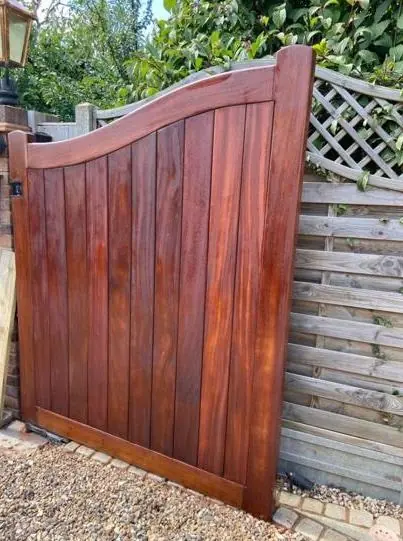
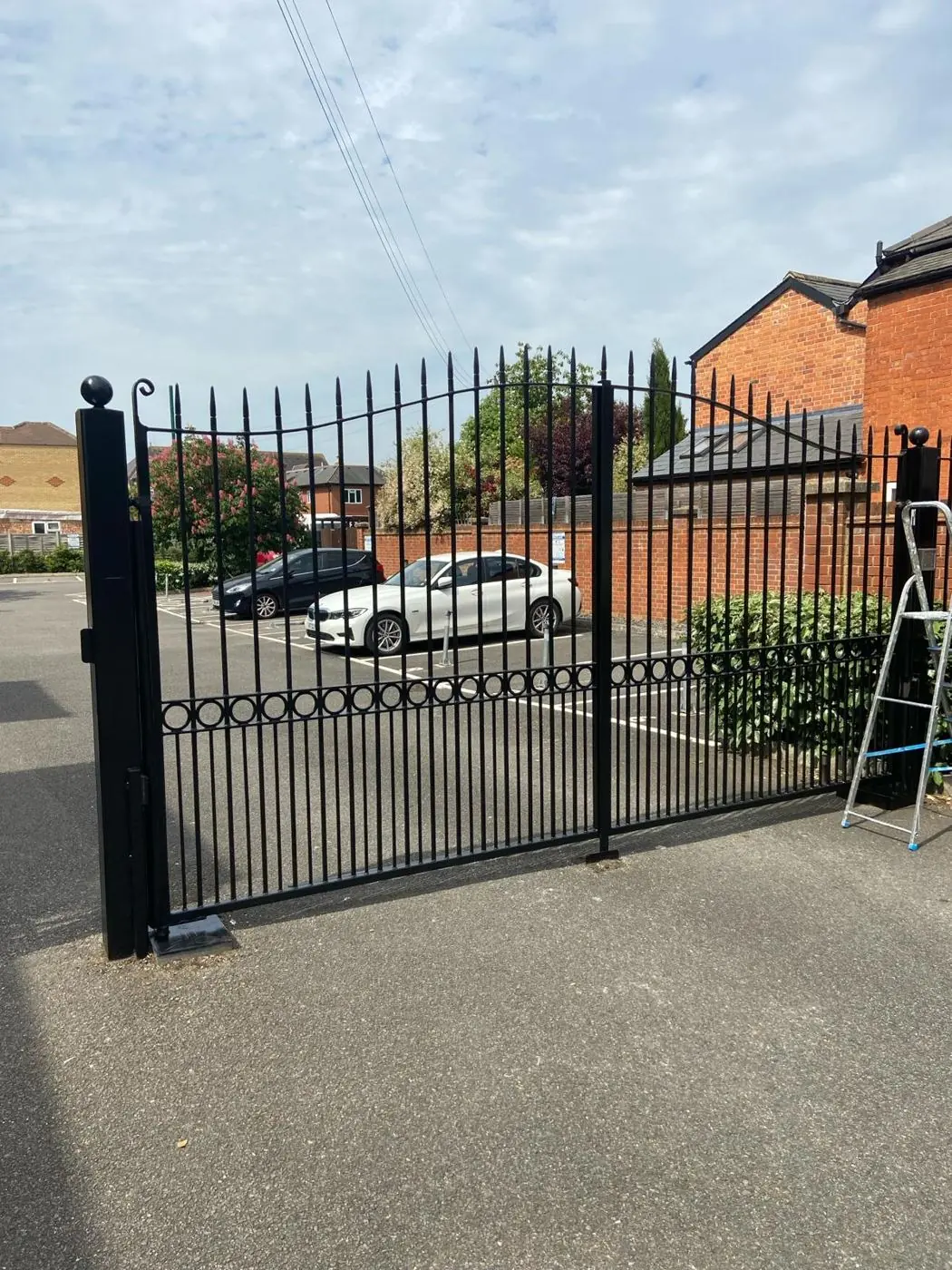
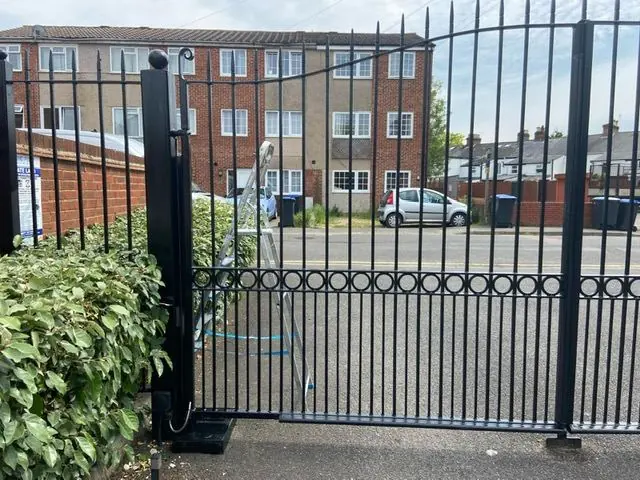
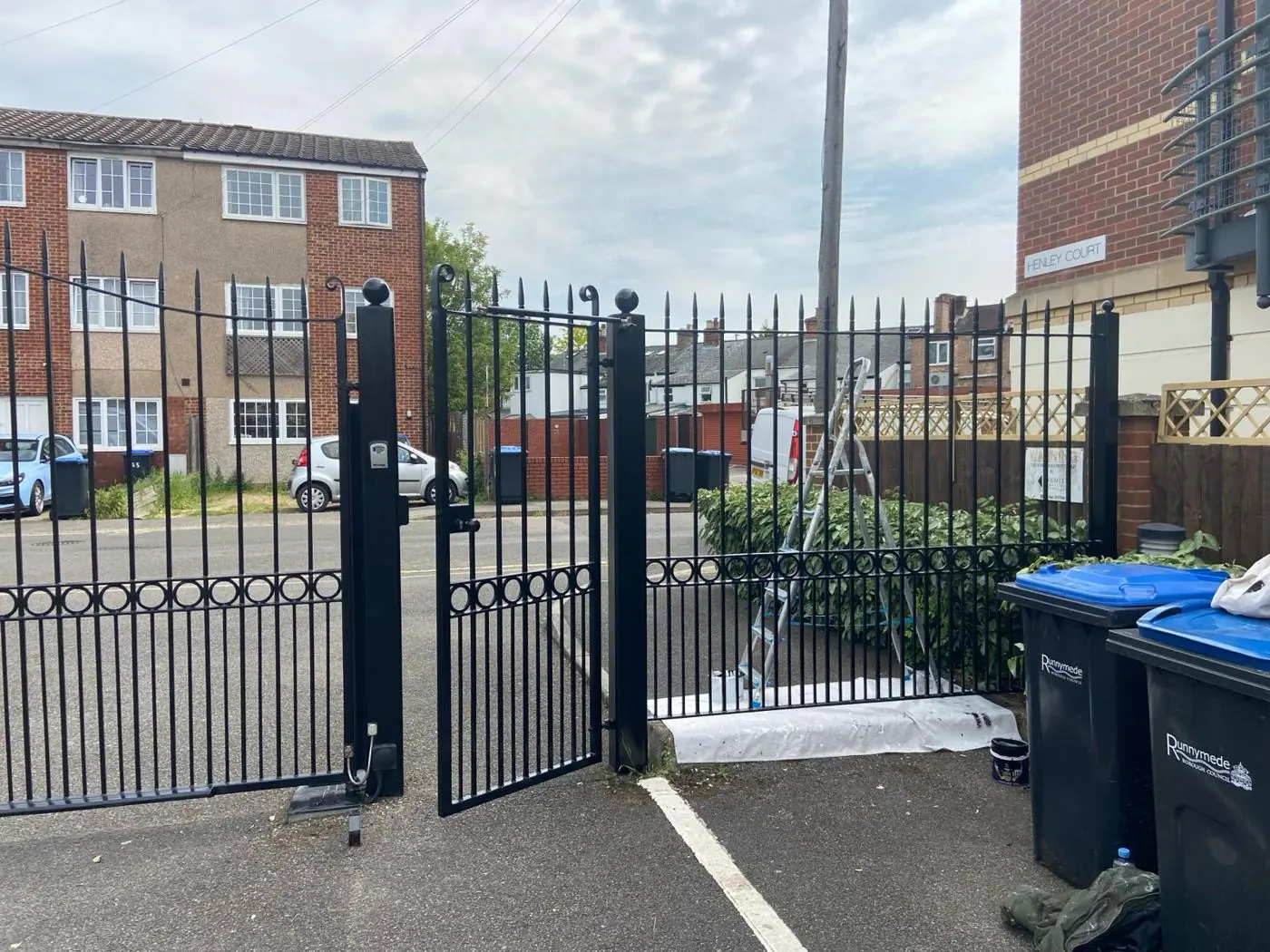
Gates take more wear than the railings either side. Hinge pins seize, latches stick, and the bottom bar stays wet where it sits close to the path. We free and lubricate moving parts before painting, mask latches and locks, and give the bottom rail and the inside faces of the hinges extra attention, because those are the spots that rust first. Gates are left propped open while drying so the paint does not seal them shut.
One set of railings, several flats
Many of the large 1880s houses are now divided into flats, and the front railings and gate then belong to the freeholder or fall to a managing agent rather than any one resident. We quote whoever is responsible, agree a date, and let occupiers know the gate will be wet for a day. Gates in daily use are painted in stages so there is always a way in, with a clear sign on fresh paint.
Working from a busy pavement
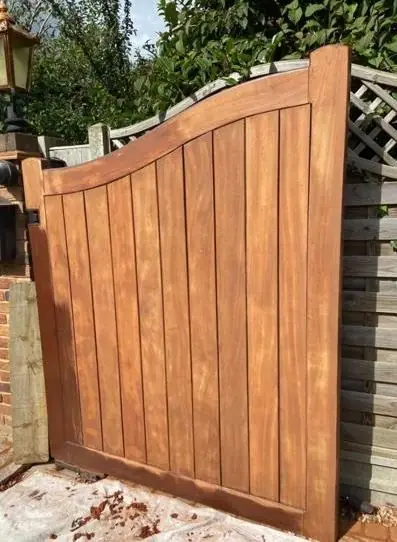
With bus stops along the Kettering Road, there is little room to park outside, so we plan where the van goes before we arrive. Work on railings happens from the pavement side as well as the garden side. We keep a clear route for pedestrians, sheet the pavement below the railings and clear up at the end of each day. Wet paint signs go up wherever someone waiting for a bus might lean.
The full process, from identifying the metal to the finish coats, is on our main metal gate and railing painting page. You can also read about the wider area on our Phippsville page, and we are fully insured for work on the pavement side of your boundary.
Last updated by Dean, DH Painter & Decorator.