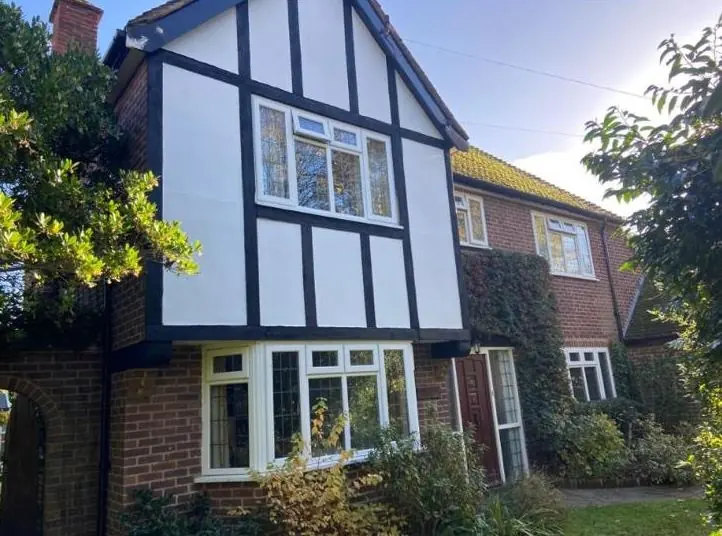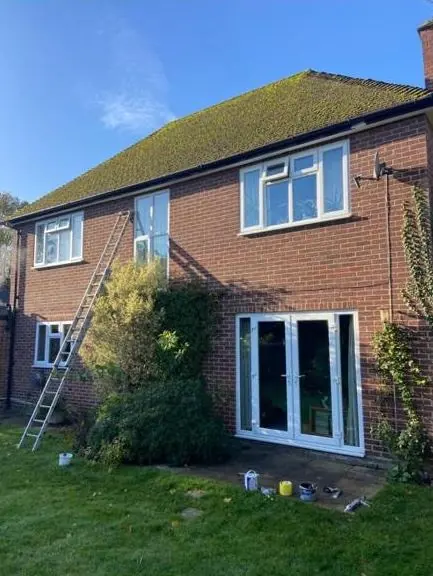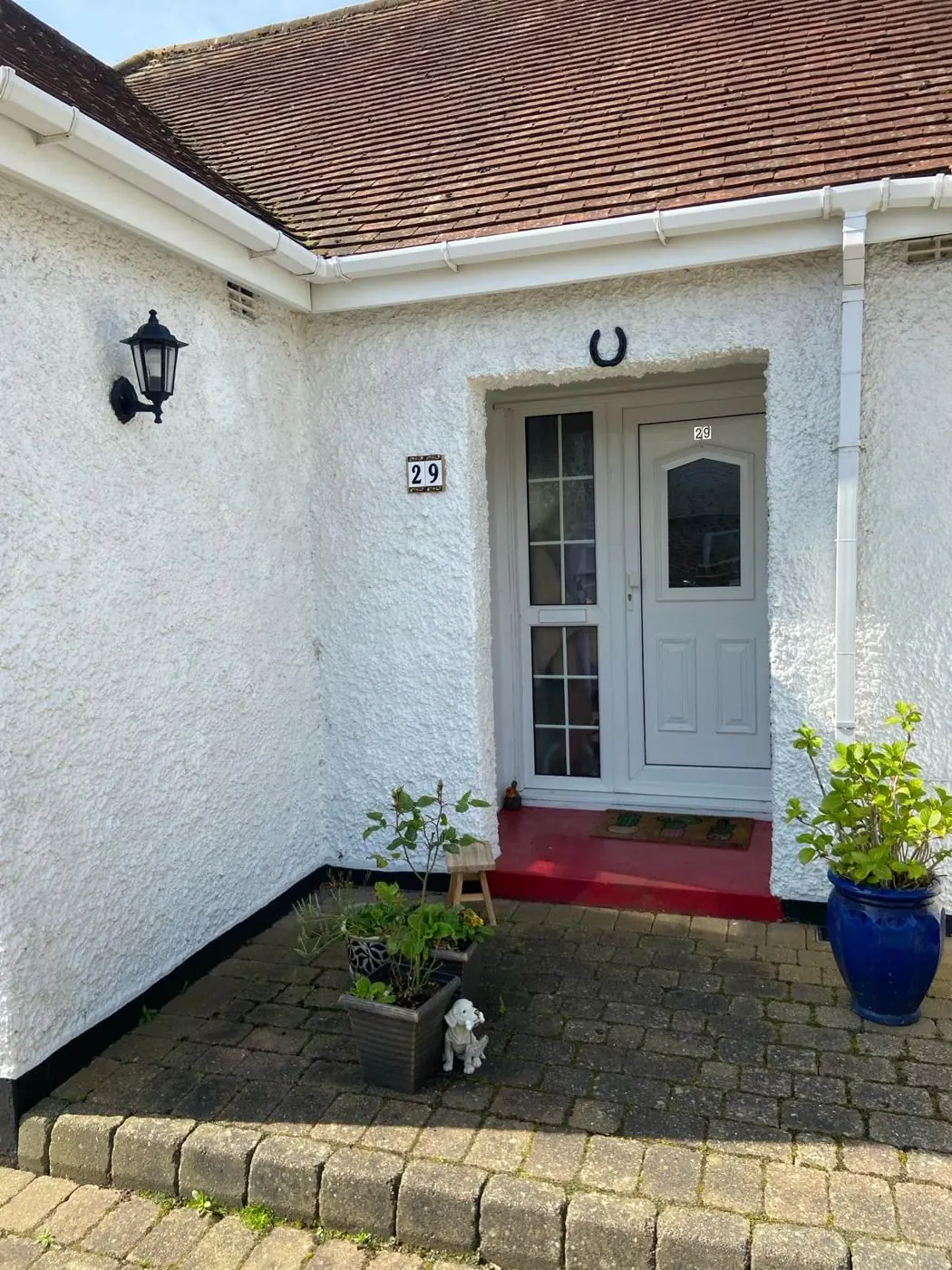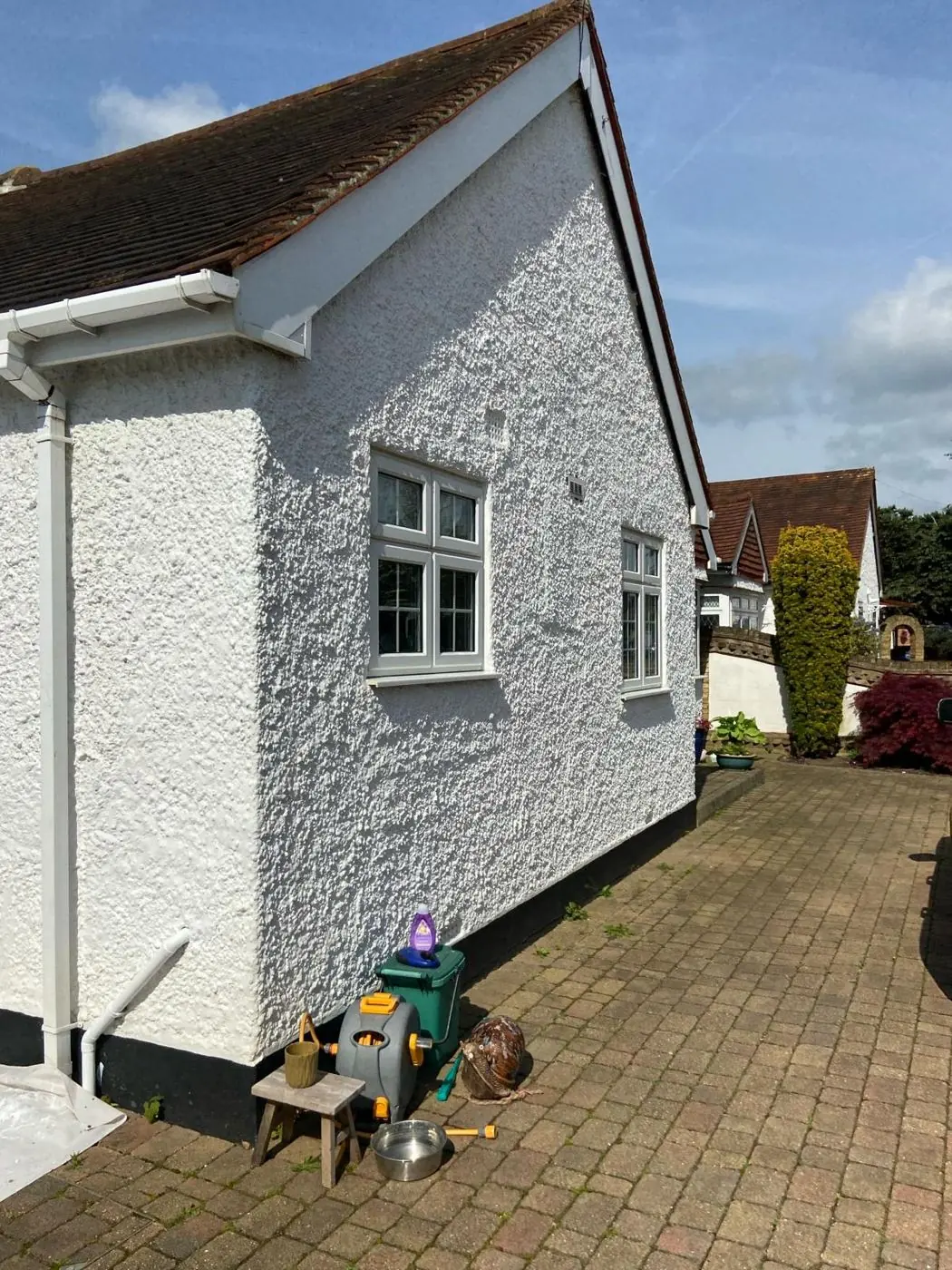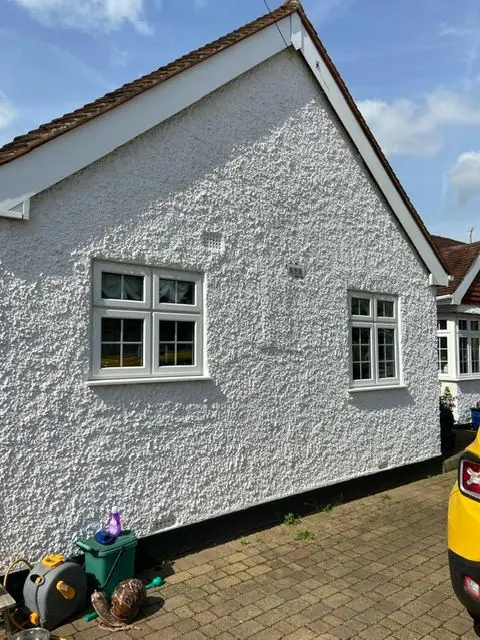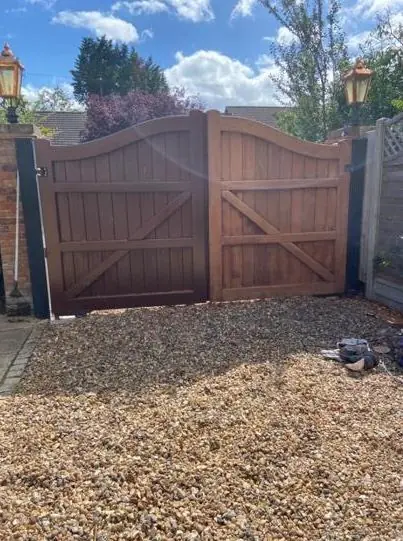
DH Painter & Decorator paints the outside of homes in Spinney Hill, NN3, the bay-fronted district either side of Kettering Road 2.1 miles from the town centre. Dean quotes after walking round the house.
Bays, sills and front joinery on the interwar and post-war semis
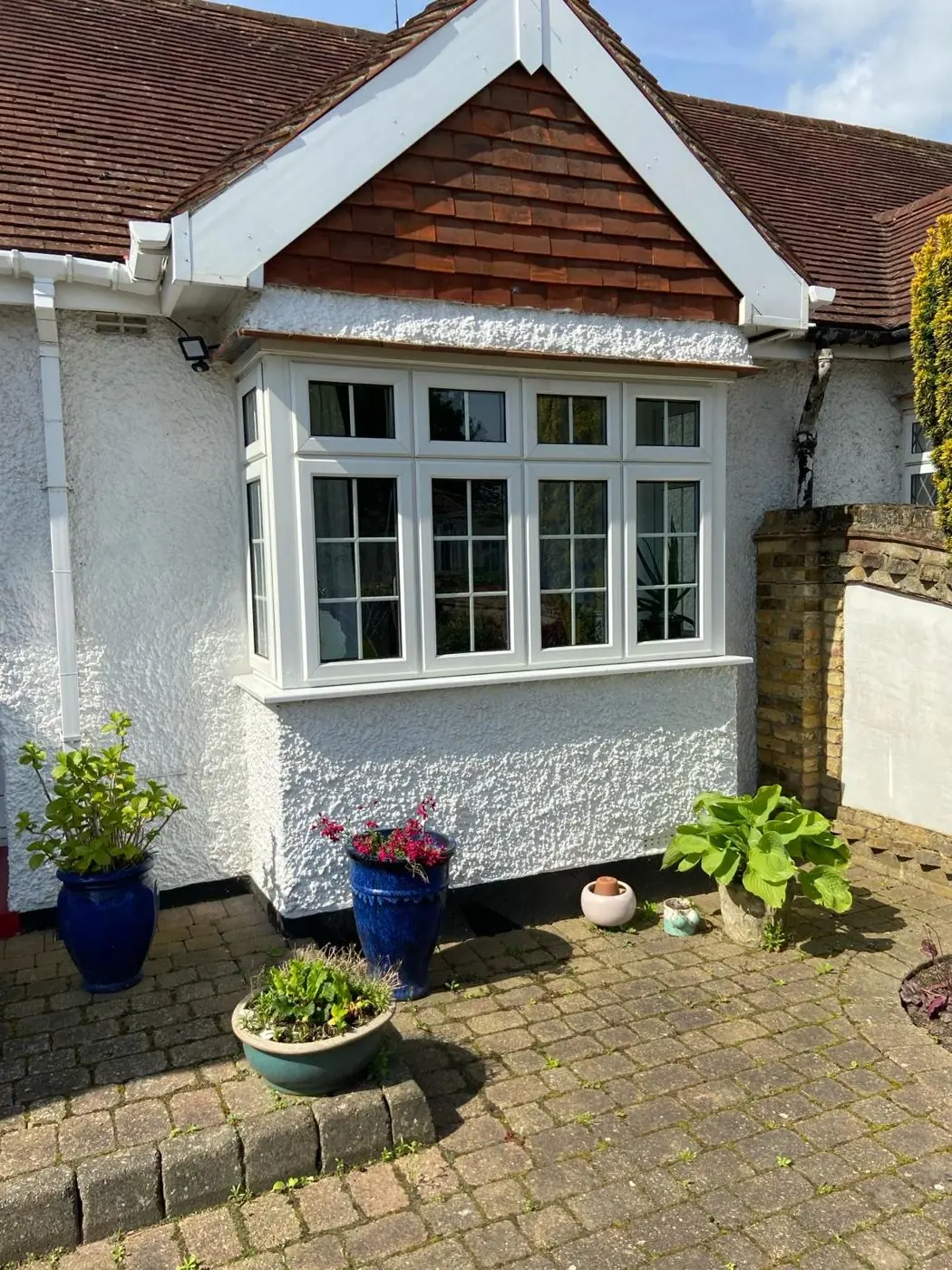
Most of Spinney Hill is three- and four-bedroom semi-detached housing from the 1930s to the 1950s, and the feature that defines the front of almost every one is the bay. A bay is a small building of its own: a roof, a fascia, a soffit, a sill run and a stack of window frames, all facing the weather together. On an exterior repaint here, that is where most of the hours go. The flat or shallow-pitched bay roof edge and the board beneath it tend to flake first, followed by the sills, where rainwater sits after every shower.
Some houses still have leaded-light bay windows in timber frames. Where they survive, we cut in by hand around the leads rather than masking over them, and use a microporous finish so the timber can breathe. Plenty of other bays have been changed to uPVC double glazing, which shifts the job to the surrounding woodwork, the bay roof trim and any painted panels below the glass.
Front walls on a bus corridor
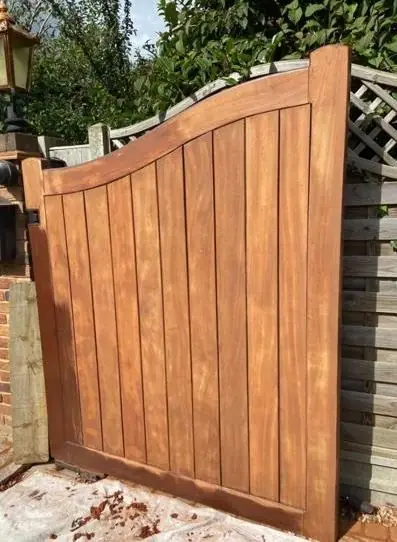
Buses run along Kettering Road towards Kettering, Moulton Park and Blackthorn, so the houses facing it collect a grey film of traffic dirt on front walls, gates, porches and sills. Paint laid over that film does not bond properly, so on these elevations a proper wash-down comes first and the surfaces get time to dry before anything is opened. We also plan the noisier, ladder-heavy stages for the quieter parts of the day rather than the rush hours, which keeps the pavement clear when foot traffic peaks.
Working opposite Northampton School for Girls
Some Spinney Hill Road houses sit directly across from Northampton School for Girls. At drop-off and pick-up the road is busy, so we avoid deliveries, van movements and putting ladders up at those times. The upside of these semis is space: agent listings describe front driveways, one with room for at least two cars, so the van can usually park on the property rather than in the road, and the side passage on a semi normally gives a route to the back without carrying anything through the house.
What the rest of the outside usually includes
Behind the front elevation, Spinney Hill homes tend to have grown. Conservatories on brick bases, single-storey rear extensions and annexes are common, so a full exterior often covers several generations of joinery and wall finish on one house. Wall finishes on the semis are not documented in any source we have, so we look at each house on site and use breathable masonry paint where the walls are already painted. On Lindale Close, a no-through road, chalet-style semis add dormer cheeks, steep roof slopes and integral up-and-over garage doors to the list.
| Surface | Typical Spinney Hill issue | Approach |
|---|---|---|
| Bay roof edge and fascia | Flaking at first floor and bay level | Scrape, spot-prime, undercoat and gloss |
| Front walls facing Kettering Road | Traffic film | Wash down and dry before coating |
| Timber bay frames with leaded lights | Paint cracking around the leads | Hand cut-in, microporous finish |
| Garage doors (Lindale Close) | Faded or chalking up-and-over doors | Clean, key and repaint |
No conservation area covers the semis, so owners can pick whatever exterior colours they like. Only the Grade II listed Manfield estate off Kettering Road is different: its dressed ironstone stays unpainted, and works there need listed building consent. For how we prepare and paint outside surfaces in general, see our exterior painting service, and for when to book, our guide to the timing of exterior painting in the UK. More on the district is on our Spinney Hill area page.
Last updated by Dean, DH Painter & Decorator.