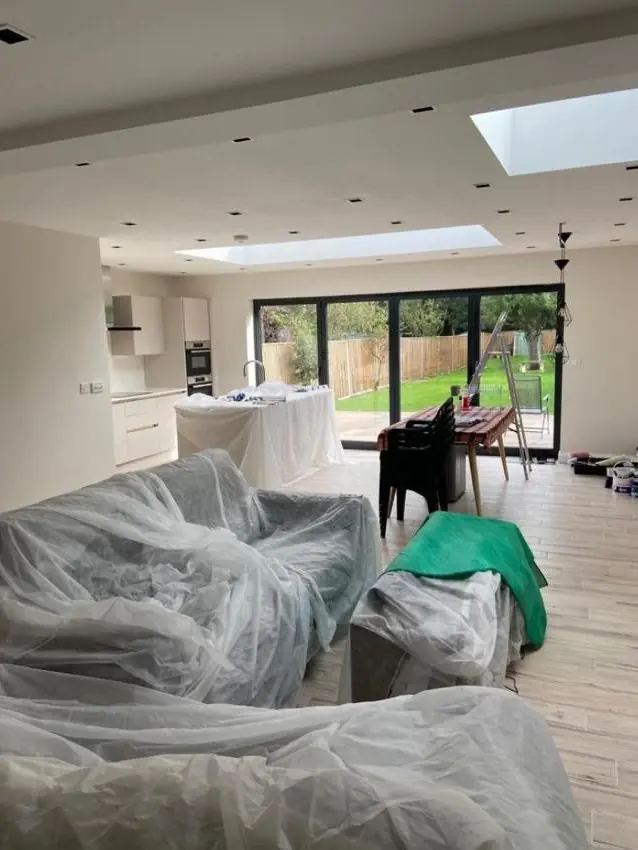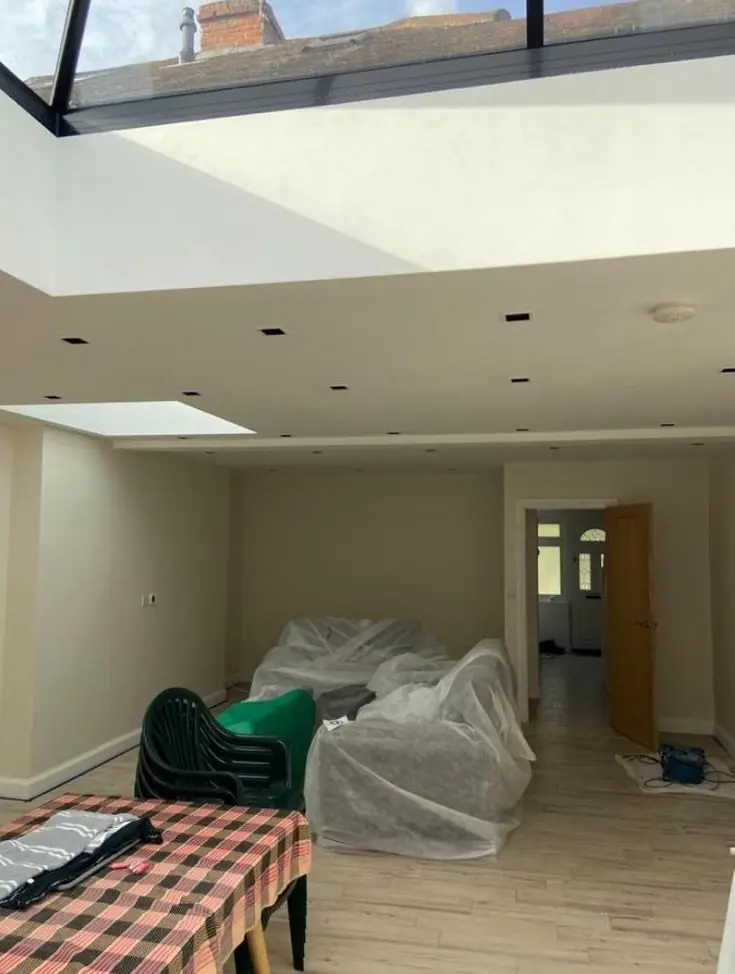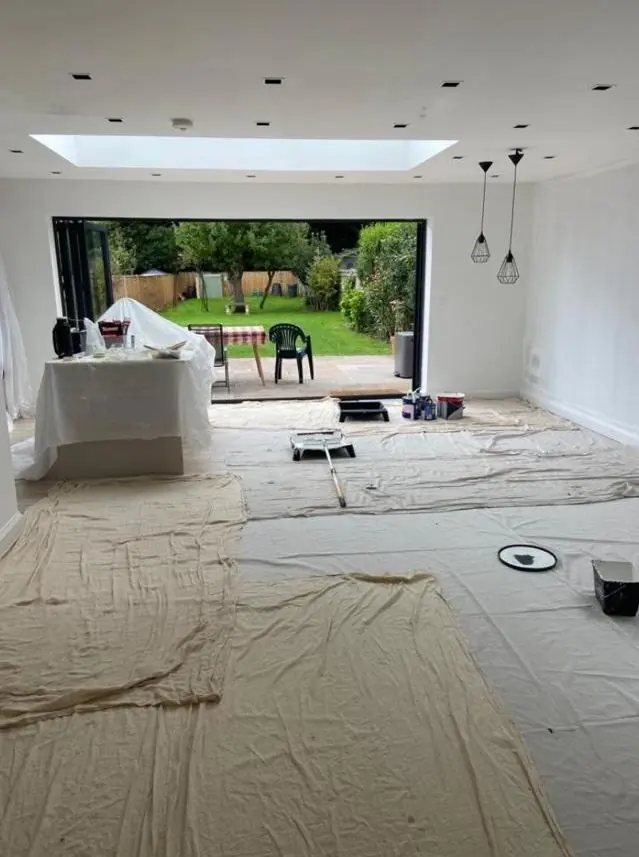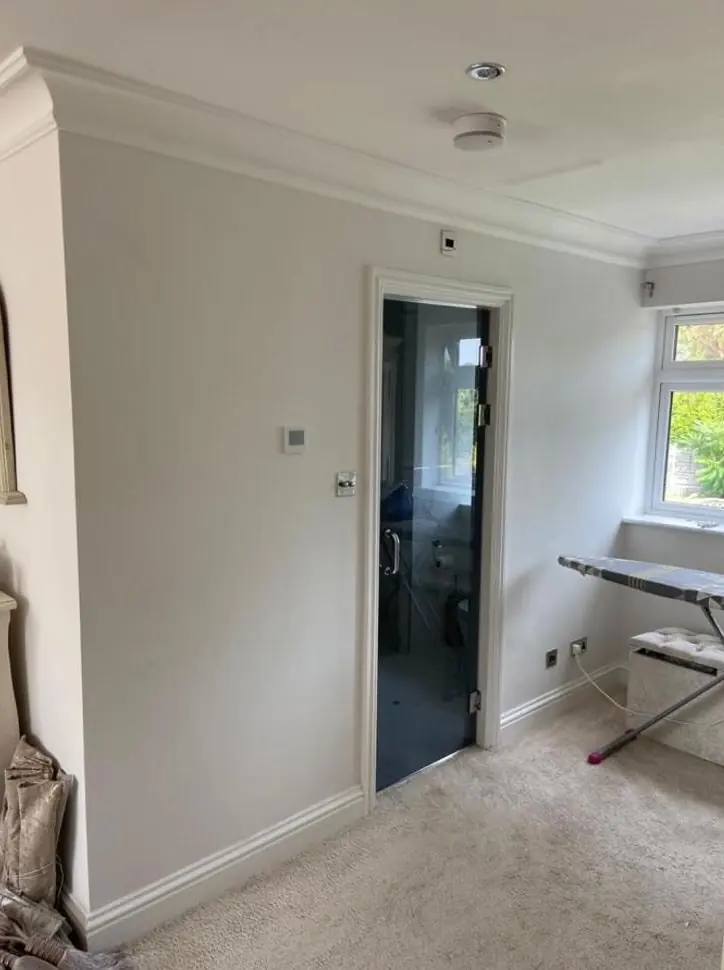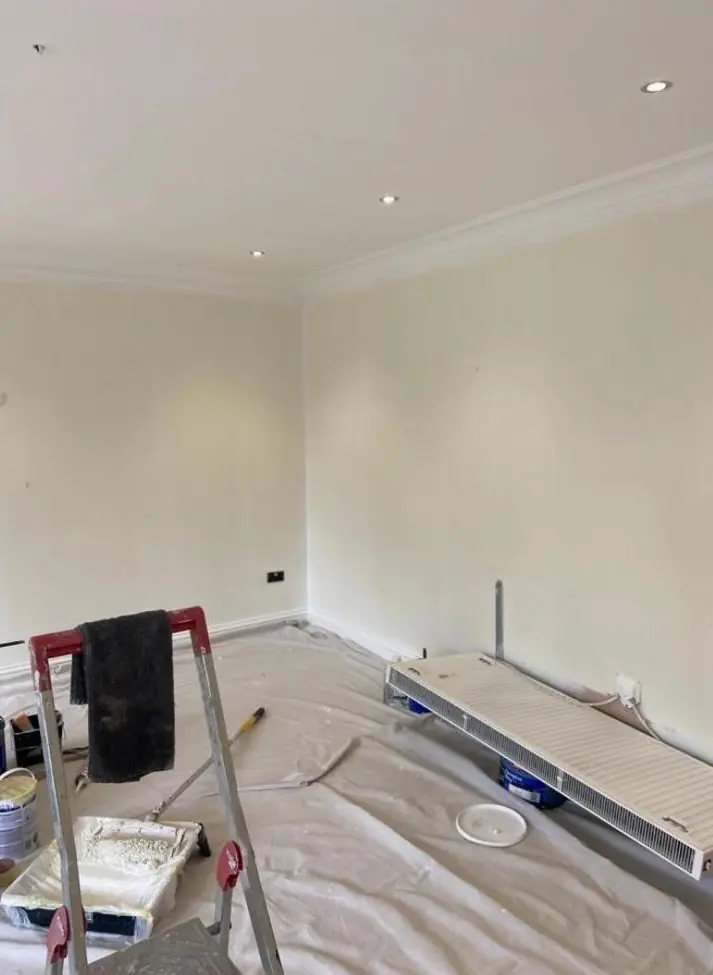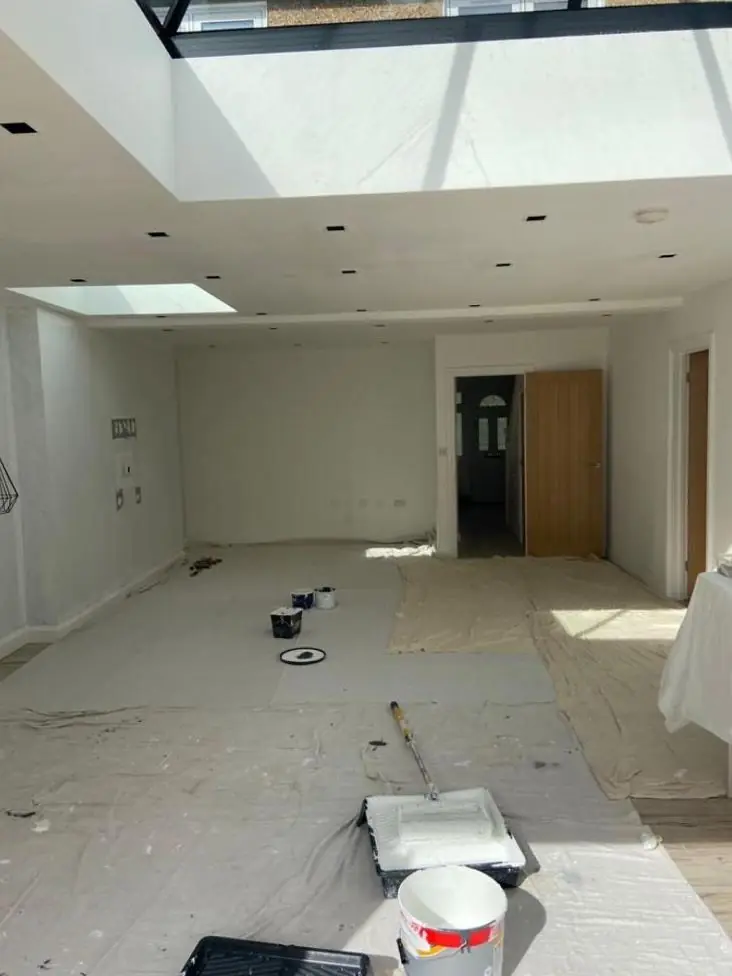
We decorate new plaster in Phippsville, about 1.3 miles north-east of Northampton town centre, once the builder or plasterer has finished. That covers re-skimmed rooms in converted 1880s villas, new attic rooms in the Edwardian semis and rear extensions, sealed with a mist coat before the finish coats go on.
Three kinds of fresh plaster in this part of Northampton
Phippsville’s housing gives us three sorts of new-plaster job, and each has its own problem.
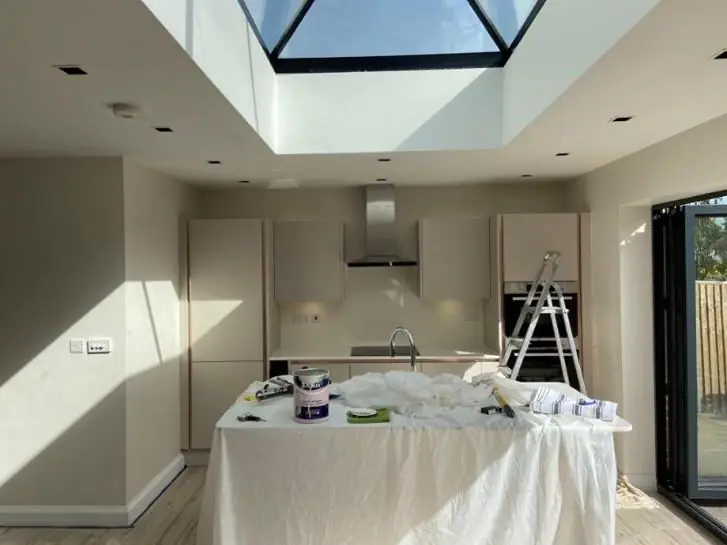
The first is flat conversions and refurbishments in the large houses built from the 1880s onwards. When one of these villas is reworked, new partition walls, ceilings and boarded-over openings sit right next to original walls. The second is attic rooms in the Edwardian and early interwar semis on and around Park Avenue, which were built with two storeys plus an attic and lend themselves to loft rooms. The third is rear extensions on terraces and semis, usually a kitchen or garden room.
Where new skim meets old villa plaster
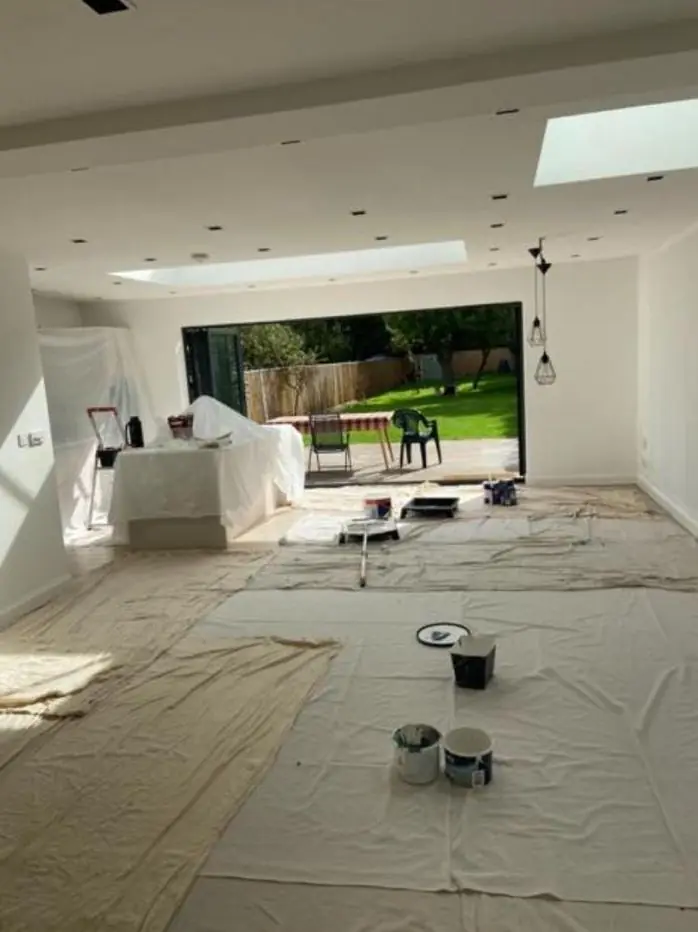
Walls in Victorian houses were usually plastered in lime, and in the villas much of that original plaster survives behind decades of paint. When a builder skims part of a room, or plasterboards a new stud wall against an old one, the new gypsum and the old surface take paint very differently. The new plaster drinks a mist coat in. The old painted wall does not need one, and a watered-down coat on it can lift or cause poor adhesion.
So we treat the two surfaces separately. New plaster gets a breathable mist coat. Old painted areas get washed, keyed and spot-primed. The joint between them is where cracks show up, so we flexible-fill and sand it before the finish coats. Where the conversion has repaired a deep cornice, the run of new plaster in the moulding needs the same sealing as a flat wall, which makes cutting-in slower than on a modern ceiling.
Attic rooms under Edwardian roofs
A new loft room in one of the bay-fronted semis tends to have sloping ceilings, a dormer with three small reveals, and a new staircase with fresh timber linings. Because the slopes meet the walls at awkward angles, there is far more cutting-in per square metre than in an ordinary bedroom. A loft is also the warmest part of the house in summer and can be the coldest in winter, which affects how fast new plaster dries. We check moisture readings across the slopes and in the reveals rather than assuming the whole room is ready on the same day.
Fitting the decorating around the build
| Situation | What we check | Usual next step |
|---|---|---|
| Thin skim over existing plaster | Even, pale colour with no dark patches | Mist coat, then two finish coats |
| New plasterboard and skim in a conversion | Joints, screw heads and corner beads | Snagging after the mist coat, then finish |
| Backing coat and skim in an extension | Moisture readings, especially low on walls | Wait until dry, then mist coat |
| Repaired cornice or ceiling rose | Detail fully set, no soft edges | Seal, then fine cutting-in by brush |
Landlords converting or refreshing flats often want a fast turnaround so the unit can be let. Painting new plaster before it has dried is the quickest way to end up with blistering and patchy colour, so we give you an honest drying estimate and fit the mist coat in as soon as the walls are ready. Our work starts after the plasterer’s, so any cracking or hollow patches we find at that stage go back to the builder before we paint over them.
Our main new plaster and extension painting page covers the full process, and the mist coat guide explains why it matters. For other work in the district, see our Phippsville page.
Last updated by Dean, DH Painter & Decorator.