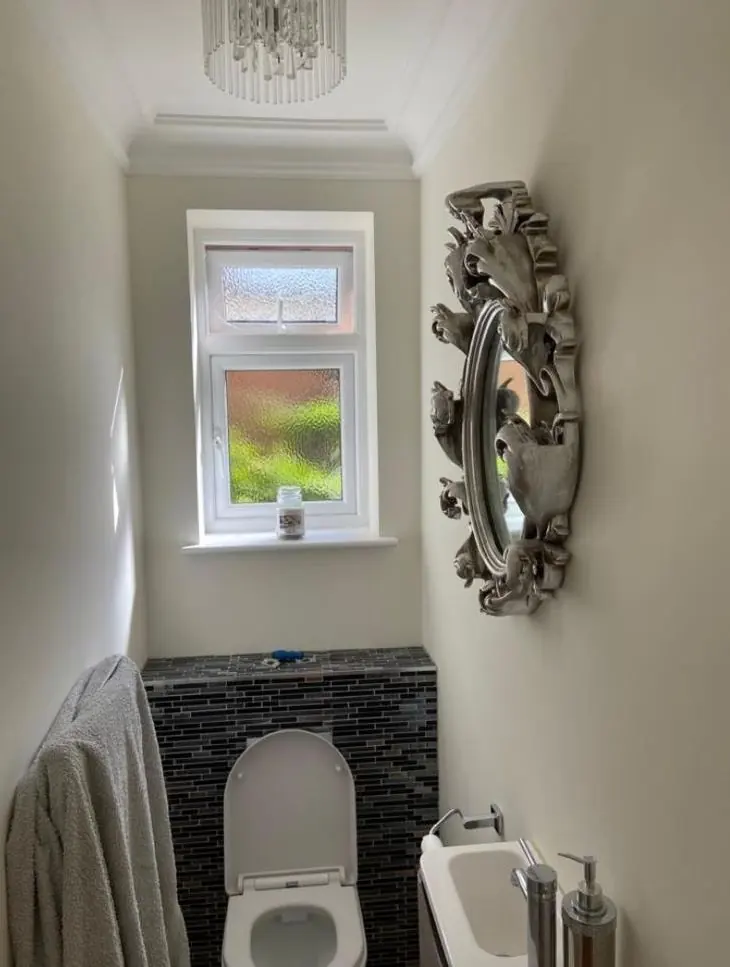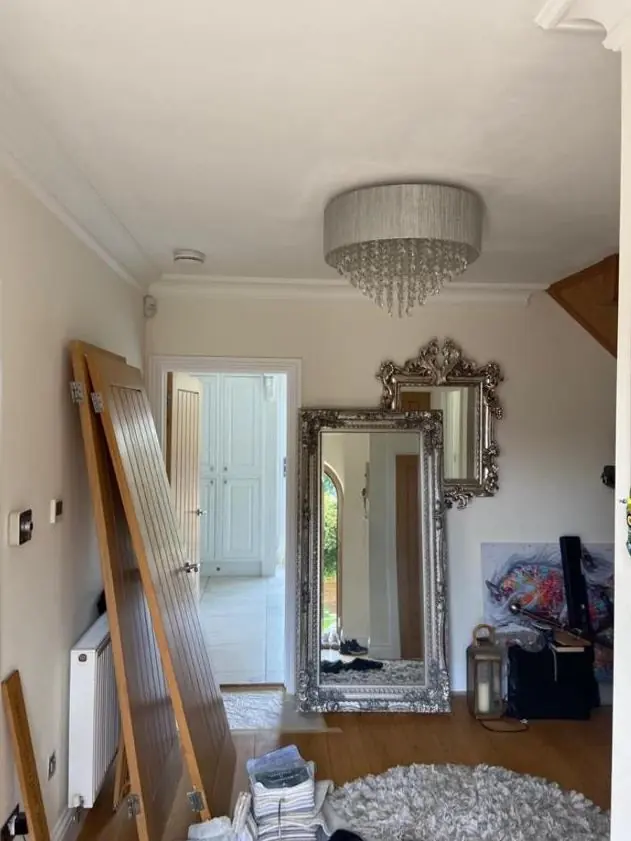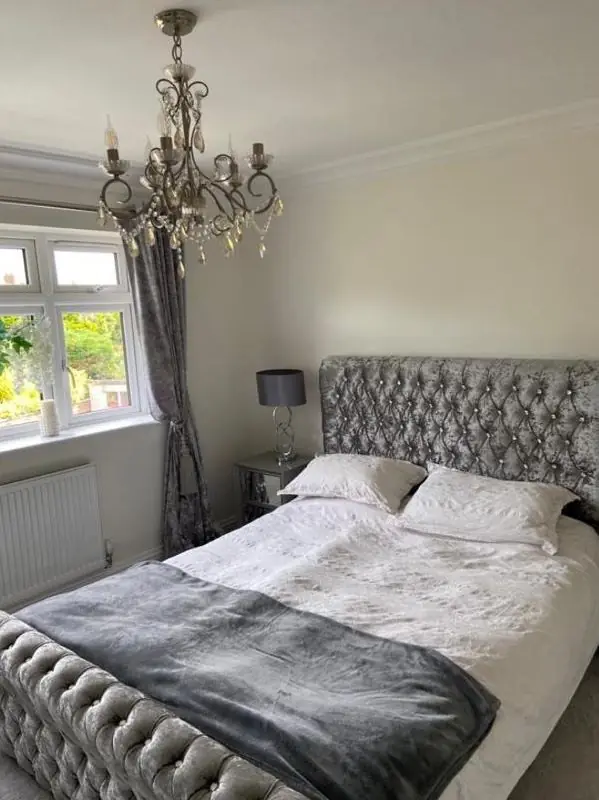
Dean hangs wallpaper in Phippsville homes, about 1.3 miles north-east of Northampton town centre. The 1880s villas give long drops and bays that suit full-height patterns, while older plaster in the converted flats usually needs a layer of lining paper before the chosen paper goes up.
Long drops in the Phipps-era houses
The houses the Phipps family built in the 1880s were meant to impress, and their walls show it. Rooms are tall, bays are deep and the stairwells in the larger villas rise a long way. That height is good news for anyone who likes a bold pattern, because a large repeat has room to breathe instead of being chopped off after one motif.
It also changes how the paper has to be planned. A long drop means fewer lengths per roll and more waste on a large repeat, so we measure the actual height to the cornice or picture rail, not a standard figure, and work out roll numbers from your paper’s repeat before you order. In a canted bay, each narrow face between the windows needs its own length matched to its neighbours, and the pattern has to read straight across three angles when you stand back in the room.
Lining paper over villa plaster that has seen a century of change
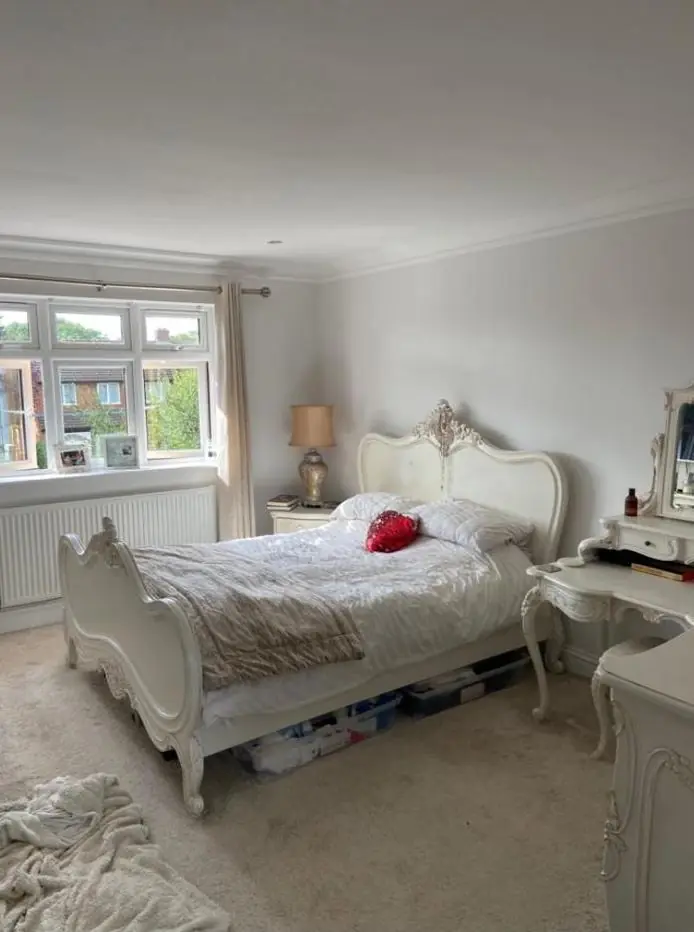
Many of these large houses were split into flats, and every conversion leaves marks: old fixings, filled-in doorways, chased cables and patches where one material meets another. Under paint you might not notice. Under a fine paper, every ripple shows.
That is why we usually recommend lining paper on older walls here. Hung horizontally, it bridges small cracks and evens out the difference between original plaster and later board, and gives the finish paper a consistent surface to grip. Where old plaster is loose or hollow, lining will not hide it for long, so that gets cut back and repaired first. We explain what we find before any paper is hung, so there are no surprises on the quote.
Sloping ceilings and dormers in the Edwardian semis
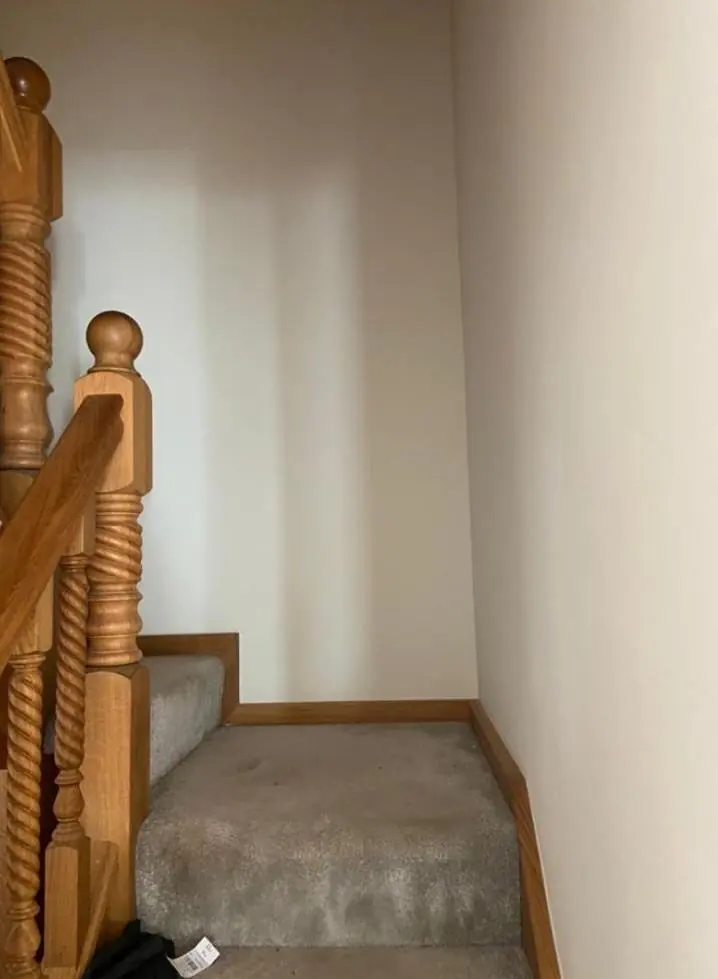
Towards Abington Park, the Edwardian and early interwar semis carry an attic storey, and those top rooms are among the trickier spaces to paper in the district. A sloping ceiling meeting a vertical wall makes a line that is never quite level, and a pattern that runs into it needs a decision about where the cut falls. Dormer reveals add short, fiddly lengths on three sides.
Our usual advice for these rooms:
- Choose a small or random pattern if the slope is steep, so the uneven meeting line is less obvious.
- Consider papering the vertical walls and painting the slope in a matching tone.
- Keep a heavy, wide repeat for the chimney breast of a downstairs front room instead.
Attic rooms also run warmer in summer than the floors below, so we let the walls settle and the paste cure at a steady temperature rather than closing up a hot room straight after hanging.
Paper in flats and shared houses
Phippsville ward falls under the HMO Article 4 direction Northampton made in 2012, a sign of how much of its housing is rented or shared. Landlords and tenants often ask whether wallpaper is sensible in that setting. In a rented room, a scrubbable vinyl or a lining paper painted in a washable emulsion copes with knocks and moves far better than a delicate designer paper. For an owner-occupied flat, the choice is yours, and we will hang whatever you select with matched seams and clean trims at the cornice and skirting.
Read more about how we strip, prepare and hang on our main wallpaper hanging page, or see how we cover the wider district on the Phippsville area page.
Last updated by Dean, DH Painter & Decorator.