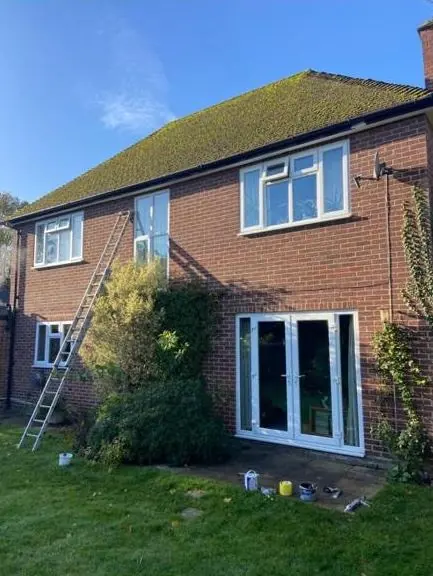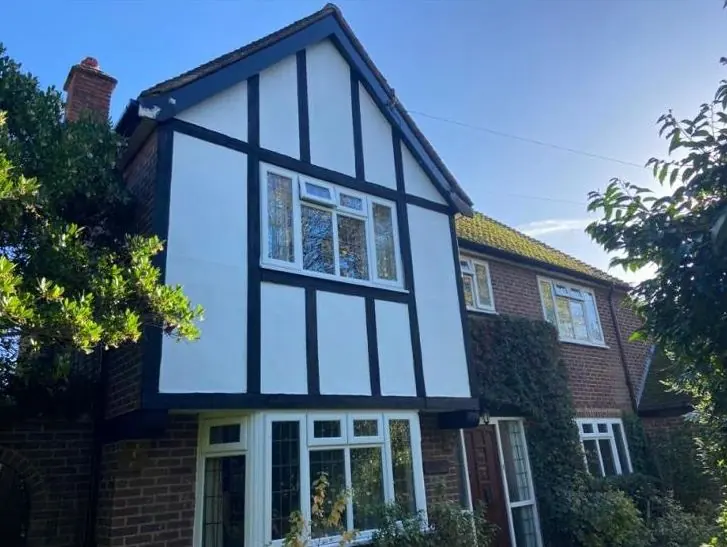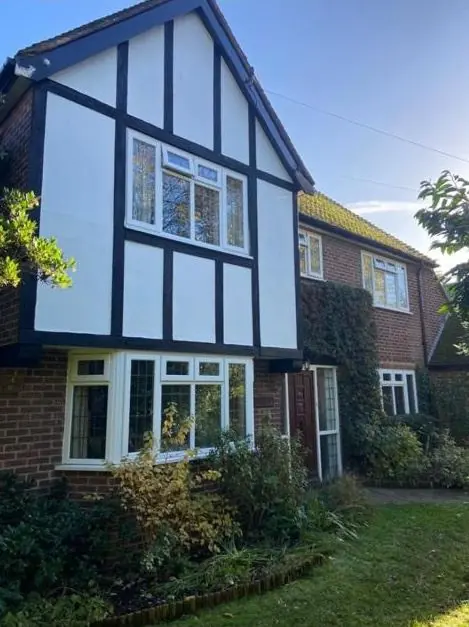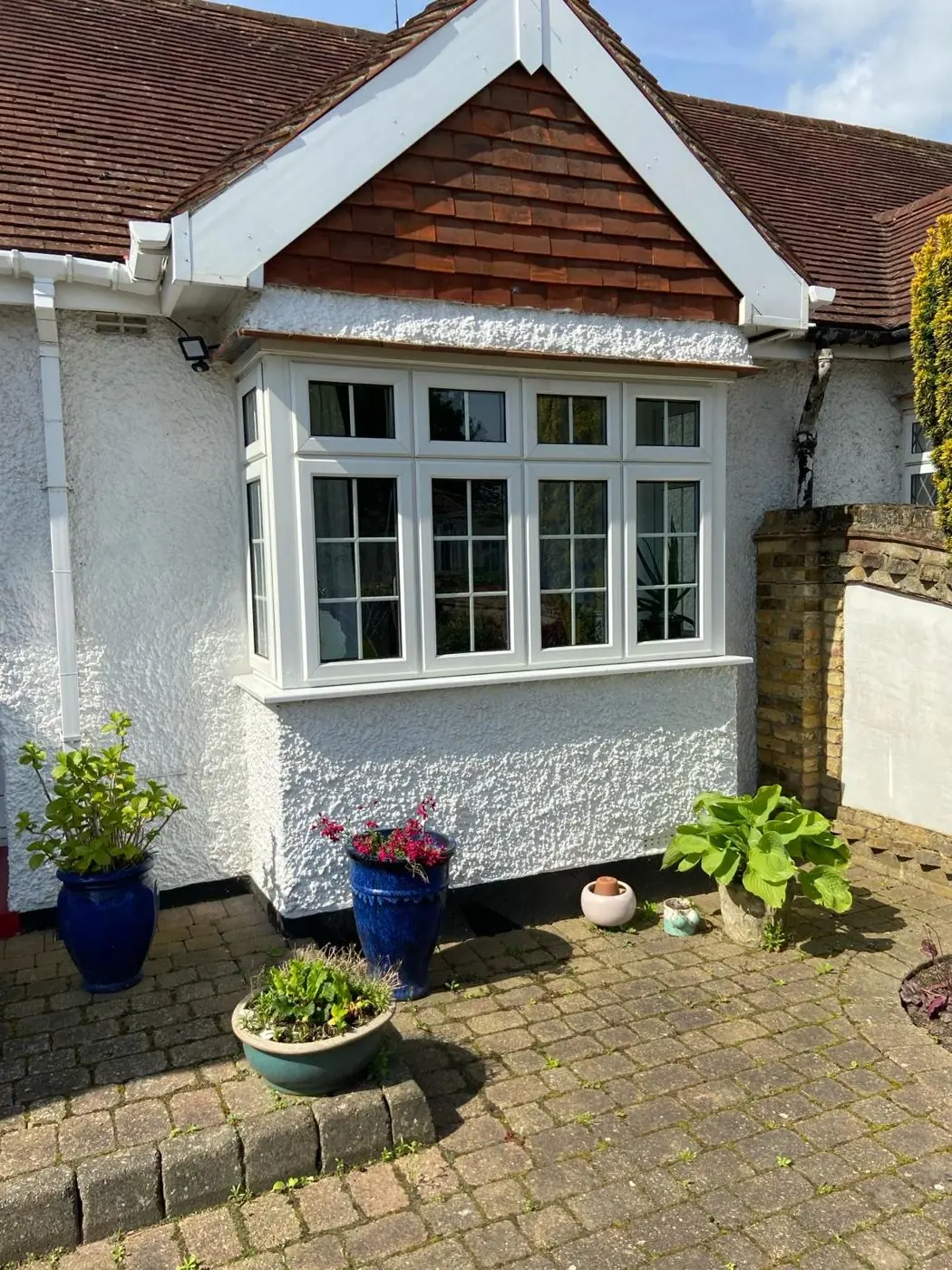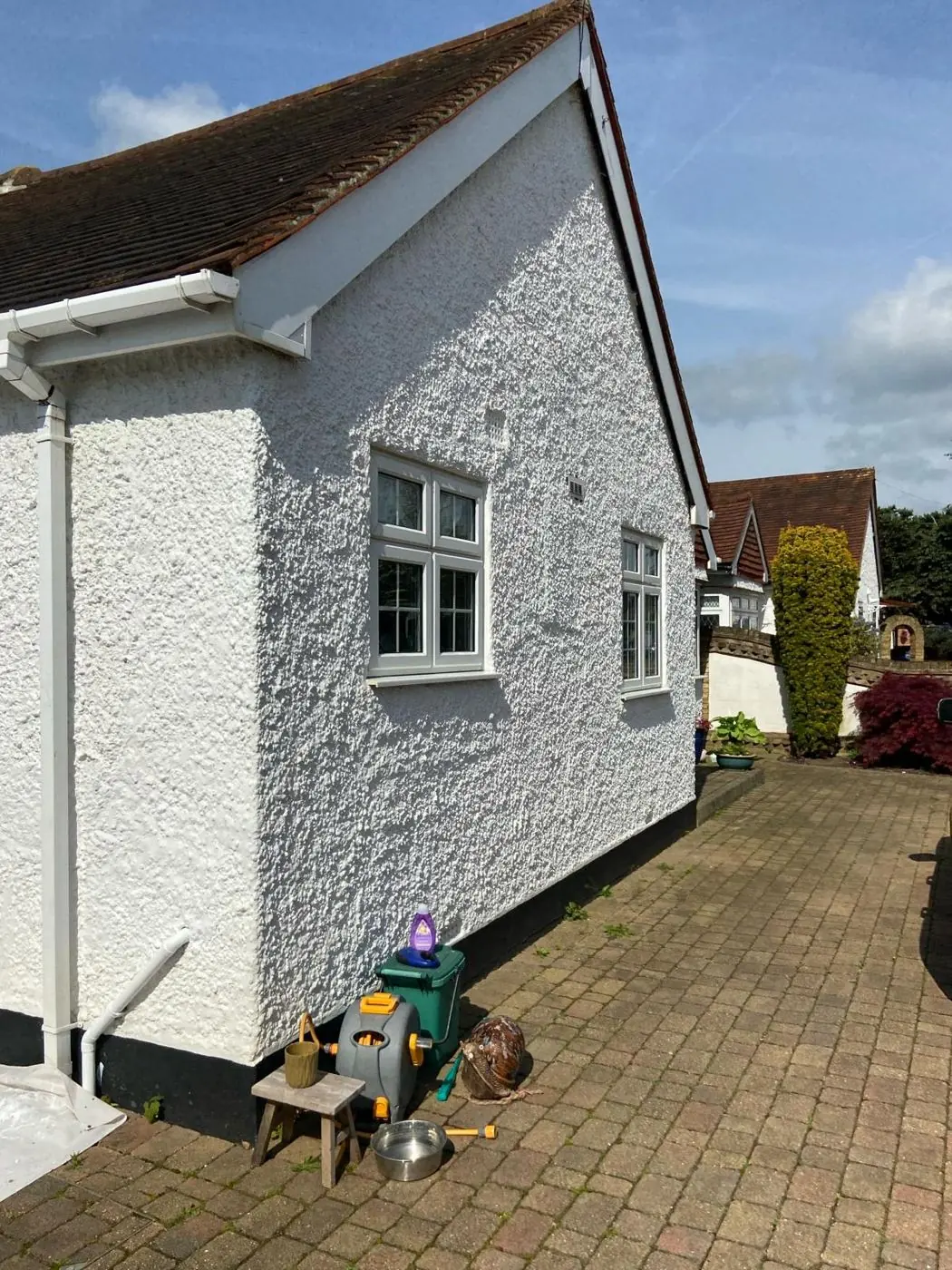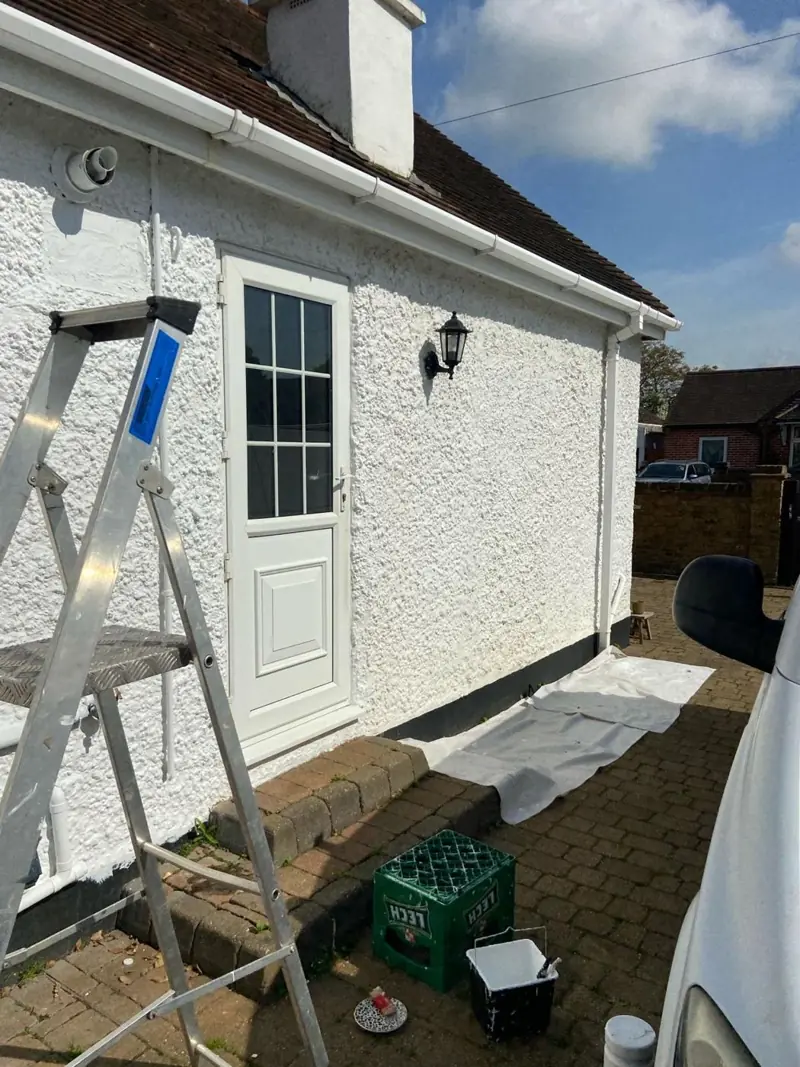
We paint render, pebbledash and painted brick in Pitsford, a conservation village 4.7 miles north of Northampton. Dean separates the walls that suit masonry paint, mostly 20th century, from the historic Pendle stone and ironstone that should stay bare or only take breathable mineral finishes.
Which Pitsford walls should take paint at all?
The first question on any masonry job in Pitsford is not the colour but whether the wall should be coated in the first place. The village has a mix of materials, and each one has its own answer.
| Wall type | Where you see it | Approach |
|---|---|---|
| Pebbledash | Former council houses, north side of High Street | Stabilise, then masonry paint worked well into the stones |
| Smooth render on brick | Post-war pairs such as Nos 24 and 26 Manor Road | Hollow and crack checks, then breathable masonry paint |
| Part-painted, part-rendered brick | No.3 High Street, No.25 Manor Road | Breathable system matched to what is already there |
| Painted Flemish bond brick | The White House, No.36 Manor Road | Keep breathable, keep the colour, avoid stripping |
| Coursed Pendle stone and orange ironstone | Most of the historic core | Usually left unpainted; limewash or silicate only if a finish is justified |
That last row matters most. The conservation area appraisal records that rendered or painted finishes are not common on Pitsford’s historic properties, and cladding an exterior in render needs permission. Coating stone that has always been bare changes how the street looks, so speak to West Northamptonshire Council before deciding.
Pebbledash on the High Street’s inter-war houses
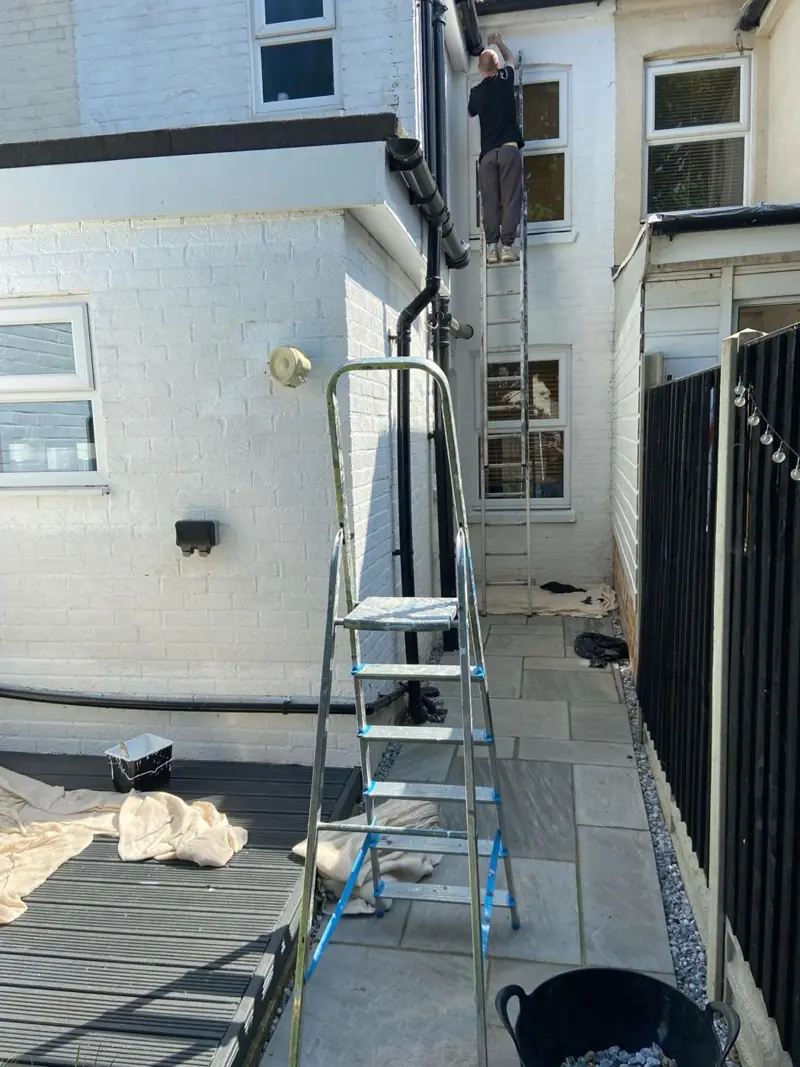
The former council houses set back behind gardens on the north side of High Street are the most straightforward masonry work in the village. Old pebbledash coatings tend to go chalky, and a chalky surface will not hold new paint. After a fungicidal wash and a stiff brush down, the surface gets a stabilising solution, then two coats of masonry paint applied with a thick-pile roller and a brush pushed into the gaps between the pebbles. Missed hollows show up as speckled bare patches, so coverage is checked from more than one angle in daylight. Being near the western end of the village, these fronts are exposed to wind coming off the farmland, which is one reason to do the job in a dry, settled spell.
Rendered pairs and part-painted brick on Manor Road
Manor Road packs several wall types into a short distance: post-war rendered pairs, modern infill, 19th century brick and stone cottages possibly built for quarry workers, and painted brick at The White House. On render, Dean taps the surface to find hollow or blown sections before painting, because paint over loose render fails within a season or two. Cracks are raked out and filled with an exterior filler. On painted brick in Flemish bond, the aim is to keep the wall breathable and not to trap moisture against soft old bricks. Access here is tight: the road is narrow in places, climbs a short hill and has overhead wires, so a tower base or ladder footing is planned at the quote stage.
Breathable finishes for old stone
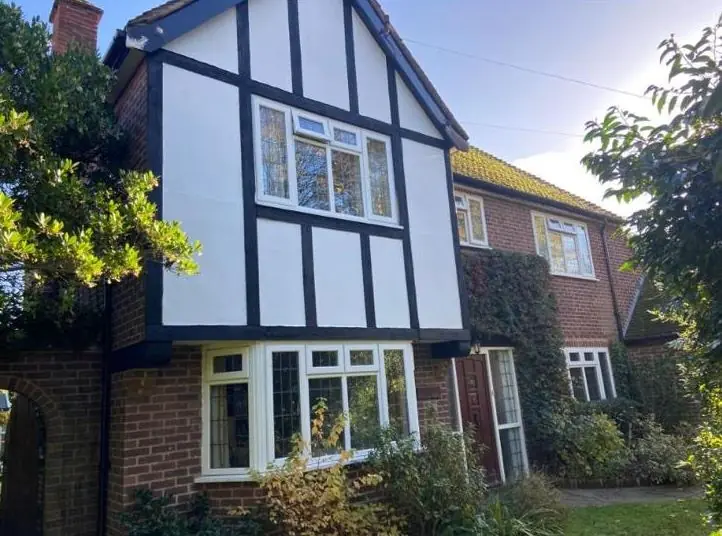
Where an old stone or lime-rendered wall genuinely needs a finish, acrylic masonry paint is the wrong product. It seals the surface, holds damp in the wall and can push salts and spalling into the stone behind. Limewash and silicate mineral paints let moisture move out. That matters in Pitsford, a village surrounded by springs, with dense tree cover and hedges grown over walls that keep north faces damp for long periods. Our guide to painting render and roughcast covers the general process, and the main render and masonry painting page explains preparation in more detail. For the wider picture of how Pitsford’s houses differ street by street, see the Pitsford village page.
Last updated by Dean, DH Painter & Decorator.