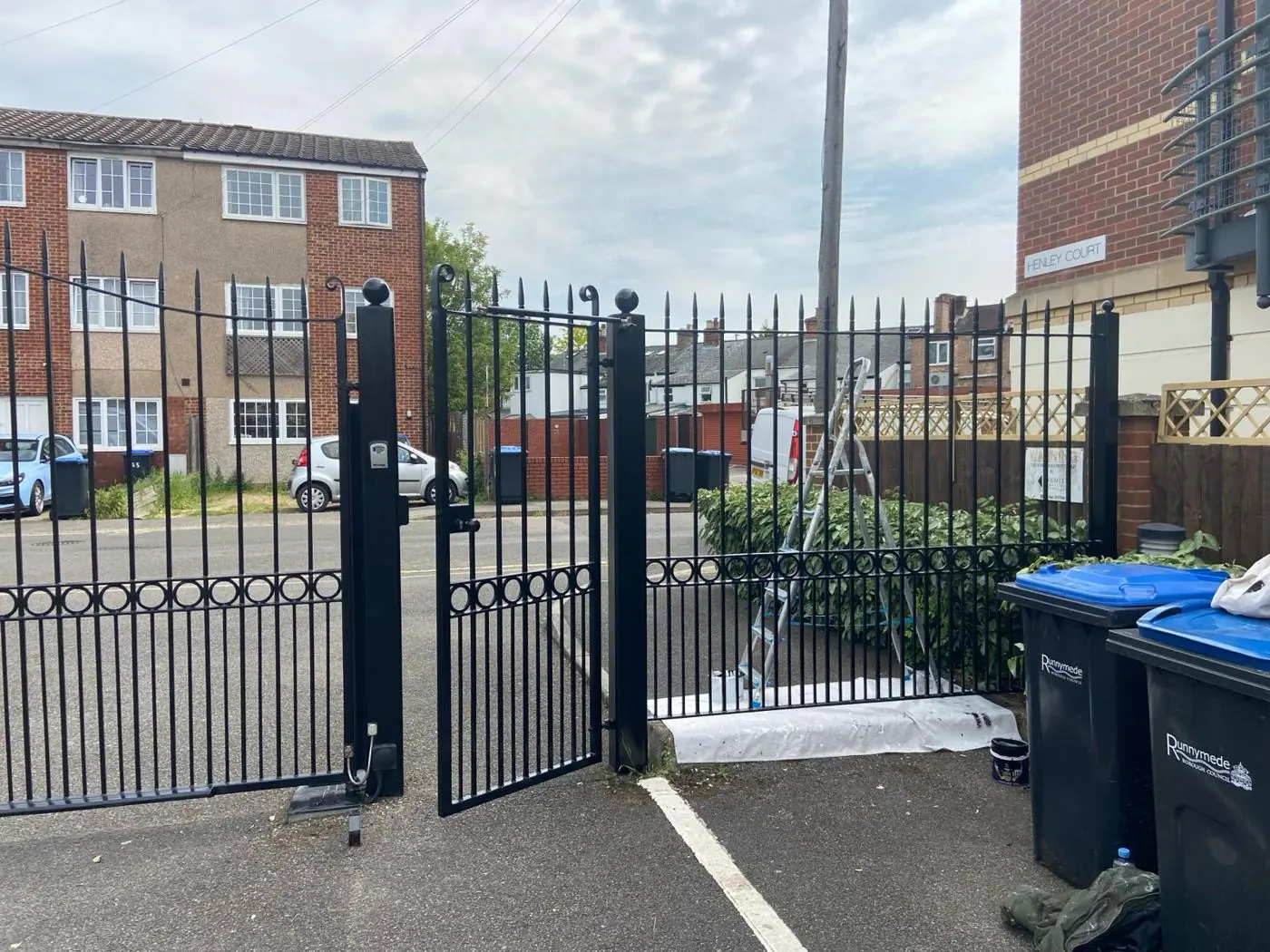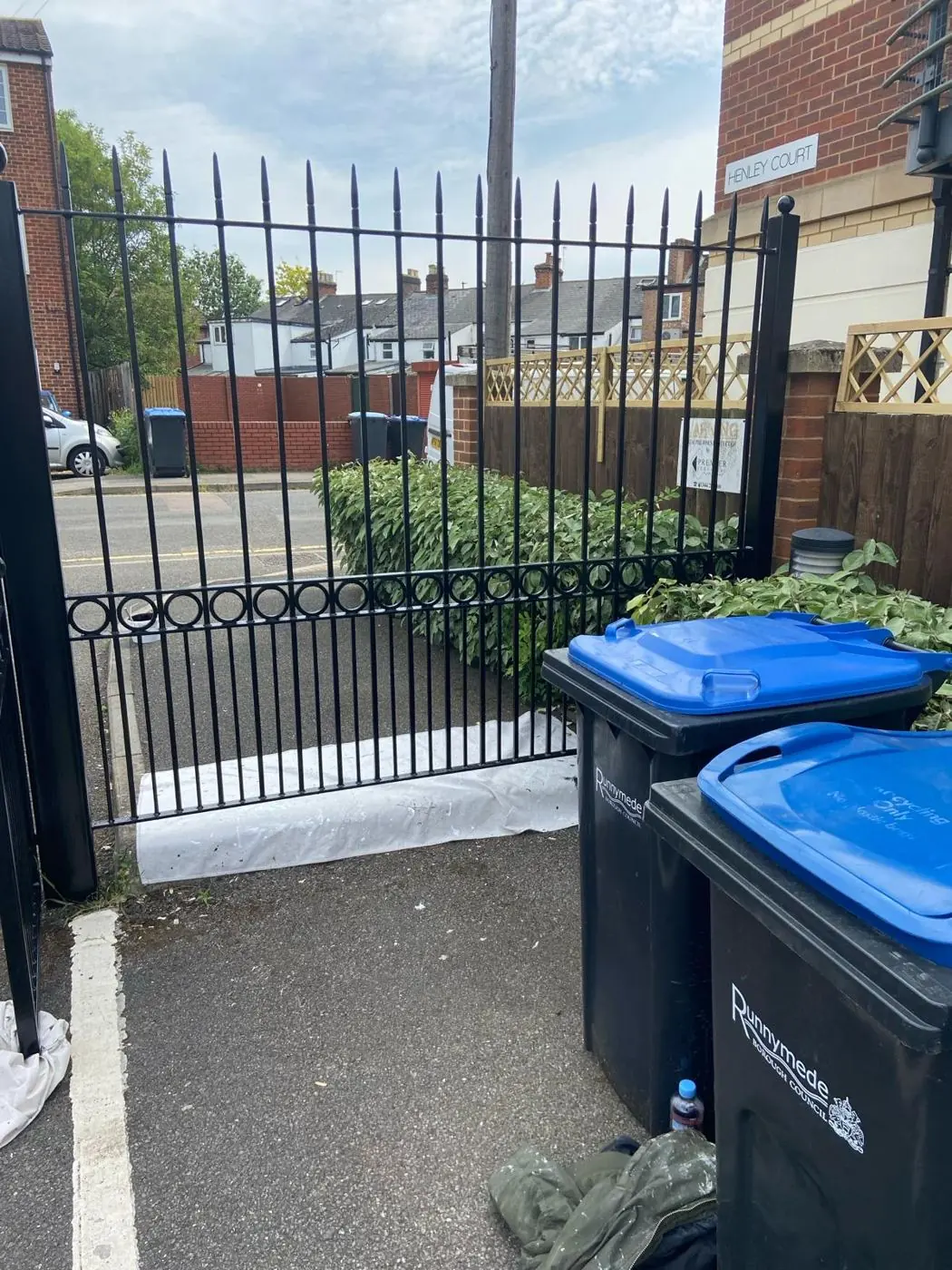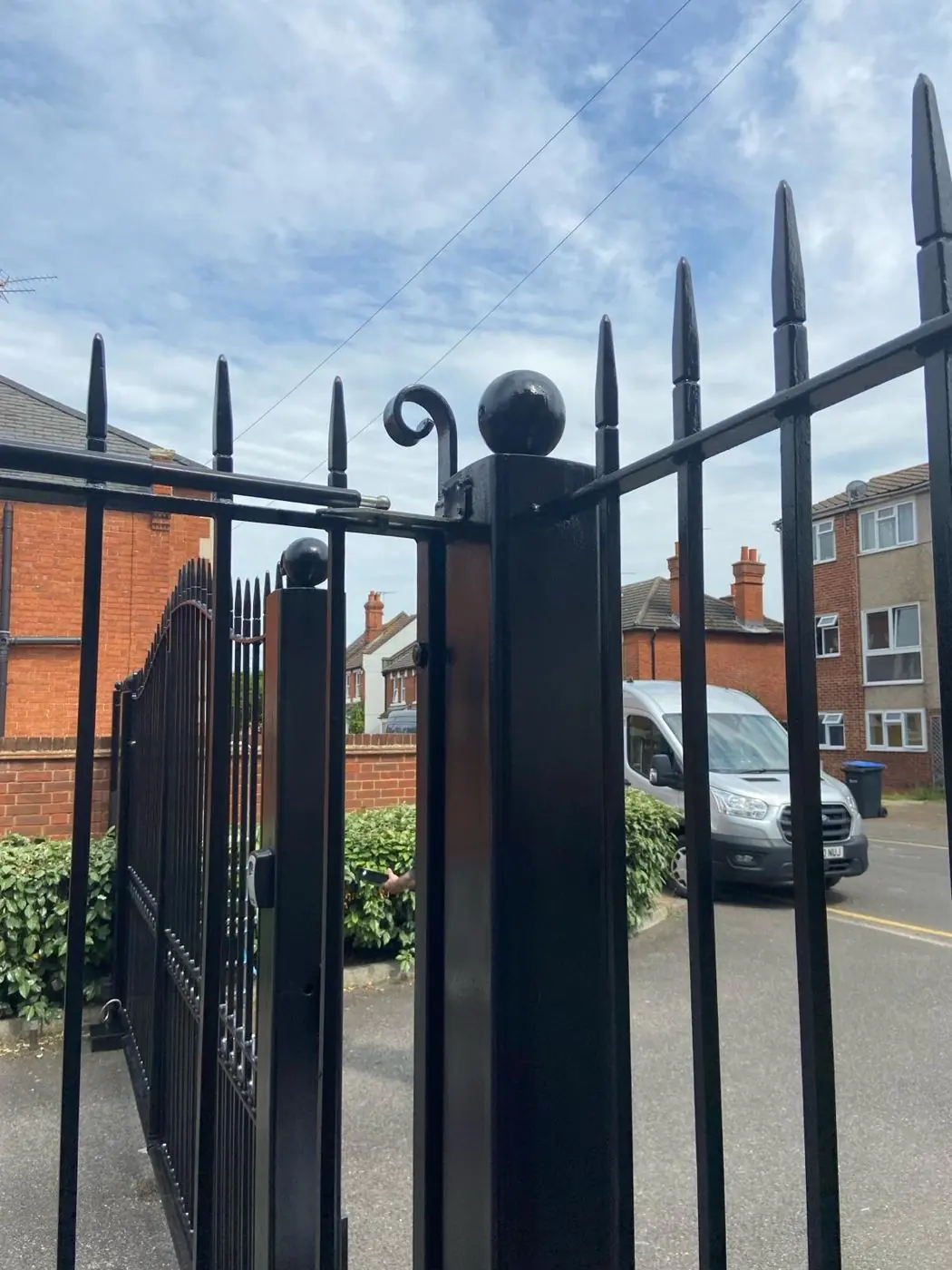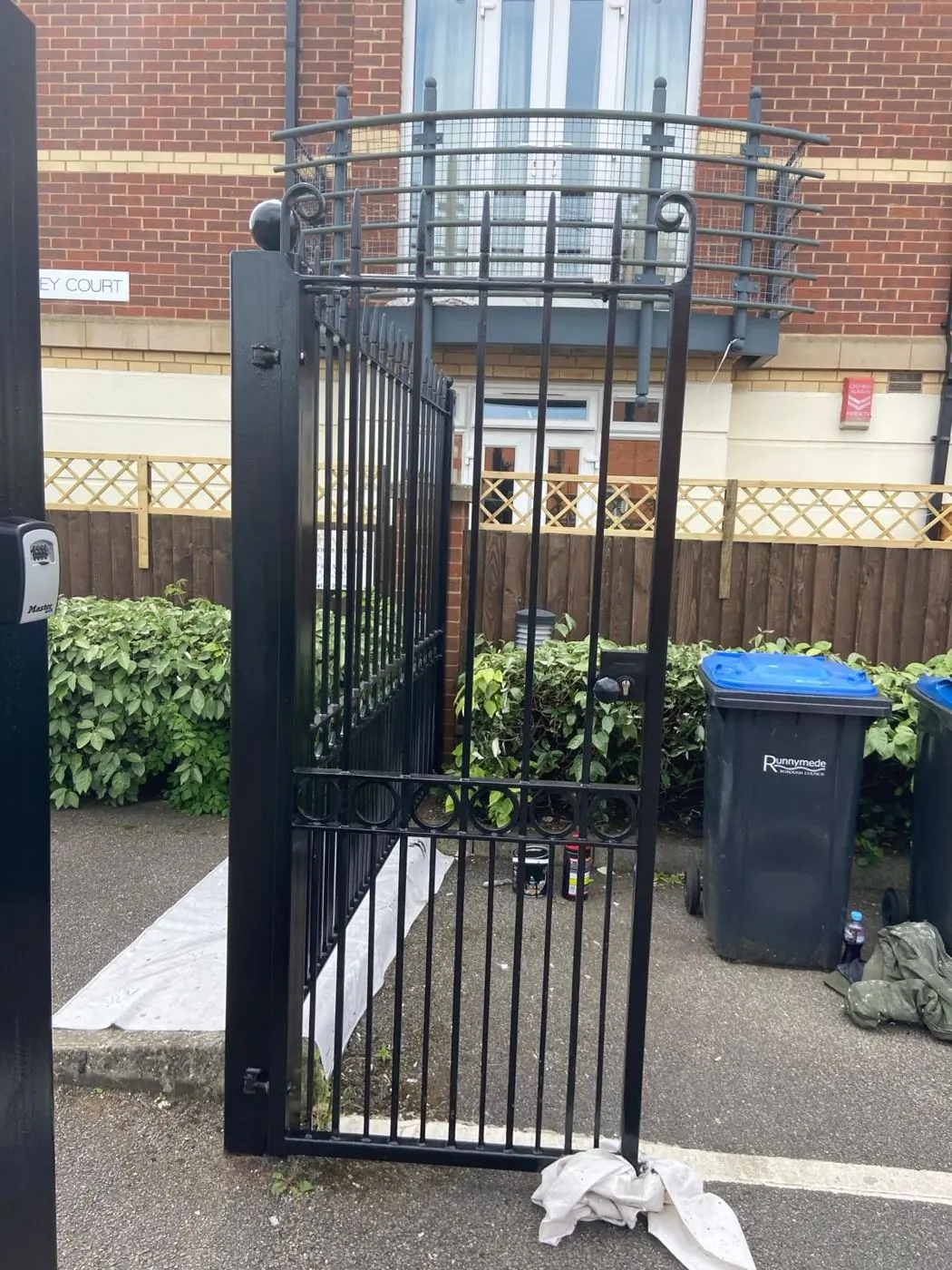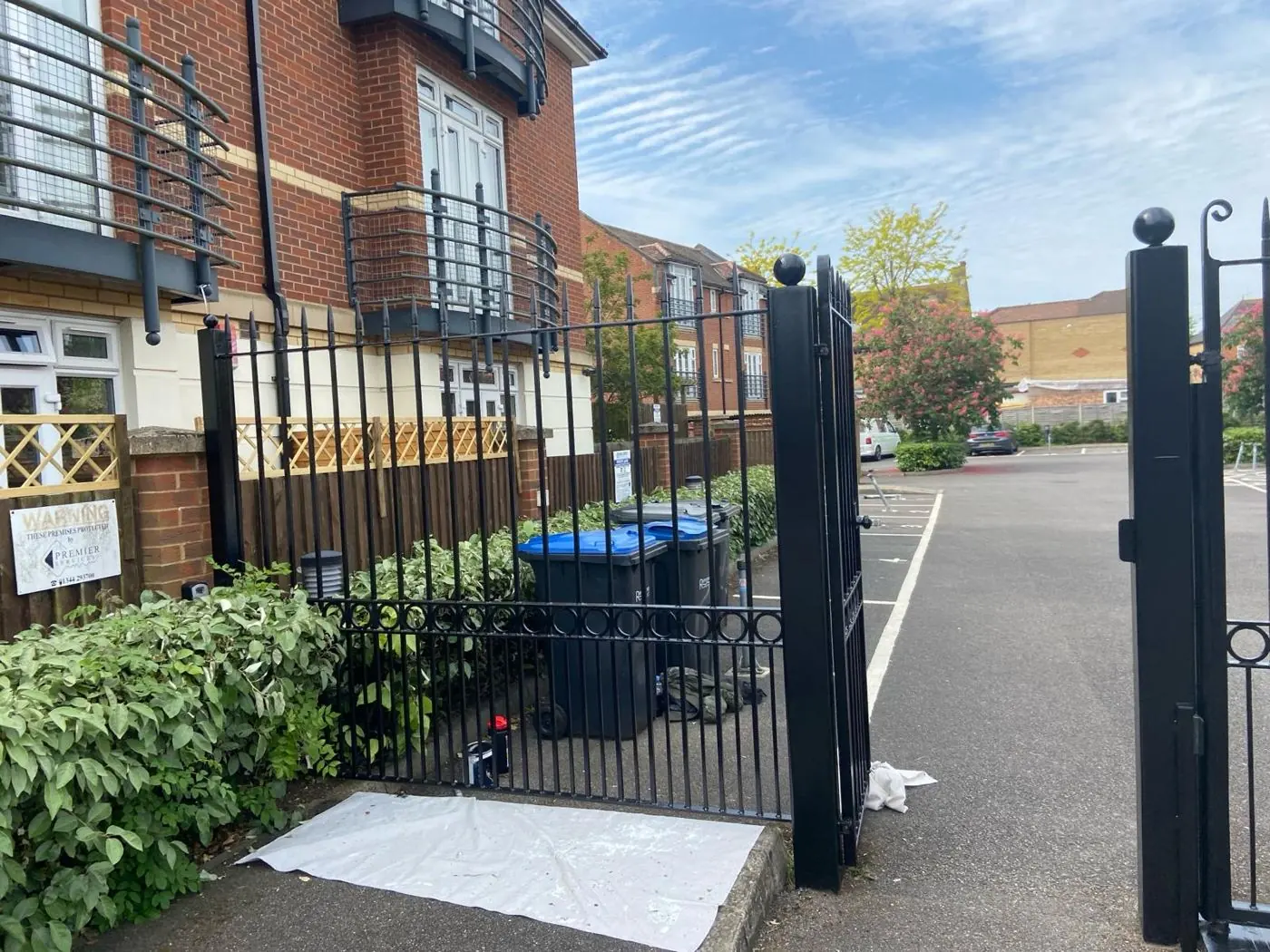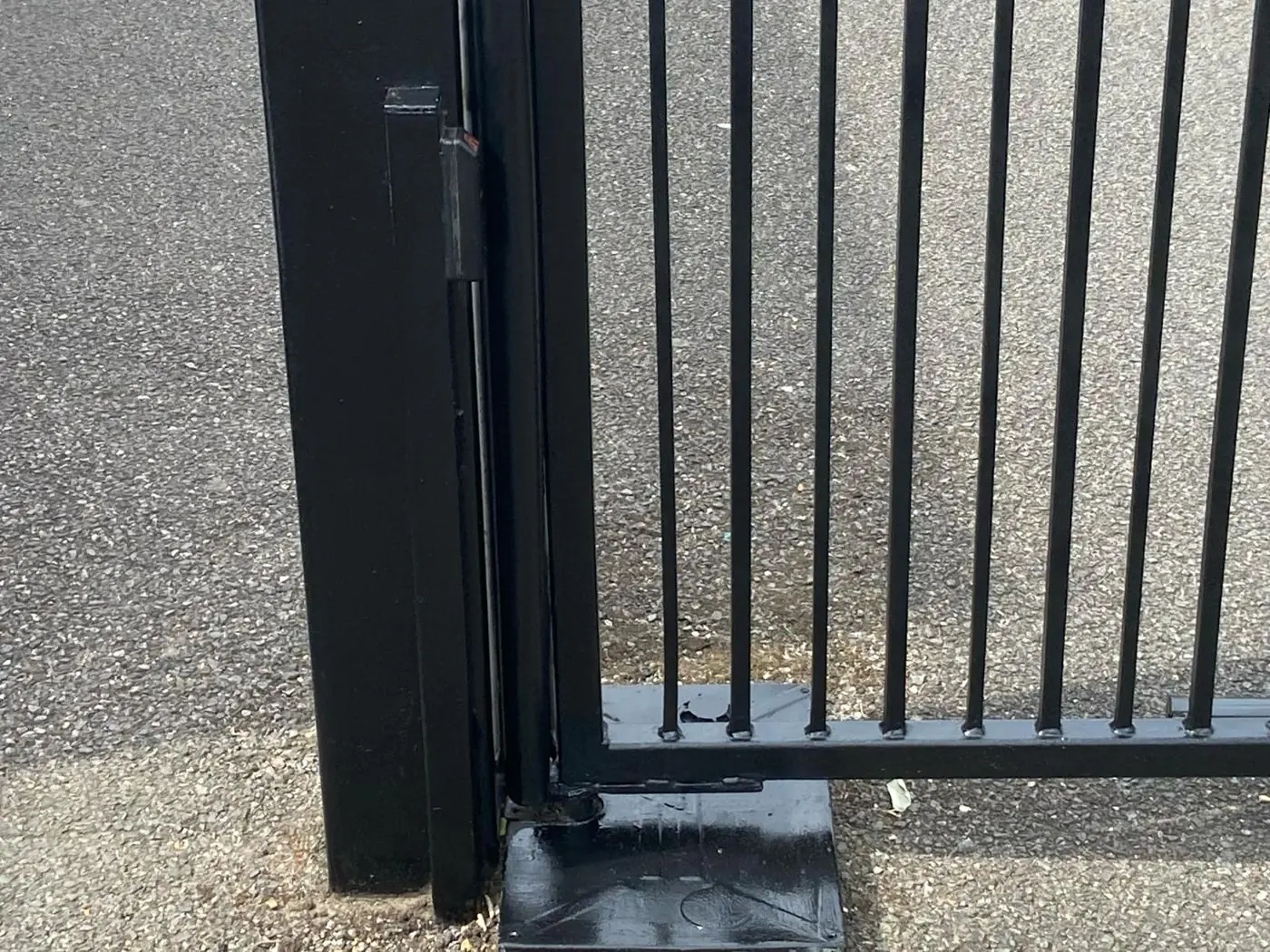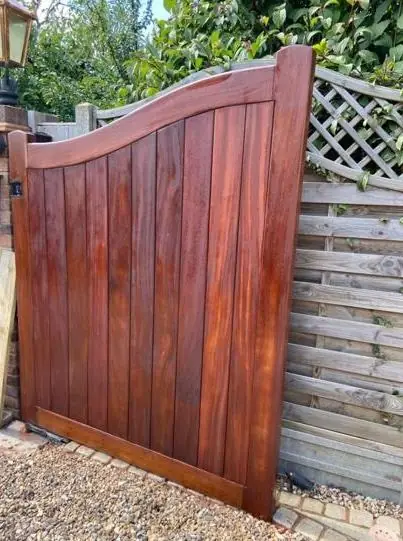
DH Painter & Decorator repaints metal railings and gates in Queen's Park (NN2), the district the A508 crosses 1.3 miles north of the town centre. The main work is wrought iron railings and matching gates on the brick front walls of the Kingsthorpe Road terraces, which face A-road traffic and, in the adjoining conservation area, are protected from removal.
Railings you are expected to keep
Low brick front walls topped with wrought iron railings, with a matching pedestrian gate, are part of the street pattern on the Victorian terraces along Kingsthorpe Road. In the Barrack Road Conservation Area, which adjoins Queen’s Park to the south, they are listed as a key feature. The Article 4 Direction there brings removal or alteration of front boundary walls and gates under planning control, and the appraisal makes clear that taking the railings out is resisted.
So when railings on these houses start to rust, replacing them with something easier is rarely an option, and repainting them properly becomes the realistic way to look after them. That is good news for the house, because wrought iron that is kept painted can last a very long time.
What a main road does to iron
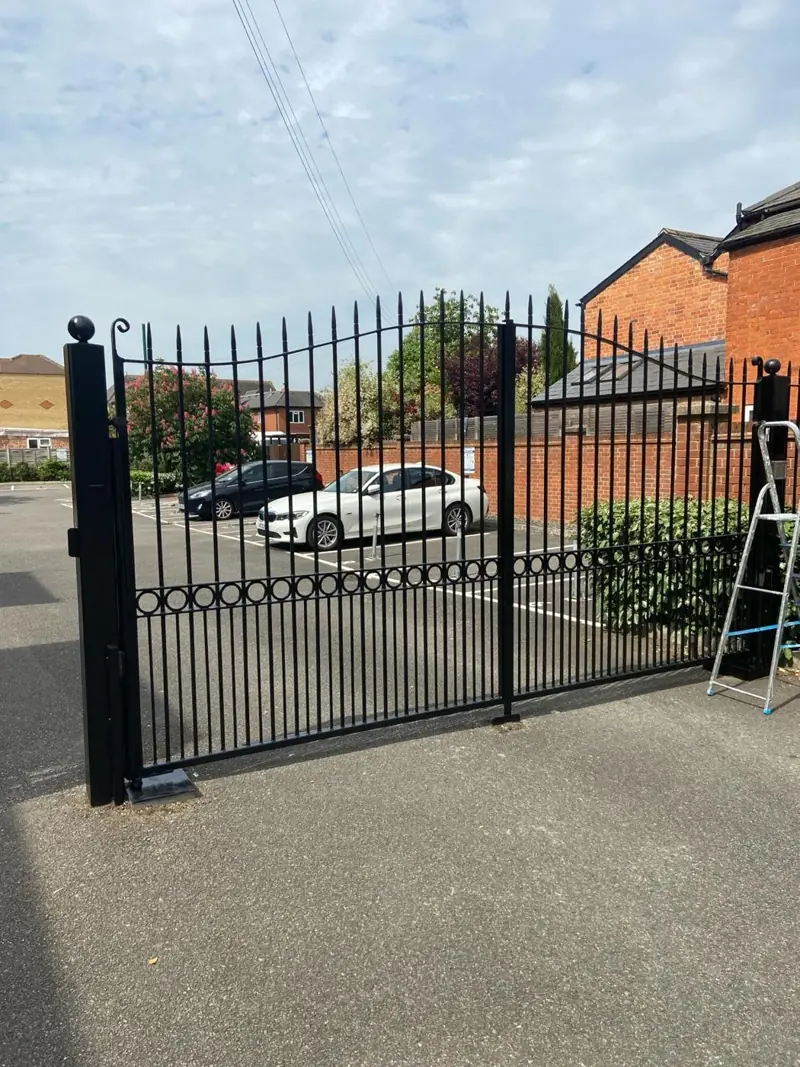
Railings facing the A508 take more punishment than those on a side street. Passing traffic throws up spray and fine grime that sticks to the bars, and winter salt from a gritted A-road speeds up rust once the paint is broken. Three places almost always go first:
- The foot of each bar where it enters the wall coping. Water sits there, rust swells the iron and the coping can crack around it.
- The gate’s hinge side and bottom rail, where movement and splash wear the paint off.
- Scrolls, collars and finials, where layers of old paint have cracked and let water in behind.
The slope down towards Kingsthorpe Hollow adds another detail. Where a front wall steps down the hill, the railing panel changes level with it, and that junction is where water collects and paint tends to break first.
Our order of work on a front railing
Every job starts with a wash to take off the traffic film, because primer will not bond through grime. Then Dean scrapes away loose paint and wire brushes back to firm metal, by hand and with rotary brushes, working into scrolls with smaller tools. Wrought iron often carries decades of paint layers. Sound, well-bonded layers can stay, and only the failing ones are removed. Deep pitting gets a rust treatment, and bare metal is primed the same day before it can flash-rust. An undercoat and a gloss finish follow.
The railings sit at the back of the pavement, so we work from both sides, keep a clear path for pedestrians and put up wet paint notices. Black gloss is the traditional finish, and it hides road grime between washes better than lighter colours. Inside the conservation area, check with the council before choosing anything bolder.
Listed gateways and working premises nearby
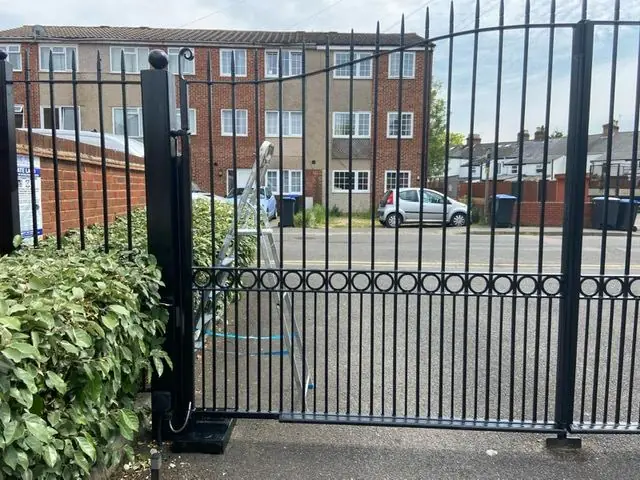
Kingsthorpe Grove Lower School is listed at Grade II together with its attached front walls and gateways, and the former Barratt shoe factory on Kingsthorpe Road is listed at Grade II, including its metal-framed windows. Painting metalwork on listed structures is consent-led and arranged with the owners. It is not something to start without checking first.
West of the A508 is an industrial estate, where steel doors, shutters, handrails and gates need durable coatings applied around working hours. That work falls under our commercial painting service.
Our main metal gate and railing painting page explains how primers differ for wrought iron, cast iron, mild steel and galvanised metal. Other services for the district are listed on our Queen’s Park page.
Last updated by Dean, DH Painter & Decorator.