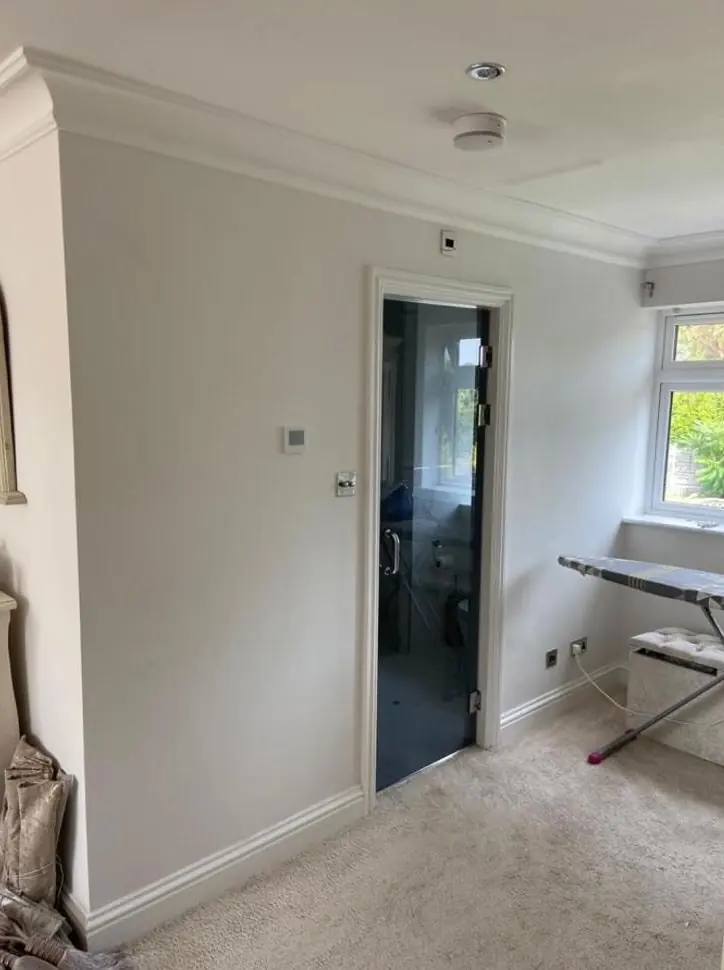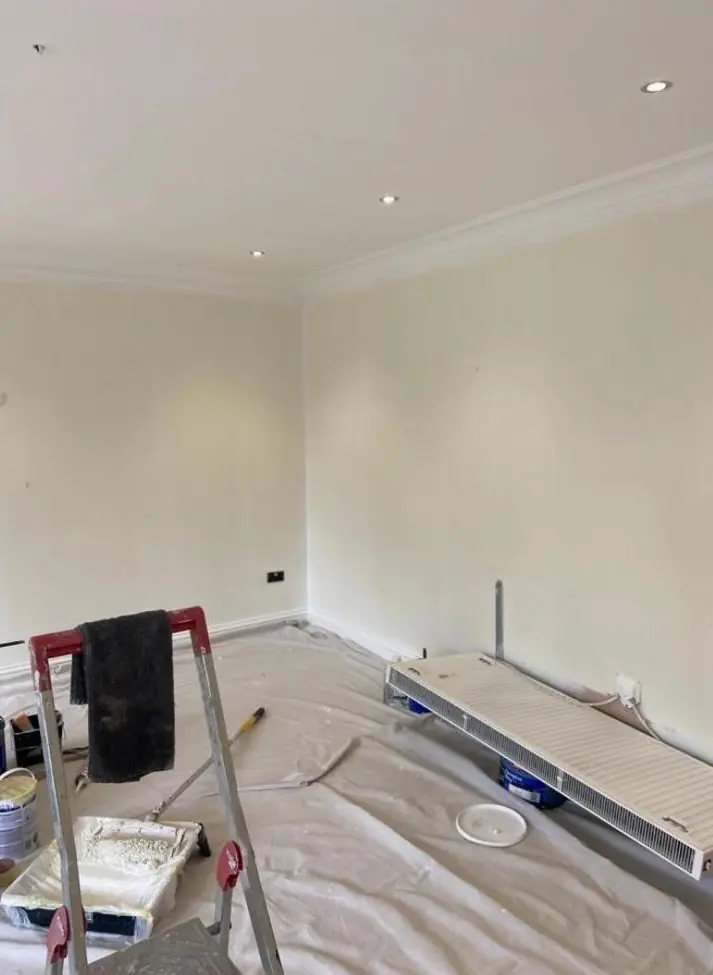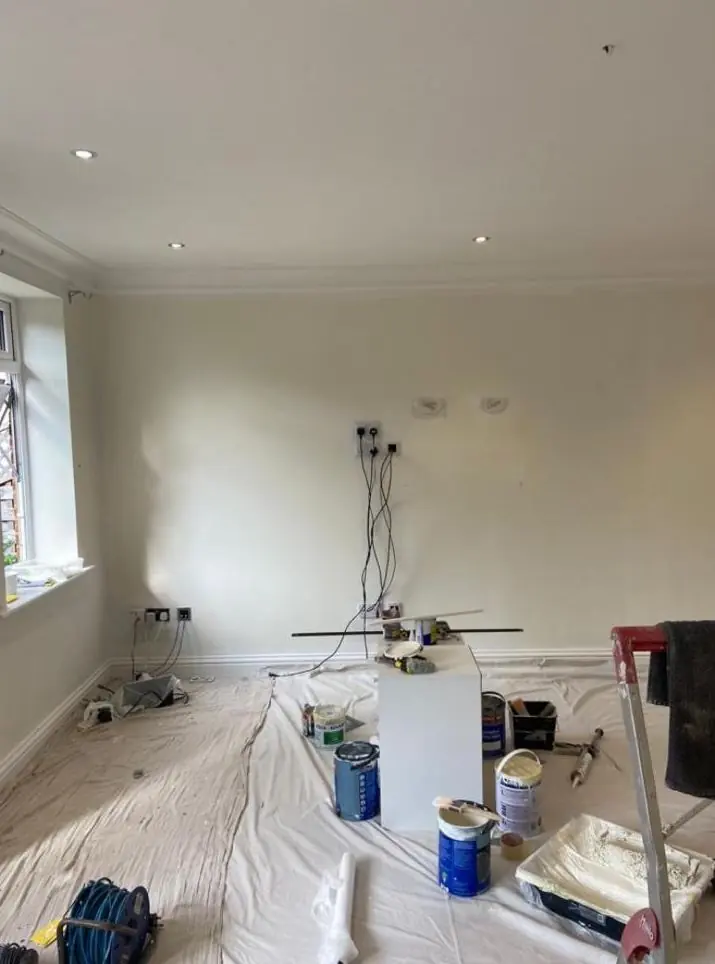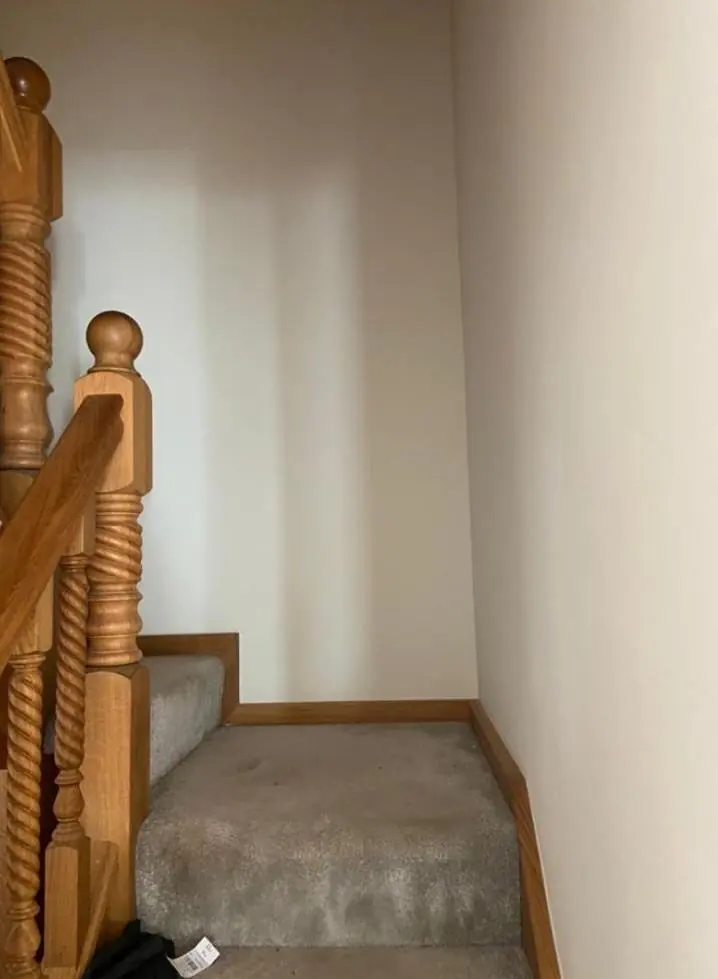
DH Painter & Decorator carries out decorative paintwork in Queen's Park, NN2, between the town centre and Kingsthorpe, 1.3 miles out. Dean hand-paints period detail, feature walls and faux effects in the district's Victorian terraces, starting with mouldings cleaned back so detail stays crisp.
The detail already in these houses
The terraces around Balmoral Road and Edinburgh Road were built when even ordinary houses got some ornament. Depending on how much has survived later modernising, you might find moulded cornices in the lounge and dining room, picture rails at frieze height, four-panel doors and deep skirtings, and timber or rendered detailing on the bay. Decorative finishes in Queen’s Park are mostly about bringing that detail back into view, rather than adding new features to plain walls.
Picking out means painting parts of a moulding, a door or a rail in a second colour so the shape reads clearly. Typical jobs here include:
- A cornice painted in the ceiling colour with one recessed band in a slightly deeper shade.
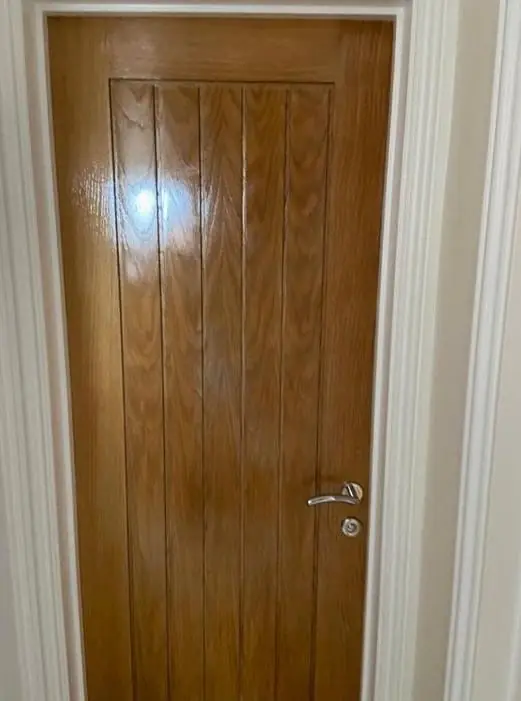
- Door panels in one tone with the mouldings and frame in another.
- A picture rail in a contrast colour, used as the line for a two-tone wall.
- Panelling added below the rail in a dining room, painted to match the woodwork.
Our decorative finishes service page describes the full range of effects; this page sticks to what suits Queen’s Park houses.
First, clear out the old paint
A cornice that has been emulsioned every few years since it was run will have lost much of its edge. Fine beads become rounded, small leaves and dentils fill in, and picking out a clogged moulding only highlights how blurred it is. Before any colour goes on, we test what is on the moulding. Older ceilings and cornices in houses of this age can carry soft distemper under the modern emulsion, which modern paint won’t hold to; if it is there, it has to be washed off or sealed with a suitable primer before anything else.
Where layers are thick, we soften and carefully pick them out of the deeper recesses by hand. It’s slow work, and on a full lounge cornice it can take longer than the painting itself, so Dean will show you a test section and agree how far to take it before quoting the room.
Borrowing from local stone and terracotta
Queen’s Park has some distinctive buildings to take ideas from. Holy Trinity on Balmoral Road, listed Grade II*, is built of squared rubble and ashlar stone. Kingsthorpe Grove school, from 1905, is red brick with moulded terracotta dressings, and the former Barratt shoe factory of 1913 on Kingsthorpe Road combines stone, brick and terracotta. Those materials and colours suit a period interior: a stone-coloured faux finish in a hall, a warm terracotta below a picture rail, or a soft ashlar-block effect on a chimney breast.
To be clear, these listed buildings need Listed Building Consent for alterations, and any work on them is specialist. We mention them as a palette and a reference, not as places we have worked.
Where a feature wall works in a bay-fronted room
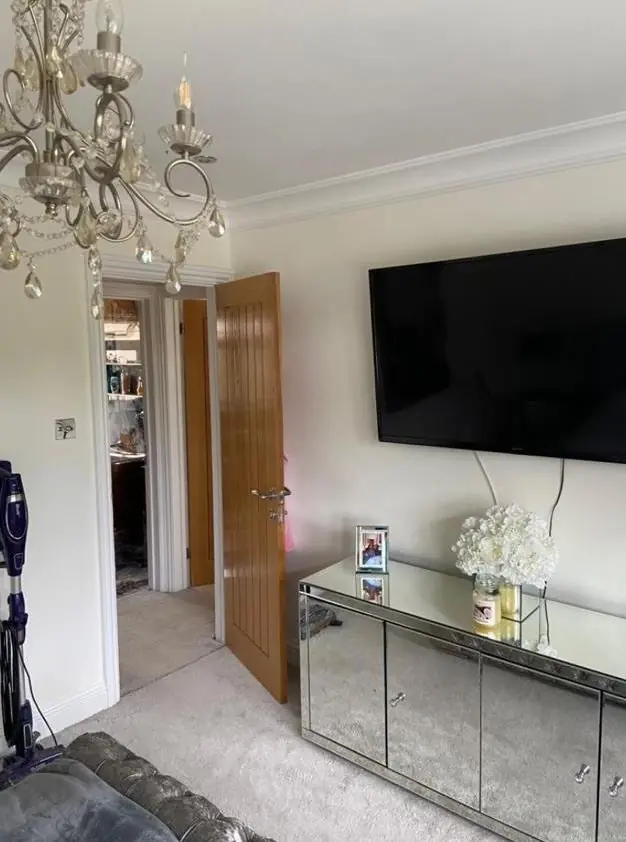
In a front lounge with a bay window, the chimney breast is normally the obvious place for a strong effect, because the bay itself is broken up by windows and a finish there gets lost. In the dining room, the wall opposite the window takes a colour-washed or layered glaze well, since it is lit evenly. Hallways where the stairs rise straight from the front door suit a darker, harder-wearing lower wall below a dado or rail, which is decorative and practical at once.
If you want the plainer walls done at the same time, see our interior painting service, and the Queen’s Park area page for everything else we cover there.
Last updated by Dean, DH Painter & Decorator.