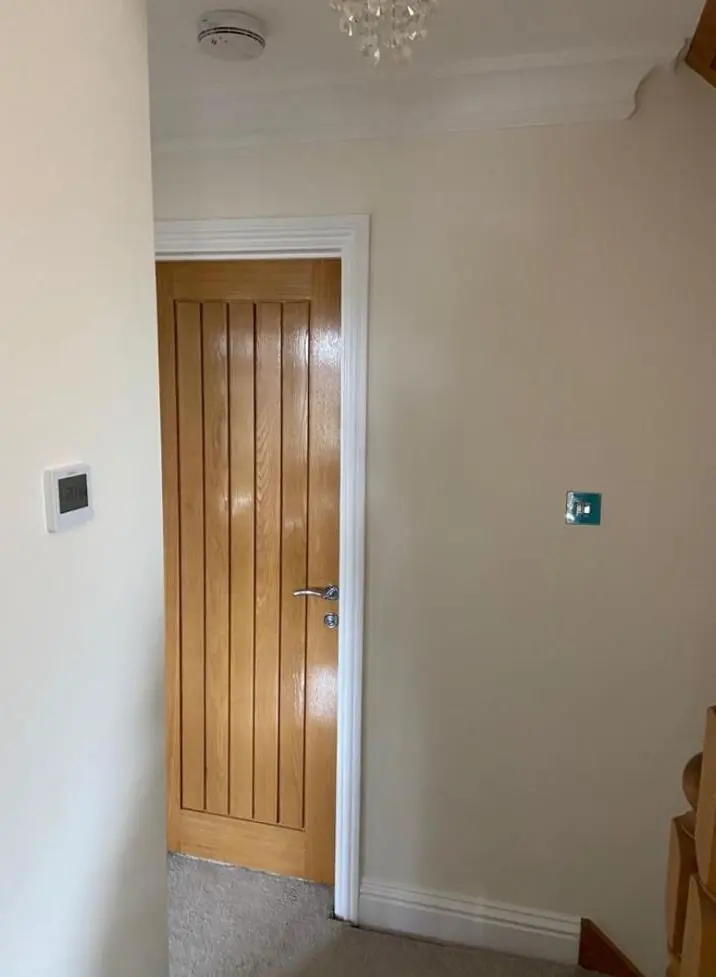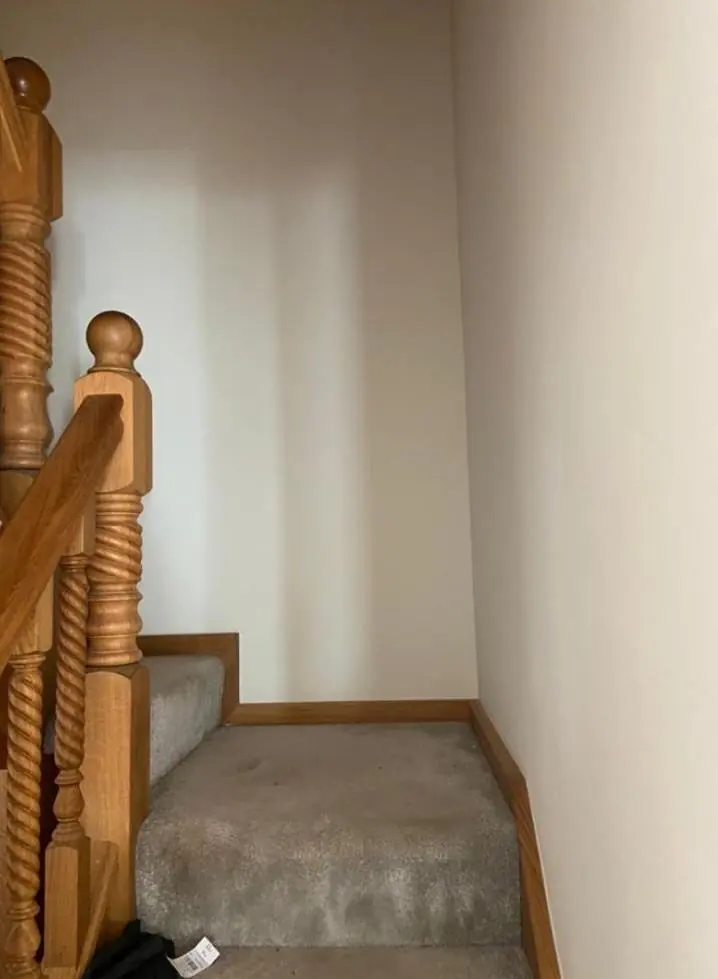
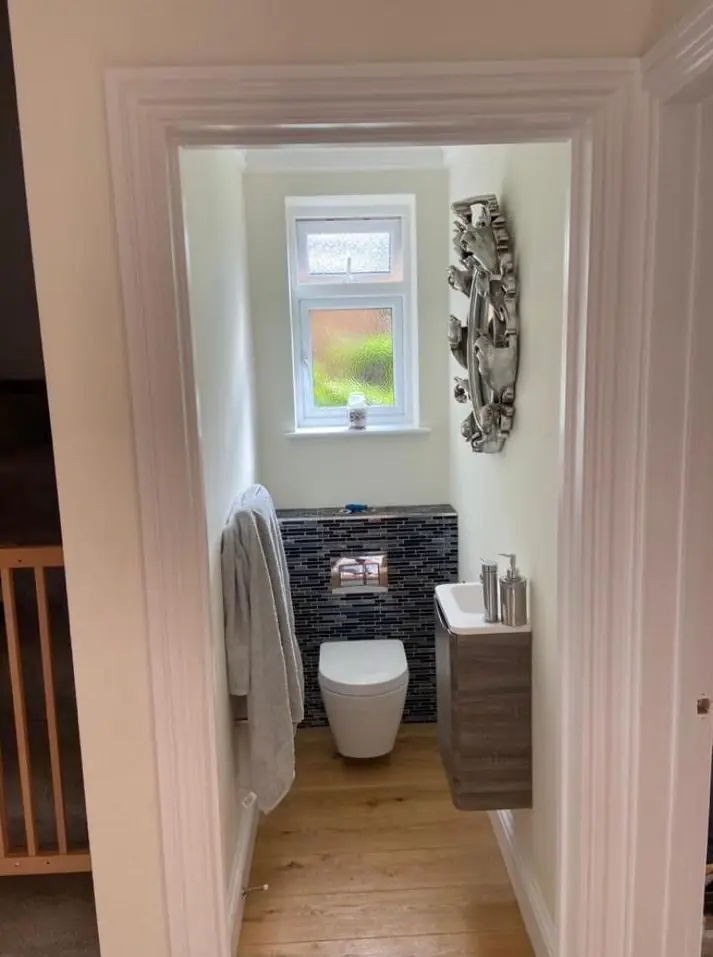
Dean paints doors, skirtings, architraves, frames and sash windows in Roade, the NN7 village on the A508 about 5.4 miles south of Northampton town centre. Original joinery in the stone conservation core is repainted like for like by hand, and 20th-century houses west of the A508 take durable modern trim paints.
Sashes, overlights and timber lintels east of the A508
Roade’s older joinery sits in the small conservation area around High Street, Church End and Hartwell Road. The Georgian houses there have a lot of woodwork for their size. 1 Hartwell Road has 12- and 16-pane sashes set under stone keyblocks. Pear Tree House, dated 1717, has 16- and 20-pane sashes and a timber trellis porch. The Baptist church has hornless 12- and 18-pane sashes. Every one of those glazing bars has to be cut in by hand with a sash brush.
The late 17th-century cottages on High Street and Memorial Green are simpler. Their timber casements sit under exposed wooden lintels. When we paint the windows we look at those lintels too, because they are bare structural timber, and soft or split wood needs sorting before any coating goes on. Doors on these rows were not always at the front. 28 High Street, for example, is entered from the back, so the rear door is often the one that has taken the most weather.
Primers, oil versus waterborne paint, and how we deal with hardwood are covered on our main door, skirting and woodwork painting page. This page sticks to what is particular to Roade.
Listed joinery and the consent question
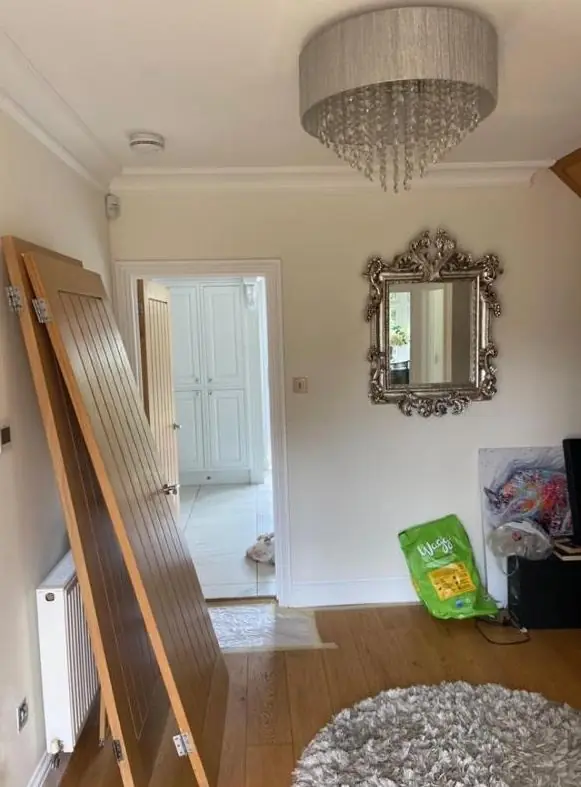
The parish has 23 listed buildings, and 12 of them are inside the conservation area. Repainting a sash or a panelled door in the same colour and type of finish is ordinary maintenance. Stripping historic paint layers, replacing original doors or changing a frontage colour can affect the building’s character, and that may need listed building consent from West Northamptonshire Council. If a job moves past a straight repaint, we tell you before work starts so you can check with the council.
Old joinery means old paint, so preparation is different:
- Paint on pre-1960s woodwork may contain lead. We test suspect layers and rub down wet rather than dry sanding.
- Loose or missing glazing putty on multi-pane sashes is cut out and replaced, then left to skin before painting.
- We don’t strip with heat guns near the thatched cottages. Lifting paint is scraped and abraded by hand.
- Ironstone keyblocks, quoins and datestones next to the frames are masked off, because paint soaks into ironstone and is very hard to get out.
Woodwork in the western closes
Most of Roade west of the A508 is 20th-century housing laid out in closes and ways, such as Hyde Close, Manor Close and Wallwin Close. Joinery there is standard: moulded or flush internal doors, machined skirting, softwood or composite front doors. These jobs depend on preparation more than technique. Kick marks on skirtings get filled and sanded, yellowed gloss is keyed and primed, and frames get cleaned along the hinge side where grease builds up.
For these houses we usually suggest a waterborne satin or eggshell enamel. It stays white, dries fast enough that a family can use the stairs and doors the same evening, and doesn’t leave a solvent smell through the house. If an older gloss is cracking, it has to come back to a sound edge first, or the new coat will crack the same way.
Front doors on the main road
Houses facing Northampton Road and Stratford Road get traffic film on their front doors and window frames. Before any outdoor joinery is painted along the A508 we wash it down and degrease it, because new paint won’t bond to grime. Ladders and steps also need planning on that stretch, since through traffic and parked cars leave little room on the footway. We sort out timing with you when we price the job.
For a view of how Roade’s older and newer housing fits together, see our Roade area page.
Last updated by Dean, DH Painter & Decorator.