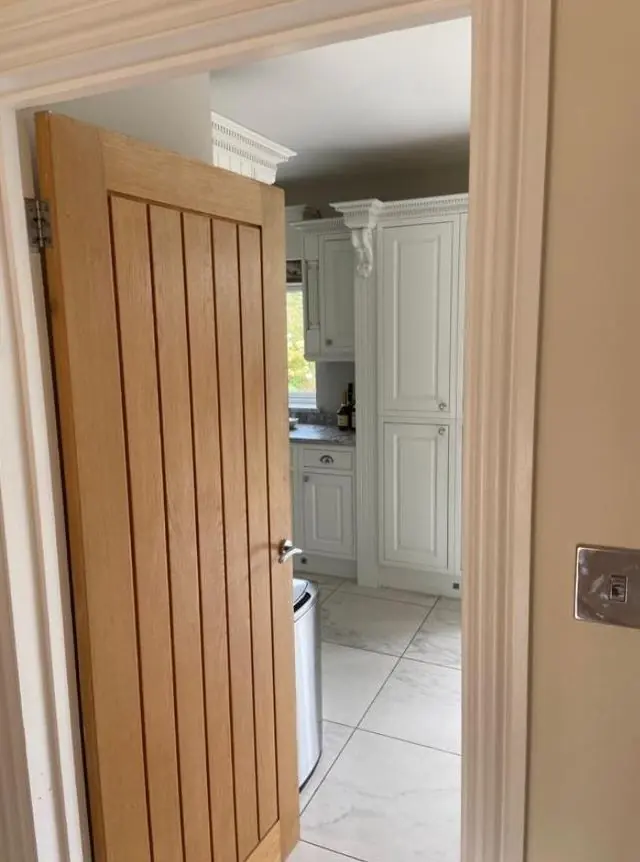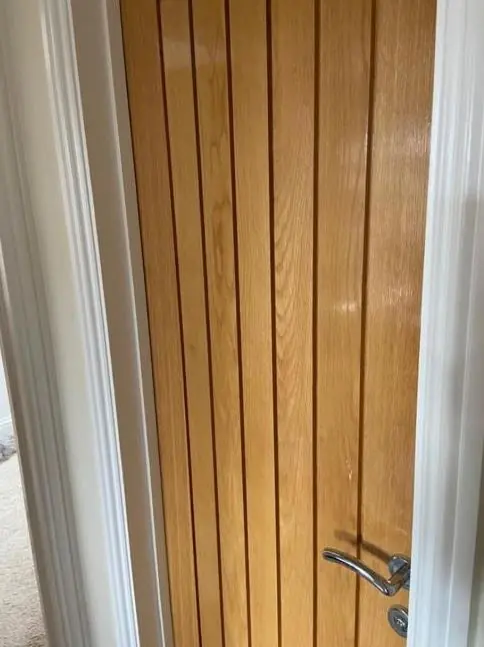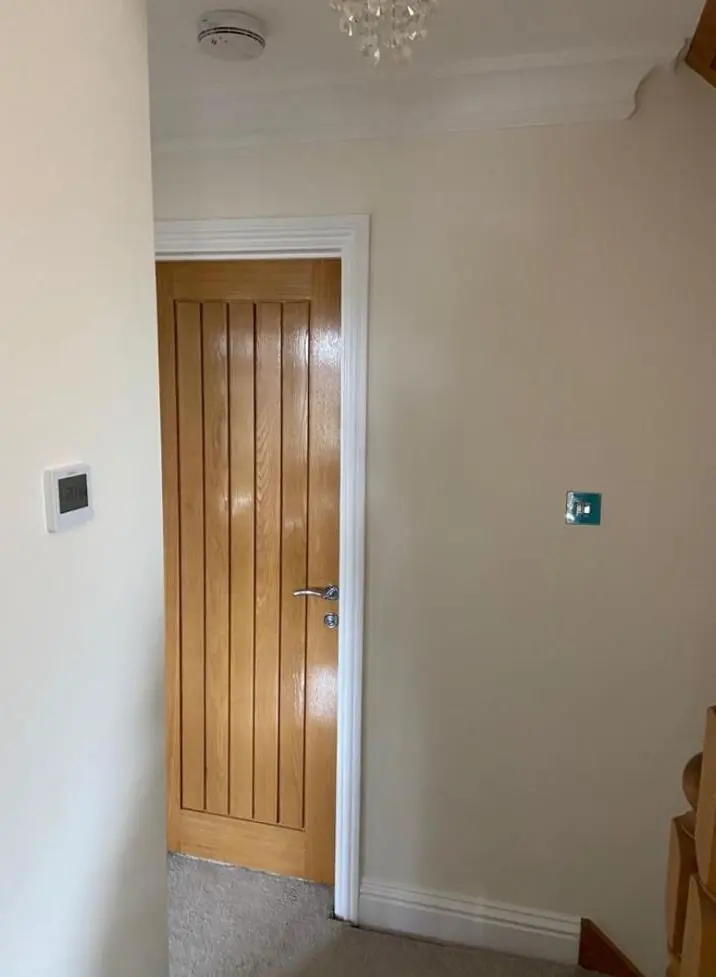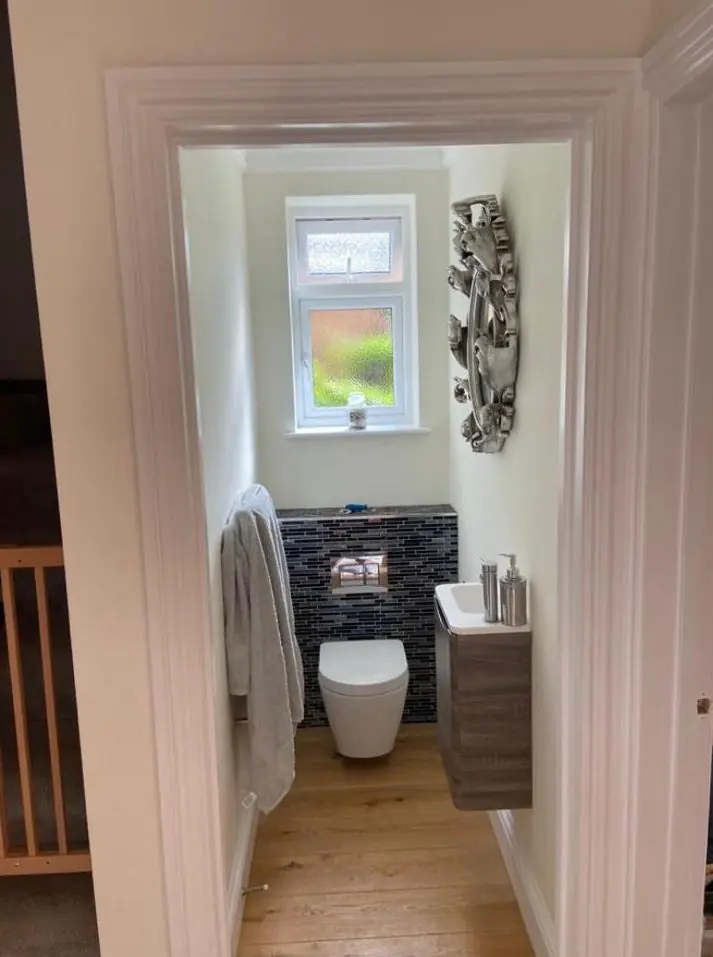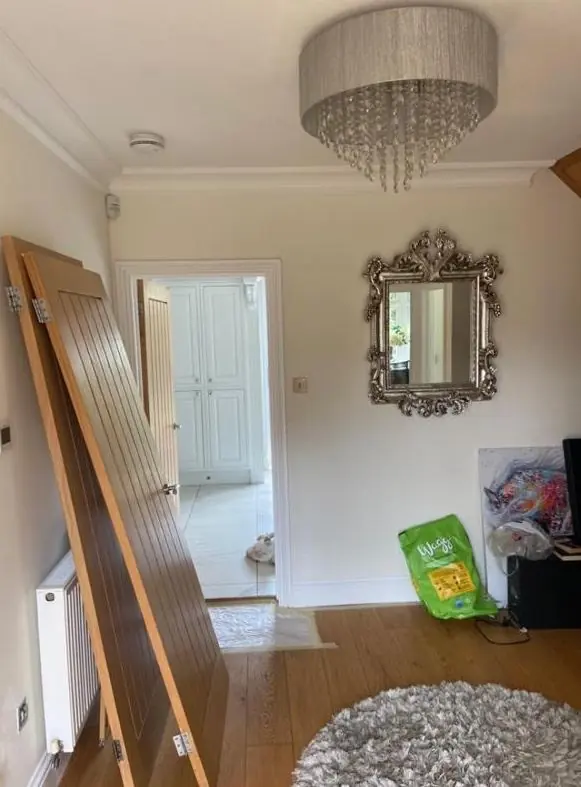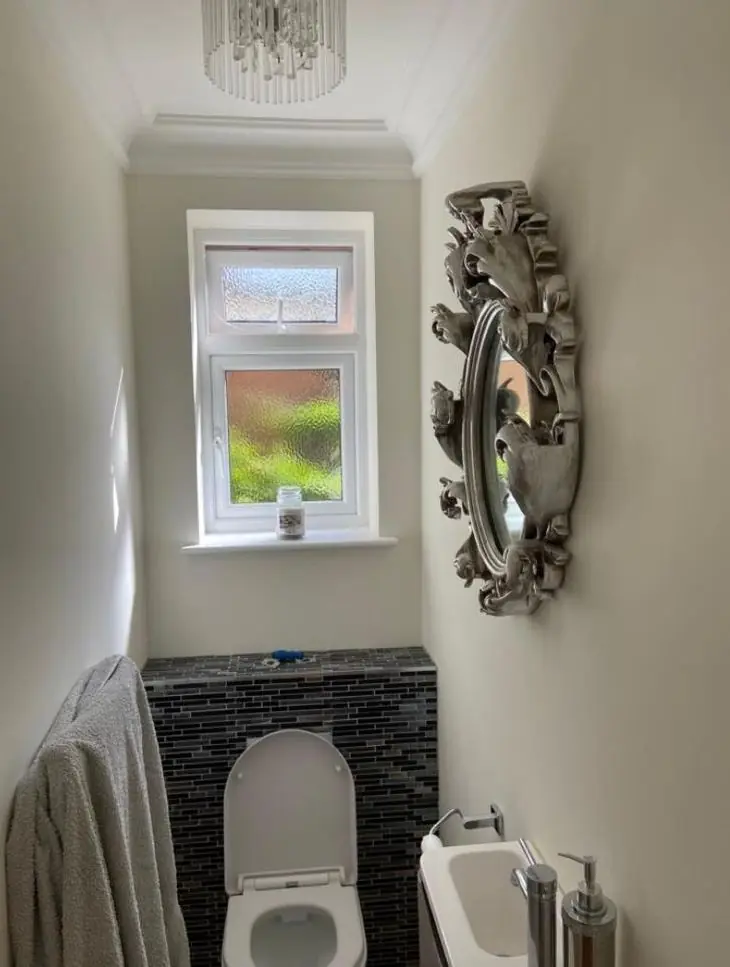
Dean paints internal and external doors, skirtings, architraves and frames in Blisworth, a stone village on the old main road 4.6 miles south-west of Northampton. Woodwork in the listed High Street cottages is repainted like for like with patient preparation, while the 1930s and post-war houses take standard modern systems.
Three generations of joinery in one village
Blisworth’s woodwork reflects the way the village was built. Along High Street and the lower part of Stoke Road, the 17th- and 18th-century labourers’ cottages still have timber casements, timber lintels and ledged plank doors. On many of these small terraces the door is at the side or the rear rather than on the street, so it often gets less attention and has weathered harder. Inside, skirtings follow walls that were never straight, and decades of paint have built up on them.
Go up Courteenhall Road or Little Lane and the picture changes. The red-brick houses of Greenway Terrace (1933), Coronation Cottages (1937) and Courteenhall Way (1938) have conventional joinery, as do the post-war cul-de-sacs either side of the old core. Flush or panelled doors, machined skirting and softwood frames there are quicker to prepare and suit modern waterborne enamels.
The trade detail on primers, oil versus water-based paint and hardwood doors is on our main door and skirting painting page. Below we cover what is particular to Blisworth.
Listed rooms and like-for-like repainting
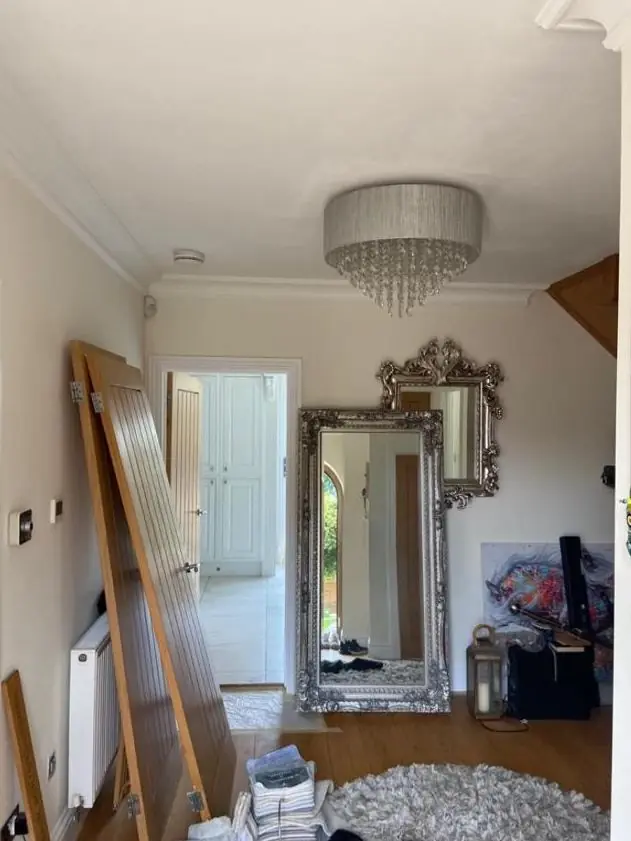
The Blisworth Conservation Area holds 24 to 29 listed structures, among them Grade II cottages on both High Street and Stoke Road. Repainting existing doors and skirtings in a similar finish is the safe default in listed houses. Stripping historic joinery back to bare wood, swapping original plank doors for new ones or removing mouldings can need listed building consent from the council, so we raise that before any work goes beyond a repaint.
Old joinery also carries old paint. Layers on doors and skirtings in houses of this age may contain lead, so Dean tests suspect paint and uses wet abrasion rather than dry sanding. Cracks along plank joints are filled with a flexible filler so they do not reopen as the timber moves with the seasons.
Front doors that face High Street traffic
Where cottage doors do open onto the street, they sit right at the pavement edge on a road that still carries heavy through traffic, despite the A43 bypass opening in 1991. Grime from passing vehicles settles on panels and in the grooves of plank doors, so every external door here is washed down and degreased before any sanding. Working beside the pavement also means planning around the bus stops and the school crossing at the Stoke Road and Courteenhall Road junctions, and timing the job so the door can be shut and secure by the end of the day.
At 8 to 14 Stoke Road and 13 to 19 Courteenhall Road, Article 4 Directions remove permitted development rights. If you are thinking about a different colour for a front door at one of those addresses, check with the council first. The appraisal favours repairing and repainting timber doors over replacing them with PVCu, which suits our approach anyway.
How the finish differs by house type
| Blisworth house type | Typical woodwork | Our usual finish |
|---|---|---|
| Stone cottages, High Street and lower Stoke Road | Plank doors, uneven skirtings, timber lintels | Brushed, low-sheen finish over careful filling |
| Victorian Grafton estate cottages | Gothic-style joinery with pointed-arch openings | Brushwork with fine cutting-in around arched heads |
| 1930s brick terraces | Panelled softwood doors, moulded skirting | Waterborne satin or eggshell enamel |
| 1960s-70s estate houses | Flush or moulded doors, machined skirting | Durable waterborne enamel, quick turnaround |
If the rooms themselves need doing too, the woodwork can be folded into the same visit. Our Blisworth area page lists everything else we cover in the village, which is about 4.6 miles from our Northampton base.
Last updated by Dean, DH Painter & Decorator.