Dean gives colour and finish advice to Roade homeowners as part of a decorating job, about 5.4 miles south of Northampton. Outside the conservation core it is mostly a matter of taste; inside it, door and window colours need to suit the limestone, ironstone and thatch, and listed frontages should usually be repainted like for like.
Ironstone dressings change the outside palette
The older houses in Roade’s eastern half are coursed limestone, and several carry darker ironstone around the windows and corners. 1 Hartwell Road has ironstone dressings and quoins with stone keyblocks over its sashes, and Pear Tree House has an ironstone datestone of 1717. That second, warmer stone colour narrows the choices for joinery. A sash colour has to sit with pale limestone and a rust-brown ironstone at once, and on the thatched cottages of High Street and Memorial Green it also sits under straw.
The stone itself is not part of the colour scheme. Bare limestone should stay unpainted, and ironstone dressings and datestones should never be painted, because paint traps moisture in the stone and is very hard to take off. Part of the stonework of The Old Forge on High Street has been painted in the past, which is the exception, not a model to follow. We mask ironstone carefully whenever we paint the windows next to it.
The conservation area and the listed buildings
Roade Conservation Area covers about 7.2 hectares around the old core and contains 12 listed buildings, and the parish has 23 in total. We could not find a published appraisal or an Article 4 direction for the village, so general conservation area controls apply rather than a detailed colour guide. For listed buildings it is stricter: changing the colour of a frontage or stripping historic finishes can need listed building consent. The safe default on a listed house is to repaint in the existing colour. If you want a change, check with West Northamptonshire Council before we buy paint.
Tylecote House and the red-brick exception
Not every period house in Roade is stone. Tylecote House on Hartwell Road, built in 1894 to 1896, is red brick with tile hanging and leaded-light timber windows. Against red brick and clay tile the useful colours shift, and the Arts and Crafts style has its own traditions for joinery colour. Houses like this show why we look at the building itself rather than applying one heritage palette to the whole village.
The same goes for the churches and chapels nearby. Roade Baptist Church keeps 12- and 18-pane hornless sashes in limestone rubble walls, and the Grade II* Church of St Mary the Virgin on Church End is coursed limestone under slate. Neither is a house, but both set the tone of the streets around them, and a neighbouring front door in a loud modern colour can jar against them more than it would on a quieter street.
Frontages on the A508
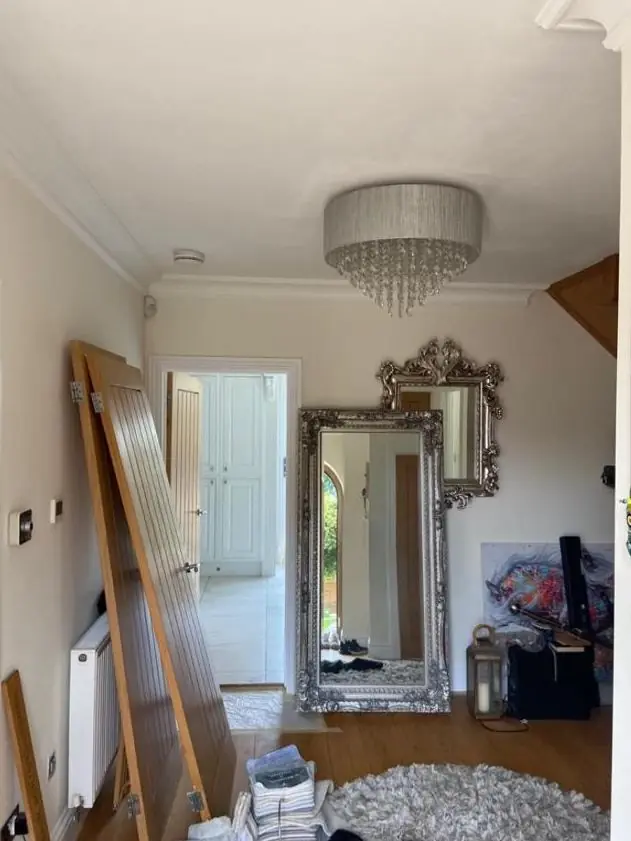
Houses facing the A508, signed as Northampton Road and Stratford Road through the village, pick up traffic dirt on walls and window frames. That affects finish more than shade. Very pale joinery and front doors show road film within months, so we often suggest a mid-tone or a slightly deeper off-white, in a finish that can be washed. We clean and degrease these surfaces before painting so the new coat bonds properly.
Inside the house
Small windows set in thick stone walls make cottage rooms on the eastern side darker than the same-sized room in a 20th-century house on the western closes. Colours that look calm on a card can turn flat and heavy in those rooms, while the brighter estate houses give more room to go deeper. Dean looks at samples on your walls at the time of day you use the room. There is more on light direction and finish choice on our main colour and finish advice page, and the Roade area page covers the village’s housing in more detail.
Last updated by Dean, DH Painter & Decorator.